Ultra-clean graphene
The use of high-quality graphene is of vital importance for the performance of these devices. Being an atomically thin material, graphene is extremely sensitive to the ruggedness of its support structure and all dirt down to the atomic scale. In particular, during typical nanofabrication processes graphene is inevitably exposed to several polymers and chemicals, which easily stick to its surface making it dirty and thus degrading its electronic quality.
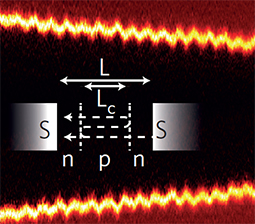
Graphene sandwiched between boron nitride layers and contacted to a superconductor – molybdenum rhenium (MoRe).
In order to circumvent this, the researchers first sandwich the graphene between two thin layers of boron nitride – an atomically flat insulator. This encasing effectively preserves the graphene in its pristine state by protecting it from the outside world. Finally, this stack is cut to the desired shape and the graphene is contacted from the side to the superconducting material.
When light bounces back and forth between two mirrors, the principle of superposition for waves gives rise to maxima and minima in the light intensity, producing a characteristic interference pattern. In analogy, the researchers here observe a similar interference in graphene due to electron waves reflecting many times off the walls of the graphene with the superconductor. This interference can only be observed in the cleanest of samples, where it is possible for electrons to move in ballistic trajectories with very little scattering from impurities and defects. When the graphene is superconducting, these ballistic effects show up as a striking periodic modulation of the supercurrent. This is the first direct observation of ballistic mirroring of supercurrents in any two-dimensional system.
TU Delft
#Graphene #Superconductivity
SPECS reports on work at the LMA microscopy lab, where Dr. David Serrate's team used the JT-STM to study graphene nanoribbons on MgO/Ag(001) and the Aarhus 150 to monitor nanostructure growth.
Nanologica's board has resolved on a rights issue of units of appx. SEK 110.5 million, with an oversubscription option of up to SEK 10 million. Commitments and a guarantee intention cover appx. SEK 85.7 million.
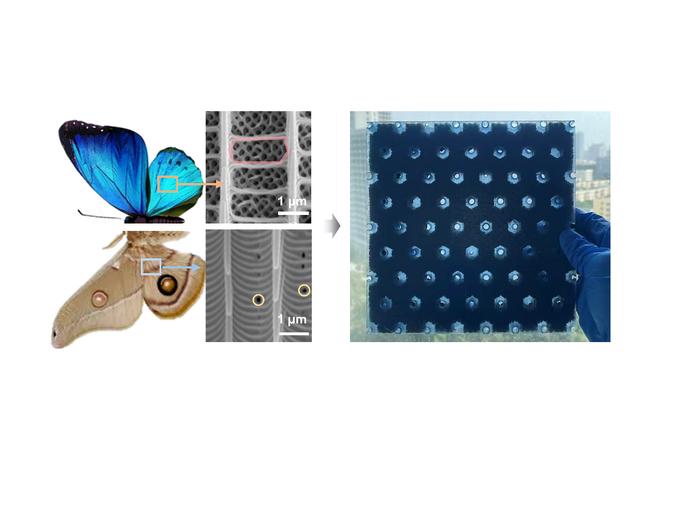
Researchers at Harbin Institute of Technology have printed a 24 mm metamaterial that absorbs impact, shields microwaves and damps low-frequency noise at once. Inspired by butterfly wing scales, it nests a gyroid lattice inside a hexagonal honeycomb, absorbing 21.9 times more impact energy than an equal-weight honeycomb and capturing over 90% of 2-40 GHz radiation and 600-900 Hz sound.
This week in nanotech
$108.5M raised
8 funding rounds · 44 deals tracked
New products
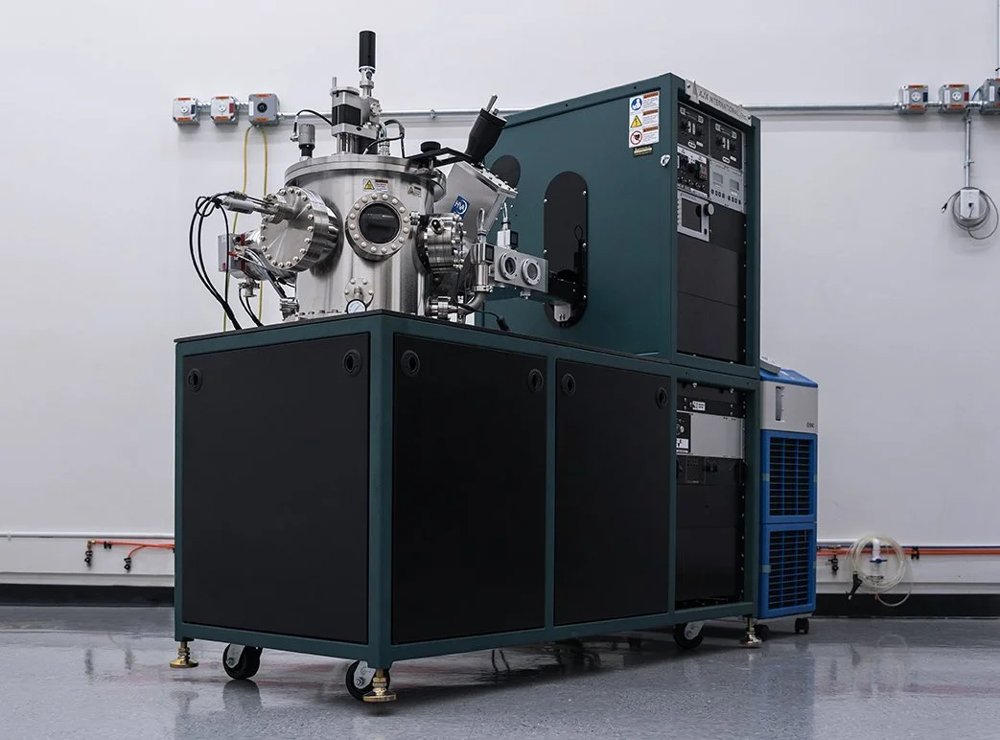 Orion Sputtering Deposition SystemsAJA International Featured
 Nion-compatible In Situ STEM Holders for Electrical BiasingHummingbird Scientific Featured
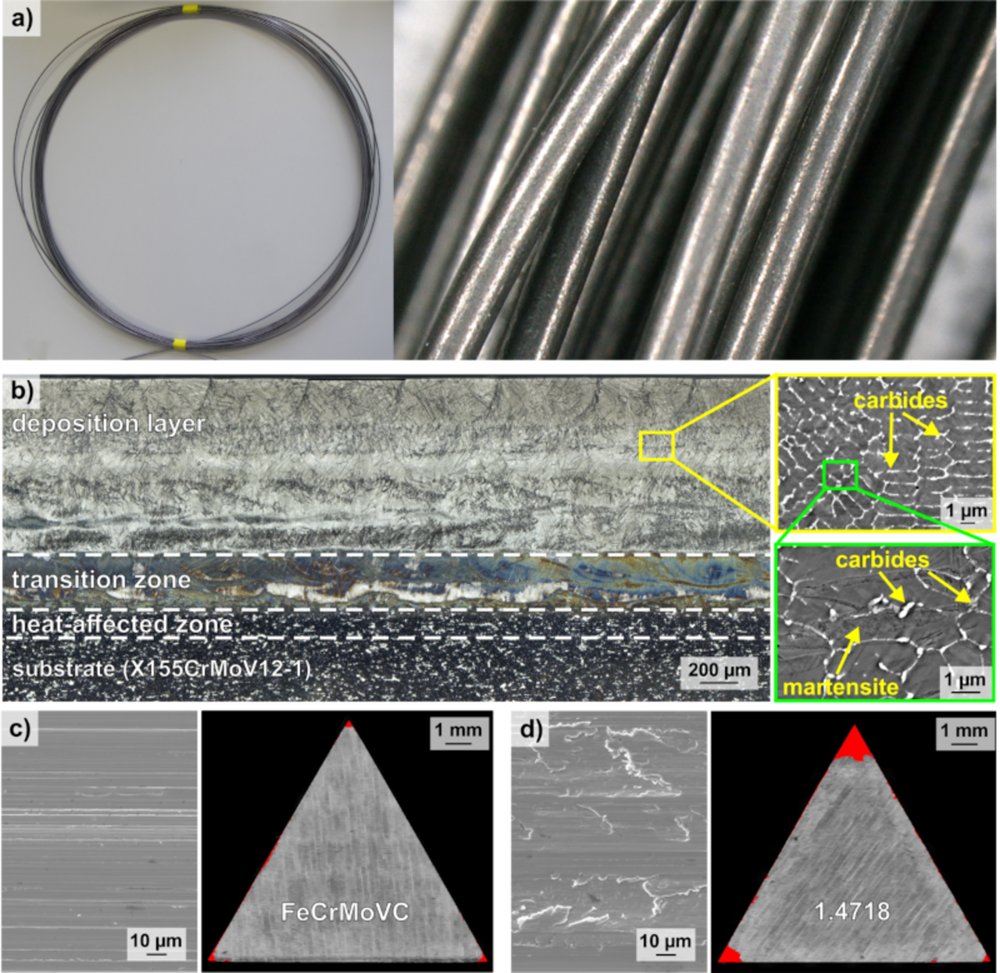 Fe85Cr4Mo8V2C1 wire filler materialLeibniz Institute for Solid State and Materials Research Dresden - IFW Dresden
Market insights
Last 30 days: Quantum Technologies drew the most money: $3.17B.
Money raised per month