Elastomers, which can transform electrical energy into mechanical energy, have a wide variety of applications, i.e. powering windscreen wipers, sound generation, and operating camera lenses. By surrounding the synthetic material with electrodes and applying operation voltage, it expands laterally. In the field of medicine, this principle is promising for the development of artificial muscles for treating severe incontinence, as the consortium recently communicated.
To provide the necessary strain, micrometer-thick silicone layers need an operation voltage of several hundred volts, which is by far too high for applications within the human body. In contrast, nanometer-thin layers require only a few volts. To generate forces necessary to reach continence, several thousand layers have to be put on top of each other.
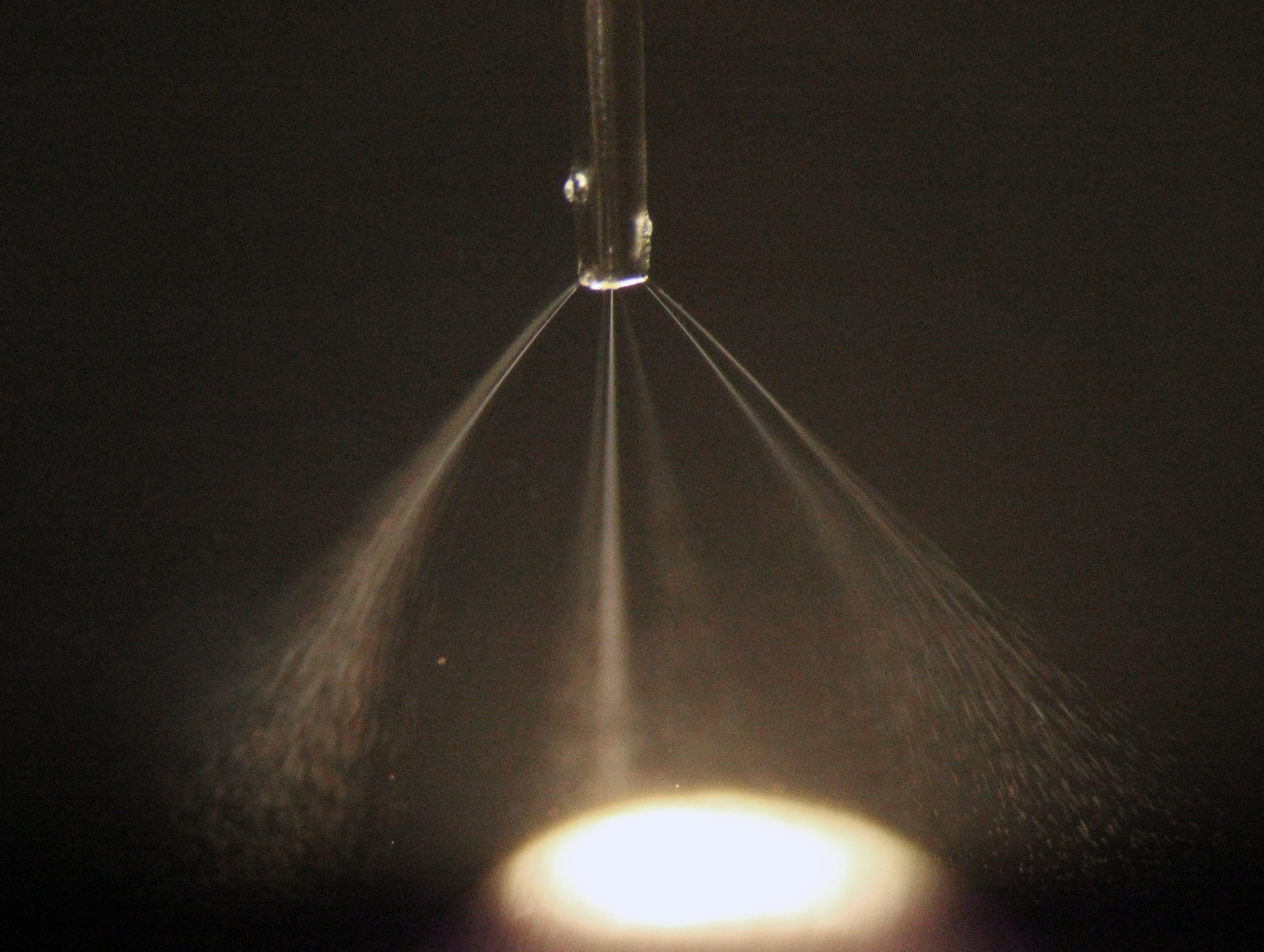
Current manufacturing methods do not allow the efficient fabrication of such layered nanostructures. The team of Prof. Müller from the Biomaterials Science Center of the University of Basel, together with researchers of Empa, has developed a deposition method to prepare extremely flat silicone layers that are much thinner than a micron. The roughness is smaller than one nanometer. For this purpose, silicone molecules in solution are sprayed assisted by high voltages – termed electrospray deposition.
Usually electrospraying is based on direct current. The researchers from Basel, however, employ an alternating current. “This rather simple deposition technique has a huge potential, as it is adaptable to the industrial requirements for producing artificial muscles as well as powering windscreen wipers”, Bert Müller said. He expects that patients suffering from severe incontinence could benefit from the technology.
Reference:
Florian M. Weiss, Tino Töpper, Bekim Osmani, Sven Peters, Gabor Kovacs, and Bert Müller
Electrospraying Nanometer-Thin Elastomer Films for Low-Voltage Dielectric Actuators
Advanced Electronic Materials 2016, 1500476 | DOI: 10.1002/aelm.201500476
Florian M. Weiss, Tino Töpper, Bekim Osmani, Hans Deyhle, Gabor Kovacs, and Bert Müller
Thin Film Formation and Morphology of Electro-sprayed Polydimethylsiloxane
Langmuir 2016 | DOI: 10.1021/acs.langmuir.6b00476
Elisa Fattorini, Tobia Brusa, Christian, Gingert, Simone E. Hieber, Vanessa Leung, Bekim Osmani, Marco D. Dominietto, Philippe Büchler, Franc Hetzer, and Bert Müller
Artificial Muscle Devices: Innovations and Prospects for Fecal Incontinence Treatment
Annals of Biomedical Engineering 2016 | DOI: 10.1007/s10439-016-1572-z
University of Basel
#Bionano #Biotechnology
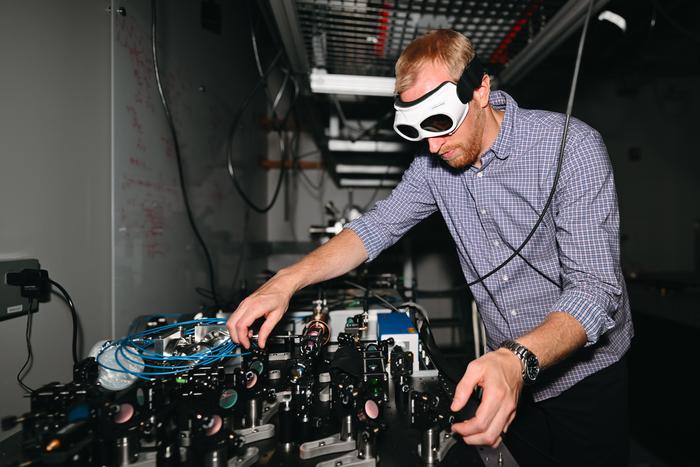
Breakthrough from a team led by Jacob Covey, associate professor in the University of Chicago’s Pritzker School of Molecular Engineering and Department of Physics, turns helium-3’s low mass into a quantum resource
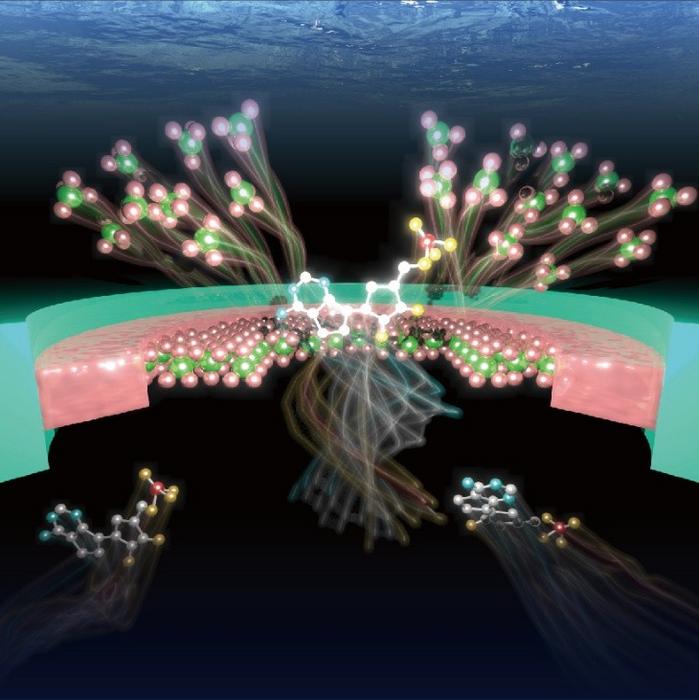
Researchers at the University of Osaka have developed an autonomous solid-state nanopore that senses molecules, generates electrical signals, and retains memory of recent events without external control. Chemical reactions inside the pore continuously reshape its structure, producing molecule-specific signal patterns. Machine learning distinguished DNA nucleotides and amino acids from these signatures. Published in ACS Nano.
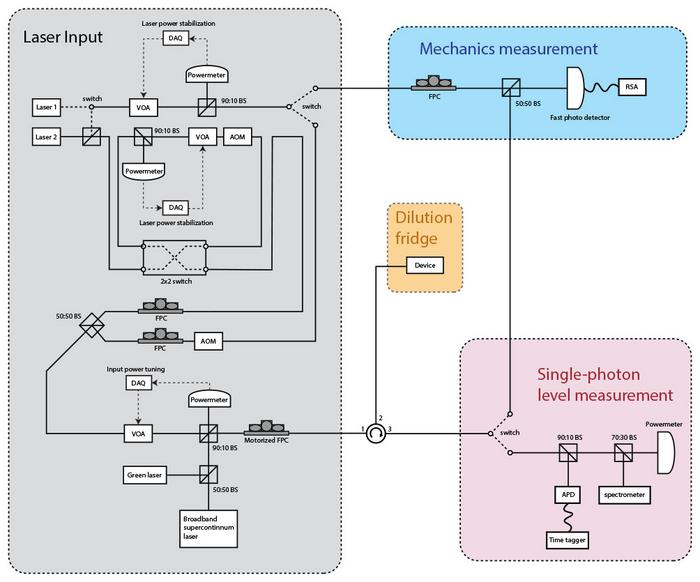
Good vibrations for quantum communications
