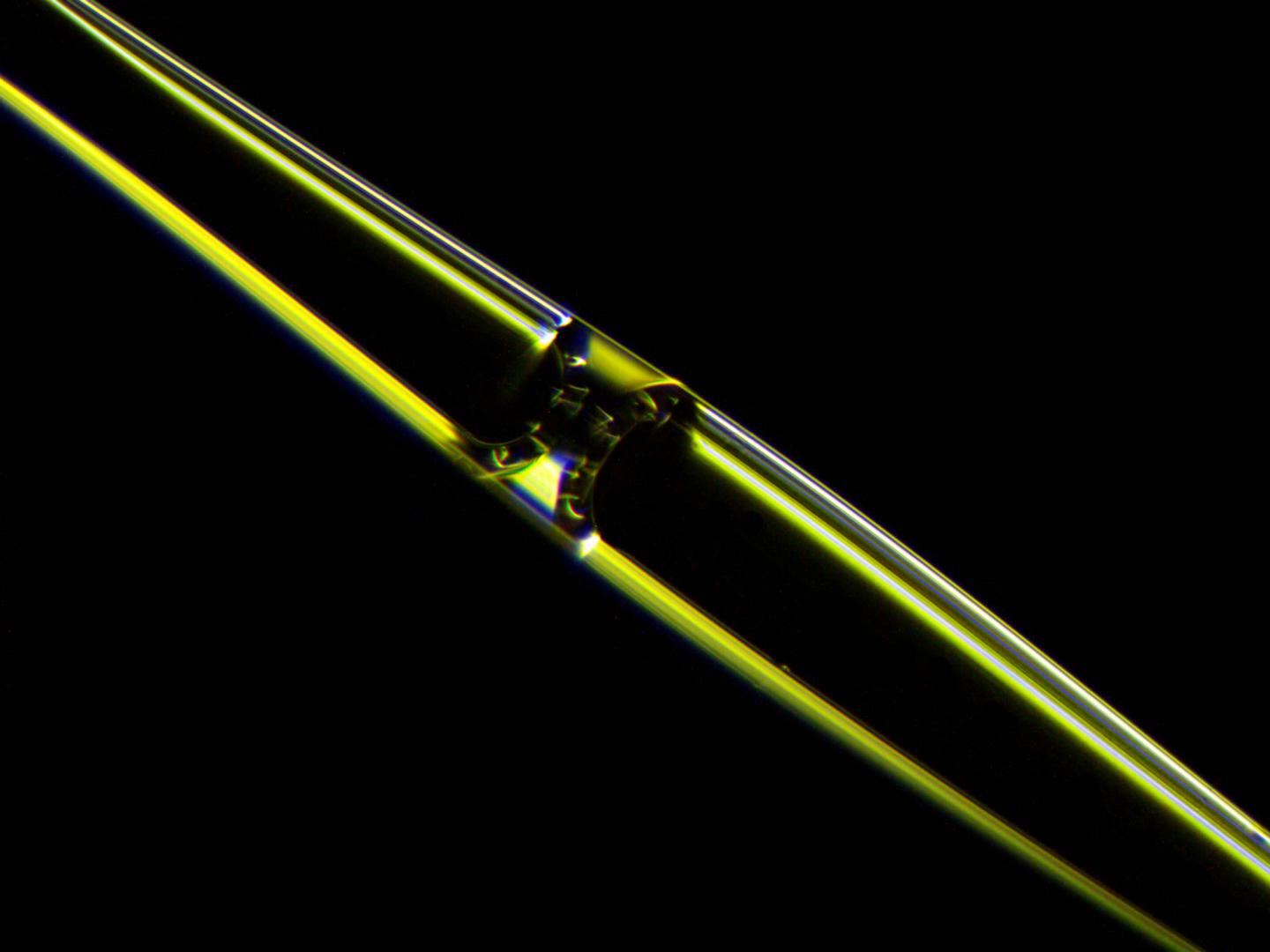
Researchers from the University of Illinois at Urbana-Champaign have developed a new technique for extremely high speed photonic sensing of the mechanical properties of freely flowing particles using an opto-mechano-fluidic resonator (OMFR). This research potentially opens up completely new mechanical "axes of measurement" on micro/nanoparticles and bioparticles.
"It is known that diseases such as cancers and anemia can correlate with mechanical properties of cells such as compressibility and viscoelasticity, but these properties are not used diagnostically due to absence of tools with enough speed and sensitivity to perform the measurement," explained Gaurav Bahl, an assistant professor of mechanical science and engineering at Illinois. "Because of this, we have a substantial knowledge-gap, and have barely scratched the surface of understanding of how diseases modify the mechanical properties of cells in our body. Developing knowledge around the mechanics of cells and bioparticles can help us understand the mobility of these micro-objects throughout the human body, about how tumors form, about how cells and bacteria can propagate through us, how diseases spread, and more."
High-speed optical detection methods, such as flow cytometry, are routinely used for analysis of large populations of particles through measurements of their optical properties, with analysis speeds approaching 50,000 particles/second. Optical sensors, however, cannot directly measure any mechanical properties of the particles (such as mass, density, compressibility, stiffness, etc). Until now, mechanical sensors have not approached the speed of optical flow cytometers, which makes routine measurements on large cell populations simply impractical.
"In this study, we aimed to blend the best features of optical sensing, i.e. the extremely high bandwidth and sensitivity, with mechanical sensing which gives us the ability to measure mechanical properties," stated Kewen Han, a doctoral candidate and first author of the paper appearing in the June 2016 edition of Optica. "To achieve this, we have developed a new microfluidic opto-mechanical device that optically detects the mechanical perturbations created by individual microparticles flowing through the fluidic channel at very high speed.
Using bakers' yeast and two types of microbeads, the researchers explored the particle-sensing capabilities of the OMFR.
"The OMFR's multimode sensing capability permits measurement of multiple particles with redundancy, and indicates future potential for inertial imaging," Han said. "The system also detects mechanical energy loss associated with individual particles, likely related to viscoelastic properties of the soft material and boundary loss at interface of particle and liquid."
"We have shown that our technique is sensitive to the density and compressibility of each individual particle as it passes by," Bahl added. "The smallest detectable particle as reported in this work is around 660 nm.
"This work presents a new approach to perform resonantly enhanced optical sensing of freely flowing particles through the action of long-range phonons that extend between solid and fluid phases of the sensor and sample."
Reference:
High-throughput sensing of freely flowing particles with optomechanofluidics
Kewen Han, JunHwan Kim, and Gaurav Bahl
doi: 10.1364/OPTICA.3.000585
University of Illinois College of Engineering
#Sensors #Photonics #Bionano #Nanomedicine
IMRA America Inc. has presented its Femtolite lasers for second harmonic generation and third harmonic generation imaging, citing their wavelengths, compact size and ease of integration into established systems.
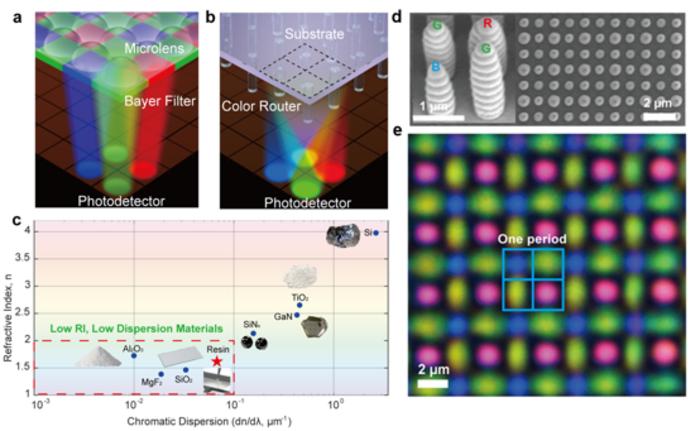
Researchers have demonstrated a 3D printed colour router that steers red, green and blue light to designated sensing regions instead of absorbing unwanted wavelengths, allowing far more incoming light to reach the sensor. Built from low-cost, low-refractive-index polymers using two-photon polymerisation, the four-pillar unit cells achieved simulated routing efficiency near 90 percent and about 70 percent in printed arrays.
Photon Bridge has raised €10 million to scale production of laser sources for optical interconnects in AI datacenters. The round was co-led by the Amadeus APEX Technology Fund and 360 Capital.
This week in nanotech
$108.5M raised
7 funding rounds · 39 deals tracked
New products
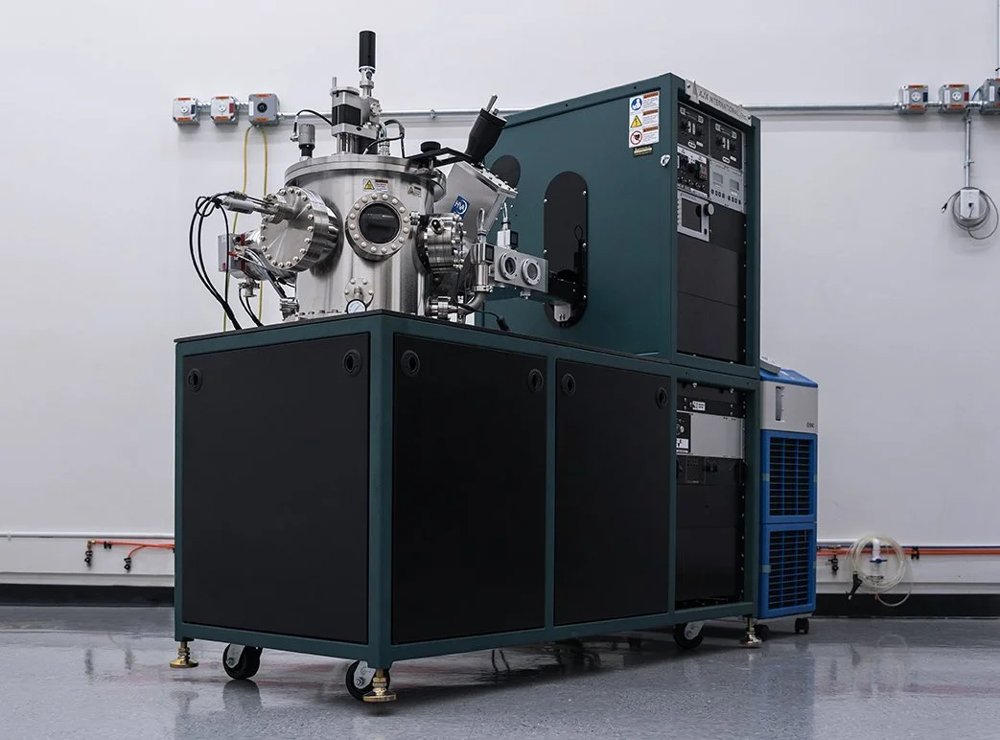 Orion Sputtering Deposition SystemsAJA International Featured
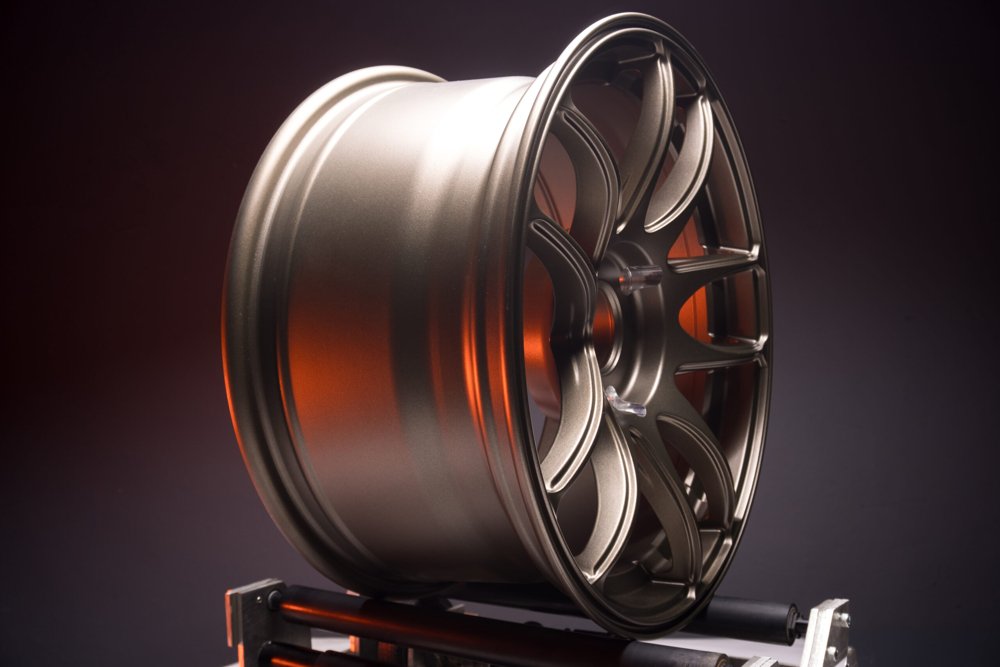 Ti-WCMBN Nanomaterialia Featured
 Talphene™ Graphene AdditivesTalga Group
Market insights
Last 30 days: Quantum Technologies drew the most money: $3.17B.
Money raised per month