American Chemical Society (ACS)
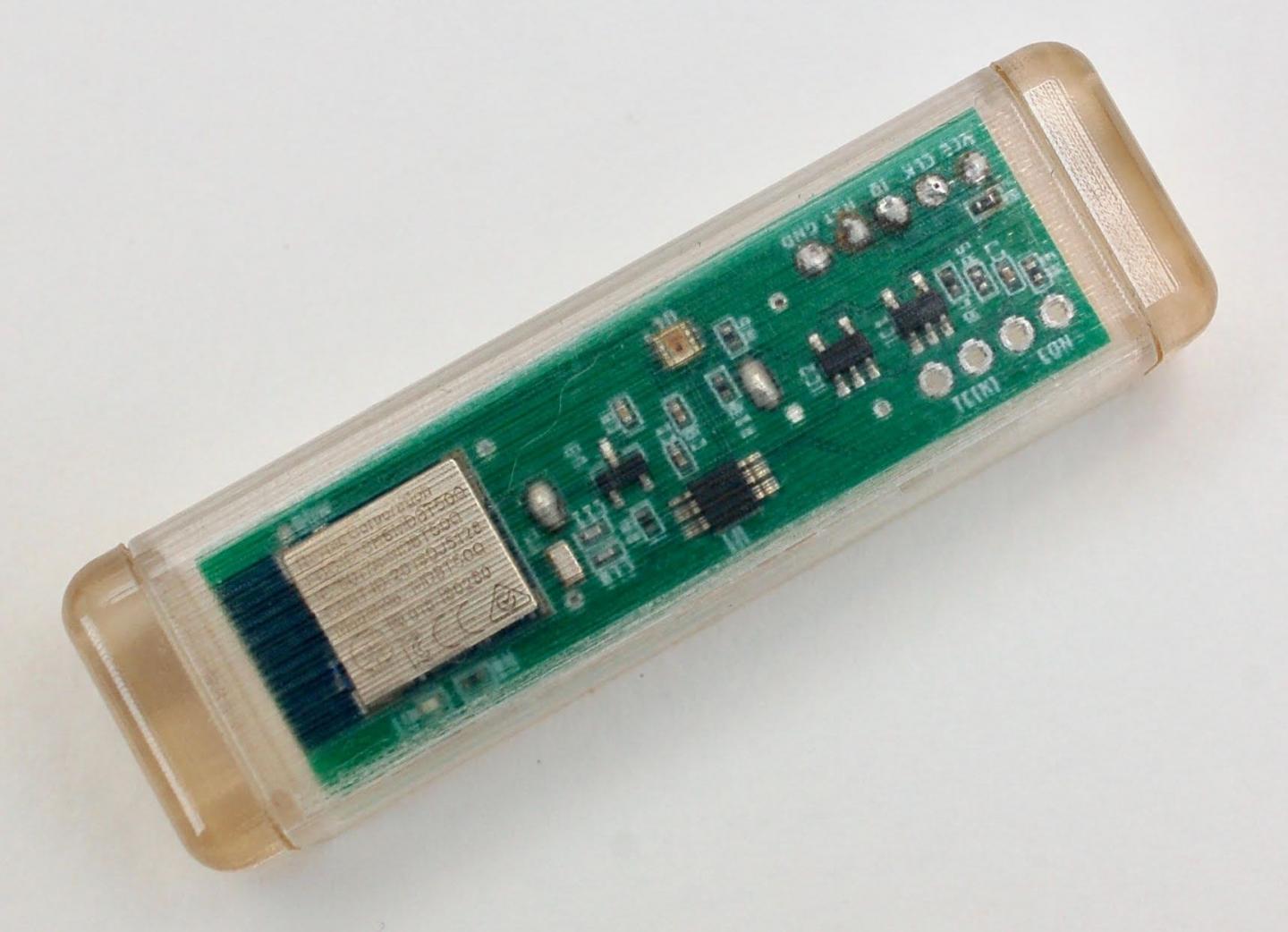
Miniaturized computer systems and wireless technology are offering scientists new ways to keep tabs on reactions without the need for larger, cumbersome equipment. In a proof-of-concept study in ACS Sensors, researchers describe an inexpensive new device that functions like a conventional magnetic stir bar, but that can automatically measure and transmit information on a solution's color, viscosity and a variety of other attributes to a smart phone or computer.
Automatic, remote data collection can make chemical processes more reliable, as well as less labor intensive and safer. This technology has begun to make inroads into chemistry labs, but options for scientists looking to remotely mix their reactions and monitor several parameters while those reactions occur remain quite scarce, limited and expensive. Nikolay Cherkasov, Dmitry Isakov and colleagues wanted to develop a device capable of simultaneously detecting numerous parameters using freely available open source software and easy-to-get, inexpensive components.
The team made two versions of the Smart Stirrer based on different integrated circuits, one a microcontroller and the other an all-in-one system on a chip. To customize the Smart Stirrer for different applications, the team used a modular design, in which sensors can be added as needed. In experiments, they confirmed they could detect color, electrical conductivity and, with careful calibration, viscosity. Additional low-cost commercially available sensors, as well as custom ones, could be used to adapt the device for many new applications, the researchers say. They note one limitation: the narrow range of temperatures within which the Smart Stirrer can function, a restriction that they say is inherent to most digital electronics. Ultimately, they predict that this approach could provide a platform for digitizing chemistry in research labs and industrial manufacturing.
Monitoring Chemistry In Situ with a Smart Stirrer: A Magnetic Stirrer Bar with an Integrated Process Monitoring System
Nikolay Cherkasov, Samuel Baldwin, Gregory J. Gibbons, and Dmitry Isakov
ACS Sensors (July 3, 2020)
DOI: 10.1021/acssensors.0c00720
Contact information:
Dmitry Isakov
Assistant Professor at University of Warwick
D.Isakov@warwick.ac.uk
Phone: +44 (0) 24 7652 4830

Researchers led by Professor Jaeyune Ryu at Seoul National University identified local pH near electrodes as a decisive variable in organic electrosynthesis. By designing a reactor that narrows electrode spacing and flows electrolyte to counterbalance acidic and alkaline zones, they raised selectivity for lactones and epoxides, feedstocks for biodegradable plastics, polyurethanes, adhesives, and epoxy resins, from about 16% to 97% using only oxygen and electricity, eliminating added peroxide…

Silver nanoparticles with diameters of ~10 nm deliver the best performance as electrocatalysts. The silver particles are sprayed onto the electrode together with a conductive carbon powder. The ideal mixture consists of 20 per cent by mass silver and 80 per cent by mass carbon powder. This image was taken using a transmission electron microscope (TEM). © HZB Via electrolysis, CO₂ can be reduced to CO, a raw material for further chemical products such as fuels. Within the GreenQuest Project,...

A flexible metal–organic framework developed by researchers from Institute of Science Tokyo enables the structural determination of large "beyond rule of 5" molecules from microgram-scale samples. Using APF-40 as a crystalline sponge, the researchers determined the structures of 12 pharmaceutical-related molecules, including the 899 Da drug molecule doramectin and trace ivermectin derivatives. The method could aid drug discovery, natural products research, and the characterization of rare...






