Purdue University
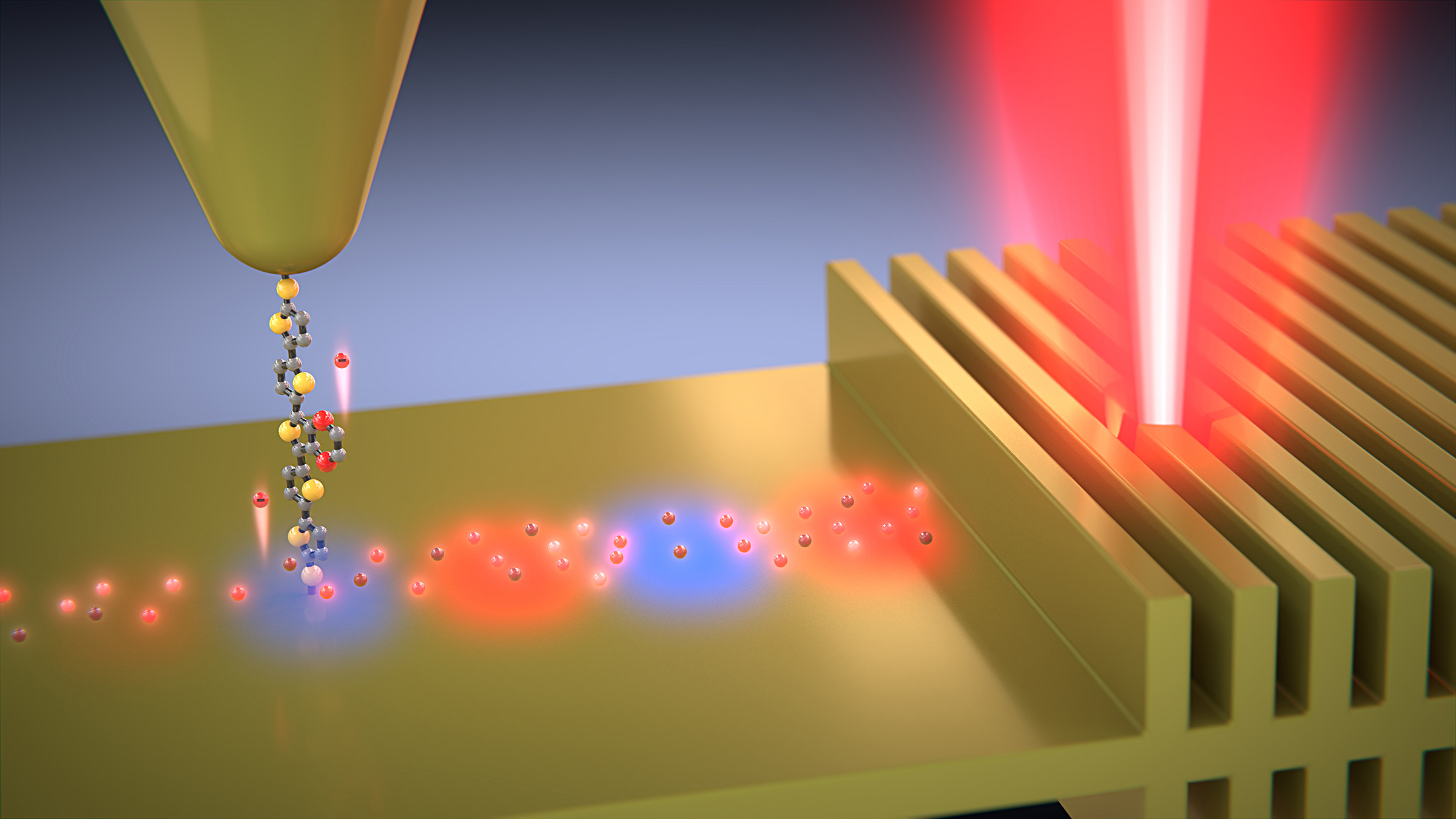
Highly energetic, "hot" electrons have the potential to help solar panels more efficiently harvest light energy.
But scientists haven't been able to measure the energies of those electrons, limiting their use. Researchers at Purdue University and the University of Michigan built a way to analyze those energies.
"There have been many theoretical models of hot electrons but no direct experiments or measurements of what they look like," said Vladimir "Vlad" Shalaev (shal-AYV), Purdue University's Bob and Anne Burnett Distinguished Professor of Electrical and Computer Engineering, who led the Purdue team in this collaborative work.
In a paper published in the journal Science on Thursday (June 4), the researchers demonstrated how a technique using a scanning tunneling microscope integrated with lasers and other optical components reveals the energy distribution of hot electrons.
"Measuring energy distribution means quantifying how many electrons are available at a certain amount of energy. That crucial piece of information was lacking for expanding the use of hot electrons," said Harsha Reddy, a Ph.D. student in Purdue's School of Electrical and Computer Engineering and an equally contributing lead author on this paper.
Hot electrons are typically generated through shining a certain frequency of light on a carefully engineered nanostructure made of metals such as gold or silver, exciting so-called "surface plasmons." These plasmons are believed to eventually lose some of their energy to electrons, making them hot.
While hot electrons can have temperatures as high as 2,000 degrees Fahrenheit, it's their high energy - rather than the material temperature - that makes them useful for energy technologies. In solar panels, energies from hot electrons could be more efficiently converted to electrical energy compared to conventional approaches.
Hot electrons also could improve the efficiency of energy technology such as hydrogen-based fuel cells in cars by speeding up chemical reactions.
"In a typical chemical reaction, the reactants need to have enough energy to cross a threshold for completing the reaction. If you have these high-energy electrons, some of the electrons would lose their energy to the reactants and push them across that threshold, making the chemical reaction faster," Reddy said.
Reddy worked with Kun Wang, a postdoctoral researcher in a University of Michigan group under professors Edgar Meyhofer and Pramod Reddy, who co-led the research effort. Together, they spent more than 18 months developing the experimental setup and another 12 months measuring the hot electron energies.
The researchers built a system that allowed them to detect the difference in charge currents generated with and without exciting the plasmons. This difference in currents contains the crucial information needed to determine the energy distribution of the hot electrons in the metallic nanostructure.
Shining a laser light onto a gold film with tiny ridges excites plasmons in the system, generating hot electrons. The researchers measured the energies of the electrons by drawing them through carefully engineered molecules into a gold electrode at the tip of a scanning tunneling microscope. Researchers at the University of Liverpool synthesized some of the molecules for these experiments.
This method could be used for enhancing a wide range of energy-related applications.
"This multidisciplinary basic research effort sheds light on a unique way to measure the energy of charge carriers. These results are expected to play a crucial role in developing future applications in energy conversion, photocatalysis and photodetectors, for instance, that are of great interest to the Department of Defense," said Chakrapani Varanasi, a program manager for the Army Research Office, which supported this study.
Determining plasmonic hot-carrier energy distributions via single-molecule transport measurements
Harsha Reddy, Kun Wang, Zhaxylyk Kudyshev, Linxiao Zhu, Shen Yan, Andrea Vezzoli, Simon J. Higgins, Vikram Gavini, Alexandra Boltasseva, Pramod Reddy, Vladimir M. Shalaev, Edgar Meyhofer
Science (4 Jun 2020) eabb3457
Contact information:
Vladimir M. Shalaev
Purdue Professor of Electrical and Computer Engineering
shalaev@ecn.purdue.edu
Phone: +1 765 49-49855
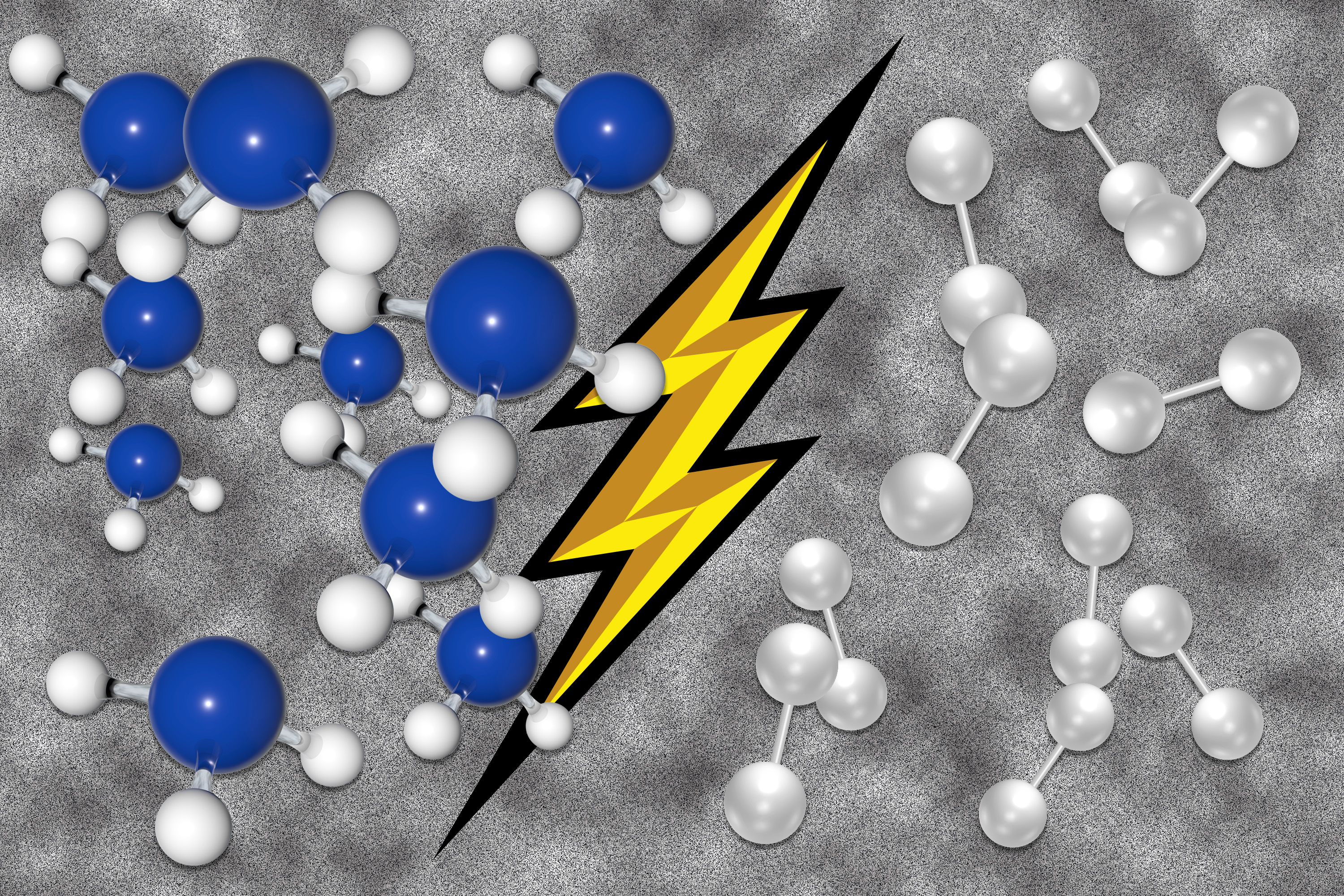
MIT researchers have developed a new way to extract pure hydrogen gas from ammonia and other hydrogen carrier molecules. Their strategy, which uses electricity to speed up the extraction, reduces the temperature and energy required to recover hydrogen from these molecules. As a liquid that is easily stored and transported, ammonia (NH3) is an attractive carrier for hydrogen, which is used in fuel cells, semiconductor manufacturing, chemical processing, and other applications. However,...
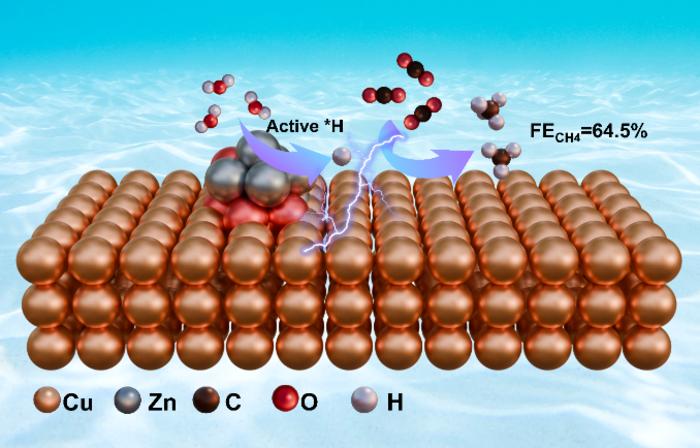
image: CuZn800@C was constructed via solvothermal method and utilizes the high-temperature volatility of zinc to prepare through calcination at different temperatures, which displays a high methane Faradaic efficiency of 64.5% and a remarkable partial current density of -551.3 mA/cm2 at -1.7 V vs. RHE, along with excellent stability. Zn and Cu form a tandem reaction system. Zn sites promote water splitting to provide protons, while Cu sites reduce the energy barrier for *CO hydrogenation....
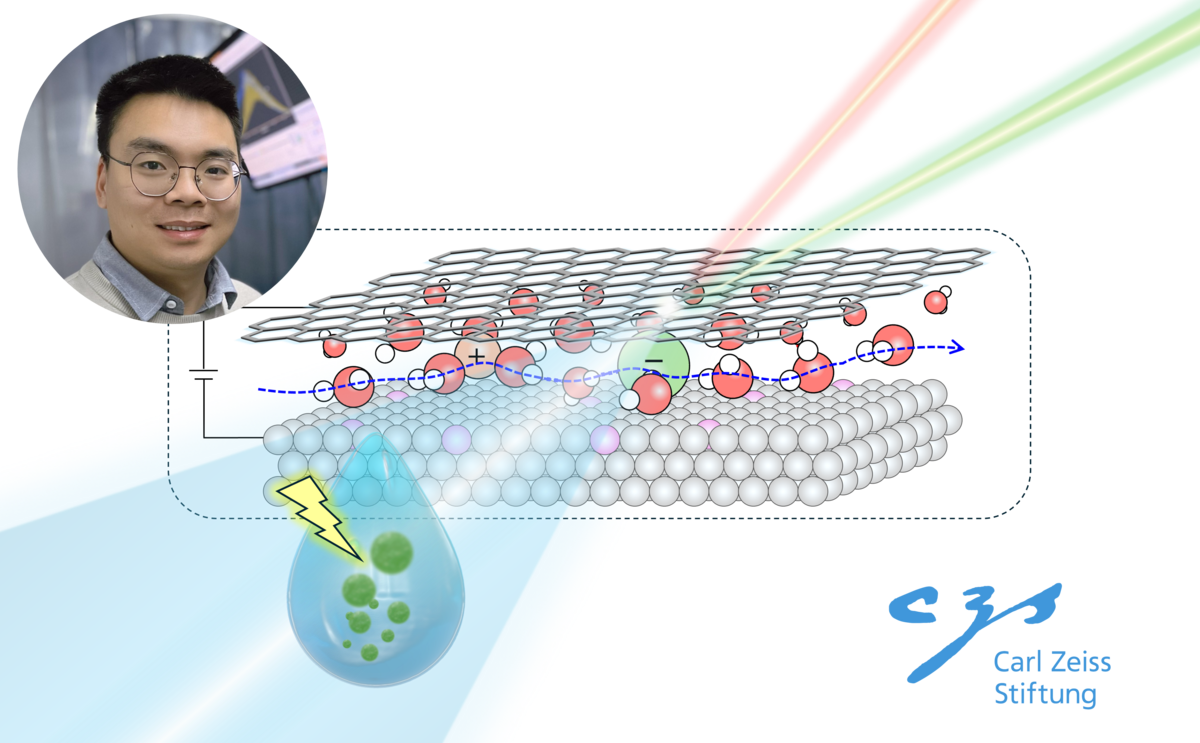
Electrochemical water splitting powered by renewable electricity is a promising pathway to sustainable hydrogen production, but its efficiency and scalability remain limited by costly catalysts and slow reaction kinetics. With €1.5 million in funding from the Carl-Zeiss-Stiftung for five years, Dr. Yongkang Wang and his team will pursue a new approach by visualizing and controlling water at the molecular level, using nanoscale confinement to shape its structure and dynamics at catalytic...
