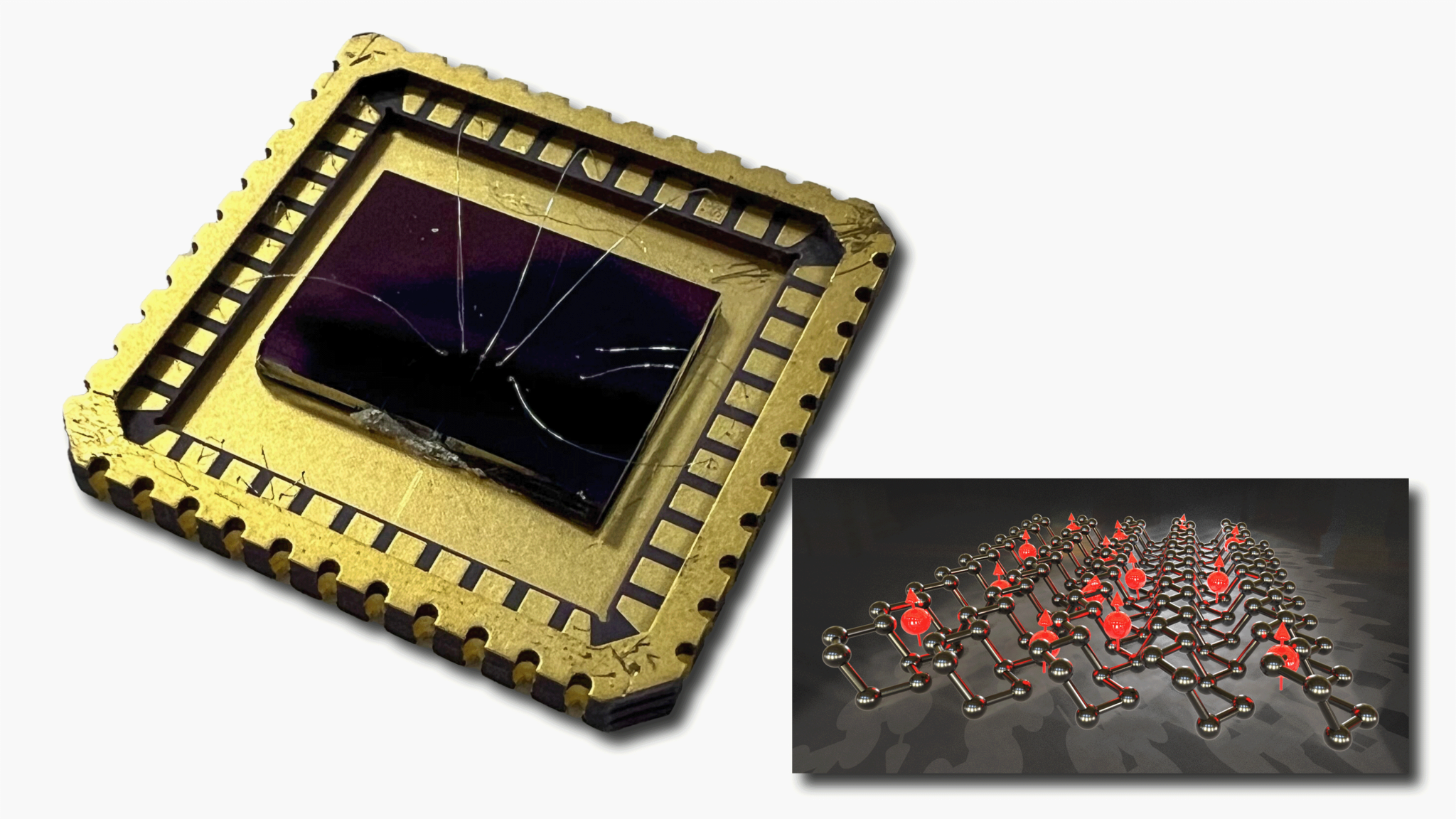
Researchers at CDE have announced a significant discovery in the field of spintronics - a fast-growing approach to power efficiency that could revolutionise the development of low-power electronic devices.
The research collaboration between groups led by Assistant Professor Ahmet Avsar and Professor Barbaros Özyilmaz (both from Materials Science and Engineering) delves into the unique properties of an ultrathin, two-dimensional material called black phosphorus and how it transports spinning electrons.
The team’s findings were published recently in the journal Nature Materials.
Unlike traditional electronics, which rely on the movement of electrical charge, spintronics utilises the intrinsic spin of electrons to create more energy-efficient devices.
Electrons have a spin state of "up" or "down" causing the electrons to act like tiny magnets and manipulating this state has been seen by researchers as crucial for achieving lower power operation in electronic devices. This is because the spin motion of electrons inherently dissipates far less heat than the movement of electrical charge used in traditional electronics.
'The backbone of spintronics'
Whilst the phenomenon of spin itself has been widely studied, the challenge has been finding a material with the optimal properties for creating the channels that transport spins.
“Choosing the right material is paramount in spintronics,” said Prof Özyilmaz.
“Highly efficient and functional spin channel materials are the backbone of spintronics devices, allowing us to manipulate and control spins for diverse applications."
Black phosphorus is a unique form of phosphorus with a distinct puckered or corrugated crystal structure. The researchers found that this property allows it to transport spinning electrons in a specific direction, making it quite different from other materials.
Dr Avsar explained: "The crystal structure of black phosphorus imparts directional characteristics to spin transport, offering new possibilities for controlling spintronics devices."
To understand how the material behaves, the researchers created very thin spintronics devices using black phosphorus. They then studied how spinning electrons move in different directions by injecting them into the material and measuring the resulting signal.
When they applied a strong magnetic field to the black phosphorus layer, the spinning electrons became much more noticeable, changing how they interacted with their surroundings and making them last at least six times longer.
“Our research also found that black phosphorus enables spinning behaviour to be controlled electrically. We can achieve very long-distance spin diffusion or completely halt its diffusion by simply applying an electric field,”said Dr Avsar.
“This, along with its exceptional ability to direct spin transport, makes black phosphorus a special material for manipulating spins which is a major step forward in the world of spintronics.”
The research team is now exploring how this discovery can be applied to new spintronic devices that can be controlled in a more advanced way, not just by the basic spinning states but also by taking advantage of the unique spinning characteristics to direct the flow of spins.
They believe this could lead to exciting possibilities for low-power, highly functional electronic devices.
Their discovery is particularly important as traditional computer chips approach their technological limitations in terms of the number of transistors they can accommodate. This has led to strong interest in the semiconductor industry for alternative technologies that enable smaller, low-energy chips with high processing speed and storage capacity.
Spintronics, with its potential avenue for creating more energy-efficient devices, is one promising solution and the team’s findings related to black phosphorus contribute a novel and crucial dimension to the advancements in this field.
Reference
Highly anisotropic spin transport in ultrathin black phosphorus
Luke Cording, Jiawei Liu, Jun You Tan, Kenji Watanabe, Takashi Taniguchi, Ahmet Avsar & Barbaros Özyilmaz
https://www.nature.com/articles/s41563-023-01779-8
National University of Singapore
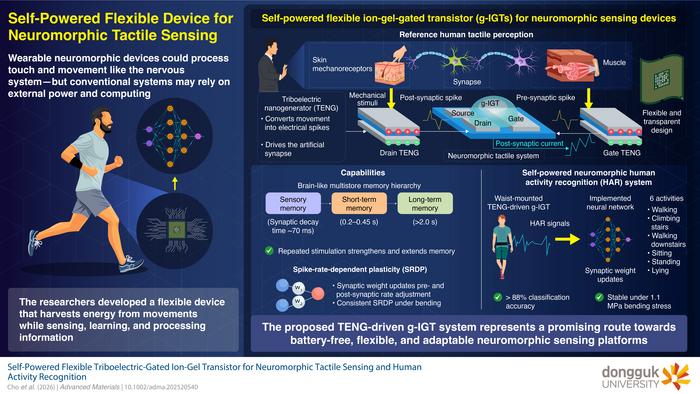
The proposed TENG-driven g-IGT is a flexible, self-powered neuromorphic device capable of reproducing multiple memory states and spike-rate-dependent learning Neuromorphic devices, which are designed to emulate aspects of biological neural networks, are promising candidates for developing low-power and intelligent sensing technologies, including wearable applications. Among the device architectures explored for neuromorphic computing, graphene-channel ion-gel-gated transistors (g-IGTs) are...
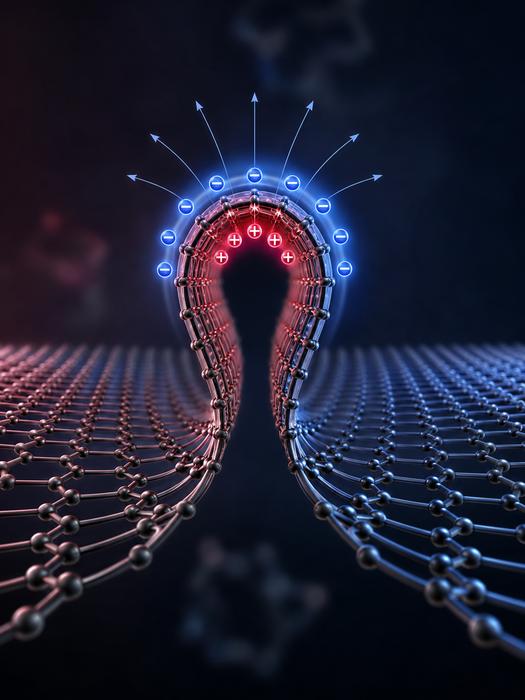
Rice University researchers have shown that sub-nanometer wrinkles in graphene generate flexoelectric charge separation, reshaping local electrical behavior through curvature alone. Extreme bending produces polarization far stronger than in larger systems and may enable geometry-controlled electronics without chemical doping. Published in Advanced Materials.
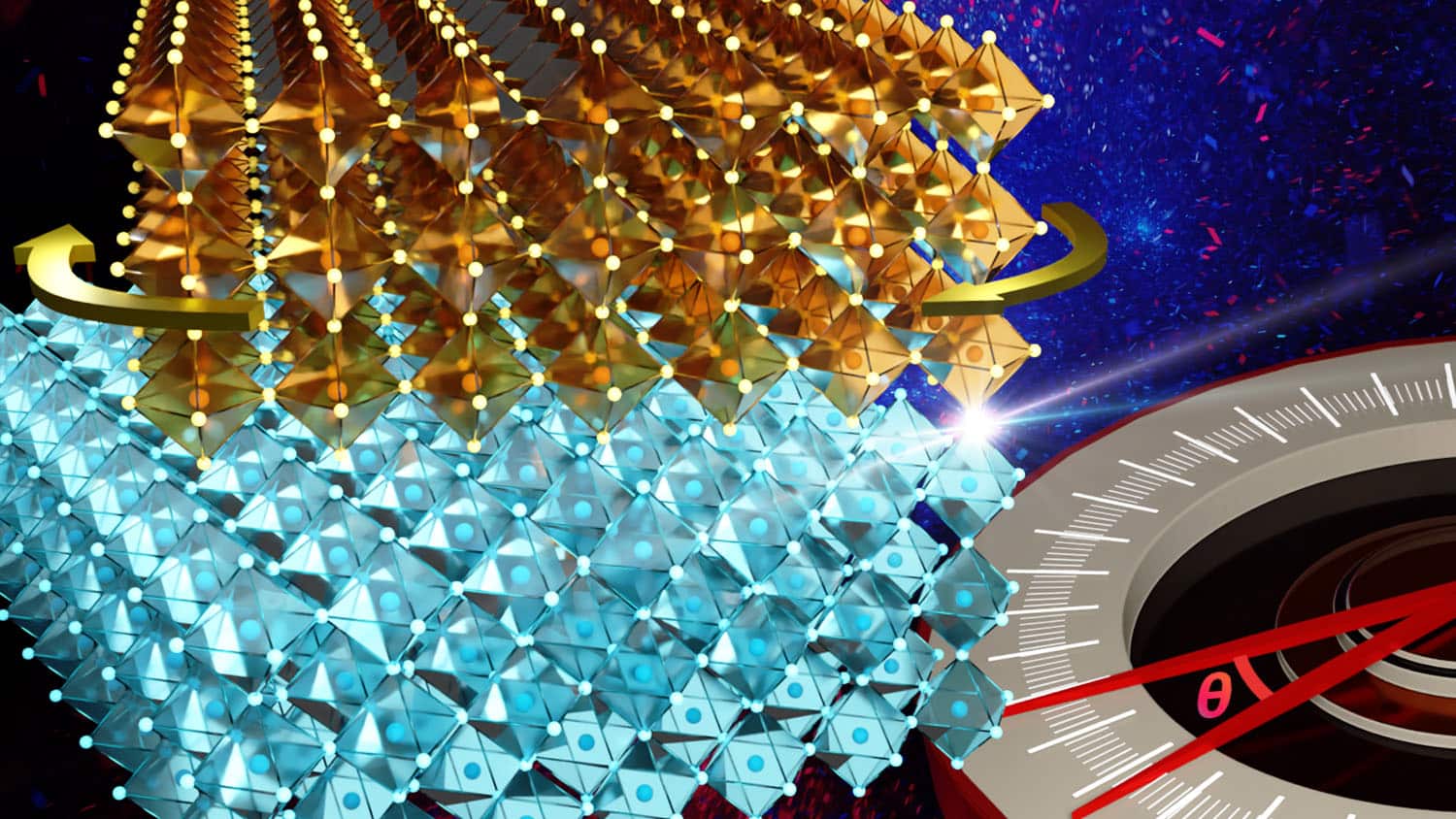
Researchers at NC State have extended twistronics beyond van der Waals materials into strongly bonded crystalline oxides. By stacking sodium niobate membranes with twist angles controlled down to 0.1 degrees, and confirming results via synchrotron X-ray diffraction, the team found interlayer bonds distort the atomic lattice, shifting phase structure and domain configuration. The technique works at near-millimeter scale, far larger than typical twistronic devices, marking a real step toward pract
