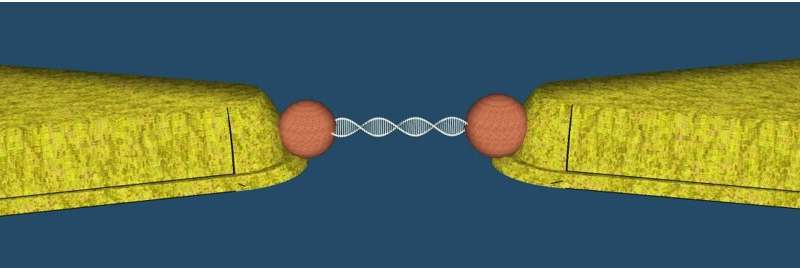
DNA molecules express heredity through genetic information. However, in the past few years, scientists have discovered that DNA can conduct electrical currents. This makes it an interesting candidate for roles that nature did not intend for this molecule, such as smaller, faster and cheaper electric circuits in electronic devices, and to detect the early stages of diseases like cancer and COVID-19.
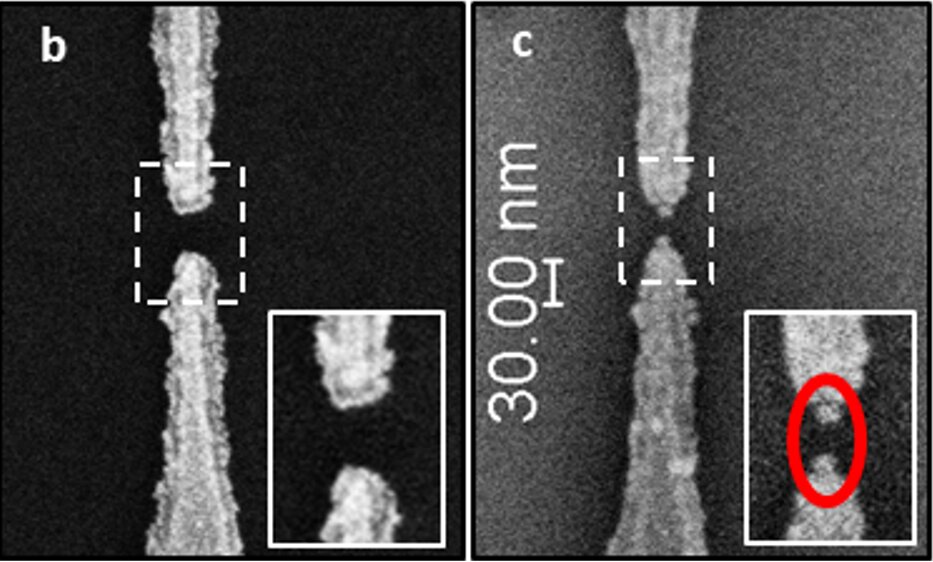
In a recent study published in Nature Nanotechnology, Hebrew University of Jerusalem (HU)'s Professor Danny Porath and his team at HU's Institute of Chemistry and the Center for Nanoscience and Nanotechnology, helped move the needle closer to such applications by demonstrating a highly reliable method to measure electric currents that pass through a DNA molecule. They were able to locate and identify individual molecules between the electrodes and to measure significant electric currents in individual DNA molecules. Their most surprising finding was that the current passes through the DNA backbone, contrary to prior assumptions in the scientific community that the current flowed along DNA base pairs. "Our method's high degree of reliability, experimental reproducibility and stability allows for a wide range of experiments in which researchers may learn about the conduction properties of DNA and bring the field closer to creating DNA-based medical detectors and electronic circuits," said Porath.
Team member HU Ph.D. student Roman Zhuravel overcame long-held technical difficulties to develop a technique that could reliably attach a single DNA molecule to electric contacts.
To verify that most of the current passes through the backbone, he created discontinuities in the backbone itself—on both sides of the double helix—and saw that in this case, there was no current.
For Porath, these findings are a career highlight: "We were able to debunk a 20-year-old paradigm. While many technical hurdles still need to be worked out, we've taken a big step toward the holy grail of building a DNA-based electronic circuit."
Reference:
Backbone charge transport in double-stranded DNA
Roman Zhuravel, Haichao Huang, Georgia Polycarpou, Savvas Polydorides, Phani Motamarri, Liat Katrivas, Dvir Rotem, Joseph Sperling, Linda A. Zotti, Alexander B. Kotlyar, Juan Carlos Cuevas, Vikram Gavini, Spiros S. Skourtis & Danny Porath
Nature Nanotechnology (2020)
DOI: 10.1038/s41565-020-0741-2
Contact:
Danny Porath
Institute of Chemistry and The Center for Nanoscience and Nanotechnology
The Hebrew University of Jerusalem
porath@chem.ch.huji.ac.il
The Hebrew University of Jerusalem
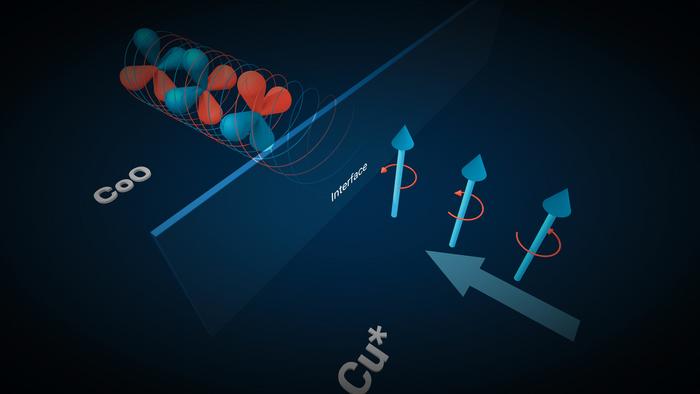
Researchers at Johannes Gutenberg University Mainz (JGU) are the first to directly utilize orbital currents without the need for conversion of the orbital current into a spin current. “We have thus realized the first purely orbitronic device approach,” said Dr. Christin Schmitt, a scientist in the research group of Professor Mathias Kläui at the JGU Institute of Physics. Orbitronics is a promising technology for future memory devices, as it could enable the realization of large-scale storage...
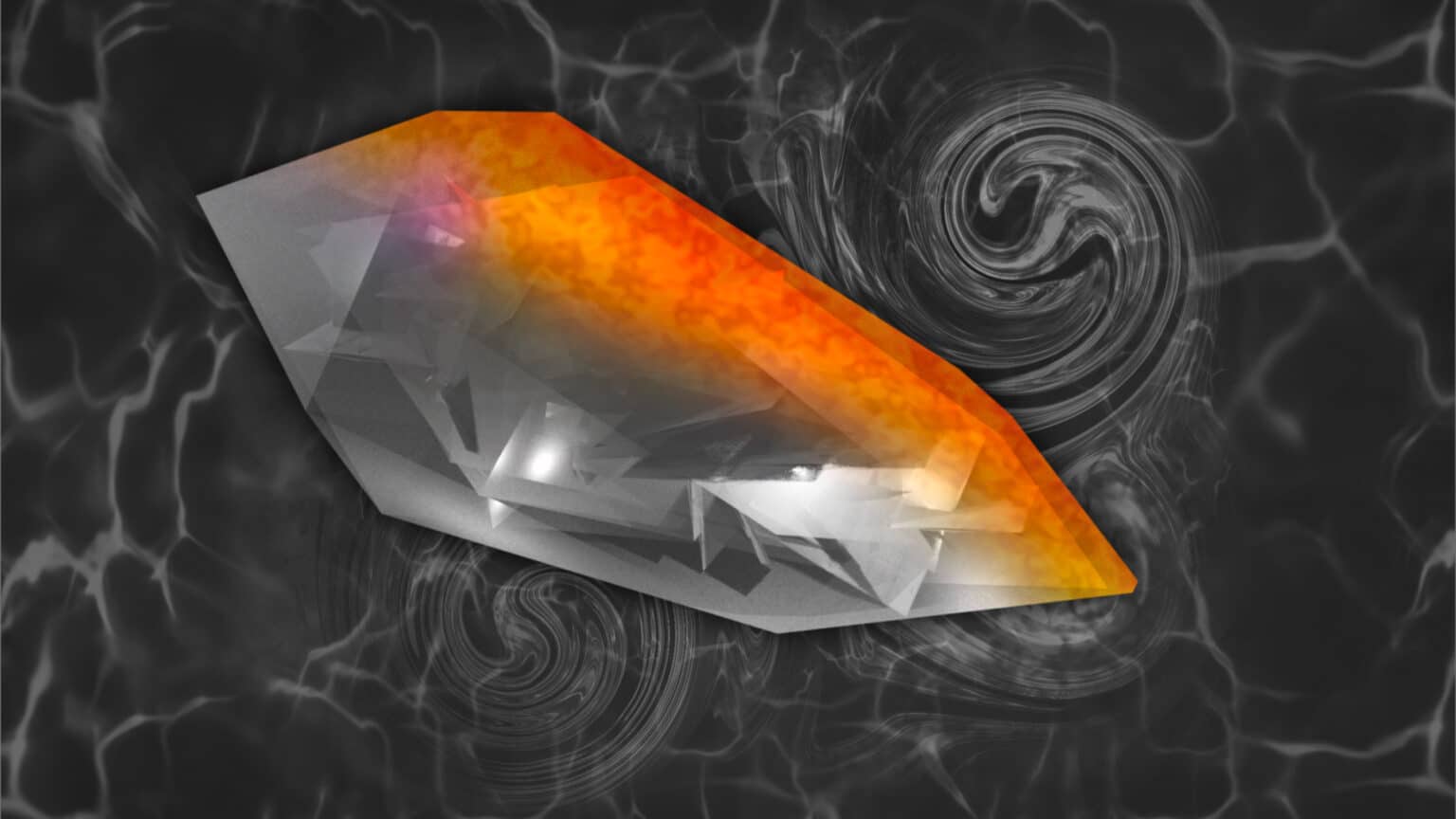
In a new study, an international group of researchers has found that chiral phonons can create orbital current without needing magnetic elements – in part because chiral phonons have their own magnetic moments. Additionally, this effect can be achieved in common crystal materials. The work has potential for the development of less expensive, energy-efficient orbitronic devices for use in a wide array of electronics. All electronic devices are based upon the charge of an electron, and electron...
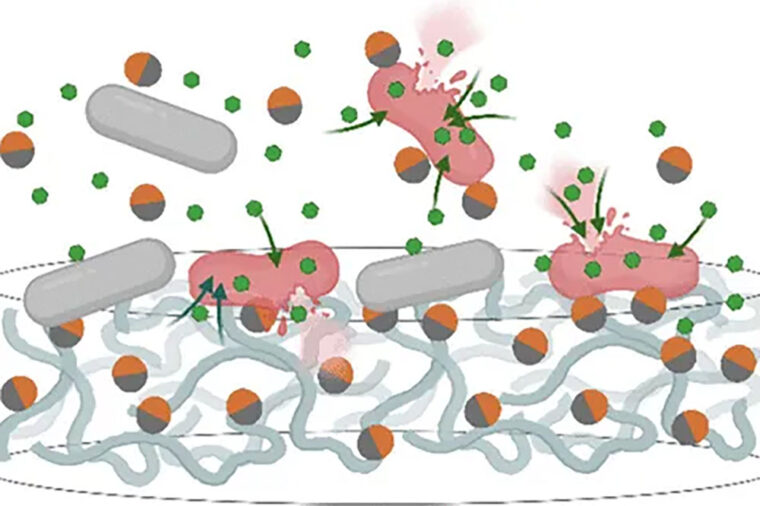
Over the decades, many strains of disease-causing bacteria have evolved defenses to even the most potent antibiotics, setting off a growing health crisis. The rise of antibiotic-resistant “superbugs” has also set off an arms race. As germs find new ways to withstand drugs, researchers are looking for new ways to break down their defenses. In a significant step forward, a research team led by Yan Yu, the Art Krieg Professor of Chemistry, in Arts & Sciences, and of biomedical engineering, at th...
