Singapore University of Technology and Design (SUTD)
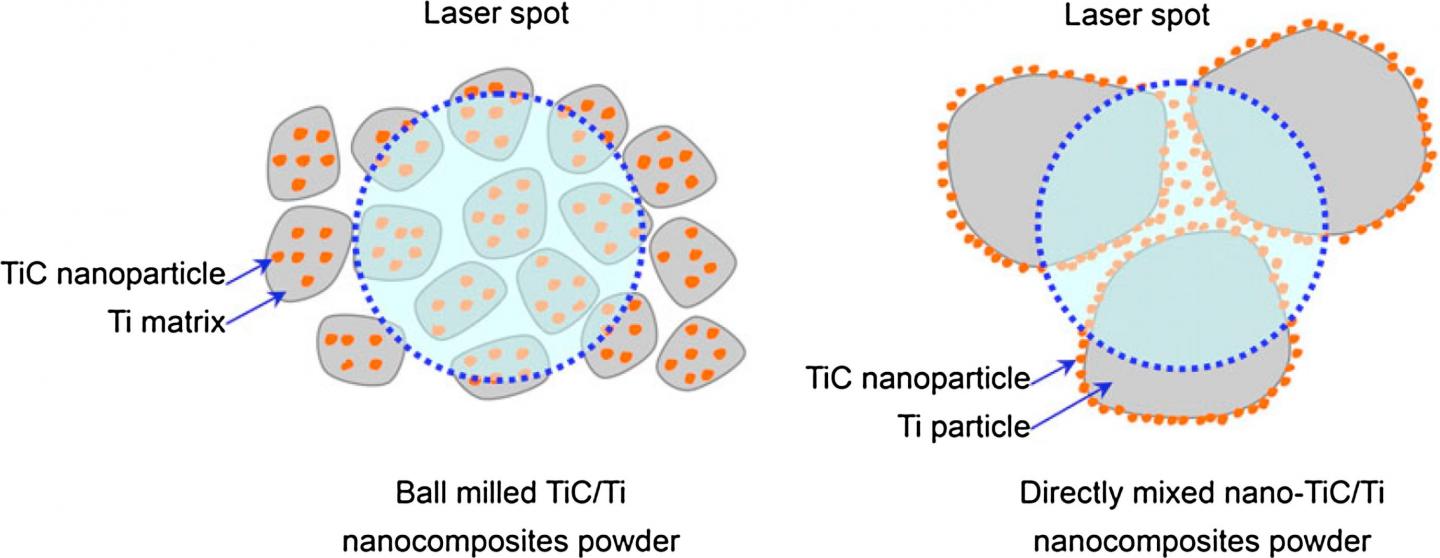
Metal Matrix Nanocomposites (MMNCs) are increasingly used in industries such as automotive, aerospace and military due to their excellent combination of high strength, thermal stability, ductility and isotropy. However, despite MMNCs' superior properties and growing interest, the complex processing and inadequate economic efficiency have limited the applications of MMNCs. High energy consumption is still essential to disperse the reinforcement to achieve microstructural homogeneity and advanced mechanical properties in these materials.
Selective laser melting (SLM), also known as laser powder bed fusion (L-PBF), is an additive manufacturing (AM) technology applied to metals and ceramics, and has shown promising potential for fabrication of unique structures and properties such as MMNCs. Using high power laser, SLM allows for quick production of three-dimensional (3D) parts with complicated shapes directly from powder materials without the time-consuming mold design process. This reduces production cost and lead time while delivering customized MMNCs parts for automotive, aerospace, electronics and biomedical industries.
However, due to the lack of comprehensive understanding of the defects unique to SLM as well as the fabrication and performance of nanocomposites with SLM, researchers from Singapore University of Technology and Design (SUTD) and their research collaborators set out to gain a thorough understanding of the scientific and technological knowledge. They reviewed state of the art research from the perspective of materials and SLM processing parameters. Their paper was published in Progress in Materials Science, a journal that publishes authoritative reviews of recent advances in the science of materials.
An in-depth review of the fabrication considerations related to nanocomposites was also conducted including the materials and SLM processing parameters, emphasizing on physical properties and preparation of powders (refer to image). Thereafter, mechanical properties of MMNCs and the corresponding enhancing mechanisms were addressed to provide a deeper understanding of MMNCs.
"MMNCs have always been a huge interest for material scientists. With the advancement in advanced manufacturing, particularly additive manufacturing, there is now greater potential in achieving high quality MMNCs. In our review, laser powder bed fusion is chosen as the process in focus as it has proven its capabilities in fabricating functional parts from metals and ceramics," explained principal investigator and co-author Professor Chua Chee Kai from SUTD.
The review paper also addressed the defects unique to SLM technology associated with nanoparticles. The applications of MMNCs especially those fabricated with SLM processing were also listed and compared.
"One of the key challenges in AM is the lack of 'printable' materials. We believe this comprehensive review provides a timely overview and understanding of SLM for MMNCs by focusing on the merits while not ignoring the limitations. This hopefully will encourage more researchers to explore this highly interesting area," said co-author Dr Sing Swee Leong from Nanyang Technological University.
Particle-reinforced metal matrix nanocomposites fabricated by selective laser melting: A state of the art review
W. H. Yu, S. L. Sing, C. K. Chua, C. N. Kuo, X. L. Tiana
Progress in Materials Science Volume 104, July 2019, Pages 330-379
DOI: 10.1016/j.pmatsci.2019.04.006
Contact information:
Chua Chee Kai
Professor and Head of Pillar for Engineering Product Development at SUTD
cheekai_chua@sutd.edu.sg
Phone: +65 6303 6662
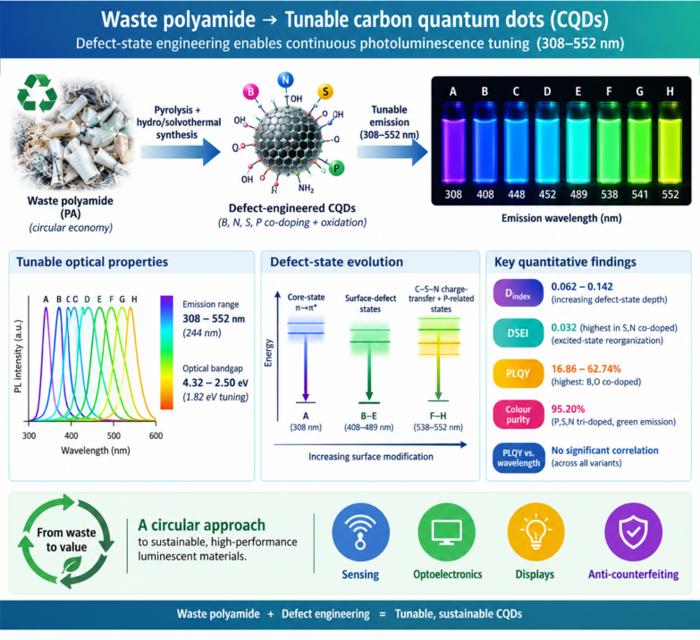
Waste polyamide-derived CQDs show continuous photoluminescence tuning from 308 to 552 nm through sequential defect-state engineering, with optical transition energies decreasing from 4.32 to 2.50 eV. @Christian Ebere Enyoh from Saitama University Carbon quantum dots (CQDs) are fluorescent carbon nanomaterials with potential applications in sensing, optoelectronics, displays, anti-counterfeiting, and environmental technologies. Their optical properties can be adjusted by modifying the carbon...
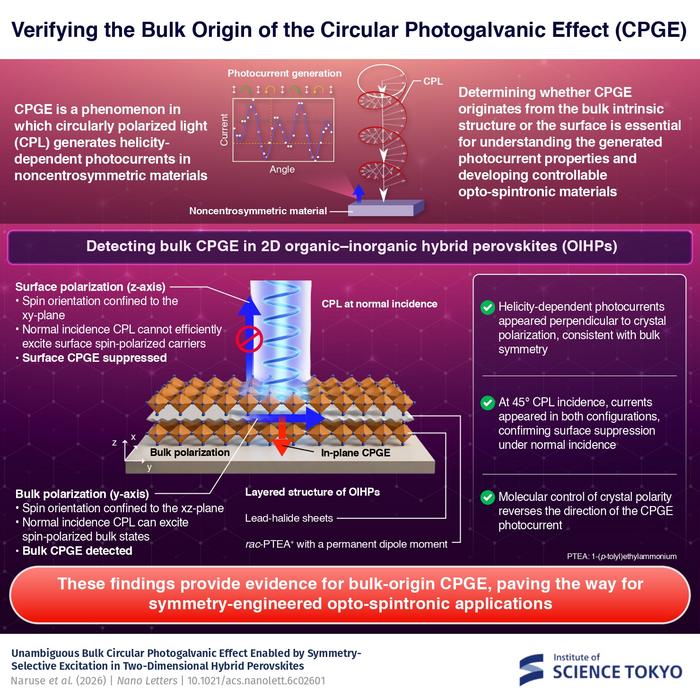
The researchers used circularly polarized light at normal incidence and found that helicity-dependent photocurrents appeared perpendicular to the crystal’s polarization but vanished when measured parallel to it, supporting a bulk origin of CPGE. @Institute of Science Tokyo The circular photogalvanic effect (CPGE), a phenomenon that generates helicity-dependent photocurrents in noncentrosymmetric materials, can originate purely from a crystal's internal structure without contribution from the...
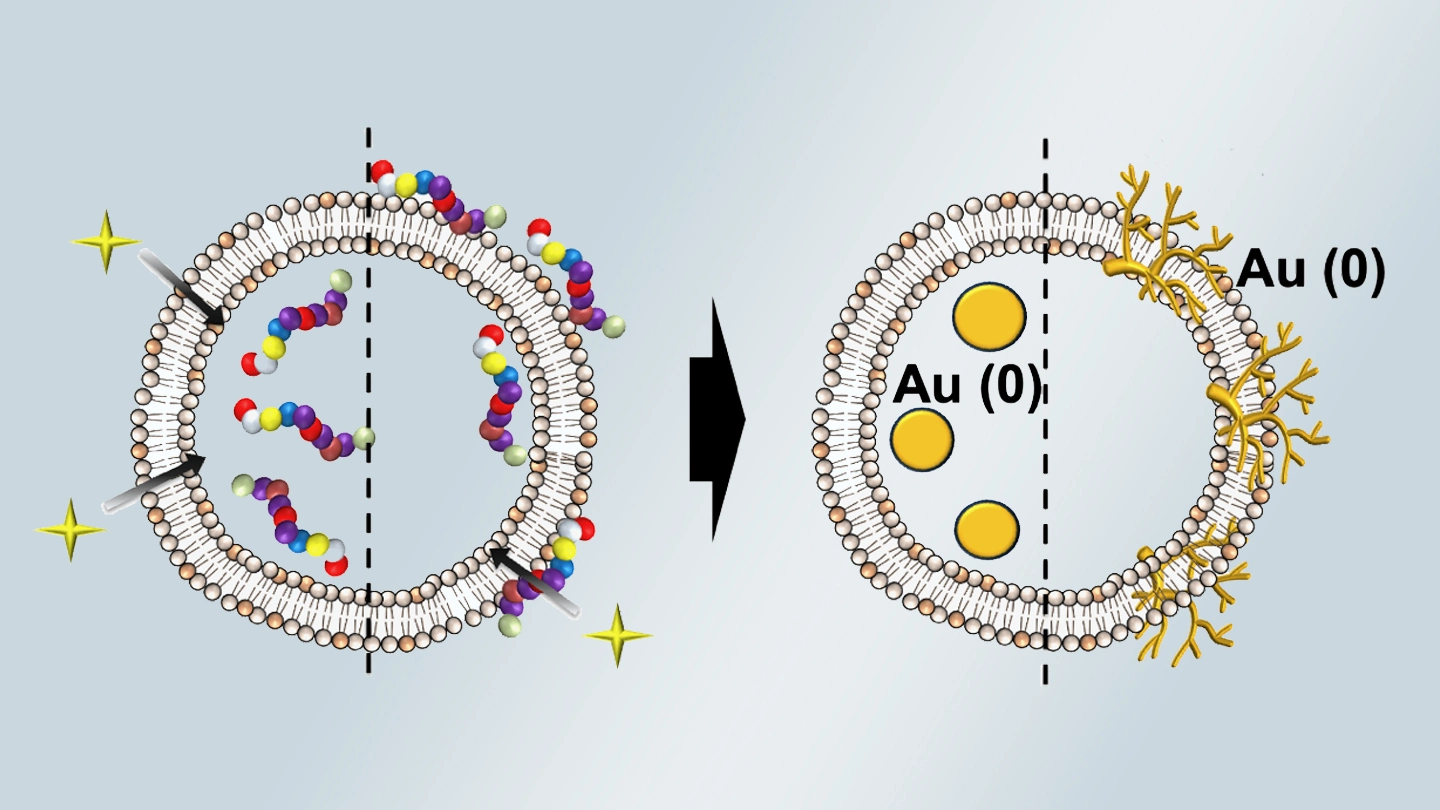
Summary of gold nanoparticle growth programming in liposome based on localization of biomineralization peptide The position of biomineralization peptides within liposomes can influence how gold nanoparticles grow, reports a research team from Institute of Science Tokyo. Peptides localized at the membrane interface promote branched structures, while those confined to the liposome interior favor spherical nanoparticles. The findings offer a new strategy for controlling nanoscale reaction...
