Using barcodes to label and identify everyday items is as familiar as a trip to the supermarket. Imagine shrinking those barcodes a million times, from millimetre to nanometre scale, so that they could be used inside living cells to label, identify and track the building blocks of life or, blended into inks to prevent counterfeiting. This is the frontier of nanoengineering, requiring fabrication and controlled manipulation of nanostructures at atomic level - new, fundamental research, published in Nature Communications, shows the possibilities and opportunities ahead.
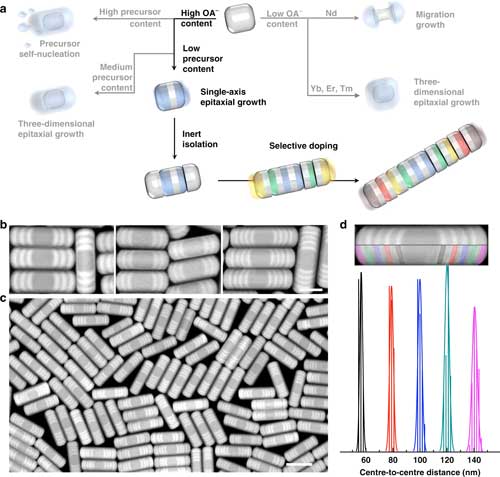
The University of Technology Sydney (UTS) led collaboration developed a nanocrystal growth method that controls the growth direction, producing programmable atomic thin layers, arbitrary barcoded nanorods, with morphology uniformity. The result is millions of different kinds of nanobarcodes that can form a "library" for future nanoscale sensing applications.
The researchers anticipate that such barcode structures will attract broad interests in a range of applications as information nanocarriers for bio-nanotechnology, life sciences, data storage, once they are incorporated into a variety of matrixes.
Lead author Dr Shihui Wen said the research provides a benchmark that will open up the potential for engineering smaller nanophotonics devices.
"The inorganic nanobarcode structures are rigid, and it is easy to control the composite, thickness and distance accuracy between different functional segments for geometrical barcoding beyond the optical diffraction limit . Because they are chemically and optically stable, the nanoscopic barcodes can be used as carriers for drug delivery and tracking into the cell, once the surface of the barcode structures is further modified and functionalized with probe molecules and cargos," Dr Wen, from the UTS Institute of Biomedical Materials and Devices (IBMD), said.
The team also had an additional breakthrough with the development of a novel, tandem decoding system, using super-resolution nanoscopy to characterize different optical barcodes within the diffraction limit.
Senior author, UTS IBMD Director, Professor Dayong Jin said there was no commercial system available for this type of super resolution imaging.
"We had to build the instrumentation to diagnose the sophisticated functions that can be intentionally built into the tiny nanorod. These together allow us to unlock the further potential for placing atomic molecules where we want them so we can continue to miniaturise devices. This was the first time we were able to use super resolution system to probe, activate and readout the specific functional segment within the nanorod.
"Imagine a tiny device, smaller than one thousandth the width of a human hair, and we can selectively activate a particular region of that device, see the optical properties, quantify them. This is the science now showing many new possibilities," he said. Professor Jin is also the co-director of UTS-SUStech Joint Research Centre.
The researchers envisage the developed nanoscale optical devices could be simultaneously used for tagging different cellular species.
"These devices are also readily applicable for high-security-level anticounterfeiting when different batches of them are blended with inks and can be readily printed on high-value products for authentication.' Dr Wen said.
Contact
Dr. Shihui Wen
Institute for Biomedical Materials & Devices (IBMD), Faculty of Science, University of Technology Sydney
Shihui.Wen@uts.edu.au
Reference
Nanorods with multidimensional optical information beyond the diffraction limit
Shihui Wen, Yongtao Liu, Fan Wang, Gungun Lin, Jiajia Zhou, Bingyang Shi, Yung Doug Suh & Dayong Jin
Nature Communications volume 11, Article number: 6047 (2020)
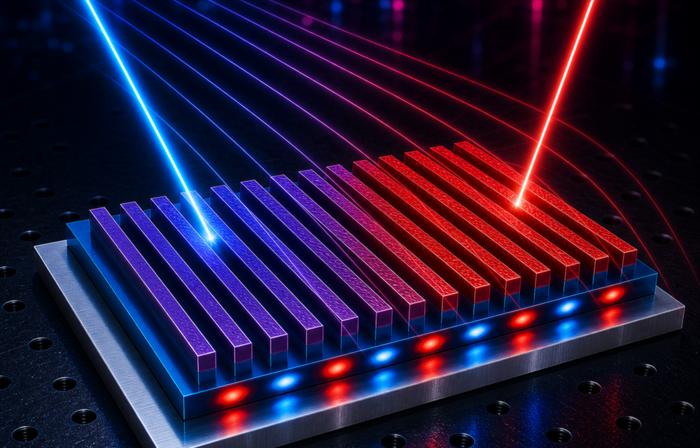
certain wavelength and direction will also emit heat in the same ways. This fundamental relationship, known as reciprocity, limits our ability to independently control heat absorption and heat emission. But if absorption and emission could be separated, engineers could design devices that absorb heat from one direction while emitting it in another. By ‘steering’ thermal energy, they could create more efficient thermal management, energy conversion, infrared sensing, and thermal communicati...
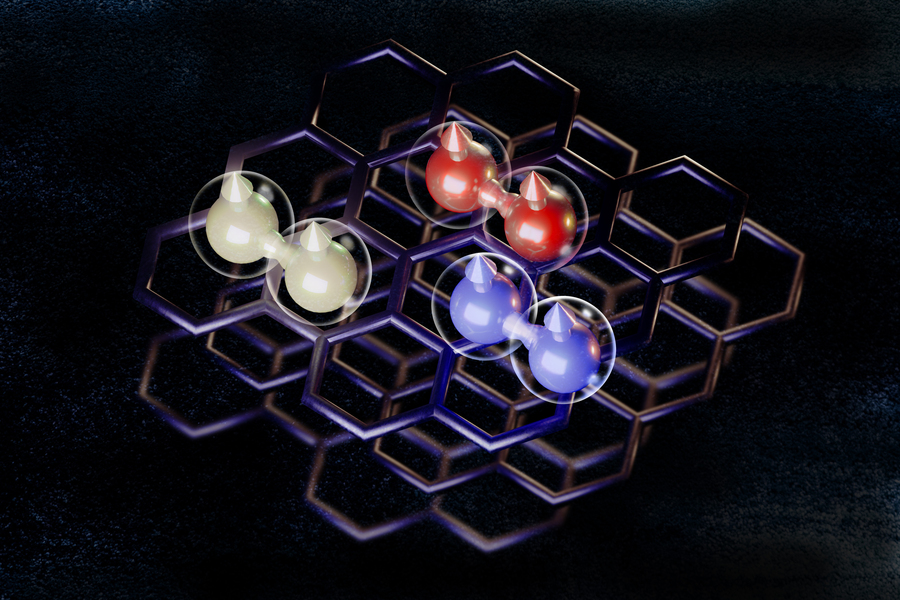
MIT researchers have found that rhombohedral graphene — a naturally occurring staircase-like stack of four or five atomically thin carbon layers found in ordinary graphite — can host multiple distinct superconducting states simultaneously, a rarity among known superconductors. Publishing in Nature, the team reports that three of these states not only survive exposure to magnetic fields up to around 9 tesla (roughly 180,000 times Earth's magnetic field), which would normally destroy supercondu...
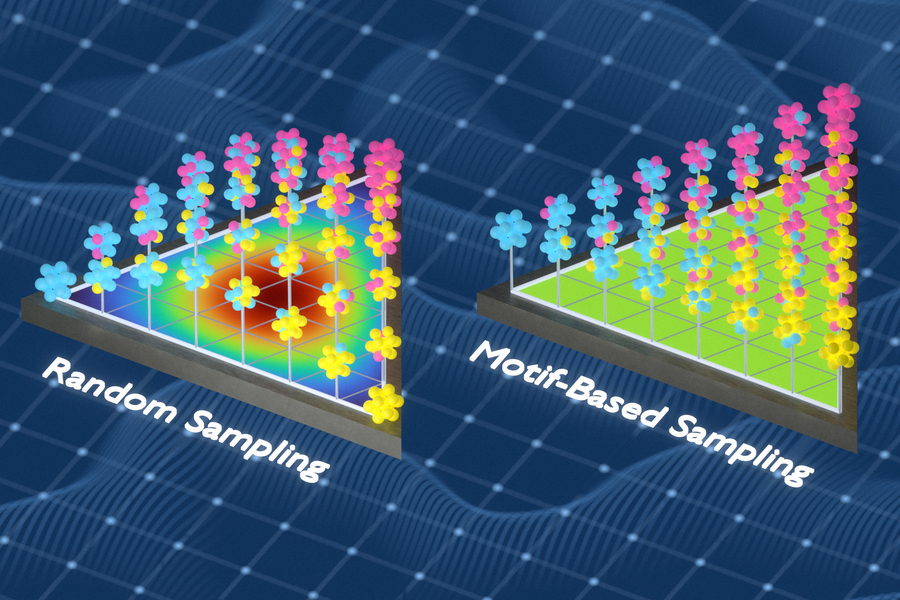
MIT researchers have developed a new approach that dramatically improves the modeling of chemically disordered metal alloys, a long-standing challenge in materials science. Traditional simulation techniques struggle with the complex atomic arrangements in real-world alloys. The team addressed this by creating smarter training datasets for machine-learning models that better capture the diverse local chemical environments in disordered materials. Using information theory to generate more repre...
This week in nanotech
$816M raised
7 funding rounds · 34 deals tracked
New products
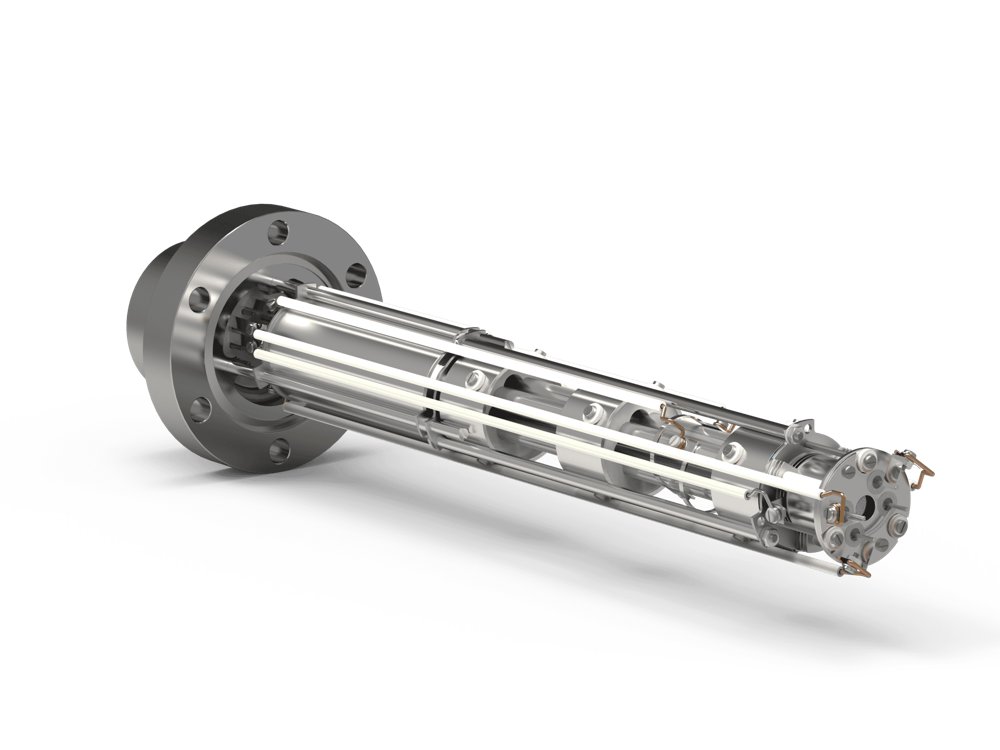 DLS-1 Mass Spectrometer for Fusion Gas AnalysisHiden Analytical Featured
 Nion-compatible In Situ STEM Holders for Electrical BiasingHummingbird Scientific Featured
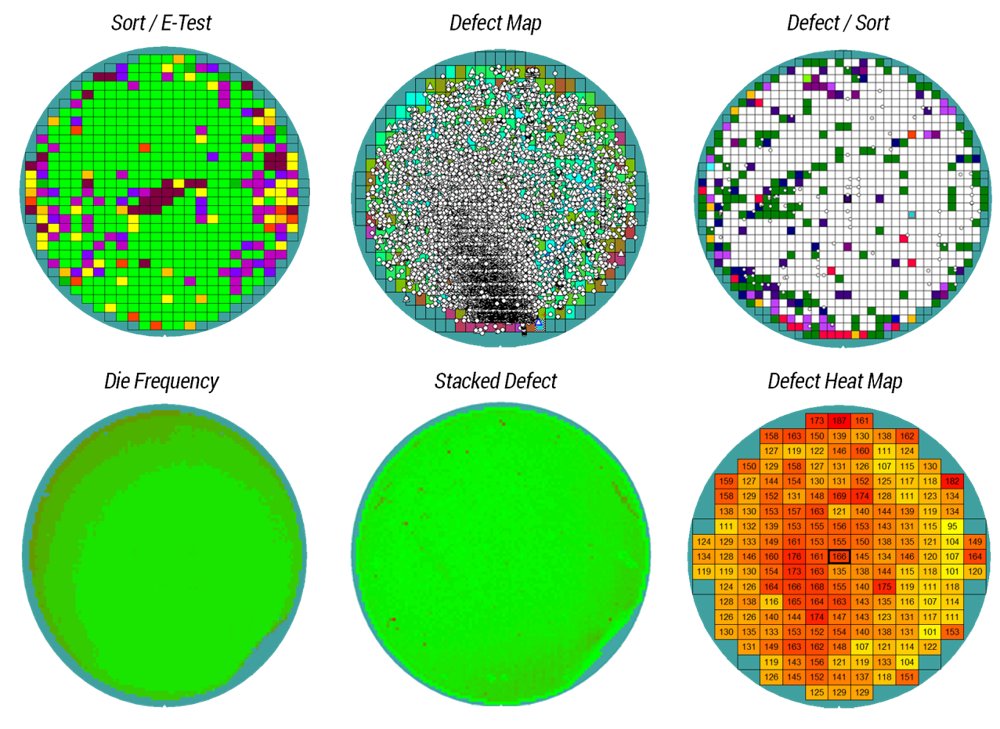 Discover Mapping SuiteOnto Innovation
Market insights
Last 30 days: Quantum Technologies drew the most money: $3.17B.
Money raised per month