University of Houston (UH)
The explosion of mobile electronic devices, electric vehicles, drones and other technologies have driven demand for new lightweight materials that can provide the power to operate them. Researchers from the University of Houston and Texas A&M University have reported a structural supercapacitor electrode made from reduced graphene oxide and aramid nanofiber that is stronger and more versatile than conventional carbon-based electrodes.
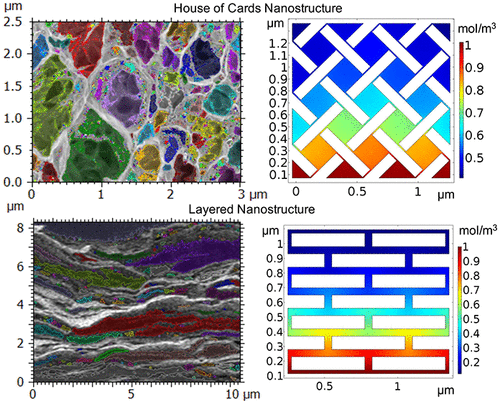
The UH research team also demonstrated that modeling based on the material nanoarchitecture can provide a more accurate understanding of ion diffusion and related properties in the composite electrodes than the traditional modeling method, which is known as the porous media model.
"We are proposing that these models based on the nanoarchitecture of the material are more comprehensive, detailed, informative and accurate compared to the porous media model," said Haleh Ardebili, Bill D. Cook Associate Professor of Mechanical Engineering at UH and corresponding author for a paper describing the work, published in ACS Nano.
More accurate modeling methods will help researchers find new and more effective nanoarchitectured materials that can provide longer battery life and higher energy at a lighter weight, she said.
The researchers knew the material tested - reduced graphene oxide and aramid nanofiber, or rGO/ANF - was a good candidate because of its strong electrochemical and mechanical properties. Supercapacitor electrodes are usually made of porous carbon-based materials, which provide efficient electrode performance, Ardebili said.
While the reduced graphene oxide is primarily made of carbon, the aramid nanofiber offers a mechanical strength that increases the electrode's versatility for a variety of applications, including for the military. The work was funded by the U.S. Air Force Office of Scientific Research.
In addition to Ardebili, co-authors include first author Sarah Aderyani and Ali Masoudi, both of UH; and Smit A. Shah, Micah J. Green and Jodie L. Lutkenhaus, all from A&M.
The current paper reflects the researchers' interest in improving modeling for new energy materials. "We wanted to convey that the conventional models out there, which are porous media-based models, may not be accurate enough for designing these new nanoarchitectured materials and investigating these materials for electrodes or other energy storage devices," Ardebili said.
That's because the porous media model generally assumes uniform pore sizes within the material, rather than measuring the varying dimensions and geometric properties of the material.
"What we propose is that yes, the porous media model may be convenient, but it is not necessarily accurate," Ardebili said. "For state-of-the-art devices, we need more accurate models to better understand and design new electrode materials."
Comparison of nanoarchitecture to porous media diffusion models in reduced graphene oxide/aramid nanofiber electrodes for supercapacitors
Sarah Aderyani, Smit A. Shah, Ali Masoudi, Micah J. Green, Jodie L. Lutkenhaus, and Haleh Ardebili
ACS Nano 2020, 14, 5, 5314–5323
Contact information:
UH Associate Professor of Mechanical Engineering
hardebili@uh.edu
Phone: 713-743-4500
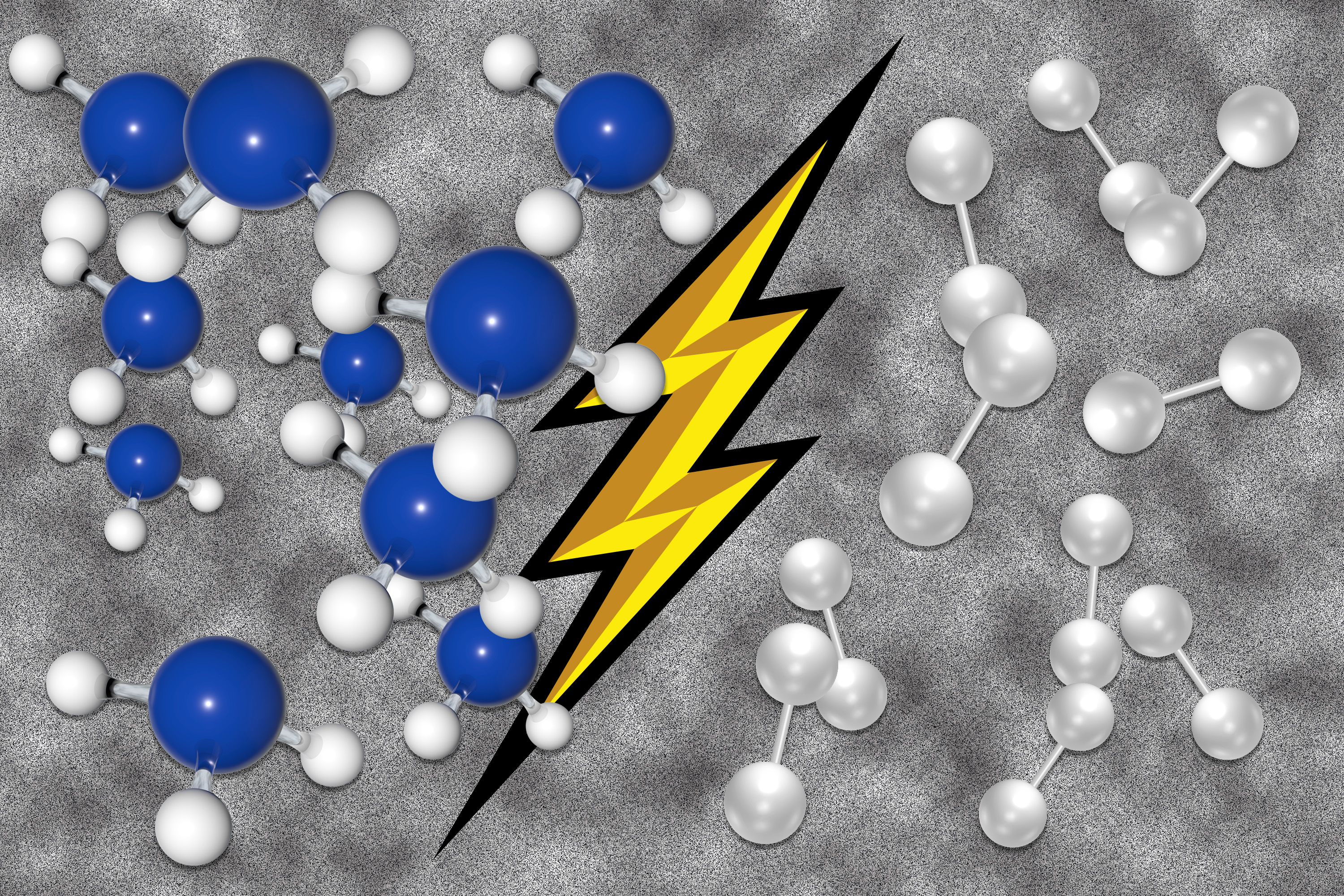
MIT researchers have developed a new way to extract pure hydrogen gas from ammonia and other hydrogen carrier molecules. Their strategy, which uses electricity to speed up the extraction, reduces the temperature and energy required to recover hydrogen from these molecules. As a liquid that is easily stored and transported, ammonia (NH3) is an attractive carrier for hydrogen, which is used in fuel cells, semiconductor manufacturing, chemical processing, and other applications. However,...
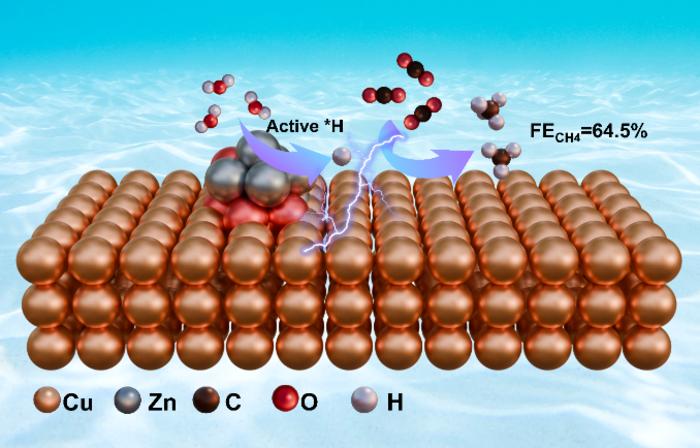
image: CuZn800@C was constructed via solvothermal method and utilizes the high-temperature volatility of zinc to prepare through calcination at different temperatures, which displays a high methane Faradaic efficiency of 64.5% and a remarkable partial current density of -551.3 mA/cm2 at -1.7 V vs. RHE, along with excellent stability. Zn and Cu form a tandem reaction system. Zn sites promote water splitting to provide protons, while Cu sites reduce the energy barrier for *CO hydrogenation....
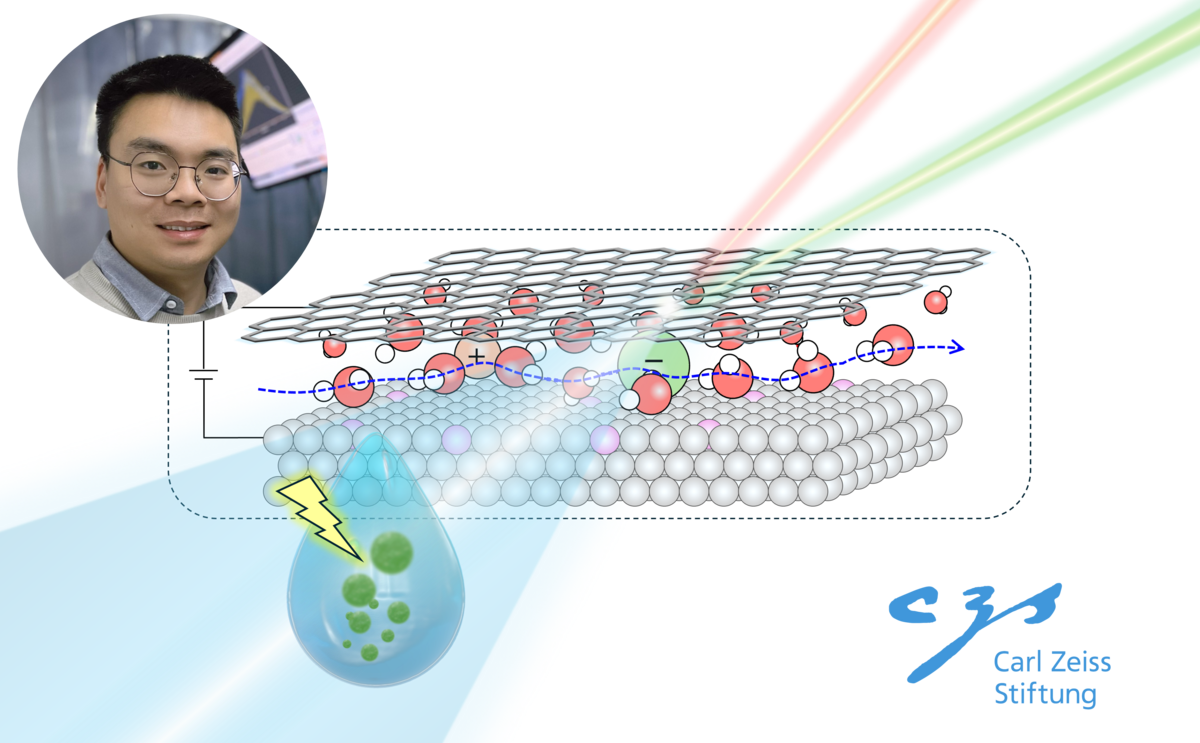
Electrochemical water splitting powered by renewable electricity is a promising pathway to sustainable hydrogen production, but its efficiency and scalability remain limited by costly catalysts and slow reaction kinetics. With €1.5 million in funding from the Carl-Zeiss-Stiftung for five years, Dr. Yongkang Wang and his team will pursue a new approach by visualizing and controlling water at the molecular level, using nanoscale confinement to shape its structure and dynamics at catalytic...






