American Institute of Physics
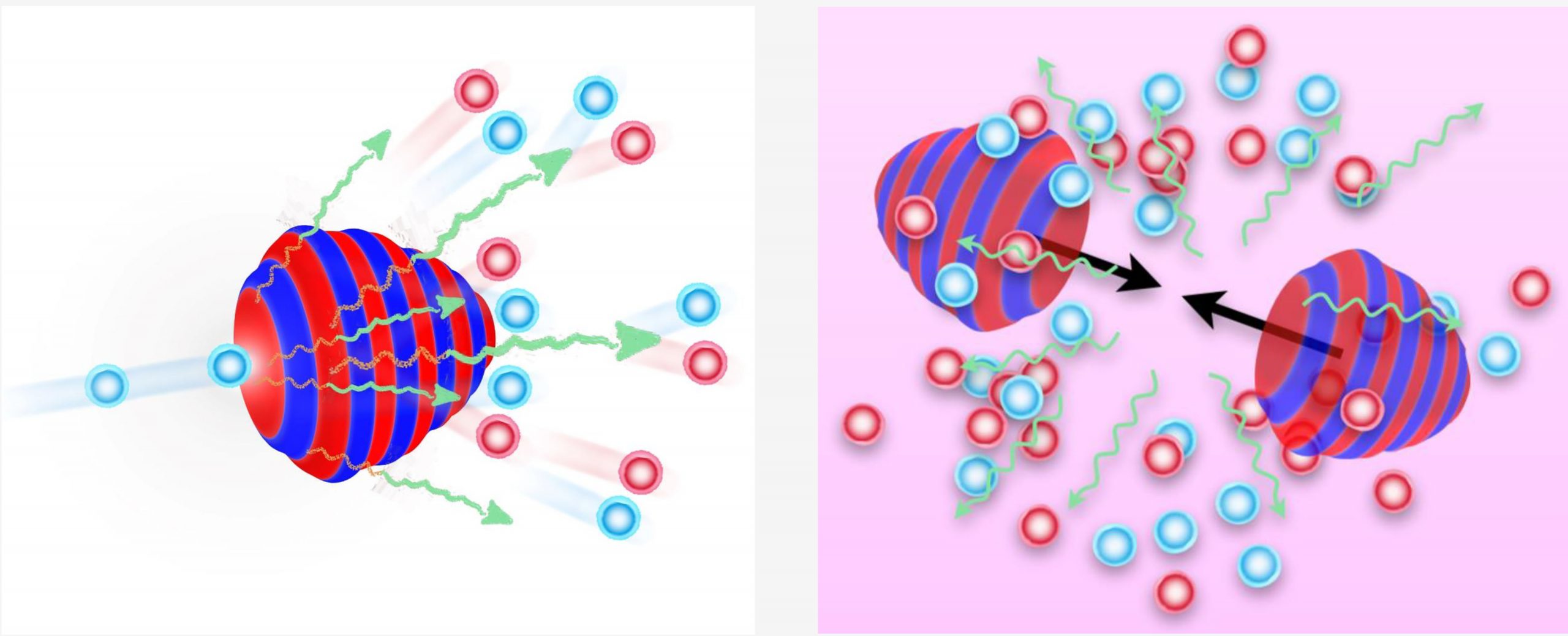
he subject of the 2018 Nobel Prize in physics, chirped pulse amplification is a technique that increases the strength of laser pulses in many of today's highest-powered research lasers. As next-generation laser facilities look to push beam power up to 10 petawatts, physicists expect a new era for studying plasmas, whose behavior is affected by features typically seen in black holes and the winds from pulsars.
Researchers released a study taking stock of what upcoming high-power laser capabilities are poised to teach us about relativistic plasmas subjected to strong-field quantum electrodynamics (QED) processes. In addition, the proposed new study designs for further exploring these new phenomena.
Appearing in Physics of Plasmas, from AIP Publishing, the article introduces the physics of relativistic plasma in supercritical fields, discusses the current state of the field and provides an overview of recent developments. It also highlights open questions and topics that are likely to dominate the attention of people working in the field over the next several years.
Strong-field QED is a lesser-studied corner of the standard model of particle physics that has not been explored at big collider facilities, such as SLAC National Accelerator Laboratory or CERN, the European Organization for Nuclear Research, due to the lack of strong electromagnetic fields in accelerator settings. With high-intensity lasers, researchers can use strong fields, which have been observed in phenomena such as gamma ray emission and electron-positron pair production.
The group explores how the findings could potentially lead to advances in studies of fundamental physics and in the development of high-energy ion, electron, positron and photon sources. Such findings would be crucial for expanding on many types of scanning technology present today, ranging from materials science studies to medical radiotherapy to next-generation radiography for homeland security and industry.
The QED processes will result in dramatically new plasma physics phenomena, such as the generation of dense electron-positron pair plasma from near vacuum, complete laser energy absorption by QED processes, or the stopping of an ultrarelativistic electron beam, which could penetrate a centimeter of lead by a hair's breadth of laser light.
"What kind of new technology these new plasma physics phenomena might translate is largely unknown, especially because the field of QED plasmas itself is a kind of uncharted territory in physics," author Peng Zhang said. "At the current stage, even adequate theoretical understanding is significantly lacking."
The group hopes the paper will help bring the attention of more researchers to the exciting new fields of QED plasmas.
Relativistic plasma physics in supercritical fields
P. Zhang, S. S. Bulanov, D. Seipt, A. V. Arefiev, A. G. R. Thomas
Physics of Plasmas, 2020; 27 (5): 050601
DOI: 10.1063/1.5144449
Contact information:
Assistant Professor in the Department of Electrical and Computer Engineering at Michigan State University (MSU)
pz@egr.msu.edu
Nanoelectronics, Plasmas, & Accelerator Technology - NanoPATh Group
Rhombohedral hexalayer graphene, in which six carbon sheets are stacked with a slight lateral offset like staircase steps, hosts both superconductivity and electrically controllable orbital magnetism, researchers report in Nature Physics. The arrangement yields a rich collection of quantum states in a simple carbon-based material, positioning rhombohedral multilayer graphene as a platform for probing the fundamental mechanisms of superconductivity and magnetism and potentially for new ways of…
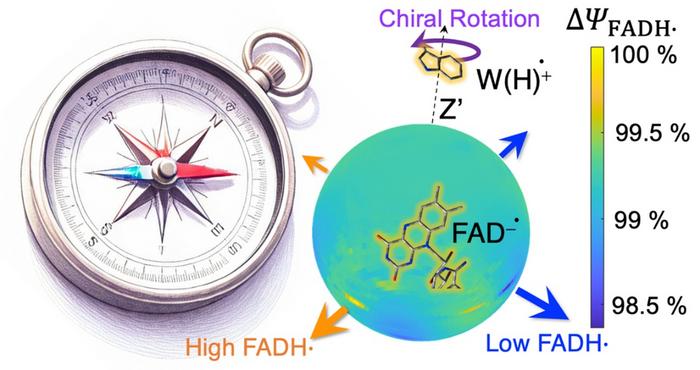
Time-resolved electron paramagnetic resonance spectroscopy of Xenopus cryptochrome-DASH reveals that chiral rotation of an oxidized tryptophan residue can drive chirality-induced spin selectivity, estimated at 8% in one charge-separated state, and shape electron-spin polarization in radical pairs.
Cornell researchers have redrawn the phase diagram of uranium ditelluride, showing the material can host two distinct flavors of superconductivity at once and that the two coexist and interact under pressure. The work settles years of uncertainty and positions uranium ditelluride as the leading candidate for a topological superconductor, a long-sought material that could unlock advances in quantum computing.
This week in nanotech
$10.2M raised
2 funding rounds · 18 deals tracked
New products
 Ti-WCMBN Nanomaterialia Featured
 Nion-compatible In Situ STEM Holders for Electrical BiasingHummingbird Scientific Featured
 SunscreenUnchained Labs
Market insights
Last 30 days: Quantum Technologies was the busiest vertical: 52 of 174 events (30%).
Money raised per month