University of Colorado Boulder (CU Boulder)
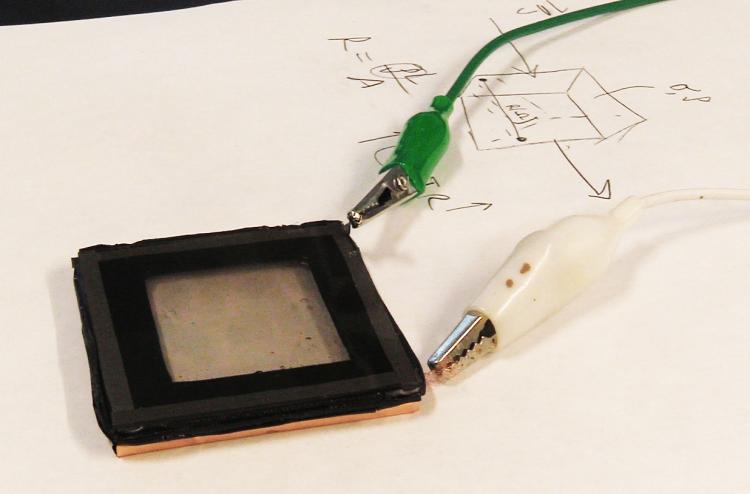
Researchers at the University of Colorado Boulder have developed an improved method for controlling smart tinting on windows that could make them cheaper, more effective and more durable than current options on the market. The research, led by Professor Mike McGehee in the College of Engineering and Applied Science, is described in a new paper this week in Joule and uses a reversible metal electrodeposition process that is different from the current industry standards.
"What we are doing is building an electrochemical cell. We have a transparent electrode and an electrode with metal ions. By switching the voltage, the thin plate metal blocks the light," he said. "It's not at all how other people are achieving the same effect."
The paper explains in detail how metal can be electroplated onto a transparent electrode to block light and then stripped to make the window transparent again by manipulating the voltage. It specifically explores how various electrolytes can be used with different supporting anions to achieve the desired results.
McGehee said smart window technology allows users to adjust the amount of sunlight and heat entering through home or windows without blocking views. Tinting allows for more natural light through home windows while still maintaining privacy and has positive implications for energy reduction and HVAC control in the home or office. Despite the appeal, dynamic windows have yet to achieve extensive commercialization because of many of the problems this paper addresses.
For example, this new process ultimately results in a more desirable neutral color of glass than other technologies and allows for any transparency adjustment all the way from 80 percent tinted down to 0 percent or fully transparent. Whereas many of the windows on the market can only provide up to 70 percent tinting. This transition can be done quickly as well, with 60 percent contrast happening in less than 3 minutes.
The final product is also likely to be less expensive to create than existing technologies. McGehee said potential cost savings were hard to gauge but producing windows with this technology doesn't require large special tools and has a high throughput - meaning the glass can be manufactured rapidly.
PhD candidate and McGehee lab member Tyler Hernandez is the first author on the paper and that the team has already made a 1 square-foot window using this process. They are currently running stability and other tests and the initial results indicate long-term durability of the with no evidence of electrode etching which degrades the overall performance and is a big drawback to other versions on the market.
Car manufactures are also interested in the technology while airplane manufacture Boeing already uses electrochromic windows on their 787 Dreamliner.
McGehee speculates that other application areas might include cycling glasses or ski goggles that shift with the quickly changing light conditions.
"This is a question and process my group has been looking into for some time now," he said. "This paper addresses many of the problems this technology has faced, and we think there is a lot of opportunity going forward."
Electrolyte for improved durability of dynamic windows based on reversible metal electrodeposition
Tyler S. Hernandez, Majed Alshurafa, Michael T. Strand, Andrew L. Yeang, Michael G. Danner, Christopher J. Barile, Michael D. McGehee
Joule (2020)
DOI: 10.1016/j.joule.2020.05.008
Contact information:
Professor • Fellow, Renewable & Sustainable Energy Institute (RASEI)
michael.mcgehee@colorado.edu
Phone: 303-492-2063
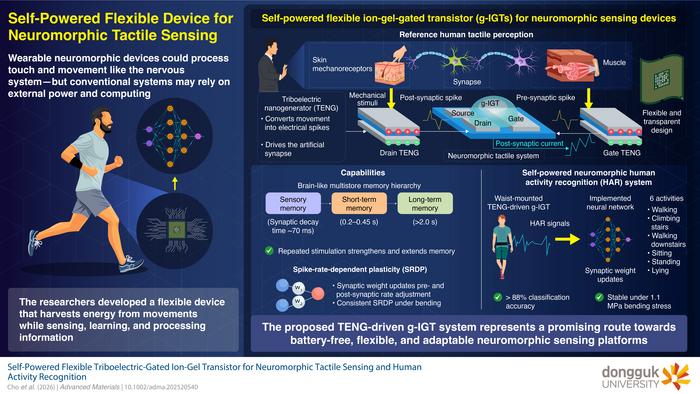
The proposed TENG-driven g-IGT is a flexible, self-powered neuromorphic device capable of reproducing multiple memory states and spike-rate-dependent learning Neuromorphic devices, which are designed to emulate aspects of biological neural networks, are promising candidates for developing low-power and intelligent sensing technologies, including wearable applications. Among the device architectures explored for neuromorphic computing, graphene-channel ion-gel-gated transistors (g-IGTs) are...
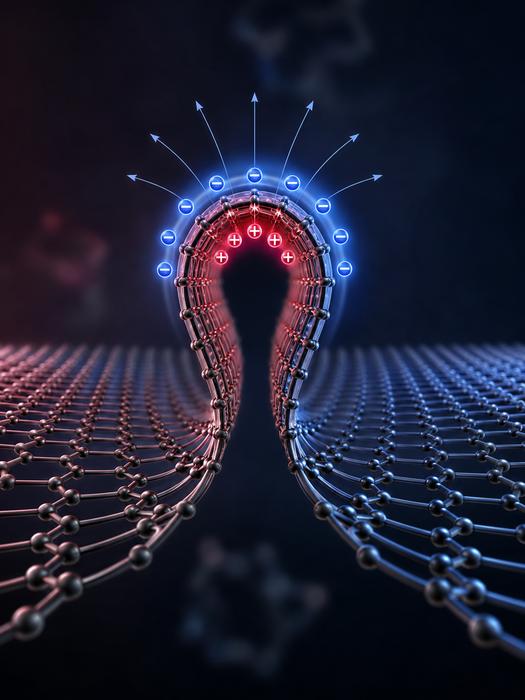
Rice University researchers have shown that sub-nanometer wrinkles in graphene generate flexoelectric charge separation, reshaping local electrical behavior through curvature alone. Extreme bending produces polarization far stronger than in larger systems and may enable geometry-controlled electronics without chemical doping. Published in Advanced Materials.
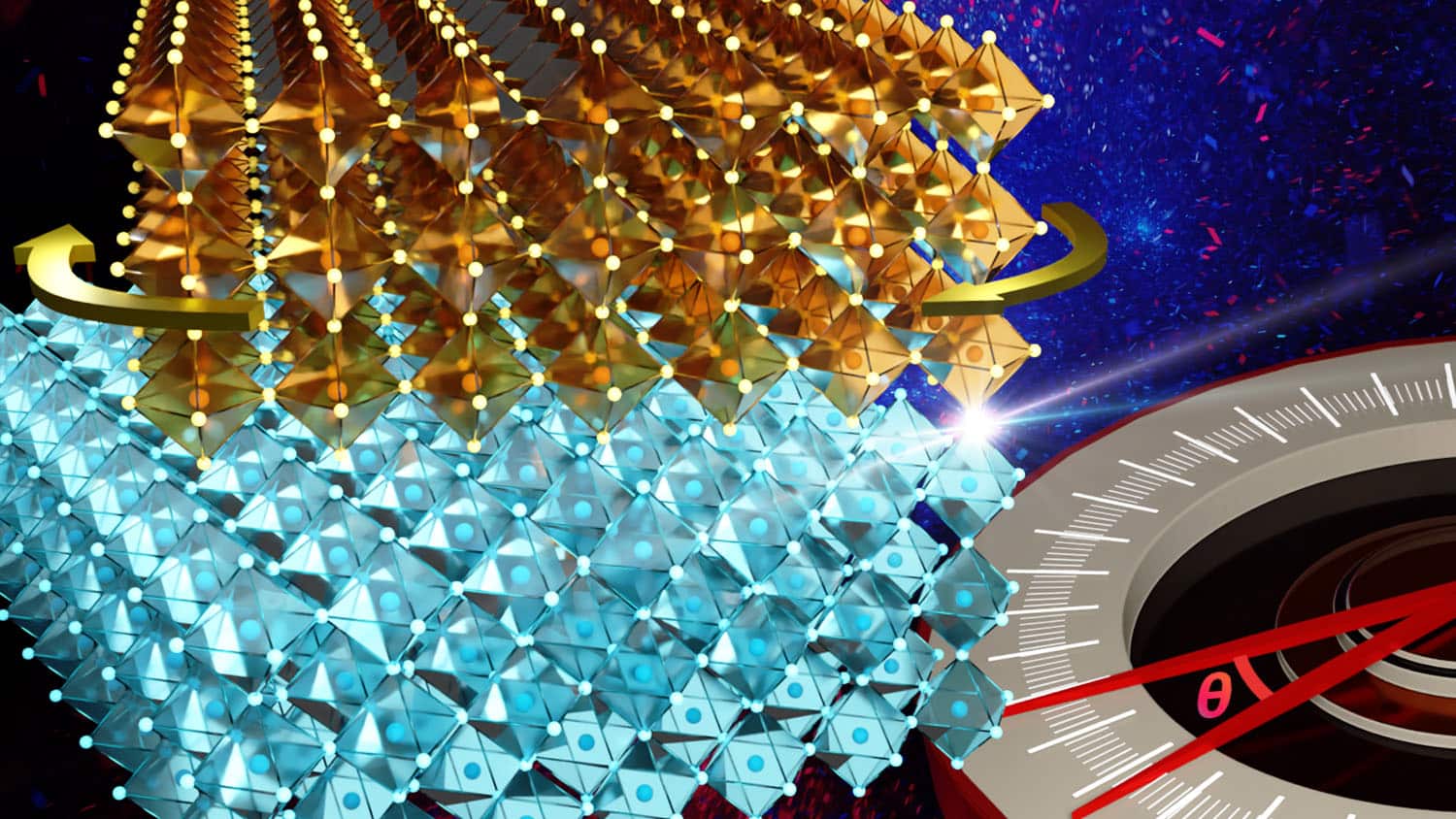
Researchers at NC State have extended twistronics beyond van der Waals materials into strongly bonded crystalline oxides. By stacking sodium niobate membranes with twist angles controlled down to 0.1 degrees, and confirming results via synchrotron X-ray diffraction, the team found interlayer bonds distort the atomic lattice, shifting phase structure and domain configuration. The technique works at near-millimeter scale, far larger than typical twistronic devices, marking a real step toward pract






