Münster University
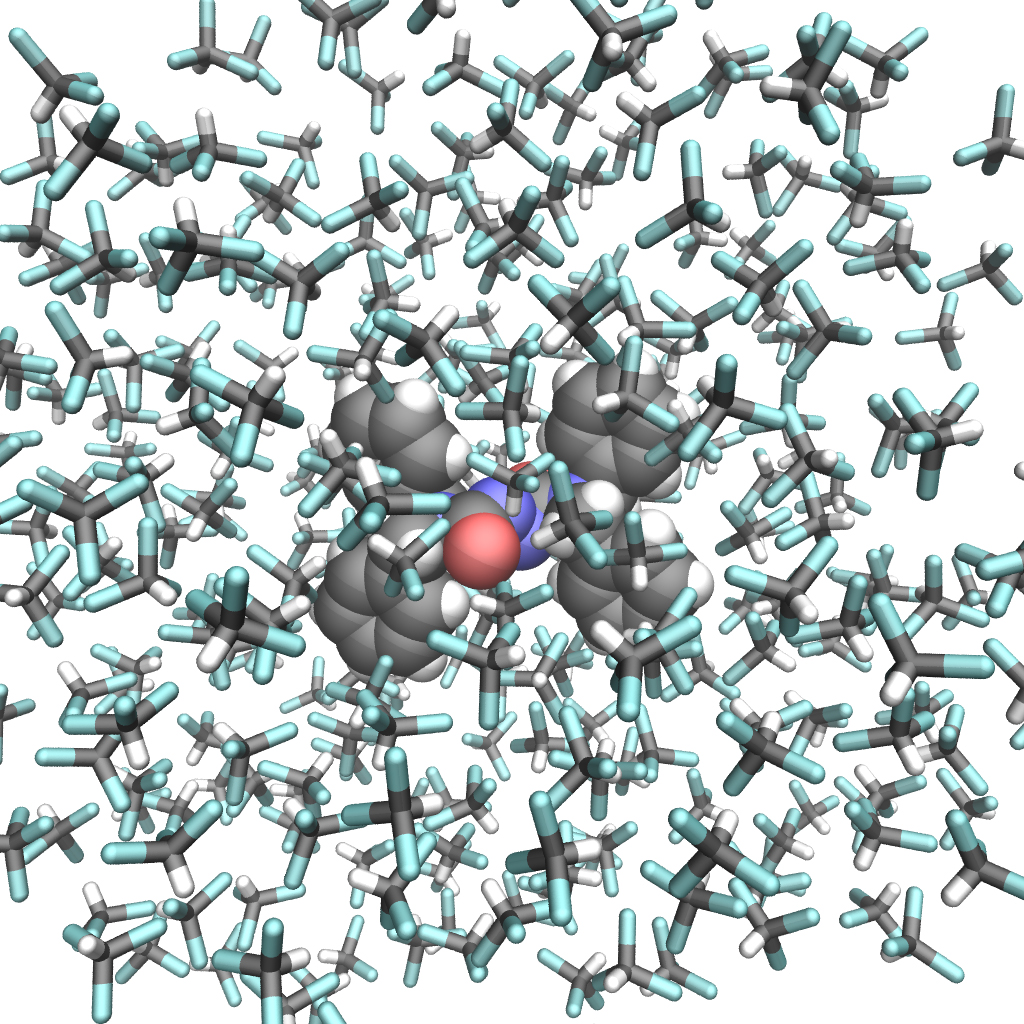
Molecular switches - they are the molecular counterparts of electrical switches and play an important role in many processes in nature. Such molecules can reversibly interconvert between two or more states and thereby control molecular processes. In living organisms, for example, they play a role in muscle contraction but also our visual perception is based on the dynamics of a molecular switch in the eye. Scientists are working intensively to develop novel molecular components that enable switching between different states, so that molecular processes can be specifically controlled.
A European research team led by nanotechnologist Dr. Saeed Amirjalayer from the University of Münster (Germany) now gained a deeper insight into the processes of a molecular switch: Using molecular dynamics simulations, the scientists produced a photographic film at the atomic level and thus tracked the motion of a molecular building block. The result was a light-controlled "pedalo-type motion", going forward and backward. Although it had already been predicted in this context in earlier work, it could not be directly proven so far.
In the future, the results may help to control the properties of materials with the help of molecular switches - for example, in order to release drugs specifically from nano-capsules. "For efficient embedding in novel responsive materials, detailed elucidation of the switching process and thus the way they function at the molecular and atomic level is crucial," emphasizes Dr. Saeed Amirjalayer, group leader at the Institute of Physics at Münster University and the Center for Nanotechnology (CeNTech). The study has been published in the "The Journal of Physical Chemistry Letters".
Background and methods:
Molecular dynamics simulations enable, by calculating the interactions between atoms and molecules, to describe their motion in the computer. In their current study, the scientists investigated an azodicarboxamide-based molecular switch in this way, using a so-called combined quantum mechanical/molecular mechanical method in the simulations. "Previous experimental and theoretical studies provided only an indirect insight into the operation mechanism of such a switch in solution. With the help of our theoretical approach, we could now follow the light-induced dynamics while taking the molecular environment into account," explains Saeed Amirjalayer.
The pedalo-type motion of the switch, triggered by light, moves backward and forward - like a bicycle pedal. Detailed understanding of the operation mechanism of a photo-responsive switch forms an important basis for the application of these molecular building blocks in novel "intelligent" functional materials.
In addition to the University of Münster, the Universities of Bologna (Italy) and Amsterdam (Netherlands) were involved in the study. "Despite the current circumstances in the wake of the Corona crisis, the cross-border exchange with colleagues from Europe could take place - virtually, but still very intensively. Together we achieved interesting and valuable results," says Saeed Amirjalayer summing up the cooperation.
Photoinduced forward and backward Pedalo-type motion of a molecular switch
Irene Conti, Wybren Jan Buma, Marco Garavelli, and Saeed Amirjalayer
Journal of Physical Chemistry Letters 11, 12, 4741–4746 (2020)
DOI: 10.1021/acs.jpclett.0c01094
Contact information:
Institute of Physics at Münster University and the Center for Nanotechnology (CeNTech)
samir_01@uni-muenster.de
Phone: +49 251 83-63919
Stimuli-Responsive Nanomaterials Group

Silver nanoparticles with diameters of ~10 nm deliver the best performance as electrocatalysts. The silver particles are sprayed onto the electrode together with a conductive carbon powder. The ideal mixture consists of 20 per cent by mass silver and 80 per cent by mass carbon powder. This image was taken using a transmission electron microscope (TEM). © HZB Via electrolysis, CO₂ can be reduced to CO, a raw material for further chemical products such as fuels. Within the GreenQuest Project,...

A flexible metal–organic framework developed by researchers from Institute of Science Tokyo enables the structural determination of large "beyond rule of 5" molecules from microgram-scale samples. Using APF-40 as a crystalline sponge, the researchers determined the structures of 12 pharmaceutical-related molecules, including the 899 Da drug molecule doramectin and trace ivermectin derivatives. The method could aid drug discovery, natural products research, and the characterization of rare...
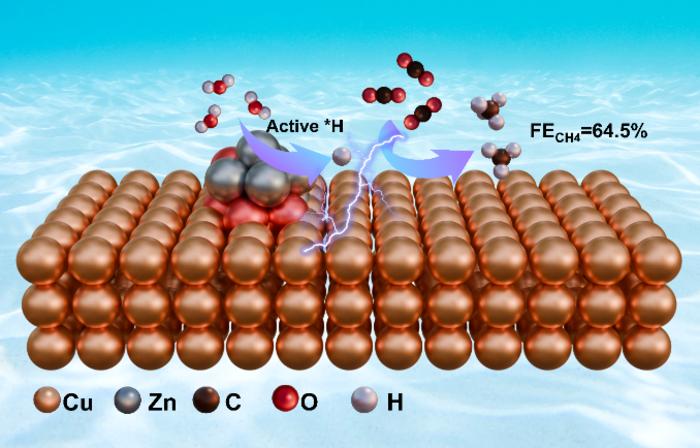
image: CuZn800@C was constructed via solvothermal method and utilizes the high-temperature volatility of zinc to prepare through calcination at different temperatures, which displays a high methane Faradaic efficiency of 64.5% and a remarkable partial current density of -551.3 mA/cm2 at -1.7 V vs. RHE, along with excellent stability. Zn and Cu form a tandem reaction system. Zn sites promote water splitting to provide protons, while Cu sites reduce the energy barrier for *CO hydrogenation....






