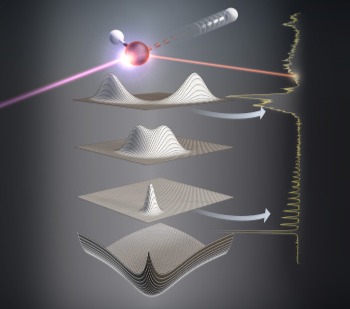
Synchrotron light sources provide brilliant light with a focus on the X-ray region and have enormously expanded the possibilities for characterising materials. In the Reviews of Modern Physics, an international team now gives an overview of elastic and inelastic X-ray scattering processes, explains the theoretical background and sheds light on what insights these methods provide in physics, chemistry as well as bio- and energy related themes.
"X-ray scattering can be used to investigate and resolve a wide variety of issues from the properties and excitations of fuctional solids, to homogeneous and heterogeneous chemical processes and reactions or even the proton pathway during the splitting of water," explains Prof. Dr. Alexander Föhlisch, who heads the Institute Methods and Instrumentation for Research with Synchrotron Radiation at HZB.
The article gives an overview of experimental and theoretical results in the field of resonant scattering of tunable soft and hard X-rays. The focus is on resonant inelastic X-ray scattering (RIXS) and resonant Auger scattering (RAS). In the review, the authors outline the most important achievements from the last two decades at Synchrotrons up to the latest advances in time-resolved studies with X-ray free-electron lasers.
Reference
Dynamics of resonant x-ray and Auger scattering
Faris Gel’mukhanov, Michael Odelius, Sergey P. Polyutov, Alexander Föhlisch, and Victor Kimberg
https://journals.aps.org/rmp/abstract/10.1103/RevModPhys.93.035001
This week in nanotech
25 deals tracked
New products
 Ti-WCMBN Nanomaterialia Featured
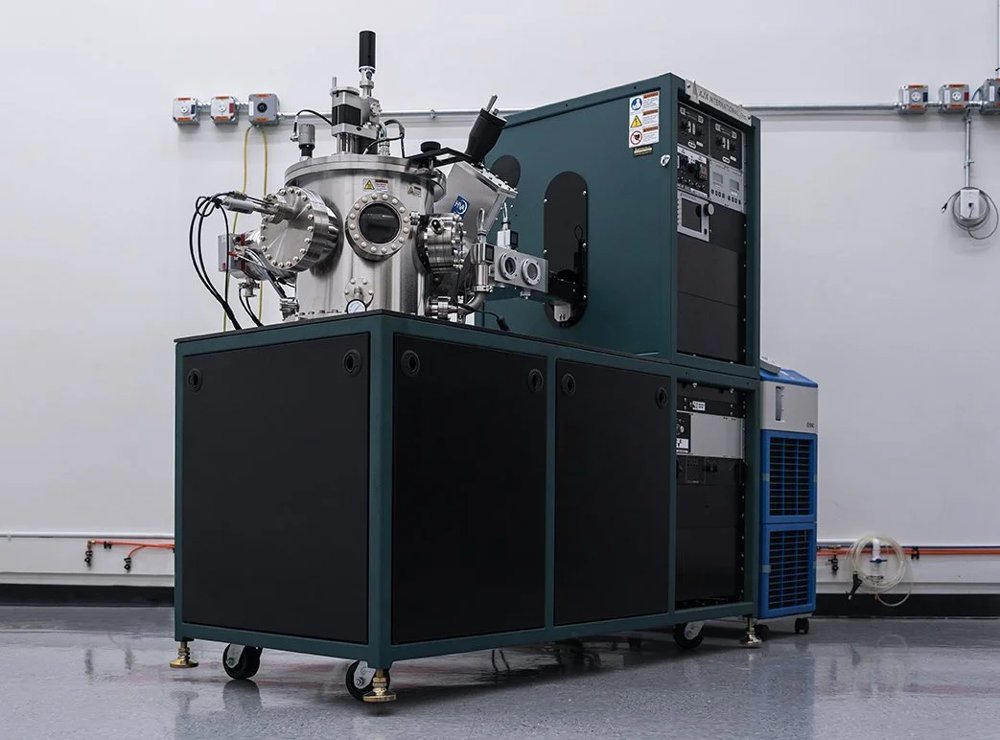 Orion Sputtering Deposition SystemsAJA International Featured
 GHK-CuPeoples Peps
Market insights
Last 30 days: Semiconductors & Electronics was the busiest vertical: 55 of 176 events (31%).
Money raised per month
Behind the deal
Who led Eindhoven University of Technology’s $1.1M Grant?
See the investors with Insights Pro →