Max Planck Institute for Intelligent Systems (MPI-IS)
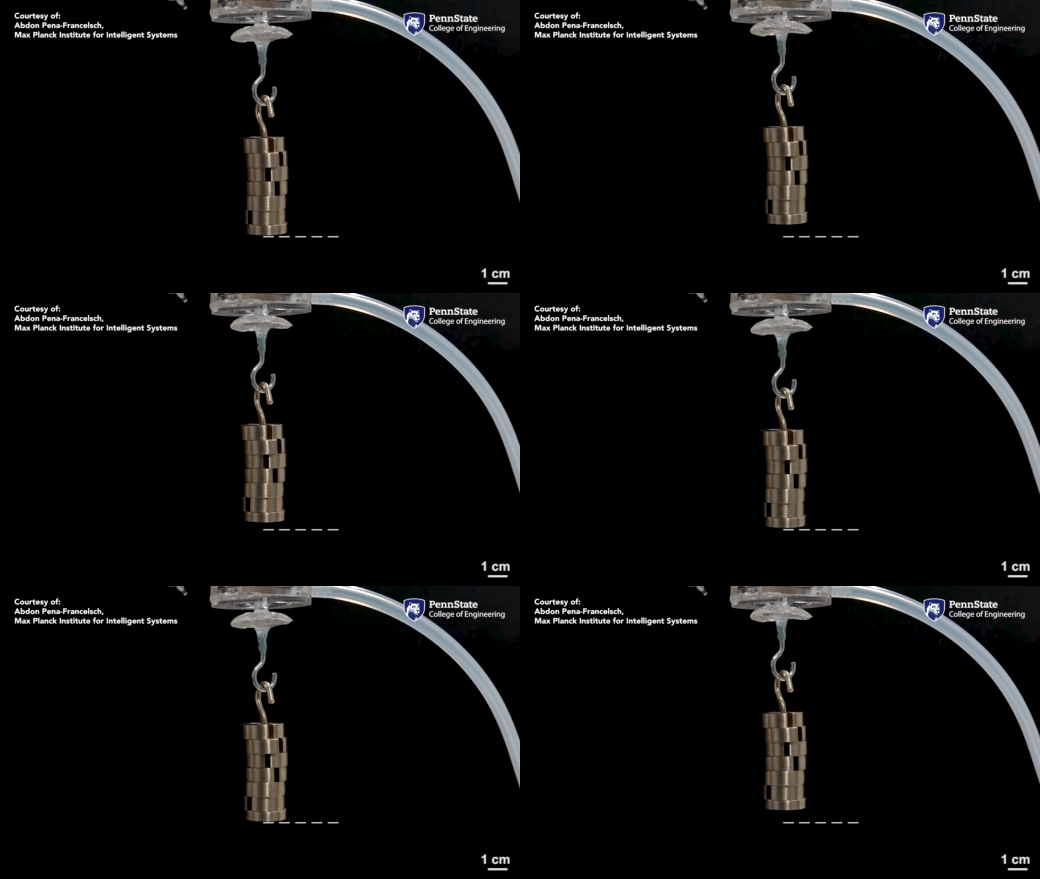
Scientists at the Max Planck Institute for Intelligent Systems (MPI-IS) in Germany and at Pennsylvania State University (PSU) in the USA have developed a soft synthetic material that can heal itself within a second after damage. The molecules of previous deformable self-healing materials take several hours or even days to bond back together, often with low strength at the point where they are punctured or cut. However, this new stretchable material entirely recovers its structure and properties at the blink of an eye – and it can do this over and over again.
“We have developed a new material that can heal much faster without losing its strength. We tested it with all kinds of extreme mechanical damage and repaired it within seconds,” says Dr. Abdon Pena-Francesch, lead author of the paper “Biosynthetic self-healing materials for soft machines”, which is due for publication in Nature Materials on July 27th 2020. The journal is one of the most prestigious in the research field of material science.
Self-healing soft materials are attracting growing interest in the scientific community, particularly in robotics, where such supernatural material could tip the scale in enabling a range of robots to come to application in everyday life. If robots are to one day work with or support humans in very dynamic and unpredictable environments, robots require material softness that allows for flexibility and compliance. However, the softer the material, the more vulnerable it is to damage. This limits a robot’s longevity and performance, thus restricting its practical application. Instantaneous self-healing capabilities could make up for this shortcoming. In the future, invincible, self-healing robots could be employed in a broad range of areas, such as disaster recovery. Or the material could be used in the realm of protective garments that would immediately repair themselves after a cut.
Dr. Pena-Francesch and his co-authors Dr. Huihun Jung and Prof. Melik C. Demirel from PSU and Prof. Metin Sitti, Director of the Physical Intelligence Department at the MPI-IS, looked to nature and the wonders of the Earth for guidance on how to build such a smart material. “Our goal is to create self-healing programmable materials with unprecedented control over their physical properties using synthetic biology,” says Prof. Demirel. He and his team studied the molecular structure and amino acid sequences of squid proteins and developed a new biosynthetic material using protein engineering. “We built the molecular structure in such a way that we can program the self-healing properties” he adds. “We were able to reduce a typical 24-hour healing period to one second, so our protein-based soft robots can now repair themselves immediately. In nature, self-healing takes a long time. In this sense, our technology outsmarts nature,” says Pena-Francesch, who has been developing self-healing materials for several years.
The squid takes longer to heal because the molecular structure of the proteins inside its tentacles is not perfectly intertwined. With the laboratory-developed squid-inspired material, the scientists changed the nanostructure of the molecules until they created crosslinks between all of them. “A network in which only a few points are connected will have defects, and its properties will not be that good. We connected all of the points and improved the material beyond what is found in nature, ” Pena-Francesch adds. Additionally, while the molecules of most polymers and other flexible material have permanent links that cannot be put back together, each physical crosslink of the new material is reversible. Thanks to fast and quick hydrogen-bonding, the connections click right back into position at the point where the material was impaired.
A supramolecular network with unprecedented self-healing properties not only opens up a vast unexplored terrain of potential applications in robotics. “Self-repairing physically intelligent soft materials are essential for building robust and fault-tolerant soft robots and actuators in the near future,” says Prof. Metin Sitti. Sitti and his team at MPI-IS plan to use such self-repairing soft materials in their research on medical soft robots as well as on robotic grippers. As the soft material can adapt to different shapes and is very flexible, it is useful in lifting objects. If an object tears the material while being carried around, it can easily self-heal.
Biosynthetic self-healing materials for soft machines
Abdon Pena-Francesch, Huihun Jung, Melik C. Demirel & Metin Sitti
Nature Materials (2020)
DOI: 10.1038/s41563-020-0736-2
Contact information:
Metin Sitti
Director of physical intelligence department, MPI-IS
sitti@is.mpg.de
Phone: +49 711 689-3423
Max Planck Institute for Intelligent Systems (MPI-IS)
Melik Demirel
Professor of engineering science & mechanics, Penn State
mcd18@psu.edu
Phone: +1-814-863-2270
Cornell and Pacific Northwest National Laboratory researchers have developed a predictive model for how crystals such as calcite incorporate silica nanoparticles, revealing that the energy needed to cross water layers at the crystal surface strongly governs uptake, and that amines rather than carboxylic acids bind best.
A polymer hydrogel that grows stronger under repeated bending and strain has been developed by chemists, who report the material survived 10,000 bending cycles in tests on a knee-like joint. Made from a biodegradable blend of sugar crystals and polyethylene glycol, the 3D printable material uses sliding cyclodextrin rings to reinforce stressed regions, mimicking collagen.
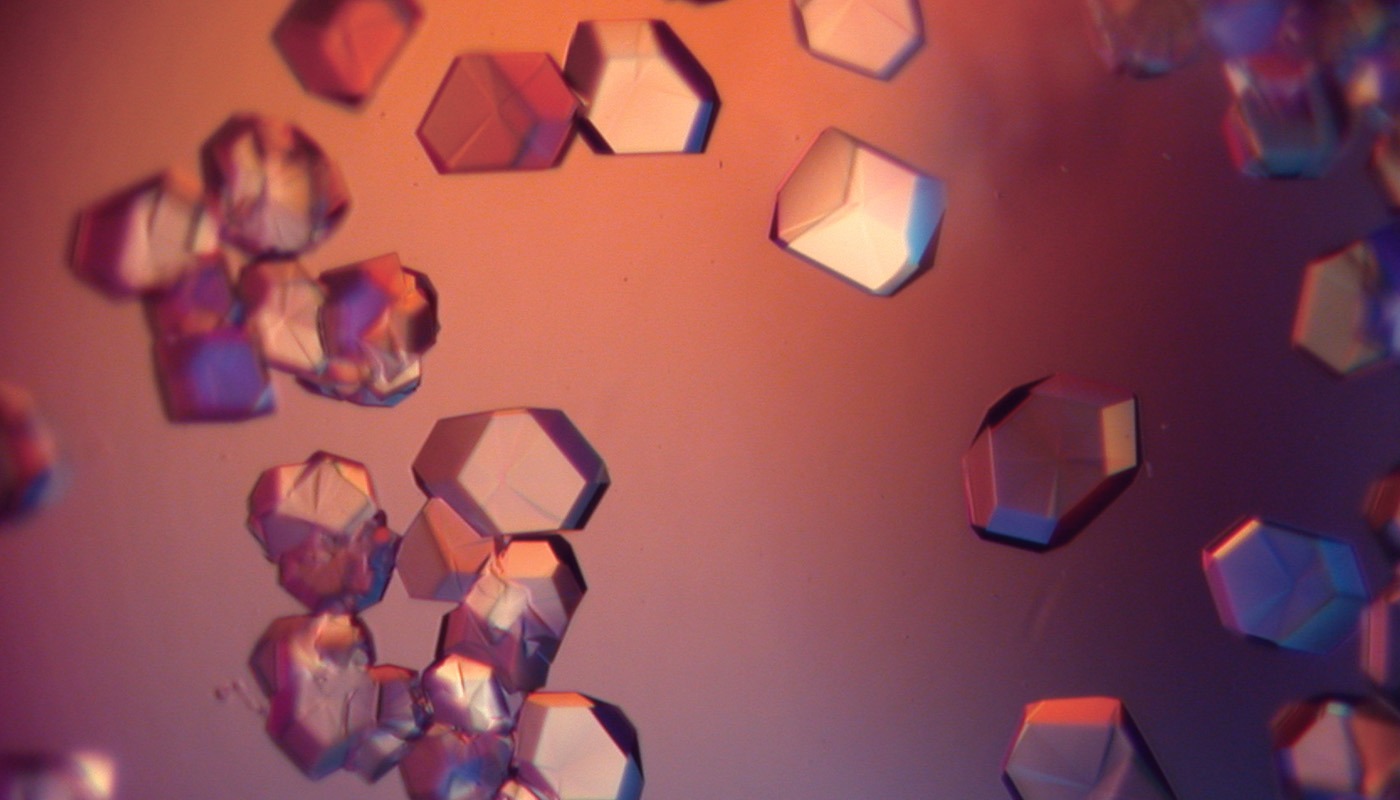
Rigaku has introduced the PhotonJetMAX-S microfocus sealed-tube X-ray source for the XtaLAB Synergy-S, delivering more than twice the diffracted intensity of the PhotonJet-S at a peak power of 50 W.
This week in nanotech
$18.9M raised
4 funding rounds · 31 deals tracked
New products
 Ti-WCMBN Nanomaterialia Featured
 Nion-compatible In Situ STEM Holders for Electrical BiasingHummingbird Scientific Featured
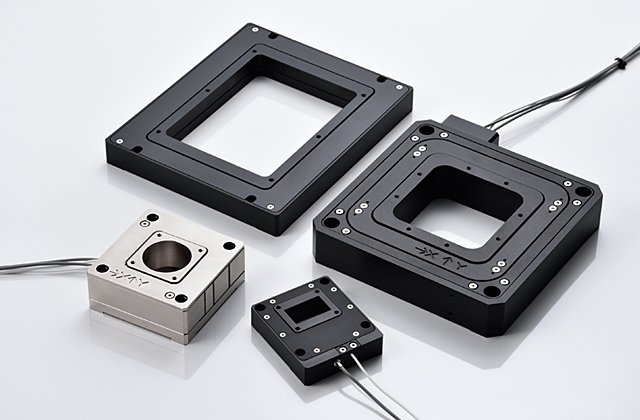 PKVH / PKVL ZAxis With an opening modelTHK PRECISION CO.,LTD.
Market insights
Last 30 days: Semiconductors & Electronics was the busiest vertical: 52 of 170 events (31%).
Money raised per month