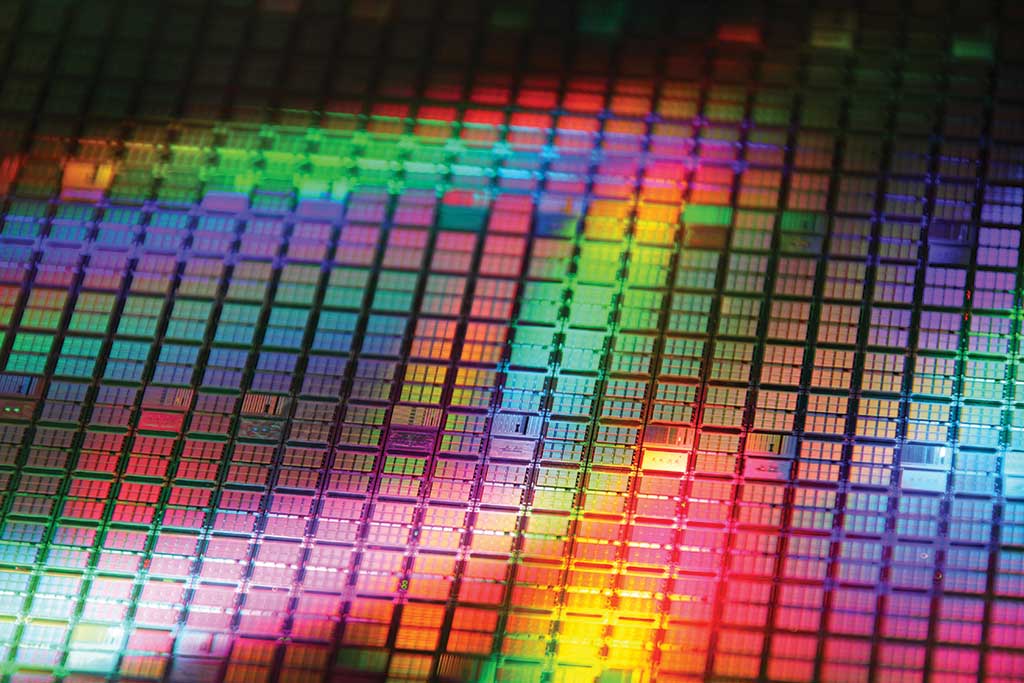
An intermediate layer consisting of a few atoms is helping to improve the transport of spin currents from one material to another. Until now, this process involves significant losses. A team from Martin Luther University Halle-Wittenberg (MLU), the Max Planck Institute (MPI) for Microstructure Physics, and the Freie Universität Berlin reports in the scientific journal "ACS Nano Letters" on how this can be avoided. The researchers thus demonstrate important new insights relevant for many spintronic applications, for example energy-efficient and ultra-fast storage technologies of the future.
In modern microelectronics, the charge of electrons is used to carry information in electronic components, mobile phones and storage media. The charge transport requires a relatively large amount of energy and generates heat. Spintronics could offer an energy-saving alternative. The basic idea is to utilise spin in information processing. Spin is the intrinsic angular momentum of the electrons that creates a magnetic moment. This generates the magnetism that will ultimately be used to process information.
In spintronics, spin currents also have to be transferred from one material to the next. "In many cases, the spin transport across interfaces is a very lossy process," explains physicist Professor Georg Woltersdorf from MLU, who led the study. The team looked for a way to mitigate these losses by using an approach that, at first, sounds rather contradictory: they integrated an insulating barrier between the two materials. "We designed the insulator at the atomic level so that it turned metallic and could conduct the spin currents. This enabled us to significantly improve the spin transport and optimise the interfacial properties," says Woltersdorf, summing up the process. The material samples were produced at the Max Planck Institute for Microstructure Physics. The unexpected effect was discovered through measurements of spin transport conducted at MLU and the Freie Universität Berlin. The team also provides the theoretical basis for the new discovery. According to Woltersdorf, this can be described using relatively simple models without spin-orbit coupling.
The results are highly relevant for many spintronic applications. For example, they can be used to improve spintronic terahertz emitters. Terahertz radiation is not not only applied in research, but also in high-frequency electronics, medicine, materials testing and communication technology.
Reference
Atomic Scale Control of Spin Current Transmission at Interfaces
Mohamed Amine Wahada*, Ersoy Şaşıoğlu, Wolfgang Hoppe, Xilin Zhou, Hakan Deniz, Reza Rouzegar, Tobias Kampfrath, Ingrid Mertig, Stuart S. P. Parkin, and Georg Woltersdorf
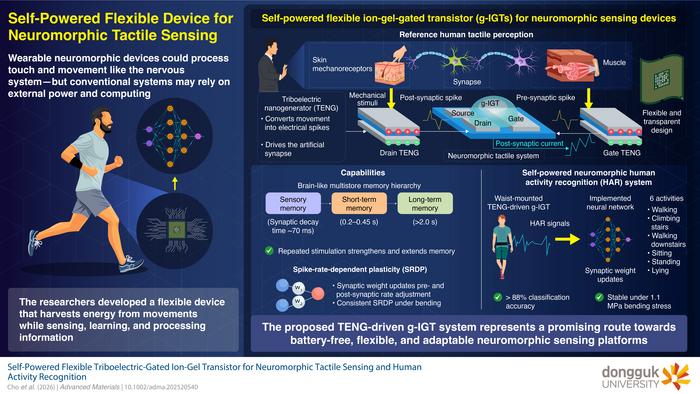
The proposed TENG-driven g-IGT is a flexible, self-powered neuromorphic device capable of reproducing multiple memory states and spike-rate-dependent learning Neuromorphic devices, which are designed to emulate aspects of biological neural networks, are promising candidates for developing low-power and intelligent sensing technologies, including wearable applications. Among the device architectures explored for neuromorphic computing, graphene-channel ion-gel-gated transistors (g-IGTs) are...
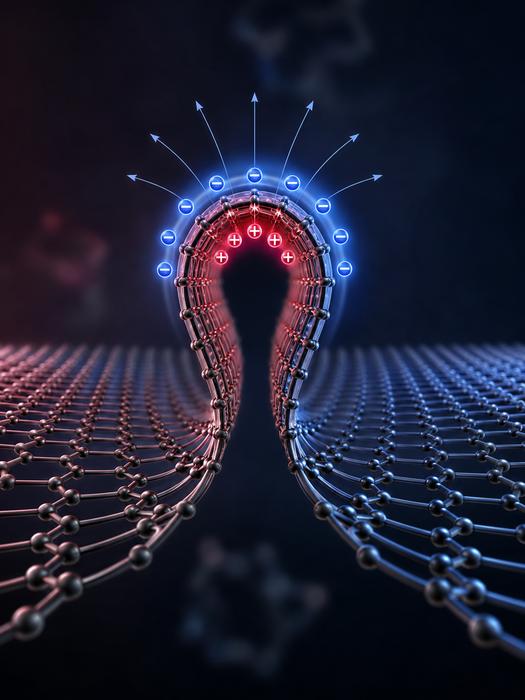
Rice University researchers have shown that sub-nanometer wrinkles in graphene generate flexoelectric charge separation, reshaping local electrical behavior through curvature alone. Extreme bending produces polarization far stronger than in larger systems and may enable geometry-controlled electronics without chemical doping. Published in Advanced Materials.
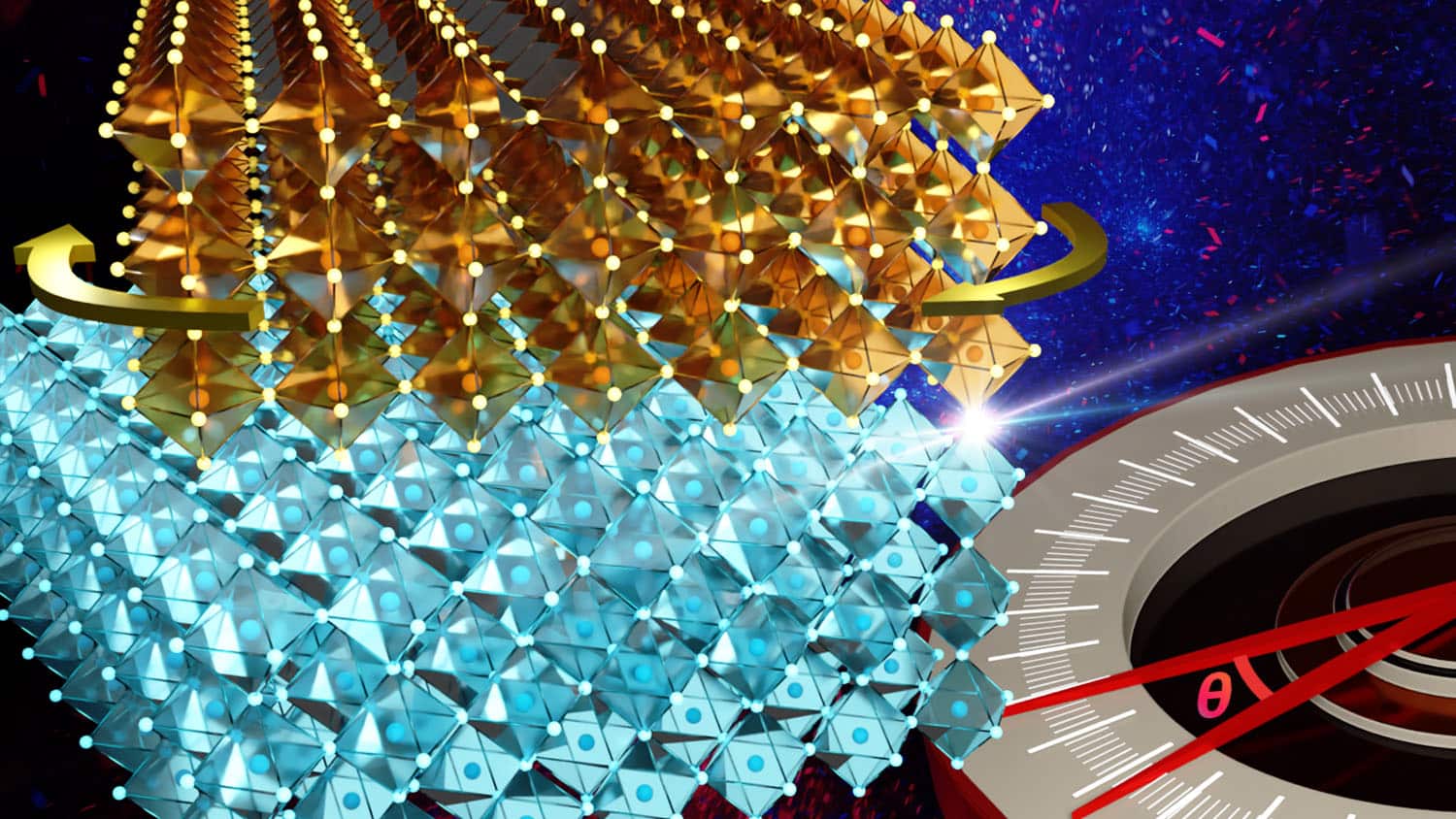
Researchers at NC State have extended twistronics beyond van der Waals materials into strongly bonded crystalline oxides. By stacking sodium niobate membranes with twist angles controlled down to 0.1 degrees, and confirming results via synchrotron X-ray diffraction, the team found interlayer bonds distort the atomic lattice, shifting phase structure and domain configuration. The technique works at near-millimeter scale, far larger than typical twistronic devices, marking a real step toward pract