Aalto University
Sensors manufactured with carbon-based materials can provide uniquely accurate and real-time information on hereditary diseases or the concentrations of drugs in the body. In addition to medicine, carbonaceous materials are used in batteries, solar cells and water purification.
Other elements, such as hydrogen and oxygen, are almost always present in carbon-based materials, which alters the materials' properties. Therefore, modifying materials for desired applications requires atomic-level knowledge on carbon surface structures and their chemistry. Researchers at Aalto University, the University of Cambridge, the University of Oxford and Stanford University have now taken a significant new step forward in describing the atomic nature of carbonaceous materials.
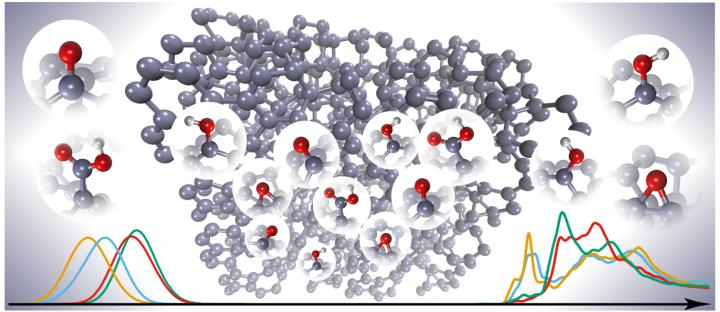
Detailed information on carbon surfaces can be obtained by X-ray spectroscopy, but the spectrum it produces is challenging to interpret because it summarises information from several local chemical environments of the surface. The researchers have developed a new systematic analysis method that uses machine learning to integrate the computational model (density functional theory) with the experimental results of the carbon sample. The new methodology allows the experimental spectrum produced by X-ray spectroscopy to be separated into atomic-level data.
'In the past, experimental results have been interpreted differently, based on varying literature references, but now we were able to analyse the results using only computational references. The new method gives us a much better understanding of carbon surface chemistry without human-induced bias' says Anja Aarva, a doctoral student at Aalto University.
The new method expands knowledge of carbon-based materials
In a two-part study, the researchers initially studied how differently bound carbon affects the formation of the experimental spectrum qualitatively. The researchers then attempted to aggregate the measured spectrum with computational spectrum reference data to obtain a quantitative estimate of what the experimental spectrum consists of. This was to help them determine what the nature of the carbon sample at the atomic-level is. The new methodology is suitable for analysing the surface chemistry of various forms of carbon, such as graphene, diamond and amorphous carbon.
The study is a continuation of the work of Aalto University postdoctoral researcher Miguel Caro and professor Volker Deringer from Oxford University, which extensively mapped the structure and reactivity of amorphous carbon. The study utilises machine learning methods developed by professor Volker Deringer and professor Gabor Csányi from Cambridge University. Experimental measurements were carried out by Sami Sainio, an Aalto based postdoctoral researcher at Stanford University.
'Next, we intend to use the methodology we have developed to predict, for example, what kind of carbon surface would be best for electrochemical identification of certain neurotransmitters, and then try to produce the desired surface. In this way, computational work would guide experimental work and not vice versa, as has typically been the case in the past,' Tomi Laurila, professor at Aalto University said.
Understanding X-ray Spectroscopy of Carbonaceous Materials by Combining Experiments, Density Functional Theory, and Machine Learning. Part I: Fingerprint Spectra
Anja Aarva, Volker L. Deringer, Sami Sainio, Tomi Laurila, Miguel A. Caro
Chemistry of Materials (2019)
DOI: 10.1021/acs.chemmater.9b02049
Contact information:
Anja Aarva
Doctoral student at Aalto University
anja.aarva@aalto.fi
Tomi Laurila
Associate Professor, Microsystem technology, Aalto Department of Electrical Engineering and Automation
tomi.laurila@aalto.fi
Phone: +358503414375
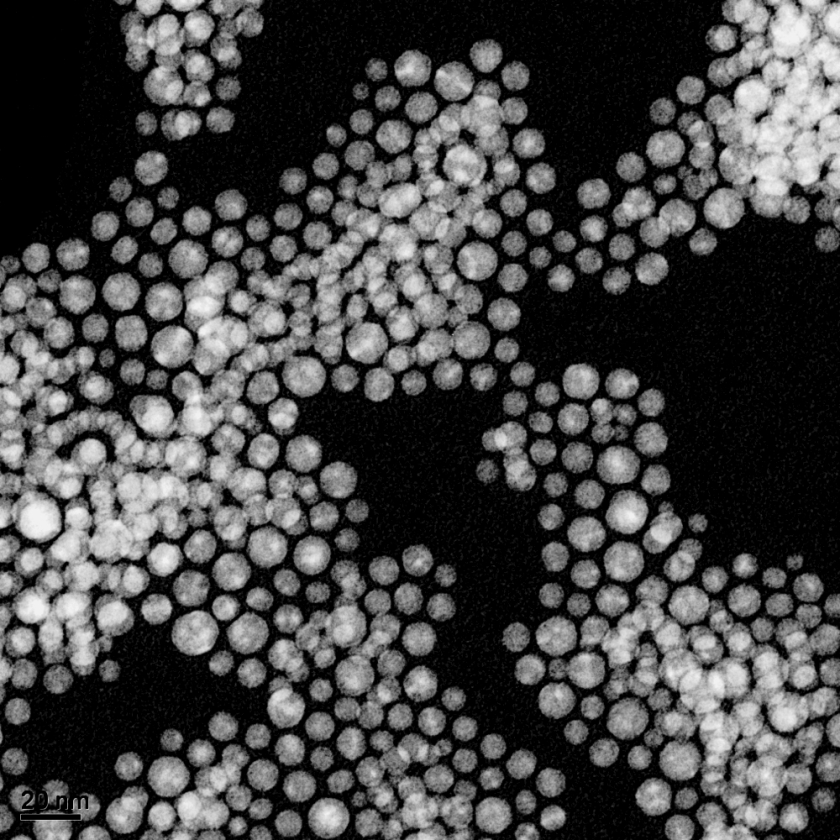
Silver nanoparticles with diameters of ~10 nm deliver the best performance as electrocatalysts. The silver particles are sprayed onto the electrode together with a conductive carbon powder. The ideal mixture consists of 20 per cent by mass silver and 80 per cent by mass carbon powder. This image was taken using a transmission electron microscope (TEM). © HZB Via electrolysis, CO₂ can be reduced to CO, a raw material for further chemical products such as fuels. Within the GreenQuest Project,...
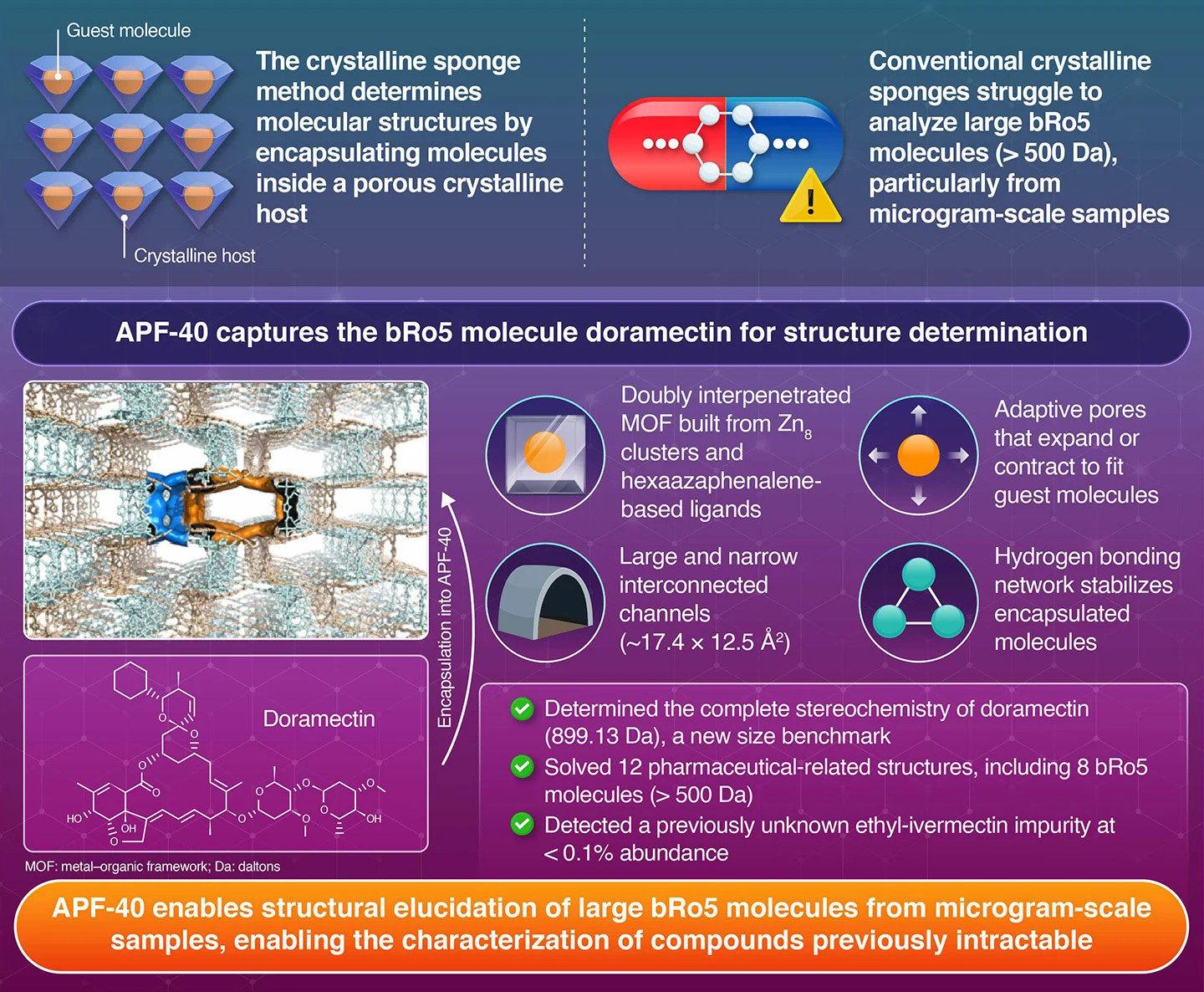
A flexible metal–organic framework developed by researchers from Institute of Science Tokyo enables the structural determination of large "beyond rule of 5" molecules from microgram-scale samples. Using APF-40 as a crystalline sponge, the researchers determined the structures of 12 pharmaceutical-related molecules, including the 899 Da drug molecule doramectin and trace ivermectin derivatives. The method could aid drug discovery, natural products research, and the characterization of rare...
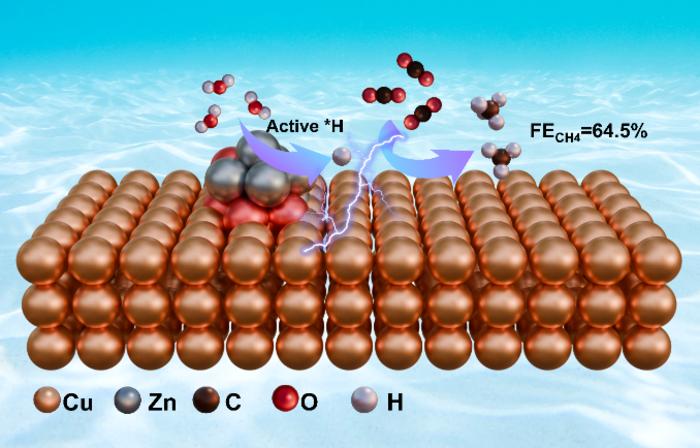
image: CuZn800@C was constructed via solvothermal method and utilizes the high-temperature volatility of zinc to prepare through calcination at different temperatures, which displays a high methane Faradaic efficiency of 64.5% and a remarkable partial current density of -551.3 mA/cm2 at -1.7 V vs. RHE, along with excellent stability. Zn and Cu form a tandem reaction system. Zn sites promote water splitting to provide protons, while Cu sites reduce the energy barrier for *CO hydrogenation....
