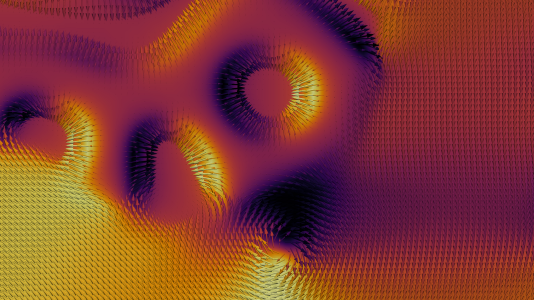
A multi-institutional team discovered surprising properties in a magnetic material. This discovery could be applicable to information storage, such as computer memory and high-efficiency microelectronics.
Microelectronics forms the foundation of much modern technology today, including smartphones, laptops and even supercomputers. It is based on the ability to allow and stop the flow of electrons through a material. Spin electronics, or spintronics, is a spinoff. It is based on the spin of electrons, and the fact that the electron spin along with the electric charge creates a magnetic field.
“This property could be exploited for building blocks in future computer memory storage, brain-like and other novel computing systems, and high-efficiency microelectronics,” said Charudatta Phatak, group leader in the Materials Science division at the U.S. Department of Energy’s (DOE) Argonne National Laboratory.
A team including researchers at Argonne and the National High Magnetic Field Laboratory (MagLab) discovered surprising properties in a magnetic material of iron, germanium and tellurium. This material is in the form of a thin sheet that is only a few to 10 atoms in thickness. It is called a 2D ferromagnet.
The team discovered that two kinds of magnetic fields can coexist in this ultrathin material. Scientists call them merons and skyrmions. They are like miniature swirling storm systems dotting the flat landscape of the ferromagnet. But they differ in their size and swirling behavior.
“This [magnetic] property could be exploited for building blocks in future computer memory storage, brain-like and other novel computing systems, and high-efficiency microelectronics.” — Charudatta Phatak, group leader in Argonne’s Materials Science division
Known and studied for about 15 years, skyrmions are about 100 nanometers in size — approximately the same as a single virus molecule — and their magnetic fields flow in complicated patterns, resembling those of the strands of a knot in a rope. Only recently discovered, merons are roughly the same size and have magnetic fields that swirl around like whirlpools.
“Both skyrmions and merons are very stable because like firmly tied knots, they are difficult to untangle,” said Luis Balicas, who holds a joint appointment at MagLab and Florida State University. “This stability along with their magnetic properties makes them attractive as carriers of information.”
The team is the first to observe both of these magnetic textures in a thin film at the same time at low temperature, from minus 280 to minus 155 degrees Fahrenheit. Also, merons remained present up to room temperature, an important consideration to exploit them in practical devices. In the past, they had only been observed at much lower temperature in different materials.
The team also showed that skyrmions and merons are detectable from their effect on an applied current, by measuring the voltage. This feature means they are adaptable to the binary code used in all digital computers. This code consists of combinations of 1 and 0. In a spintronic device, a 1 would be indicated by an electrical signal detecting a skyrmion or meron. The absence of an electrical signal would then convey a 0.
Detecting and characterizing the different magnetic textures in a film fewer than ten atoms thick required a special scientific tool. Argonne physicist Yue Li led that challenging task using an instrument called a Lorentz transmission electron microscope (TEM). This microscope includes aberration correction technology to improve its resolution. This TEM can visualize the magnetization of materials at the nanoscale under different magnetic fields over a wide temperature range, a unique capability available at Argonne. The range extends from minus 280 Fahrenheit to room temperature.
The team performed additional magnetic and other imaging at Argonne’s Center for Nanoscale Materials, a DOE Office of Science user facility.
“Much more basic research is needed to fully understand the behavior of skyrmions and merons under different conditions, and how to employ them in coding information,” Balicas said. “Many seemingly science fiction schemes are out there. We cannot predict the future, but it seems likely that one or more might come to fruition.”
Reference
Coexistence of Merons with Skyrmions in the Centrosymmetric Van Der Waals Ferromagnet Fe5–xGeTe2
Brian W. Casas, Yue Li, Alex Moon, Yan Xin, Conor McKeever, Juan Macy, Amanda K. Petford-Long, Charudatta M. Phatak, Elton J. G. Santos, Eun Sang Choi, Luis Balicas
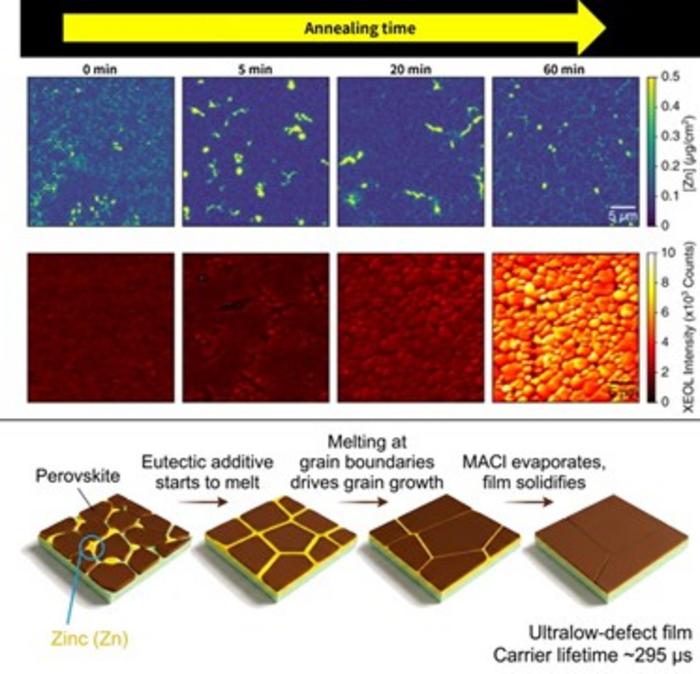
A eutectic mixture of methylammonium chloride and a zinc halide melts at about 100 degrees Celsius, forming a transient liquid layer at perovskite grain boundaries that lets crystals merge into larger, cleaner grains. The resulting films reached a carrier lifetime of roughly 295 microseconds and a surface recombination velocity of 0.3 cm/s, the lowest reported for lead halide perovskites.
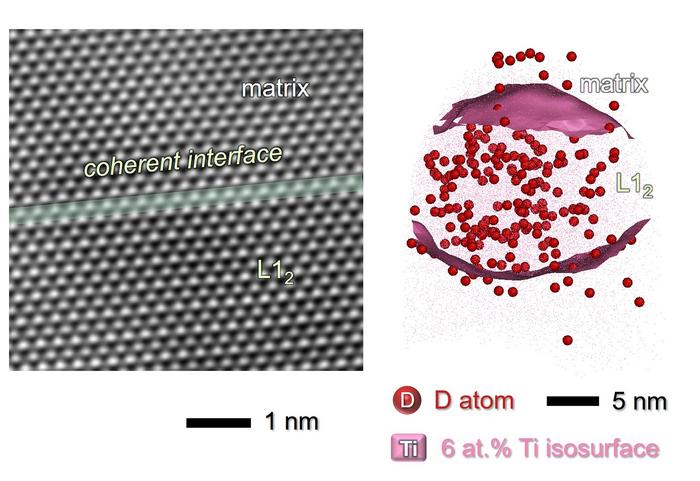
Researchers at the University of Sydney have directly observed hydrogen dissolved in the interstitial spaces between metal atoms in alloys, a world first. Using cryogenic atom probe tomography with deuterium tracers, electron microscopy and theoretical calculations, the team showed hydrogen occupies sites between atoms rather than only collecting at defects, and that local atomic arrangement and chemistry dictate where it prefers to reside.
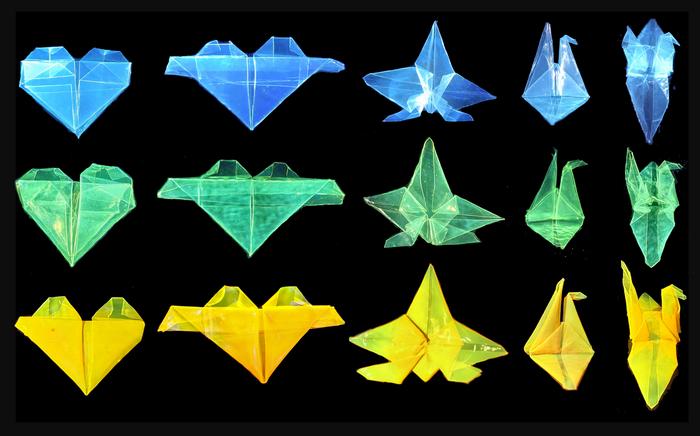
Researchers have developed carbon dots whose fluorescence shifts across the visible spectrum, from blue to red, depending on concentration, liquid environment and acidity. By tuning the particles' surfaces, the team produced versions that change color reversibly as pH shifts, then incorporated them into polymer powders, molded shapes and flexible films.
This week in nanotech
$13.6M raised
3 funding rounds · 20 deals tracked
New products
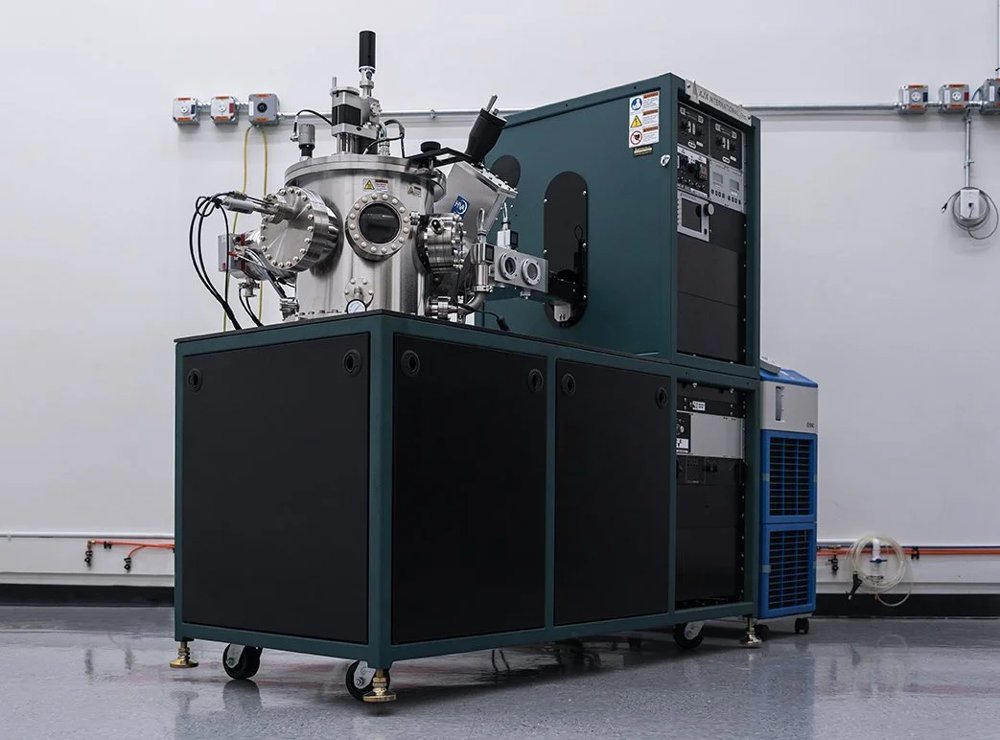 Orion Sputtering Deposition SystemsAJA International Featured
 Nion-compatible In Situ STEM Holders for Electrical BiasingHummingbird Scientific Featured
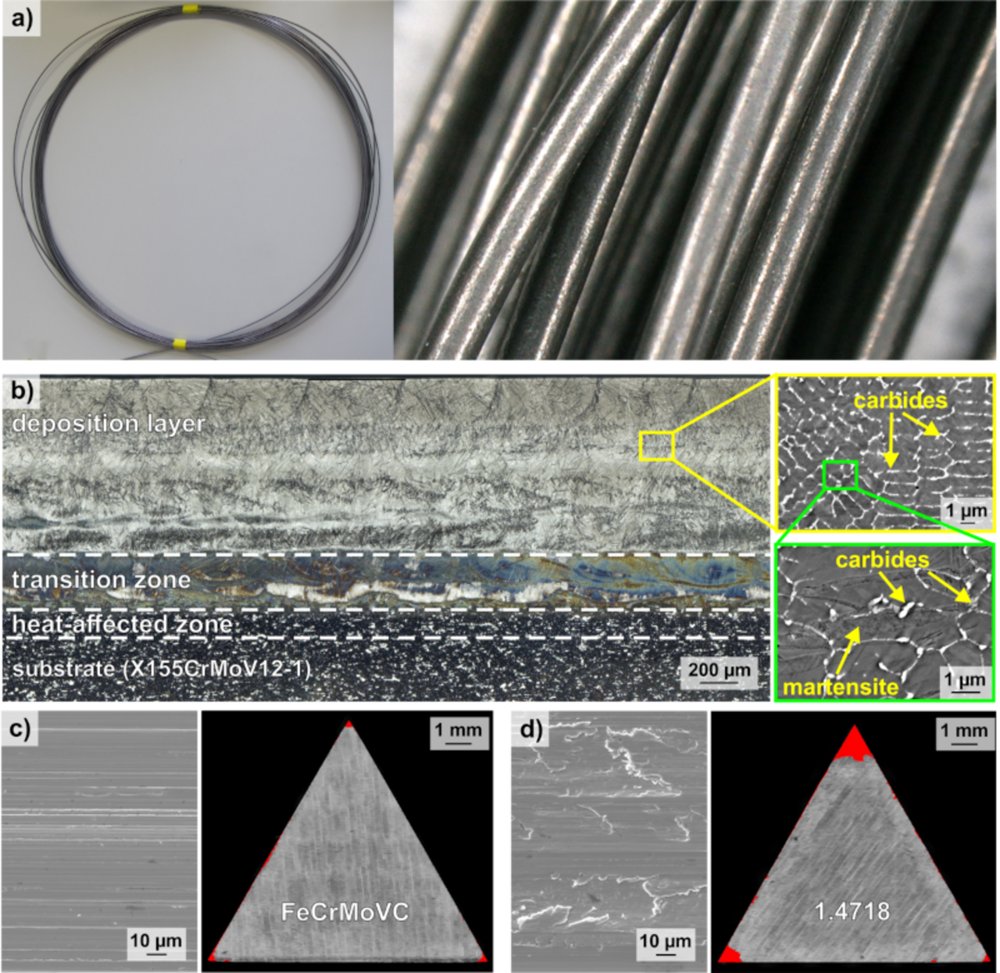 Fe85Cr4Mo8V2C1 wire filler materialLeibniz Institute for Solid State and Materials Research Dresden - IFW Dresden
Market insights
Last 30 days: Quantum Technologies was the busiest vertical: 61 of 192 events (32%).
Money raised per month