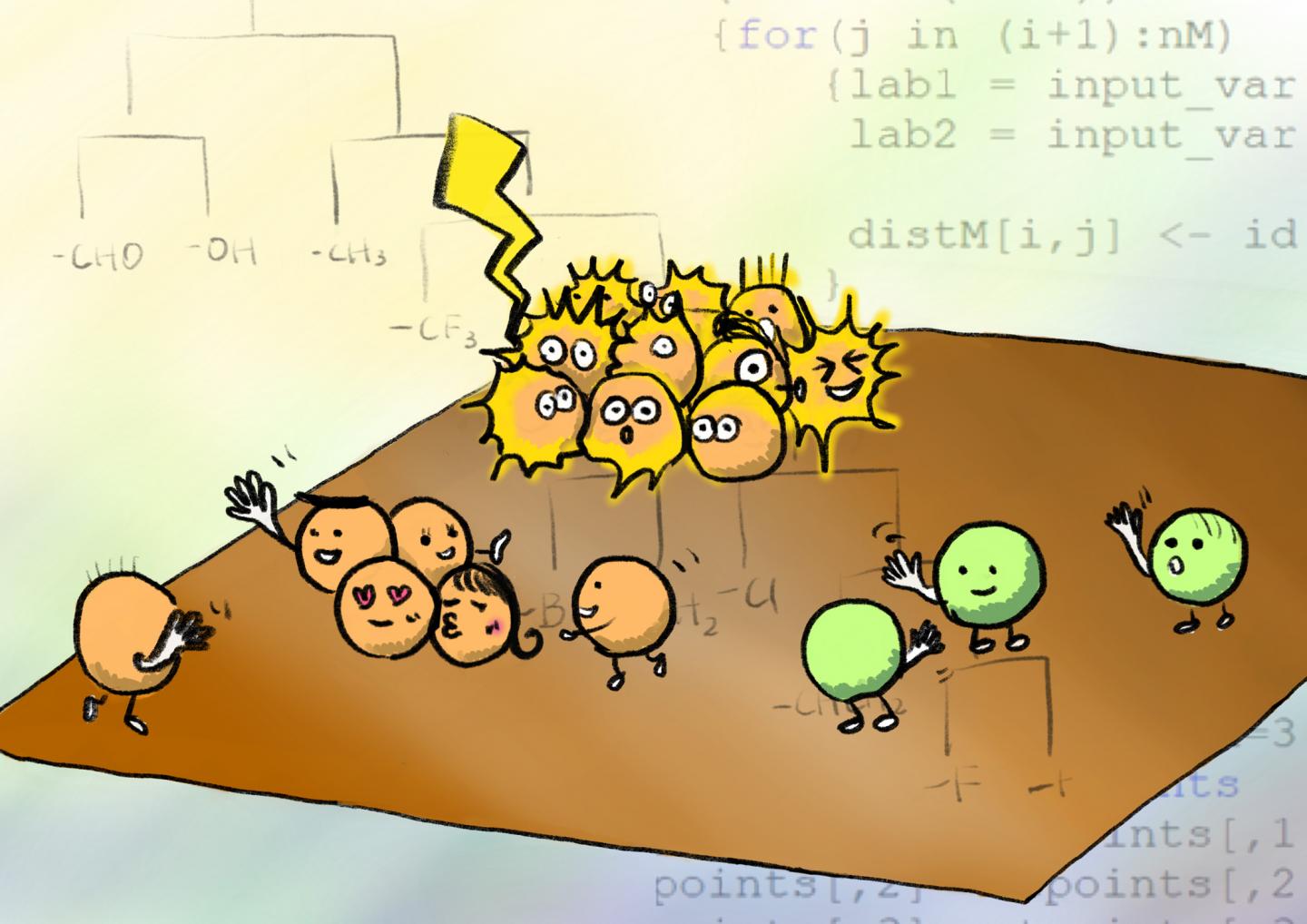
The approach was developed by Daniel Packwood of Kyoto University's Institute for Integrated Cell-Material Sciences (iCeMS) and Taro Hitosugi of the Tokyo Institute of Technology. It involves connecting the chemical properties of molecules with the nanostructures that form as a result of their interaction. A machine learning technique generates data that is then used to develop a diagram that categorizes different molecules according to the nano-sized shapes they form. This approach could help materials scientists identify the appropriate molecules to use in order to synthesize target nanomaterials.
Fabricating nanomaterials using a bottom-up approach requires finding 'precursor molecules' that interact and align correctly with each other as they self-assemble. But it's been a major challenge knowing how precursor molecules will interact and what shapes they will form.
Bottom-up fabrication of graphene nanoribbons is receiving much attention due to their potential use in electronics, tissue engineering, construction, and bio-imaging. One way to synthesise them is by using bianthracene precursor molecules that have bromine 'functional' groups attached to them. The bromine groups interact with a copper substrate to form nano-sized chains. When these chains are heated, they turn into graphene nanoribbons.
Packwood and Hitosugi tested their simulator using this method for building graphene nanoribbons.
Data was input into the model about the chemical properties of a variety of molecules that can be attached to bianthracene to 'functionalize' it and facilitate its interaction with copper. The data went through a series of processes that ultimately led to the formation of a 'dendrogram'.
This showed that attaching hydrogen molecules to bianthracene led to the development of strong one-dimensional nano-chains. Fluorine, bromine, chlorine, amidogen, and vinyl functional groups led to the formation of moderately strong nano-chains. Trifluoromethyl and methyl functional groups led to the formation of weak one-dimensional islands of molecules, and hydroxide and aldehyde groups led to the formation of strong two-dimensional tile-shaped islands.
The information produced in the dendogram changed based on the temperature data provided. The above categories apply when the interactions are conducted at -73°C. The results changed with warmer temperatures. The researchers recommend applying the data at low temperatures where the effect of the functional groups' chemical properties on nano-shapes are most clear.
The technique can be applied to other substrates and precursor molecules. The researchers describe their method as analogous to the periodic table of chemical elements, which groups atoms based on how they bond to each other. "However, in order to truly prove that the dendrograms or other informatics-based approaches can be as valuable to materials science as the periodic table, we must incorporate them in a real bottom-up nanomaterial fabrication experiment. We are currently pursuing this direction in our laboratories."
Materials informatics for self-assembly of functionalized organic precursors on metal surfaces
Daniel M. Packwood & Taro Hitosugi
Nature Communicationsvolume 9, Article number: 2469 (2018
DOI: 10.1038/s41467-018-04940-z
Contact information
Daniel Packwood
Kyoto University's Institute for Integrated Cell-Material Sciences (iCeMS)
dpackwood@icems.kyoto-u.ac.jp
Kyoto University
#Graphene #Nanostructures #Computing #Nanomanufacturing
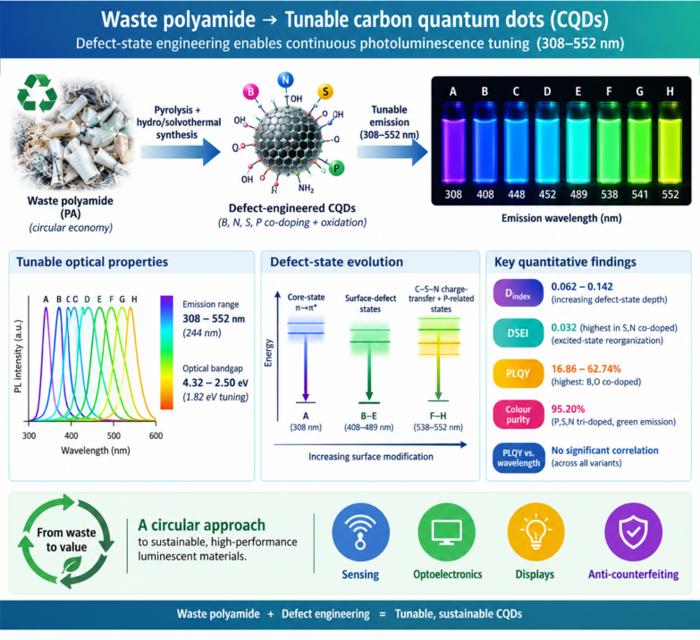
Waste polyamide-derived CQDs show continuous photoluminescence tuning from 308 to 552 nm through sequential defect-state engineering, with optical transition energies decreasing from 4.32 to 2.50 eV. @Christian Ebere Enyoh from Saitama University Carbon quantum dots (CQDs) are fluorescent carbon nanomaterials with potential applications in sensing, optoelectronics, displays, anti-counterfeiting, and environmental technologies. Their optical properties can be adjusted by modifying the carbon...
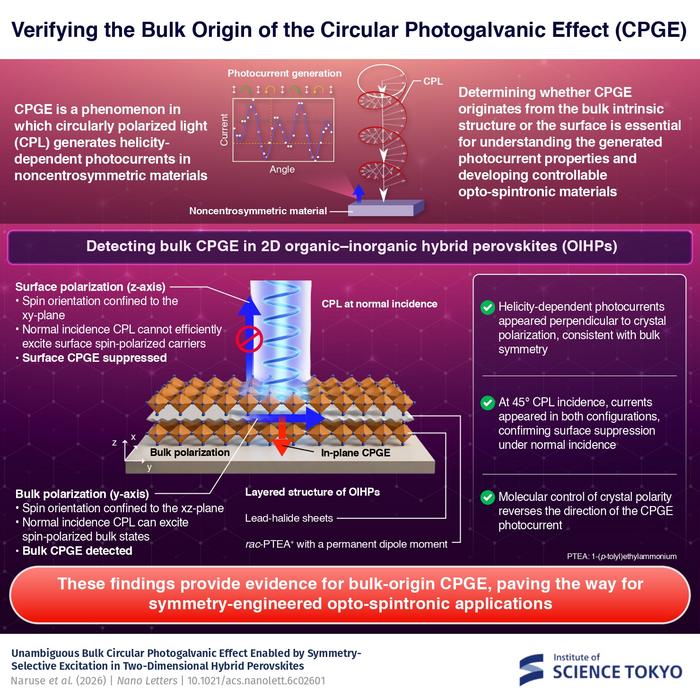
The researchers used circularly polarized light at normal incidence and found that helicity-dependent photocurrents appeared perpendicular to the crystal’s polarization but vanished when measured parallel to it, supporting a bulk origin of CPGE. @Institute of Science Tokyo The circular photogalvanic effect (CPGE), a phenomenon that generates helicity-dependent photocurrents in noncentrosymmetric materials, can originate purely from a crystal's internal structure without contribution from the...
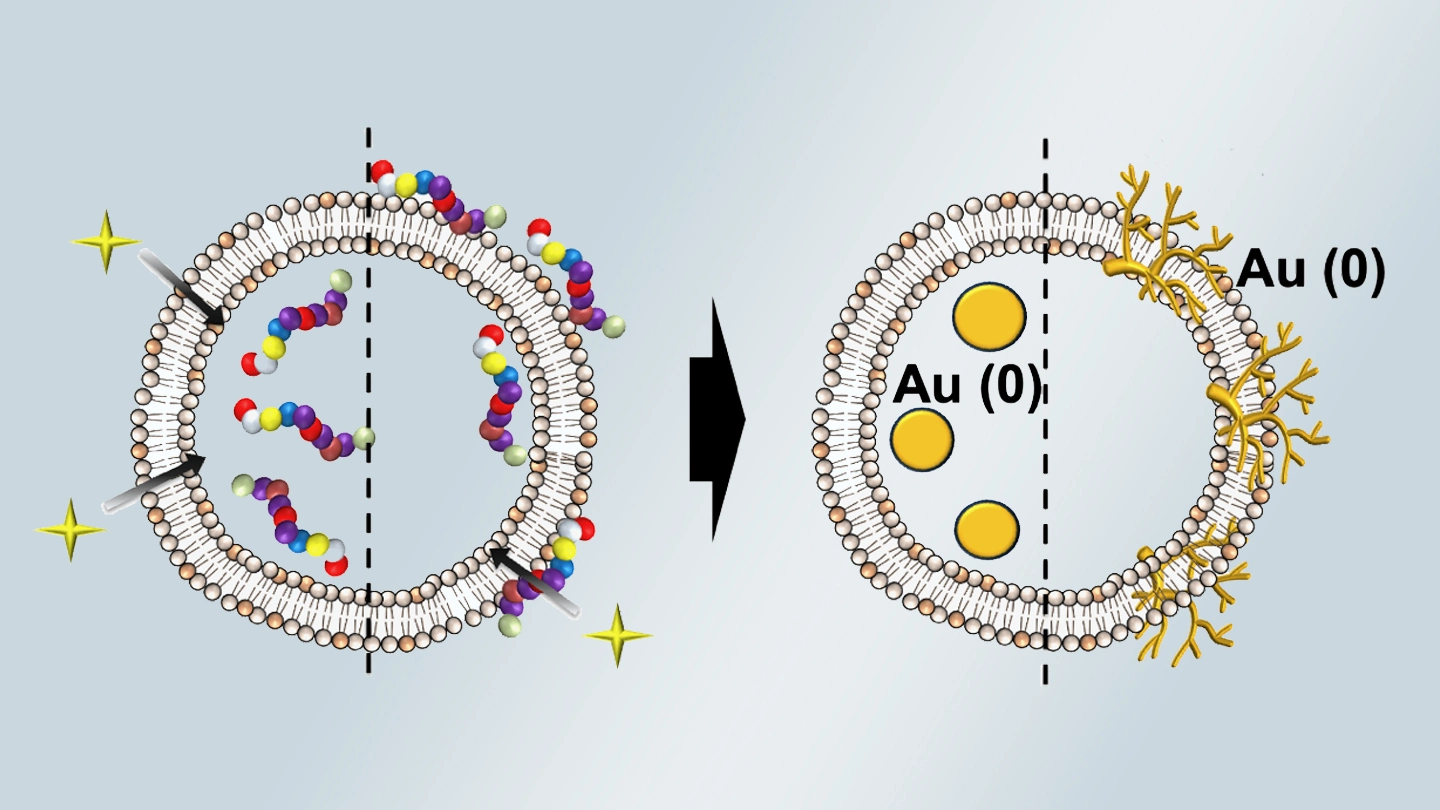
Summary of gold nanoparticle growth programming in liposome based on localization of biomineralization peptide The position of biomineralization peptides within liposomes can influence how gold nanoparticles grow, reports a research team from Institute of Science Tokyo. Peptides localized at the membrane interface promote branched structures, while those confined to the liposome interior favor spherical nanoparticles. The findings offer a new strategy for controlling nanoscale reaction...






