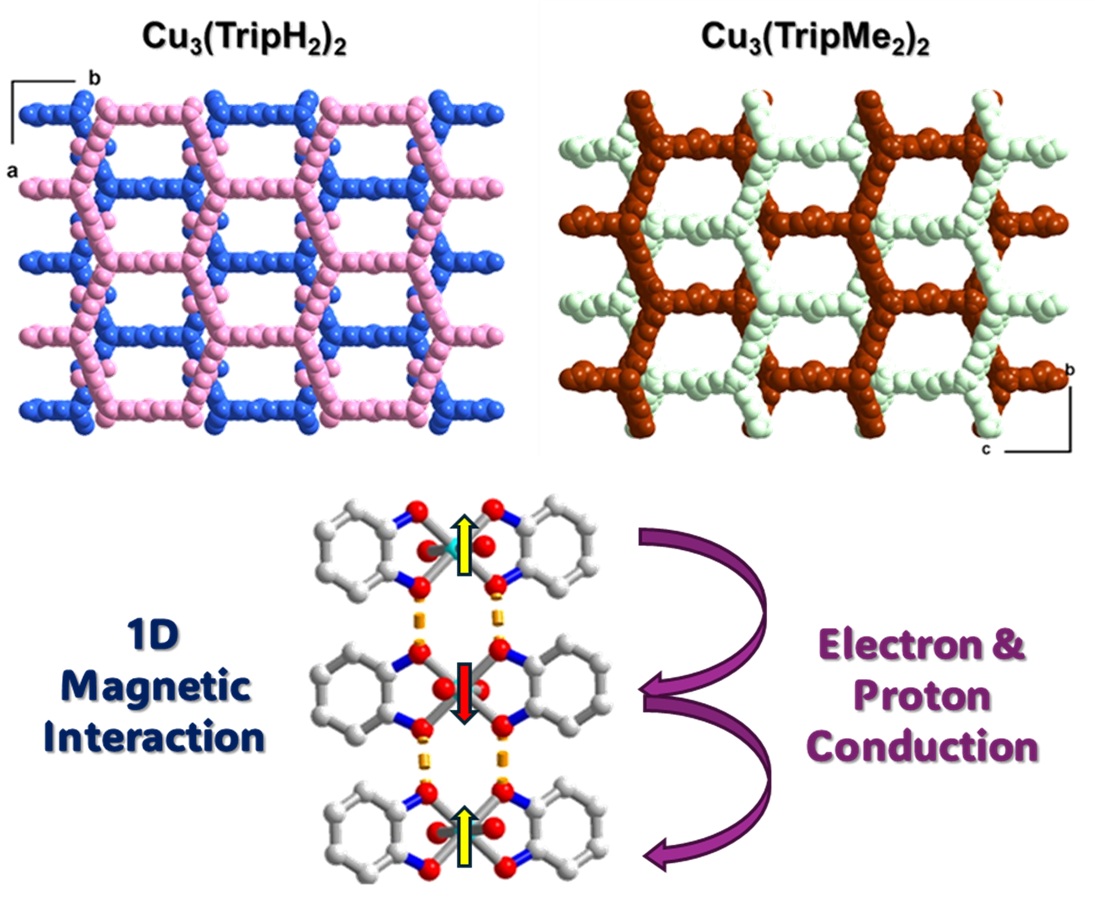
Researchers at Kumamoto University and Nagoya University have developed a new class of two-dimensional (2D) metal-organic frameworks (MOFs) using triptycene-based molecules, marking a breakthrough in the quest to understand and enhance the physical properties of these promising materials. This innovation opens new possibilities for multifunctional applications in gas/molecular sensors, electrochemical energy storage, and spintronic devices
Two-dimensional (2D) conductive metal-organic frameworks (MOFs) have drawn increasing attention for their unique properties—like high electron and proton conductivity and unusual magnetic behaviors—that set them apart from conventional MOFs. However, the field has long been held back by challenges in growing large, high-quality crystals and a lack of clarity about how molecular structures relate to material performance.
To tackle these issues, Associate Professor Zhongyue Zhang from Faculty of Advanced Science and Technology at Kumamoto University, in collaboration with Professor Kunio Awaga’s team at Nagoya University at the time of the research, turned to triptycene-based linkers. Unlike traditional flat, π-conjugated ligands that promote fast crystal growth and stacking, triptycene has a rigid 3D shape that suppresses interlayer interactions. This allows crystals to grow more slowly and reach larger sizes, making them suitable for detailed structural and functional studies.
Using a slow diffusion method in sealed glass tubes—rather than standard solvothermal techniques—the team successfully synthesized two new MOFs: Cu₃(TripH₂)₂ and Cu₃(TripMe₂)₂. These reached crystal sizes exceeding 0.3 mm, sufficient for single-crystal X-ray diffraction and precise measurements of electronic, magnetic, and proton transport properties.
Structural analysis revealed that the catechol groups coordinating the metal ions remain fully protonated—an unusual and experimentally verified feature that stabilizes the layered framework via hydrogen bonding. While previous theories suggested protonation might affect electronic properties, this study provides the first experimental evidence of such protonated states in MOFs.
Measurements on these large single crystals showed high directional conductivities, with electron and proton transport significantly stronger along the vertical (a-axis) direction. The data suggest a possible cooperative mechanism for charge and proton hopping between different arms of the triptycene units. Electron paramagnetic resonance (EPR) and magnetization studies further revealed one-dimensional antiferromagnetic coupling along the same axis, enabled by interlayer hydrogen bonds. This is in sharp contrast to the frustrated in-plane magnetic behavior seen in other 2D MOFs.
Because these materials exhibit strong electronic and magnetic correlations in the interlayer direction—despite having no continuous structural connections there—the researchers propose a new term to describe them: "2.5-dimensional" (2.5D) MOFs.
“This study demonstrates how a simple change in molecular geometry can overcome longstanding barriers in MOF research,” said Professor Zhongyue Zhang of Kumamoto University. “By enabling high-quality single crystals, we not only clarified fundamental structure–property relationships but also unlocked new potential for next-generation MOFs in real-world devices.”
The findings pave the way for further developments in MOF-based technologies, including zinc-ion batteries, molecular sensors, and quantum information systems.
Reference
Triptycene-Based 2.5-Dimensional Metal–Organic Frameworks: Atomically Accurate Structures and Anisotropic Physical Properties from Hydrogen-Bonding Bridged Protonated Building Units
Qi Chen, Amos Afugu, Yoshiaki Shuku, Zhen-Fei Liu, Kunio Awaga, Zhongyue Zhang
https://pubs.acs.org/doi/full/10.1021/jacs.5c08703
Kumamoto University
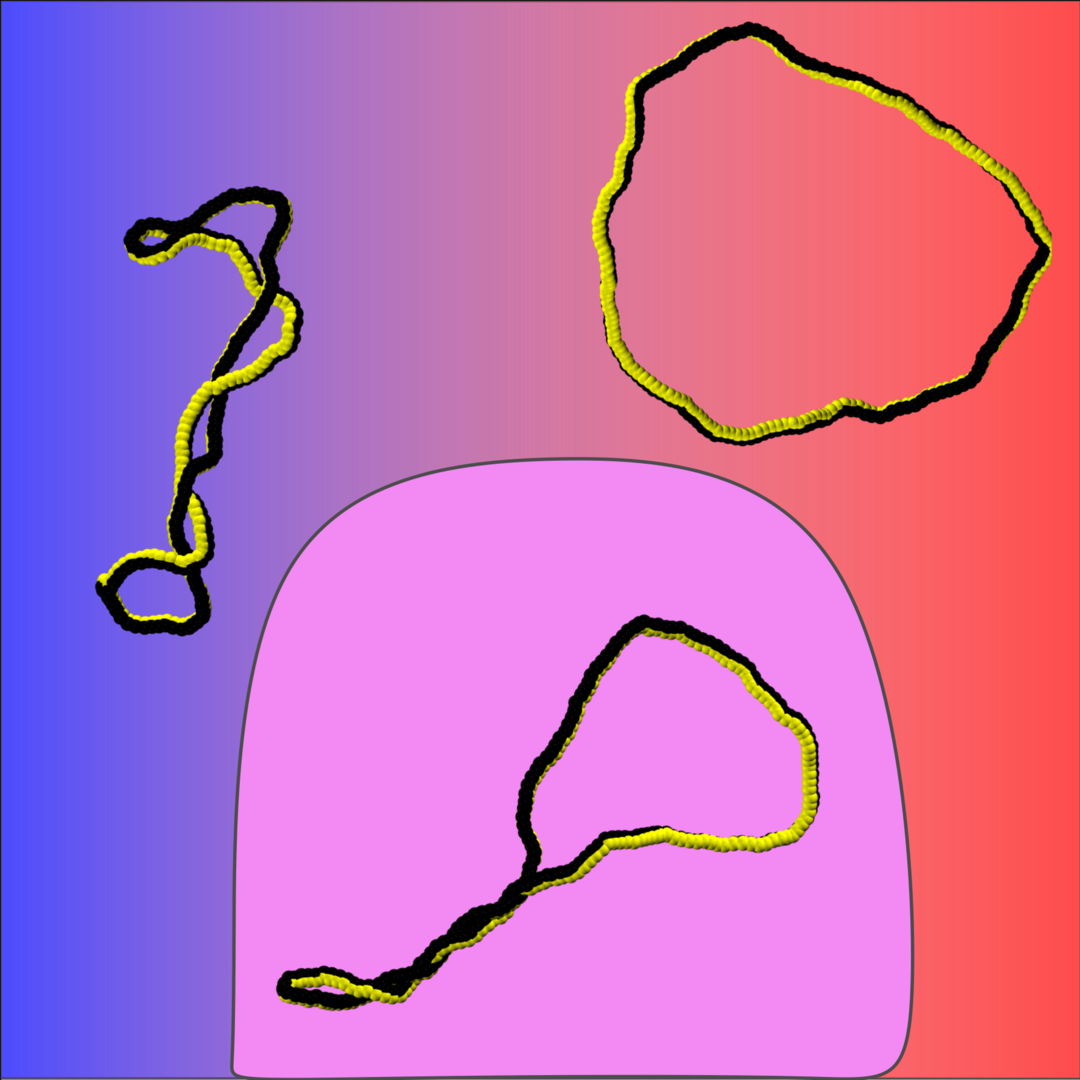
What if a complex material could reshape itself in response to a simple chemical signal? A team of physicists from the University of Vienna and the University of Edinburgh has shown that even small changes in pH value and thus in electric charge can shift the spatial arrangement of closed ring-shaped polymers (molecular chains) – by altering the balance between twist and writhe, two distinct modes of spatial deformation. Their findings, published in Physical Review Letters, demonstrate how el...
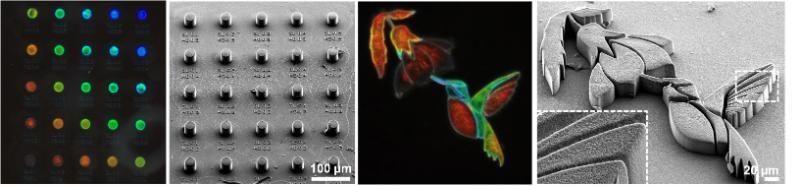
Half a billion years ago nature evolved a remarkable trick: generating vibrant, shimmering colours via intricate, microscopic structures in feathers, wings and shells that reflect light in precise ways. Now, researchers from Trinity have taken a major step forward in harnessing it for advanced materials science. A team, led by Professor Colm Delaney from Trinity’s School of Chemistry and AMBER, the Research Ireland Centre for Advanced Materials and BioEngineering Research, has developed a pio...
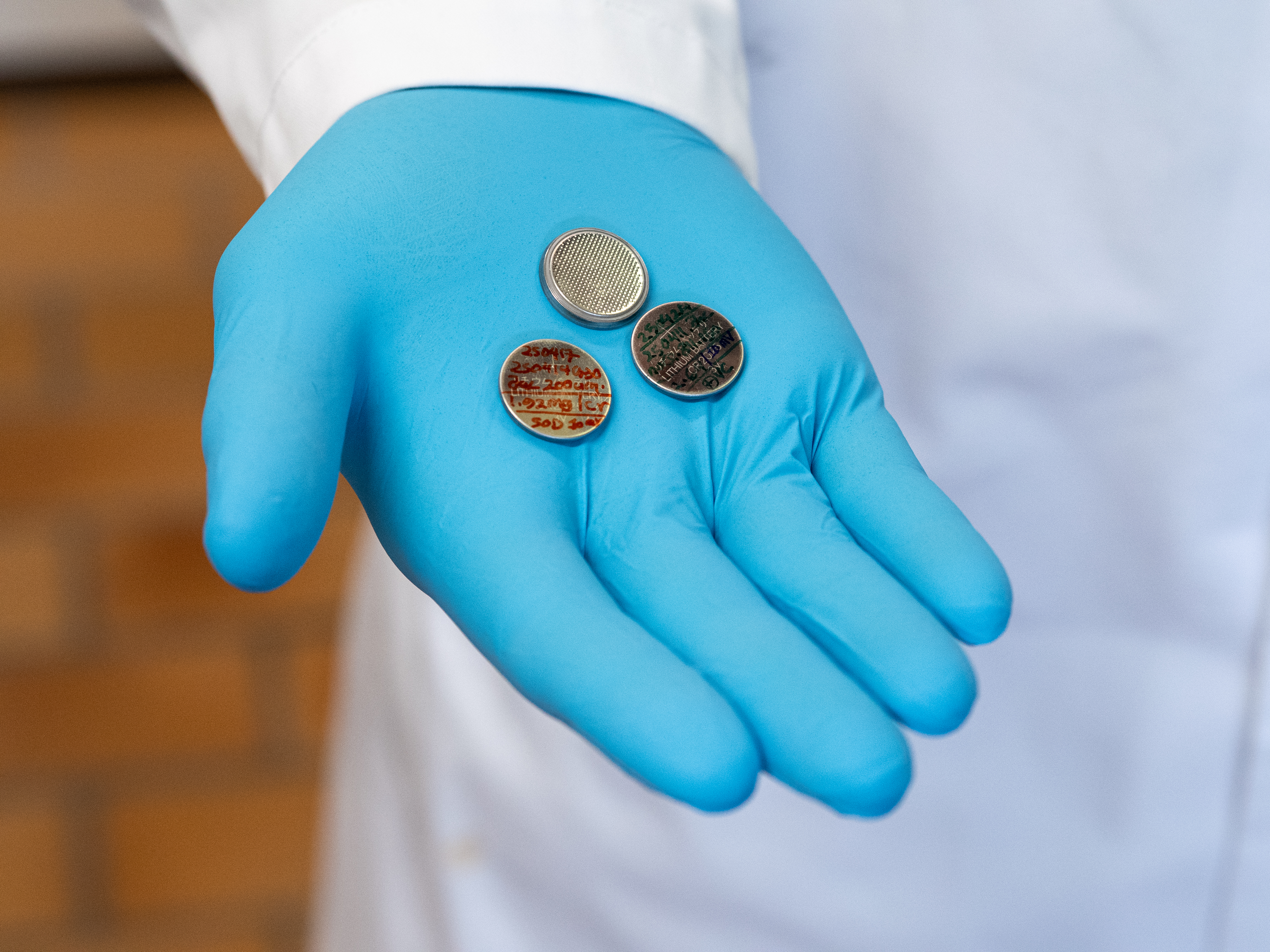
Pure graphene for industrial applications is usually obtained from graphite. Conventional production methods have a very low yield of pure graphene, which has to be separated from waste products at great expense. However, thanks to a previous research project, the Empa researchers have an ace up their sleeve: They developed a process with which high-quality graphene can be “exfoliated” from graphite both cost-effectively and efficiently, and processed into a gel-like printable ink. This graph...