University of Oxford

Physicists in the Department of Physics, University of Oxford, have used a hybrid quantum computer, formed by qubits and quantum oscillators, to observe the Aharonov-Bohm effect in a quantum simulation. The effect is a quantum phenomenon in which a particle can acquire a measurable phase by travelling around a magnetic flux, even though it never passes through a region where a magnetic field is present.
The result demonstrates how hybrid quantum systems can be used to simulate interactions between matter and gauge fields that become increasingly difficult to model on classical computers. The paper has been published in Nature Physics.
In classical, everyday physics, the motion of a charged particle is determined locally by the electric and magnetic fields it encounters. Quantum mechanics allows a more subtle effect. In 1959, physicists Yakir Aharonov and David Bohm predicted that a charged particle travelling around, rather than through, a region containing a magnetic field would still pick up a measurable trace of that field's presence. This became known as the Aharonov–Bohm effect, and it was later confirmed in experiments with real electrons.
Physicists are now interested in seeing the effect emerge in a different setting: lattice gauge theories. These are mathematical frameworks used to describe interactions between matter and gauge fields, including important models in particle and high-energy physics. In a lattice gauge theory, matter sits at the points of a grid, and the fields live on the links connecting those points.
The difficulty is that as these systems grow, their behaviour becomes increasingly difficult to calculate on a classical computer. Quantum computers, which operate according to the same quantum rules the theories describe, offer another approach: rather than solving the full dynamics on a classical computer, researchers build a physical system that behaves in the same way and observe what it does. This is known as quantum simulation.
Beginning in 2022, lead author Dr Sebastian Saner, Dr Oana Bazavan and colleagues in Oxford, working with Dr Alejandro Bermudez from the Instituto de Física Teórica in Madrid, developed an experiment to simulate lattice gauge theories using a hybrid quantum system. Their experiment used a hybrid quantum system with two kinds of component, each playing a different physical role.
Qubits – quantum bits, encoded in the internal states of trapped ions – represented the gauge fields, while quantum oscillators – the vibrations of those same ions – represented the matter. Using this encoding, the team built a loop, the elementary building block of the theory, from two oscillators representing matter at two points, connected by two qubits representing the fields between them.
The team then prepared the two qubits in an entangled quantum state, in which their properties are linked in a way that has no classical equivalent. In the language of the lattice gauge theory, this corresponds to a magnetic flux piercing the loop. Producing such a flux in the conventional way, as a fixed background, would have required an interaction the hardware could not provide, so encoding it in the qubits began as a practical workaround.
'For us, the exciting step was to encode the magnetic flux in a gauge field that was itself dynamical,' says Dr Saner. 'Rather than having matter evolve in a fixed background, the matter and gauge field become part of the same quantum dynamics.' What began as a workaround turned out to be the more interesting route.
The researchers then watched a matter particle tunnel around the loop. With no flux present, it tunnelled freely. With the flux present, the two paths around the loop interfered destructively, suppressing the tunnelling completely and leaving the system frozen in its starting state. The result was experimental demonstration of the Aharonov–Bohm effect in a dynamical setting within a lattice gauge theory.
The paper appears alongside related work from a group at the University of Maryland led by Professor Norbert Linke, which used a hybrid quantum system to simulate the Yukawa potential, an interaction relevant to nuclear and particle physics. The two groups developed their approaches independently before coordinating their submissions to Nature Physics. Together, the two studies highlight the potential of hybrid quantum architectures for simulating fundamental interactions that are difficult to tackle classically.
The paper 'Aharonov–Bohm interference in a ℤ₂ lattice gauge theory on a hybrid qubit–oscillator quantum computer,' S Saner et al has been published in Nature Physics, 25 September 2026
Reference
Aharonov–Bohm interference in a lattice gauge theory on a hybrid qubit–oscillator quantum computer
S. Saner, O. Băzăvan, D. J. Webb, G. Araneda, C. J. Ballance, R. Srinivas, D. M. Lucas, and A. Bermúdez
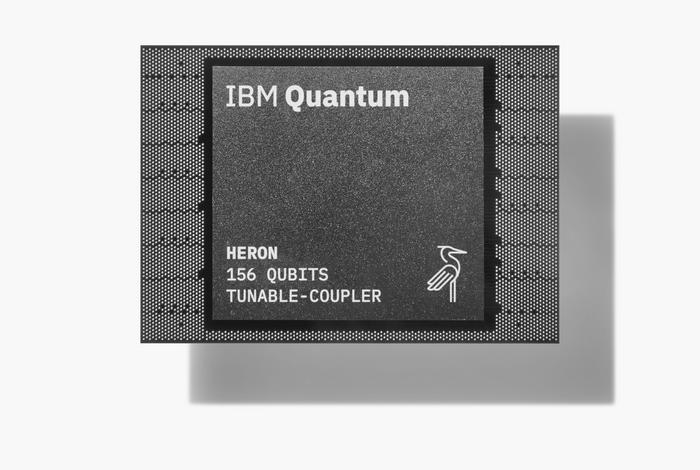
Researchers from Rutgers, IBM and collaborators demonstrated real-time quantum feedback control on a 156-qubit Heron processor, using up to 100 connected qubits. By alternately scrambling information and resetting qubits nearly 5,000 times each, they steered the system from chaos to an ordered state, revealing a sharp phase transition.
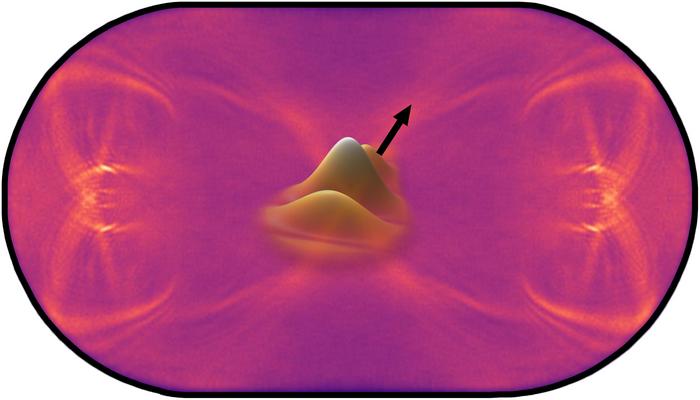
A quantum "wave packet" (in the middle) launched from the same kind of starting point behaves differently. Even after bouncing around for a very long time, faint filament-like patterns (bright glow) are still visible, a tattoo tracing back to its early history. This lingering imprint is the "quantum birthmark" described in the study. Credit: Joonas Keski-Rahkonen, Tampere University Even the most chaotic quantum systems keep a permanent mark of their own past – a "quantum birthmark" – that...

A chip-based quantum memory built from erbium-doped thin-film lithium niobate shows that photons can be held on an integrated nanophotonic platform for more than a microsecond. Using spectral hole burning to form an atomic frequency comb, the device preserves quantum information at high fidelity and stores multiple photons at once. Because the platform supports wafer-scale manufacturing, it points toward practical quantum memories for scalable quantum computers and communication networks.






