College Park, 14 October 2026. IonQ (NYSE: IONQ) announced the pricing of a $2.0 billion equity offering. The securities will be purchased from the underwriter by an entity managed by Heights Capital Management, Inc.
The offering consists of 20,500,000 shares of IonQ common stock at $40.00 per share, and pre-funded warrants to purchase 29,500,000 shares at $40.00 per pre-funded warrant. Each represents a premium of approximately 15% to IonQ's closing stock price on October 13, 2026. The offering also includes seven-year warrants to purchase 100,000,000 additional shares at an exercise price of $69.46 per share, a premium of 100% to IonQ's closing stock price on October 13, 2026.
J.P. Morgan acted as the sole underwriter in the transaction. Paul, Weiss, Rifkind, Wharton & Garrison LLP served as legal counsel to IonQ. Simpson Thacher & Bartlett LLP acted as legal counsel to J.P. Morgan. Skadden, Arps, Slate, Meagher & Flom LLP acted as legal counsel to the investor.
"This investment will accelerate the commercialization of our full-stack quantum platform and is a tremendous vote of confidence in the trailblazing innovation that has defined IonQ," said Niccolo de Masi, Chairman and CEO of IonQ.
A shelf registration statement relating to these securities has been filed with the SEC and is effective.
Source: IonQ news
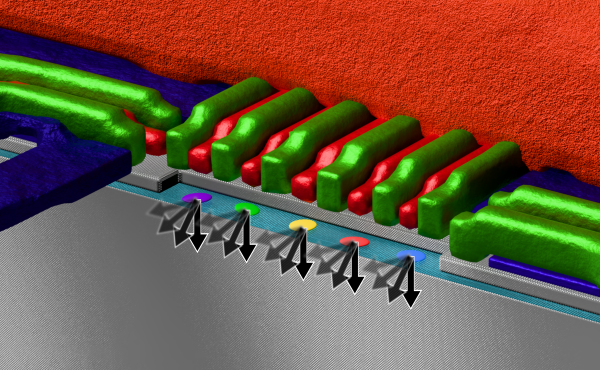
Silicon spin qubits usually lose accuracy when many qubits are driven in parallel, a barrier to scalable quantum processors. Writing in Nature Physics, RIKEN researchers traced the main error source to AC Stark shifts from shared microwave control signals. Their pairwise phase calibration protocol restored gate fidelities above 99.99% for up to three simultaneous qubits, and about 99.9% across all five, near fault-tolerant requirements.
Qilimanjaro Quantum Tech has completed a €19.6 million first close of its Series A round, led by Indra Group through IndraMind. SETT renewed its support with €9.6 million.
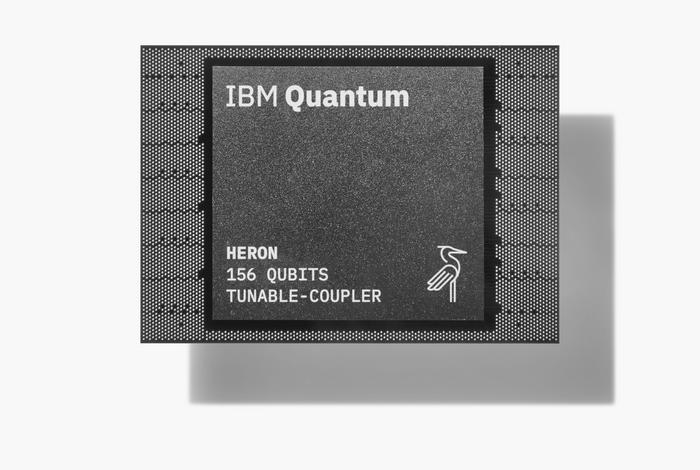
Researchers from Rutgers, IBM and collaborators demonstrated real-time quantum feedback control on a 156-qubit Heron processor, using up to 100 connected qubits. By alternately scrambling information and resetting qubits nearly 5,000 times each, they steered the system from chaos to an ordered state, revealing a sharp phase transition.






