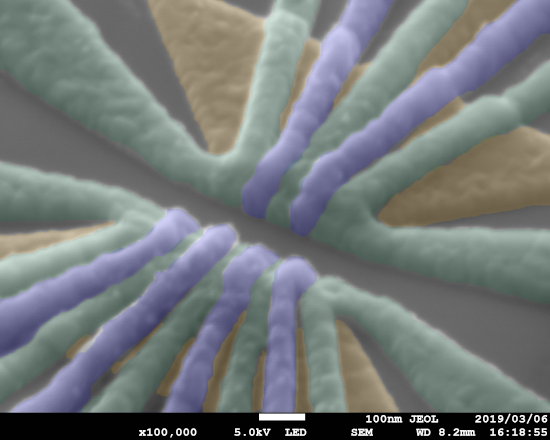
Researchers from RIKEN in Japan have achieved a major step toward large-scale quantum computing by demonstrating error correction in a three-qubit silicon-based quantum computing system. This work, published in Nature, could pave the way toward the achievement of practical quantum computers.
Quantum computers are a hot area of research today, as they promise to make it possible to solve certain important problems that are intractable using conventional computers. They use a completely different architecture, using superimposition states found in quantum physics rather than the simple 1 or 0 binary bits used in conventional computers. However, because they are designed in a completely different way, they are very sensitive to environmental noise and other issues, such as decoherence, and require error correction to allow them to do precise calculations.
One important challenge today is choosing what systems can best act as “qubits”--the basic units used to make quantum calculations. Different candidate systems have their own strengths and weaknesses. Some of the popular systems today include superconducting circuits and ions, which have the advantage that some form of error correction has been demonstrated, allowing them to be put into actual use albeit on a small scale. Silicon-based quantum technology, which has only begun to be developed over the past decade, is known to have an advantage in that it utilizes a semiconductor nanostructure similar to what is commonly used to integrate billions of transistors in a small chip, and therefore could take advantage of current production technology.
However, one major problem with the silicon-based technology is that there is a lack of technology for error correction. Researchers have previously demonstrated control of two qubits, but that is not enough for error correction, which requires a three-qubit system.
In the current research, conducted by researchers at the RIKEN Center for Emergent Matter Science and the RIKEN Center for Quantum Computing, the group achieved this feat, demonstrating full control of a three-qubit system (one of the largest qubit systems in silicon), thus providing a prototype for the first time of quantum error correction in silicon. They achieved this by implementing a three-qubit Toffoli-type quantum gate.
According to Kenta Takeda, the first author of the paper, “The idea of implementing a quantum error-correcting code in quantum dots was proposed about a decade ago, so it is not an entirely new concept, but a series of improvements in materials, device fabrication, and measurement techniques allowed us to succeed in this endeavor. We are very happy to have achieved this.”
According to Seigo Tarucha, the leader of the research group, “Our next step will be to scale up the system. We think scaling up is the next step. For that, it would be nice to work with semiconductor industry groups capable of manufacturing silicon-based quantum devices at a large scale.
Reference
Quantum error correction with silicon spin qubits
Kenta Takeda, Akito Noiri, Takashi Nakajima, Takashi Kobayashi & Seigo Tarucha
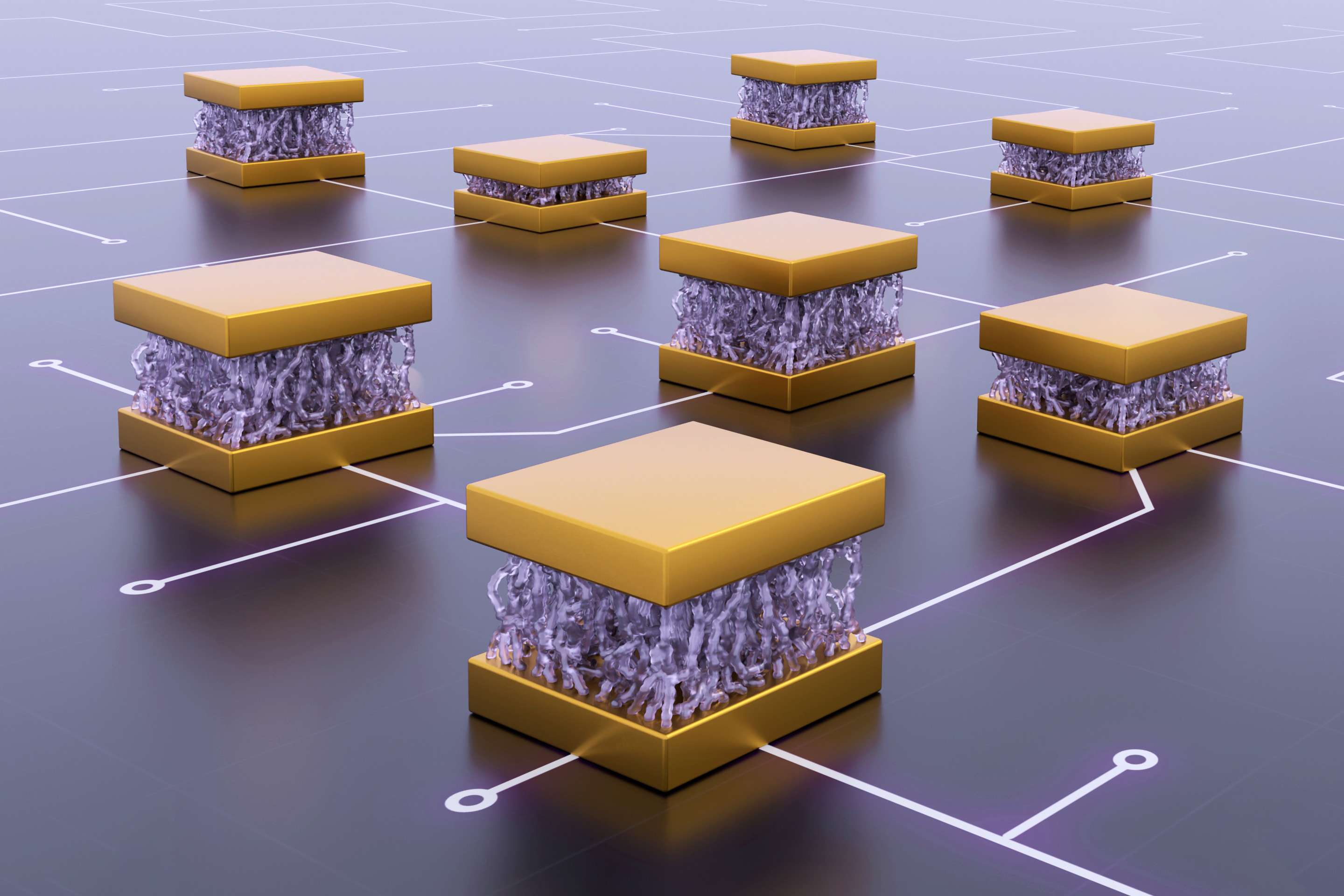
This illustration shows the nano-mechanical devices the researchers developed. Inspired by neurons, they can perform computing tasks with high energy efficiency. Image: Emily Theobald MIT researchers have created a new computing platform that could be used to develop intelligent and adaptive next-generation electronics that can simultaneously perform multiple functions, like computing and memory, all within one extremely compact, energy-efficient device. Such a platform opens opportunities...
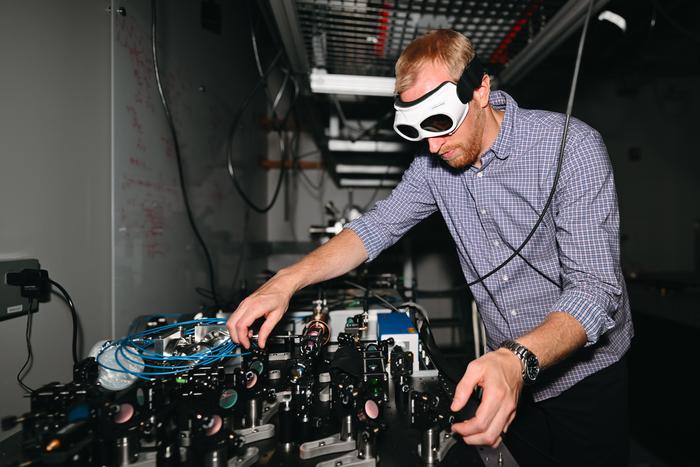
Breakthrough from a team led by Jacob Covey, associate professor in the University of Chicago’s Pritzker School of Molecular Engineering and Department of Physics, turns helium-3’s low mass into a quantum resource
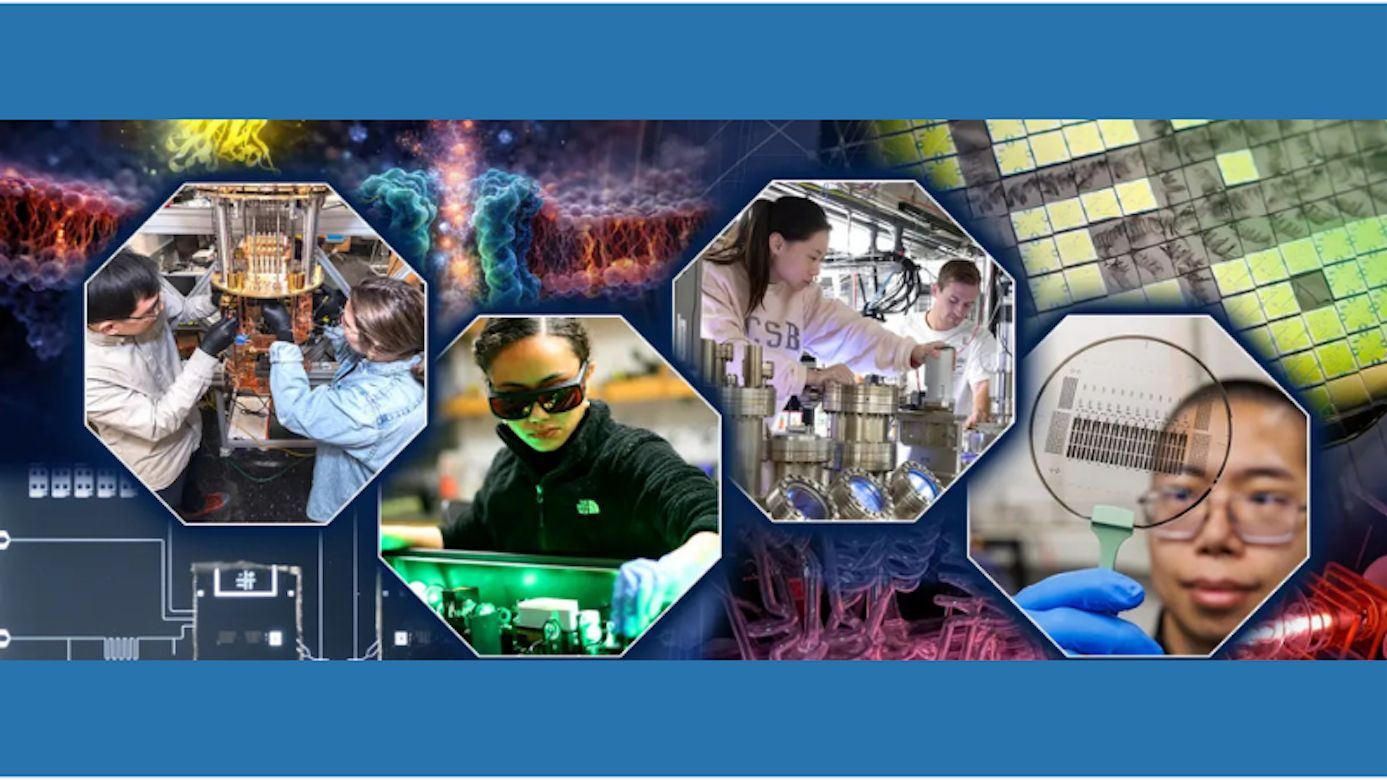
Courtesy of the National Science Foundation The NSF's Quantum Leap Challenge Institutes are taking on some of the hardest scientific hurdles in the global race to create powerful quantum-based technologies. Two UCLA computer scientists will help lead major national efforts to address some of quantum computing’s biggest challenges, serving as co-principal investigators for separate research institutes backed by five-year, $37.5 million grants from the National Science Foundation. The two...






