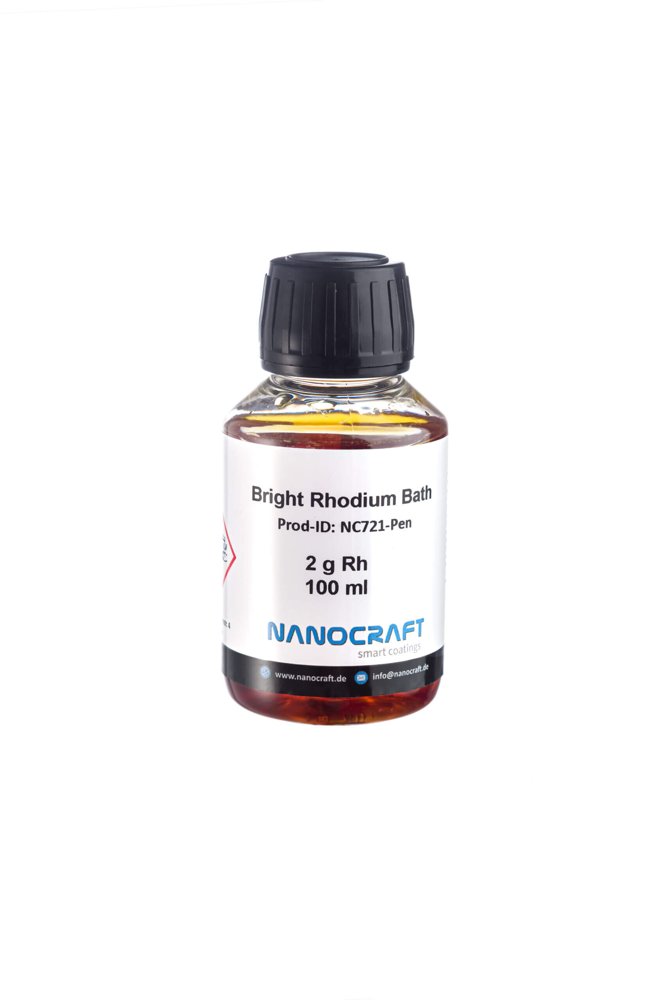
High quality rhodium Pen/Brush plating solution for decorative applications! The rhodium bath NC721-Pen is specially suitable for partial plating, for multi-color processing and reparation or restoration. The result is a brilliant white rhodium layer. Rhodium content: 2 g Rh/100 ml Technical Specifications Electrolyte characteristics Metal content: 25 g/l Rh pH value: <1 Operating temperature: 20 - 40 °C Voltage: 6 - 10 V Coating Characteristics Alloy composition: 99.9 wt. % Rh Color of deposit: Brilliant-white Brightness: Ultra-bright Max. Coating Thickness: 0.1 μm
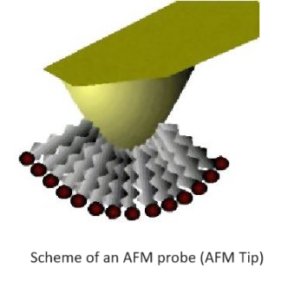
AFM probes for atomic force microscopy can be chemically, biologically and physically modified by us. Chemically and biologically modified AFM probes can be used to obtain additional information such as the chemical composition of the surface in addition to the usual information provided by an AFM. This is called Chemical Force Microscopy (CFM). You can select the appropriate AFM probes from our wide product range, depending on the chemical or biological composition of the hydrophilic or hydrophobic surface to be examined. If required, we are happy to advise and support you in the selection of the suitable AFM tip. We produce the customer-specific modified AFM probes according to your individual wishes. Measuring probes with tip radii of 7 nm – 500 nm and spring constants of 0.006 N/m – 40 N/m are available: Modification / Property / Area of application - CH3 hydrophobic for hydrophobic contrast in H2O - CF3 hydrophobic, polar very strong hydrophobic. For hydrophobic contrast in H2O - NH2 hydrophobic, hydrophilic charge, amino groups and acid groups can be detected - COOH hydrophobic, hydrophilic charge and acid groups can be detected - OH hydrogen bonds polar groups in particular OH groups via temporary hydrogen bonds in hexadecane can be detected - titan coating titan coating: Coat thickness 10 nm -500 nm - gold coating gold coating: Coat thickness 10 nm -500 nm The minimum order quantity is 5 probes per modification. Chemically sensitive electrodes are supplied in gel packs in air or inert gas or in a special holder in ethanol. Thus the shelf life of the chemically modified electrodes is several months if stored carefully.
CATEGORY
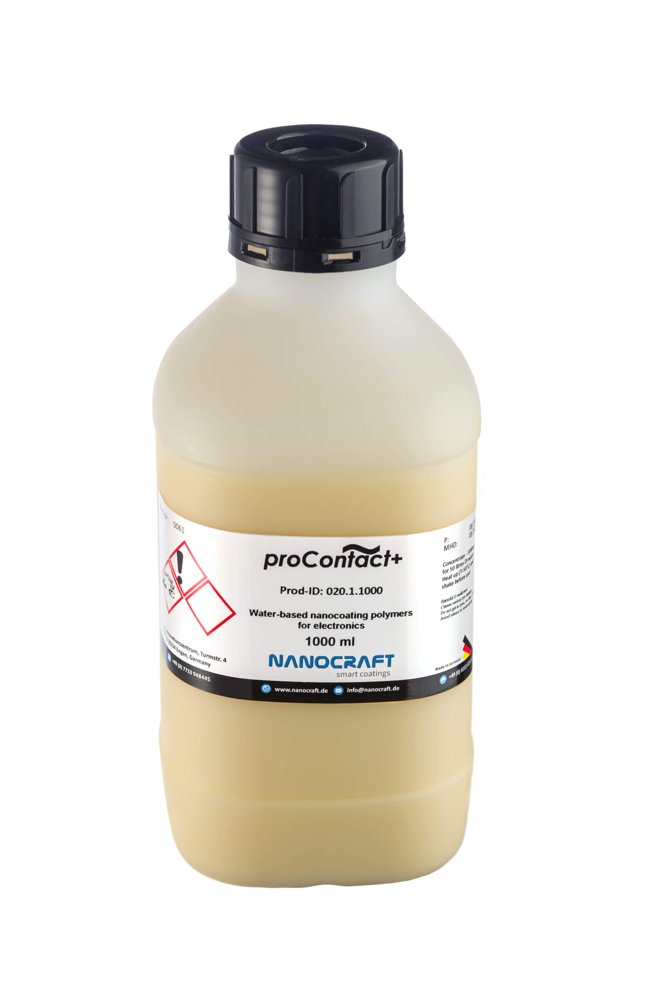
The protective finishing proContact+ is used in a variety of electrical contact areas. It protects the contact points from contamination as well as from mechanical stress and corrosion and thus ensures the electrical contact. Moreover, the electrical properties of the base material are maintained. Fields of application: Electronic and semiconductor industry, test contact manufacturers, connectors, technical gold surfaces. This protection system for contact surfaces is based on molecular technologies and is free of particle and heavy metal ions. Special bio-polymers adsorb on the contact surface and combine to form a conductive protective layer a few nanometers thick. Packing: 1 L, 10 L, 20 L (ready-to-use) 100 ml, 1 L, 10 L, 20 L (concentrate) Advantages conductive and solderable protective coating Protective finishing for electrical contacts Increases the lifespan of electrical contacts Visually invisible due to the low layer thickness Chemically inert as well as dirt and water resistant Reduces oxidizing processes on the metal surface Reduces environmental pollution Free of particles and heavy metal ions It is compliant with EU Directive 200/53/EC and ROHS Directive 2011/65/EU (RoHS 2) Applications Electronic and semiconductor industry Test contact manufacturers Connectors Technical gold surfaces
CATEGORY
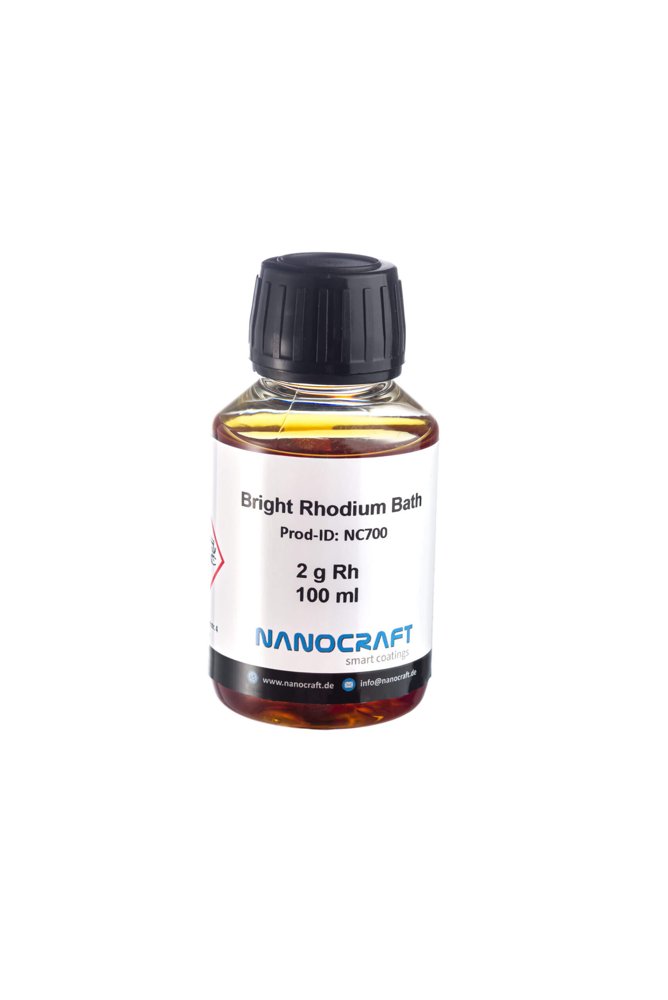
Rhodium NC700 deposits mirror shining, brilliant white, magnificent hard and abrasion resistant rhodium layers. It is additionally characterized by high covering speed and excellent throwing power. Furthermore the NC700 Ultra Bright layer thicknesses of up to 1.5 micron can be deposited crack-free. Rhodium can be directly deposited on silver, gold, copper and copper alloys, nickel and nickel alloys. When plating tin, lead, zinc, aluminium and iron, intermediate nickel coatings of some micron thickness are absolutely essential. Strike nickel plating is advantageous with all substrates. Rhodium content: 2 g Rh/100 ml Advantages - Ultra-bright coatings with previously unattained lightness and brilliance - Good covering speed - Minor porosity - Excellent throwing power - Layer thicknesses of up to 1.5 micron can be deposited - For rack and barrel plating - High abrasion resistance Applications - Jewelry & Watches - Spectacle frames - Writing implements - Electronic and communication industries - Industries Technical Specifications Electrolyte characteristics - Electrolyte type: Strongly acidic - Metal content: 5 (1.3 - 3.0) g/L Rh - pH value: <1 - Operating temperature: 45 (40 - 55) °C - Current density range: 1 - 2 (0.5 - 10) A/dm2 - Plating speed: 0.08 μm/min at 1 A/dm2, 0.10 μm/min at 2 A/dm2 - Anode material: MMO (RuO2-TiO2) or Pt-Ti Coating Characteristics - Coating: Rhodium - Alloy composition: 99.9 wt. % Rh - Color of deposit: Brilliant-white - Brightness: Ultra bright - Hardness of deposit: Approx. 800-900 HV - Max. Coating Thickness: Approx. 1.5 μm - Density of the coating: Approx. 12.4 g/cm3
CATEGORY
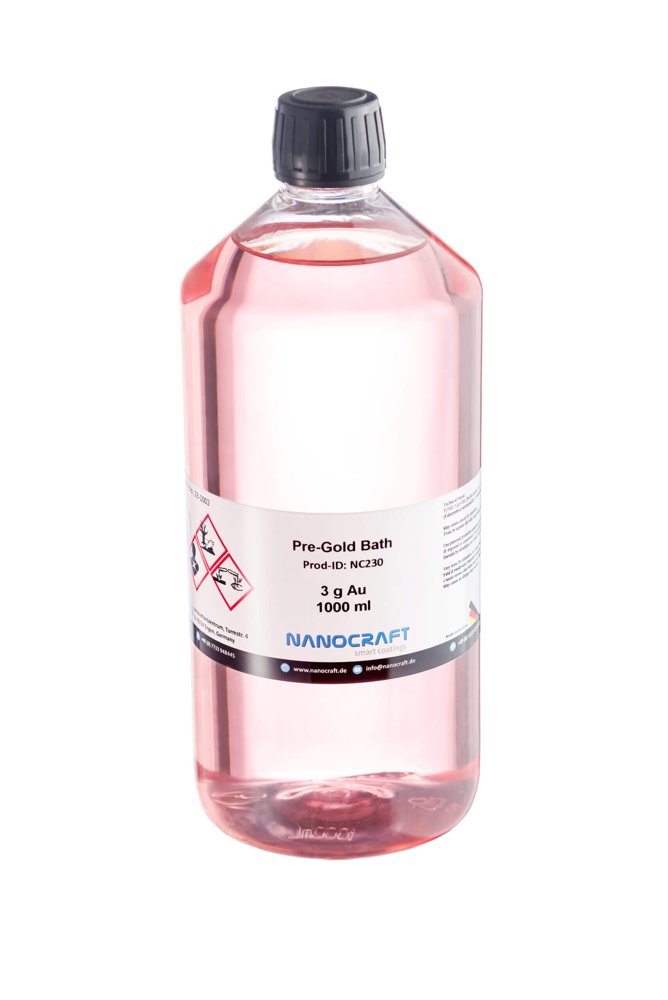
NC230 is a strongly acidic alloy electrolyte for the adhesive direct gold-plating of stainless steel. It is preferably used for chromium-nickel steels, molybdenum steels and nickel based alloys difficult to activate. Because of its highly activate impact it can be used successfully for passive material which is difficult to plate. The gold electrolyte generally improves the adhesive properties between base material and galvanic surface. The gold electrolyte is suitable for both strike gold layers and thick coatings in the decorative field. The coatings are low in pores and protect against corrosion. The alloy electrolyte can be used for rack and barrel. Gold content: 3 g Au/1000 ml Advantages - Hard gold electrolyte for the direct gold-plating of stainless steel - Low-pore and crack-free coatings - Suitable for strike gold layers as well as for thick coatings - Good throwing power - Suitable for rack and barrel Applications - Jewellery & Watches - Household articles - Writing implements - Spectacle frames - Cutlery Technical Specifications Electrolyte characteristics Electrolyte type: Strongly acidic Metal content: 3 g/L Au pH value: 1.3 (0.6 - 2) Operating temperature: Room Temperature, up to max. 40°C Current density range: 2 - 6 A/dm2 Plating speed: 0.04 - 0.15 μm/min Anode material: MMO (RuO2-TiO2) or Pt-Ti Coating Characteristics Coating: Gold-Cobalt Alloy composition: 99.7 wt. % Au, 0.3 wt. % Co Color of deposit: Yellow Brightness: Bright Hardness of deposit: 165 HV Max. Coating Thickness: Approx. 2 μm Density of the coating: Approx. 17.5 g/cm3
CATEGORY
