
By Canatu
Electrochemical biosensors Medical diagnostics is about to be transformed – saving lives and money. Canatu’s electrochemical biosensors offer the highest sensitivity outside a lab – over ten times more sensitive than anything our competitors can offer. Exceptional sensitivity unlocks unprecedented opportunity to detect new assays, as well as severe diseases and infections, at their earliest stages. The inherently large surface area, high conductivity and tailorable surface chemistry makes Canatu CNTs an ideal electrode material for electrochemical biosensors.
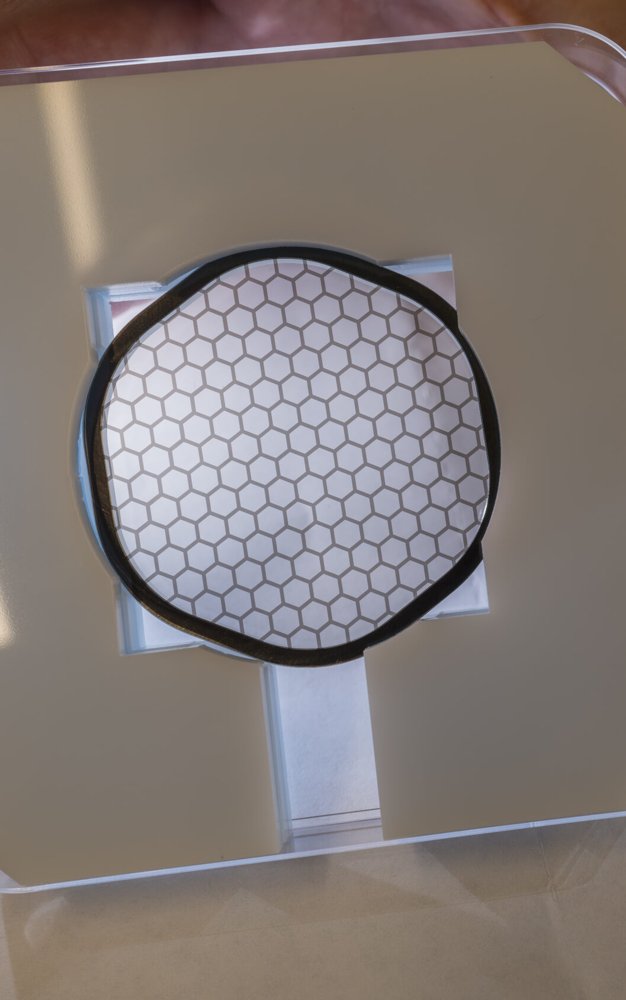
Inspection membranes filter debris from the EUV light source and optical path, enhancing quality control in pre- and post-lithography processes. Inspection membranes with exceptional mechanical strength Canatu inspection membranes are designed to enhance quality control in pre- and post-lithography exposure processes. They prevent EUV-generated particles from contaminating or damaging the sensitive and expensive optics or masks, ensuring high-quality, defect-free processes with high heat resistance and EUV light transmission. In mass production since 2021, they are perfectly suited for advanced semiconductor manufacturing. - Ultra-thin transparent debris filters with exceptional mechanical strength and long-term durability - Withstands high-vacuum and differential pressure environments due to high tolerance to pressure pulses - Prevents particle contamination on photomasks by filtering debris (plasma and molten metal particles) from the EUV light source and optical path - High EUV / X-Ray transmittance while selectively blocking UV, DUV, visible, and infrared radiation for optimal light passage, enabling accurate defect detection - Flexible fabrication onto selected frames with a novel all-carbon mesh structure - Customizable coating thickness enabling gas sealing and differential pressure control Functionality Prevent particle contamination: Ensures contamination is minimized within the tool, including mirrors, photomask and EUV pellicle. These debris filters are utilized in EUV mask inspection to improve quality control and to protecting masks from potential contamination by the contamination source. Preserves optical clarity of the tools: With high EUV transmittance, Canatu inspection membranes maintain optimal light passage, enabling accurate defect detection. Application Canatu inspection membranes are used in pre- and post-lithography processes to filter debris, block DUV photons and/or electrons, and provide gas seal for differential pressure. These membranes can be used in various applications, including, but not limited to, EUV mask inspection before and after the lithography process for EUV mask qualifying tools to enhance quality control. The patterned mask inspection is currently the primary market for Canatu’s inspection membranes. Beyond patterned mask inspection, other quality control phases – including blank masks and optical filters, are also possible applications for inspection membranes. Key benefits High EUV transmittance: Ensures optimal light passage for accurate defect detection Flawless mask inspection: Prevents contamination from EUV light source and optical path, ensuring defect-free mask Extended lifespan: Enables lower inspection machine power usage, extending the laser source’s lifespan and reducing service interval. Leveraging versatile platform technology for inspection membranes Canatu CNT membranes serve as a versatile platform technology for a wide range of EUV and optical filter applications. Within Canatu’s product portfolio, you will find an array of cutting-edge solutions such as CNT pellicle membranes, inspection membranes, and optical filters tailored to different needs. These membranes are created from Canatu CNT, renowned for its exceptional purity and properties. Canatu CNTs are synthesized in a floating catalyst chemical vapor deposition (FC-CVD) reactor, and then dry-deposited onto an open frame or a border. With more than a decade of experience in large-scale production of CNTs, Canatu excels in controlling the process and tailoring CNTs for different uses. All-carbon mesh A novel mesh structure manufactured from Canatu CNTs provides an alternative to conventional metal meshes. - Enhanced mechanical properties - Excellent film-to-mesh adhesion - Stops film tear propagation after puncture - A wide range of shapes and dimensions to minimize EUV transmittance loss - Retains spectral purity in X-ray applications
CATEGORY
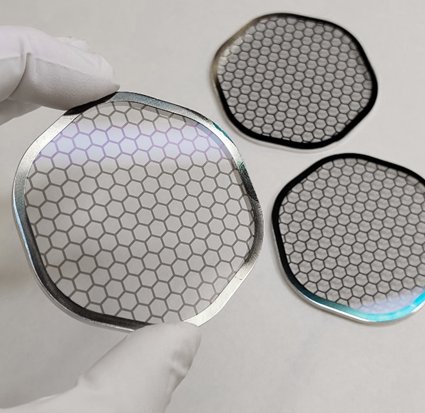
Canatu debris mitigation filters prevent EUV particles from contaminating or damaging the photomask and sensitive optics, ensuring safe and accurate actinic inspection process. Debris filters for EUV mask inspection Canatu debris filters made of carbon nanotube (CNT) membrane are designed to ensure quality control by protecting the photomask during the EUV actinic inspection process. They prevent EUV-generated debris from contaminating the reticle and sensitive optics, while maintaining high EUV light transmission for accurate inspection. In mass production since 2021, they are perfectly suited for particle control for semiconductor manufacturing. - Prevents particle contamination of photomask by filtering debris from the EUV light source and optical path - 97% EUV transmittance while selectively blocking UV, DUV, visible, and infrared radiation for optimal light passage, enabling accurate defect detection - Ultra-thin transparent debris filters with exceptional mechanical strength and long-term durability - Withstands high-vacuum and differential pressure environments due to high tolerance to pressure pulses - Flexible fabrication onto selected frames with a novel all-carbon mesh structure - Customizable coating thickness enabling gas sealing and differential pressure control How CNT debris filters enable EUV mask inspection EUV mask inspection has become critical for detecting nanoscale defects that can affect millions of chips. To mitigate debris generated by EUV light, debris filters made of carbon nanotube (CNT) membranes became a key enabler for reliable EUV inspection, with their unique combination of high EUV transmission and durability. Advanced debris filters for EUV Lithography Made of Canatu proprietary CNT membrane, these debris mitigation filters leverage the unique properties of carbon nanotubes to deliver robust, ultra-thin, and highly transparent protection in critical pre- and post- lithography processes. Functionality Prevent particle contamination: Ensures contamination is minimized within the tool, including mirrors, photomask and EUV pellicle. This debris filters are utilized in EUV mask inspection to improve quality control and to protecting masks from potential contamination by the contamination source. Current and potentials applications Canatu debris filters a re currently used in pre- and post-lithography processes to filter particles, block DUV photons and/or electrons, and provide gas seal for differential pressure. They can be used in various applications, including, but not limited to, EUV mask inspection before and after the lithography process for EUV mask qualifying tools to enhance quality control. Exceptional properties suited for any environment High EUV transmittance: Ensures optimal light passage for accurate defect detection Flawless mask inspection: Prevents contamination from EUV light source and optical path, ensuring defect-free mask Extended lifespan: Enables lower inspection machine power usage, extending the laser source’s lifespan and reducing service interval.
CATEGORY

Film heaters using Canatu CNT provide clear field of vision for ADAS systems to function in any weather. In harsh weather, sensors get covered with ice, fog, and snow, risking reliable ADAS sensor ranging. The Canatu film heater keeps sensors clear, enabling autonomous driving in any weather. These wire-free film heaters offer industry-leading optical performance with high transmittance and minimal scattering. They provide fast, uniform, and power-efficient heating across the sensor cover, eliminating common issues associated with traditional metallic heating wires, such as thermal gradients, hotspots, and obstruction of the view. Film heater benefits: - Industry-leading optical performance: high transmittance in VIS / NIR range - Fast, uniform, and power-efficient heating - 3D formable and in-moldable enabling design freedom for complex geometries - Customized to meet specific optical and heating requirements - Automotive-grade reliability High optical performance The Canatu film heaters feature high transmittance in visual and near infrared range. They are completely wire-free, enabling even heating without optical distortion. Canatu film heaters exhibit ultra-low haze, minimal light scattering and they preserve wavefront uniformity, making them ideal for the most demanding optical applications. Even and power-efficient heating Carbon nanotubes are one of the best thermal conductivity materials. In fact, CNTs are 1000x more conductive than copper. Applied on a plastic substrate, Canatu CNTs form a very thin coating with very small thermal resistance, providing even and power-efficient heating across the whole area. The Canatu film heaters are also energy-efficient, using 40% less energy compared to wire heaters, which means you get the same heating performance with lower power consumption. Design freedom for complex geometries Our film heater can be 3D formed before integration if desired. Our material is highly stretchable (200%) and can be bent with the bending radius of only 1mm. Film heaters using Canatu CNT can be thermoformed or high-pressure formed into any 3D shape, offering design freedom for complex geometries. Easy integration by FIM or lamination Canatu film heaters can be seamlessly integrated into the plastic cover lens through film insert molding. For the glass lens, the heater can be sandwiched between interlayers and laminated between B and C glass surfaces, or it can be laminated behind the glass on the D glass surface. Download technical data Download further information on our film heaters. In mass-production since 2015 Canatu has been in mass production with the automotive industry since 2015 and with the semiconductor industry since 2021. At the end of 2024, Canatu carried out mass production through 11 programs, including CNT products and reactors, having delivered 1,1M sensors with a truly exceptional Field Return Rate (FRR) of zero. Automotive-grade reliability With autonomous cars on the rise, safety and reliability standards in the automotive industry are more rigid than ever. In light of this, Canatu film heaters have undergone rigorous testing to earn 3rd party validation in these aspects, passing several rigorous test procedures. This is in line with Canatu’s commitment to R&D, which has allowed the company to consistently improve upon its products and solutions. The Canatu film heaters have successfully passed automotive industry standard 85°C/85% 2000 hrs reliability tests. Usually, 2000 hrs tests at 85 degree Celsius and 85 percent relative humidity are used to predict up to 25 years of operation. The reliability standards ultimately vary between markets, with Japanese benchmarks being universally recognized as most stringent. Thus, meeting reliability requirements in Japan signifies that Canatu will likely be able to comply other international standards. “We are extremely happy that Canatu’s heater product has achieved the high industry standards for reliability. We have set rigid quality standards for our suppliers in accordance with customer needs. High evidence of reliability is required to ensure products will always work,” Toshihiko Muraki, Senior Director, Thermal Systems Business Group at DENSO CORPORATION Increasing CNT performance and lowering manufacturing costs Canatu has been mass manufacturing for automotive applications since 2015. Since then, Canatu has moved towards effectively industrializing CNT film by more than doubling previous performance levels whilst also lowering costs. Years of R&D has resulted in a record-breaking industrially applicable sheet resistance to optical transparency ratio in CNT films at 35Ω/sq to 90% transmittance. Though increasing electrical conductivity without harming transmittance or adding cost is a significant challenge, these constraints were mitigated due to Canatu’s wealth of nanotechnology expertise. Canatu’s careful control over the synthesis process produces longer CNTs that are extremely clean, enabling the formation of thin yet strong CNT networks. Industrializing CNT film manufacturing has brought costs down to a tenth, and the trend continues. Furthermore, Canatu’s scalable product platforms provide a solid core for applying Canatu CNT for various industries. Production costs have decreased ten-fold in the past three years, with the downward trend projected to continue.
CATEGORY
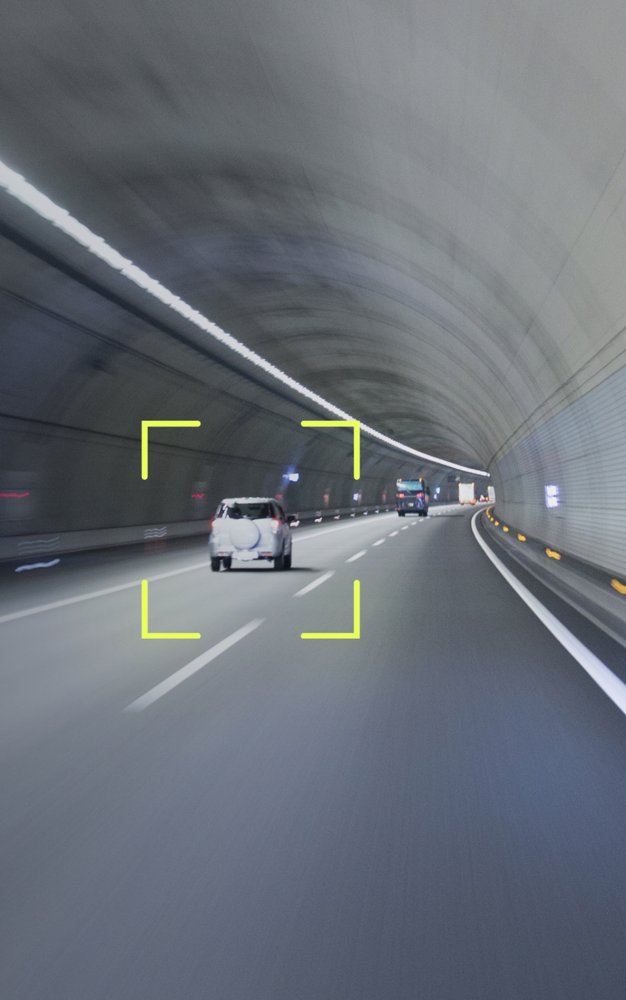
ADAS camera heaters require high levels of transmittance at visible and infrared wavelengths, as well as even heating to remove weather-related obstructions. Canatu CNT film heaters exhibit the ideal optical properties and heating performance that allow ADAS cameras to accurately detect surrounding objects in any weather. ADAS cameras create a continuous video stream of the environment. This is the source for advanced machine-learning-based object identification and incident detection algorithms. For ADAS cameras to perform reliably, it’s essential that the field of view through the lens is clear, making them sensitive to weather conditions. Efficacy can be lowered due to obstruction by fog, snow, ice or mist. Canatu ADAS camera heaters have been specially designed to overcome these challenges, ensuring reliable ADAS camera performance in any weather. Canatu ADAS camera heater benefits: - superior optical performance at visible and infrared wave lengths - fast, even and power-efficient heating - high level of design freedom with vehicle integration - proven automotive-grade reliability Clear optical path Canatu ADAS camera heaters, which are based on Canatu CNT transparent conductive film, have high transmittance throughout the visible and infrared wavelengths. Canatu ADAS camera heaters are also wire-free, leading to less obstruction in the camera’s field of view. Due to its low-haze, low-distortion and colour neutrality, camera image quality is hardly impacted by the presence of the heater, effectively preserving image sharpness. Even and efficient heating Canatu ADAS camera heaters can heat up entire surfaces immediately. Such even heating performance prevents signal-deteriorating thermal gradients that risk distorting the camera’s field of view. Furthermore, Canatu ADAS camera heaters consume 40% less power compared to traditional wire heaters and can also be accompanied with real-time temperature monitoring to better optimize power consumption. High performance in steeply raked windshields The steeper the windshield angle, the more glass light has to pass through, and the larger the optically critical area to be heated. Traditional heating wires face severe challenges as the deicing area increases including lack of performance, optical distortion and temperature gradient. Canatu film heaters are transparent, wire-free and conductive throughout the whole surface, offering high optical performance and even heating in optically critical ADAS windshield zones. Taking ADAS camera heater performance to new levels Contemporary ADAS cameras elevate automotive heater requirements to a completely new level. Extremely high optical requirements, combined with the need for even and efficient heating as well as excluding signal-disturbing thermal gradient render most traditional heating solutions unsuitable. Conversely, Canatu ADAS camera heaters solutions, which are based on our CNT film heaters, can effectively meet these demanding requirements. This is attributed to their outstanding optical and mechanical properties, as well as their flexible, seamless integration into glass surfaces such as windshields. With Canatu having been in mass production in the automotive industry since 2015, the company has both the expertise and capacity to take on demanding projects in this field.
CATEGORY
