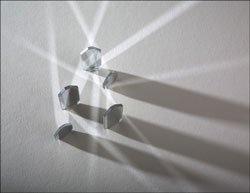
Reynard, a leading global supplier of custom optics and thin film coatings announces high precision coatings for Galvanometer Mirrors. Galvo mirrors are used in various laser system applications such as scanners, bar code readers, sweeping remote sensors, marking systems, and laser light shows. A mirror is modulated on it centered axis, causing a static laser beam to scan in a one-dimensional orientation. Adding a second Galvo mirror allows for scanning in two dimensions. For example, the first scans in an X-orientation across a single line, while the second mirror allows for Y-orientation movement. With a synchronized X-Y controller, any continuous geometric shape can be realized. Our custom optical mirrors are manufactured using most any substrate, but are most commonly made from N-BK7, fused silica or silicon. With our CNC machining capabilities, we can shape these galvo mirror substrates to suit any application. The substrates are then coated with a highly reflective protected metal or multi-layer dielectric tuned for the required wavelength band and application. Our galvo mirror coatings can achieve reflectivity of greater than 99.9% and are able to withstand the most rigid durability requirements per military specifications – including Temperature/Humidity and Salt Fog requirements per Mil-C-48497A.
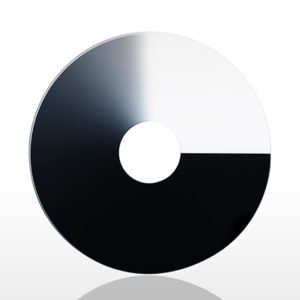
Customizable variable density functions in a compact footprint Reynard, a leading global supplier of custom optical components and thin film coatings announces complete customization of their Circular Variable Neutral Density (CVND) Graduated Filters. This technology is best used in high quality optical systems to change the intensity of light from 100% to less than 0.1%. As the circular neutral density filter rotates, the beam intensity is modified due to the density variation of a gradient metallic coating around the filter. Used from the UV to Infrared, density neutrality can be achieved for narrow band applications, such as lasers, to wide band applications, such as the spectrum of white light. These filters are fully customizable in optical density gradient function, transmission gradient function, substrate type, coating materials, and size to match your application requirements. The key features of a circular neutral density filter are: - Densities are supplied as standard linear or as a custom gradient function. - Gradient function can be supplied from 45° to 360° of rotation. - Gradient coatings are used for Laser as well as Wide Band applications - Substrates can be supplied from 1.0″ (~25mm) to 8″ (~200mm) in diameter - Functional wavelengths are designed to operate from the UV to IR - Custom applications are always welcomed. In imaging systems, large aperture neutrality with constant density can be achieved by configuring two filters of equal design back-to-back. Counter-rotating the two filters allows for a variable setting of the density or transmission requirement in both the rotational and radial directions. “For large aperture imaging, the two-filter solution offers adjustment flexibility that cannot be physically achieved by any other means,” says Forrest Reynard, CEO of Reynard. “High-resolution cameras can operate with full aperture while still being able to attenuate light.” These circular variable graduated neutral density filters are typically specified in linear optical density or transmission. But, since all optical systems are not linear in operation, Reynard offers the capability of customizing the density gradient based on user defined functions. The variable graduated neutral density filters can be made on a variety of substrates including BK-7, Fused Silica, ZnSe, and Ge, among several others. The typical coating material is a nickel variant for room temperature, low-power applications. But, the ND coating can be enhanced to increase survivability in hostel environments by the use of other common and precious metals to match the absorption, spectral, and environmental characteristics of a customized system.
CATEGORY
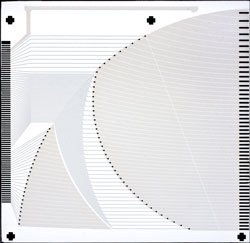
A unique way of monitoring corrosive environments. Reynard, a leading global supplier of custom optics and thin film coatings announces thin film-based environmental gauges. Thin film-based environmental gauges are manufactured by depositing environmentally susceptible coating materials onto an inert substrate. Coating materials are typically deposited in a custom defined quasi-grid pattern of lines. Redundant traces, matched in length and size, can be implemented to monitor environmental changes over a small region, such as for rising gas or fluid conditions, or to provide damage protection when used in abrasive conditions. Unmatched lines allow for the variable open-space monitoring of increasing corrosion levels, or for the monitoring of different types of corrosive elements. Grid configurations are designed for specific operational environments and can utilize a combination of matched and unmatched lines to achieve the required electrical characteristics. The detection of environmental caused degradation is accomplished by monitoring the change in electrical characteristics from one side, or zone, of the environmental gauge to another. Photolithography techniques are utilized to achieve repeatable, high-precision transmission characteristics in confined areas to meet your system requirements. Materials such as Copper, Silver, Aluminum, Iron, and Zinc are commonly used for these lines, although other materials, or dopants, required for specific applications can also be deposited. Traces can be added to most any substrate type, even to flexible substrates such as Melinex®. Reynard Corporation’s thin film engineers will work closely with you to ensure product key characteristics are properly defined and the highest reliability product is delivered on-time to meet the demands of your custom application. Key Characteristics: - Custom grid line configurations - Photolithography based precision and repeatability - Materials to match your application
CATEGORY
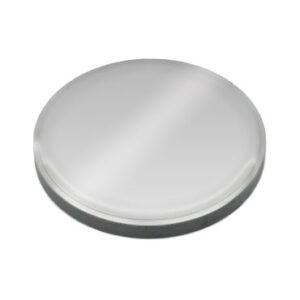
Optical mirrors are precision optical components made of a optical polished substrate material with a high-reflection coating. Our custom high-precision optical mirrors are designed to reflect light and can be made to reflect any wavelengths of light at any angle, as needed for your application. Types of optical mirrors include metallic mirrors, dark mirrors, galvo mirrors, dielectric mirrors, or hybrid mirrors and broadband, narrow band or multi-band. We provide a variety of custom optical mirrors from the UV to the LWIR and all wavelengths in-between. High-precision optical mirrors offer several advantages in various application due to their superior performance and precision. Some key advantages include enhanced image quality, improved system performance, durability and longevity, enhanced optical design flexibility and customization. In summary, high-precision optical mirrors are integral to achieving excellent performance, reliability, and efficiency in various advanced optical applications, ranging from scientific research to industrial and defense systems. So, whether you need optical mirror prototype quantities or are ready to scale to large production volume, we want to partner with you to help you in Perfecting Your Light™. We look forward to discussing the shape, surface and configuration that meet your specifications. Reynard is ISO 9001:2015 certified, ITAR registered, and Cybersecurity (CMMC) compliant, providing the quality standards and compliance many industries require. SPECIFICATIONS: Optical Mirror Types: Metallic Mirror, Dielectric Mirror, Infrared Mirror, Broadband Mirror, Hot Mirror, Cold Mirror, Dark Mirror, 1st & 2nd Surface Mirror, Laser Line Mirror, High-Reflector Mirror & Galvo Mirror Coating Types: Protected Aluminum, Enhanced Aluminum, Protected Silver, Protected Gold & Dielectric Sizes: 3mm - 1000mm Substrate Materials: All Optical Materials OPTICAL MIRROR APPLICATIONS - Laser Systems - Imaging Systems - Aerospace - Astronomy - Commercial Avionics - Medical Instrumentation - Semiconductors - Military Avionics - Health & Life Sciences - Large-Scale Optical Systems
CATEGORY
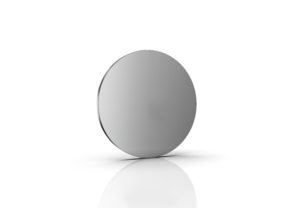
Reynard, a leading global supplier of custom optics and thin film coatings announces the addition of polished and coated indium arsenide (InAs) to its list of manufacturing capabilities. InAs combines the refractive index profile of silicon with a short-wavelength blocking range broader than germanium. Reynard Corporation routinely manufactures InAs optical windows with surface qualities approaching 10-5 per MIL-PRF-13830. Substrates can be coated and verified to meet any customer spectral requirement from room temperature to 80K. Coatings are routinely verified to pass the adhesion, humidity, and moderate abrasion requirements of MIL-C-48497A. Key characteristics: - Transmission edge is 3.1µm at 80K (cryogenic) - Transmission edge is 3.8µm at 298K (room temperature) - Refractive index is comparable to silicon in the 3-5 µm and 8-12µm spectral bands - Complete blocking below 3.0µm due to natural material absorption Applications: IR imaging, single band and multi band The benefit of InAs is that it enables infrared optical system designers to explore the trade space between improved system performance and allowable manufacturing tolerances. The extended blocking range offered by InAs enables the production of high performance, fully-blocked filters in the 3-5µm and 8-12µm spectral bands. In comparison to classical approaches, InAs based thin-film coatings require fewer layers to meet out-of-band blocking specifications while maintaining superior in-band transmission. "Using InAs instead of the more commonly know IR materials can reduce optical component production costs which results in lower system costs with improved optical performance." says Forrest Reynard, CEO of Reynard. Eliminating "dig" defects is of paramount importance for filters used above focal plane arrays (FPA's) as such defects render blind any underlying pixels. Samples manufactured by Reynard Corporation have been verified to approach 10-5 per MIL-PRF-13830.
CATEGORY
