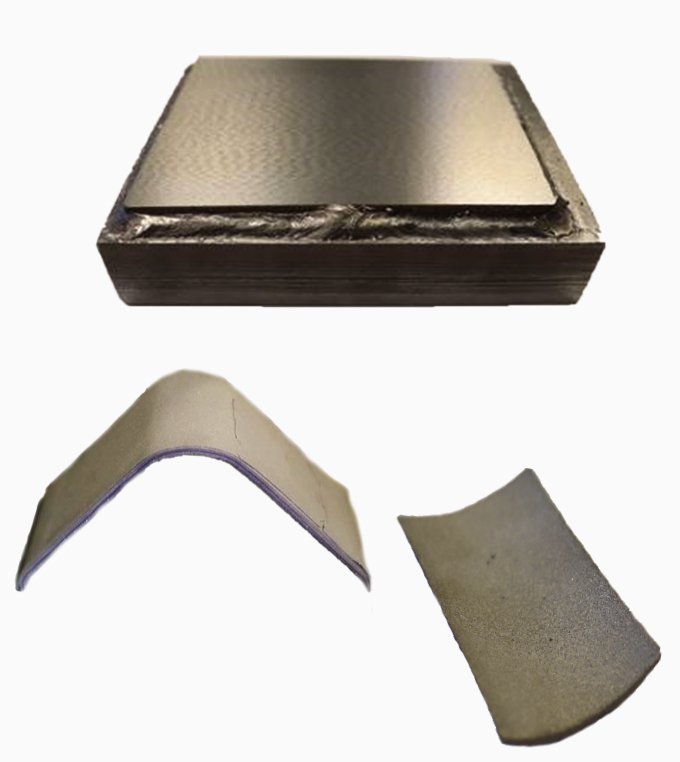
The Q-Tile family (Q-Tile Gen-1 and Q-Tile XT: wear coatings and wear tiles) offers cost-effective solutions to protect critical equipment that is exposed to extreme multi-modal wear mechanisms. It is especially well-suited to protect against slurry erosion – abrasive-erosive wear degradation in potentially corrosive environments. Optimal performance in applications exposed to steam-based slurries. Can be used to coat non-line-of-sight, internal tubular surfaces. Available as a wear tile with high latitude in X-, Y-, and Z-dimensions, 2mm to 25mm (Z), up to 500mm x 500mm per tile (X-Y). Can be used to cover/protect complex shapes.
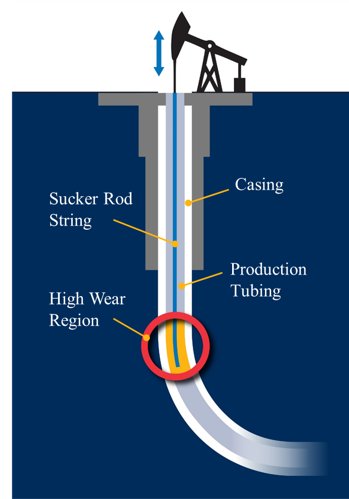
World-Class Sliding Wear Protection Q-Tough (Gen-1, Gen-2 and Gen-3) are specialized coatings consisting of sub-micron, well-dispersed transition metal carbides, silicides, and borides generated in-situ in a ductile corrosion-resistant metallic matrix. The coatings are designed to perform reliably in applications facing extreme levels of sliding wear. Standardized ASTM G99 pin-on-disk sliding wear testing shows Q-Tough delivers 10X the performance of D2 tool-grade steel, and over 20X the performance of high-chromium white cast iron. "Teflon-like" In addition to delivering best-in-class sliding wear protection, the as-produced surface finish is very smooth and Q-Tough delivers significantly longer run-times for coated equipment while reducing wear and tear on mating components, metallic, coated or organic. Field trials in oil wells (shale gas and tight oil service) show service life extended by over 4X (for Gen-1 alone), drastically reducing the frequency of costly, resource-intensive workovers and increasing reliability, resulting in annual savings of over US$75,000 per well. Versatile Applications The coating can be applied to both external and/or internal (non-line-of-sight) surfaces, currently to a thickness of up to 1.5mm. Field-proven performance in O&G production tubing, with applications in many additional down-hole components. In accelerated wear testing for PCP rotors, the coating has exhibited excellent wear resistance, low friction and has been identified as “Teflon-like” in terms of its low friction coefficient, reduced energy requirements and extending the life of mating elastomer stators. Best-in-class Protection for Production Tubing Q-Tough coated tubulars address the sliding wear problems in sucker rod-driven wells which cause production tubing perforations and lead to a high frequency of tubewall failures and costly downtime and workovers. Production tubing lasts longer when Q-Tough is applied at high-wear locations, eliminating resource intensive workovers, reducing costs, and increasing reliability. Wear Performance Testing High-Chromium White Cast Iron D2 Tool-grade Steel Q-Tough outperforms J55 carbon steel in ASTM G65 and G99 testing. Comparable performance to Chromium Carbide overlays and white cast iron in slurry jet erosion tests, 93% of coating thickness remains after 500+ days in field service. Proprietary Microstructure Field Performance Data Field trials of Q-Tough coatings have been installed in 44 wells in the Bakken region of North Dakota. - In 4 years of operation, no coating related upsets or failures have occurred. - At 500 days of field service, only the 7% of top coating surface shows wear (93% intact). - Q-Tough gives a 200% average increase in well runtime. - Up to 500% reduction in production downtime. Product Specifications: ASTM G65 | Volume Loss (mm³): Q-Tough 21.2; O&G G3 11.3; AR400 52.6; A335 64.5; D2 35.6 ± 5.2; HCWCI 28Cr 16.8 - 22.6 Mass Loss (g): Q-Tough 0.17; O&G G3 0.10; AR400 0.42; D2 0.24 - 0.32; HCWCI 28Cr 0.14 - 0.26 Coriolis | Vol loss (mm³/kg): Q-Tough 0.236; O&G G3 0.061; A335 4.550; HCWCI 28Cr 0.097 ASTM G99 | Pin on Disk (μm³): Q-Tough 7.0 × 10⁵; O&G G3 4.9 × 10⁵; A335 4.5 × 10⁶; D2 6.9 × 10⁶; HCWCI 28Cr 2.39 × 10⁷ NRC Slurry Jet Wet Erosion | Volume Loss (mm³) 90°: Q-Tough 18.0; O&G G3 13.1; AR400 75.0; D2 24.4; HCWCI 28Cr 14.4 Volume Loss (mm³) 45°: Q-Tough 17; O&G G3 11.6; AR400 126.0; D2 25.9; HCWCI 28Cr 12.8 Volume Loss (mm³) 20°: Q-Tough 5; O&G G3 3.2; AR400 85 Hardness | HRC: Q-Tough 61; O&G G3 64; AR400 40; A335 25; D2 60; HCWCI 28Cr 56 Vickers - Matrix: Q-Tough 1035; AR400 370; D2 818; HCWCI 28Cr 812 ASTM G171 Scratch Hardness | Scratch Hardness (GPa): Q-Tough 14.20; O&G G3 19.20; AR400 3.39; A335 2.70; D2 2.03; HCWCI 28Cr 9.14 Innotec Rotary Impact | Mass Loss (g): O&G G3 0.003-0.008 AR400 Abrasion-resistant Steel A335 Chromium-molybdenum Alloy Steel D2 Tool-grade Steel High-Chromium White Cast Iron Download our Q-Tough Brochure for more information
CATEGORY
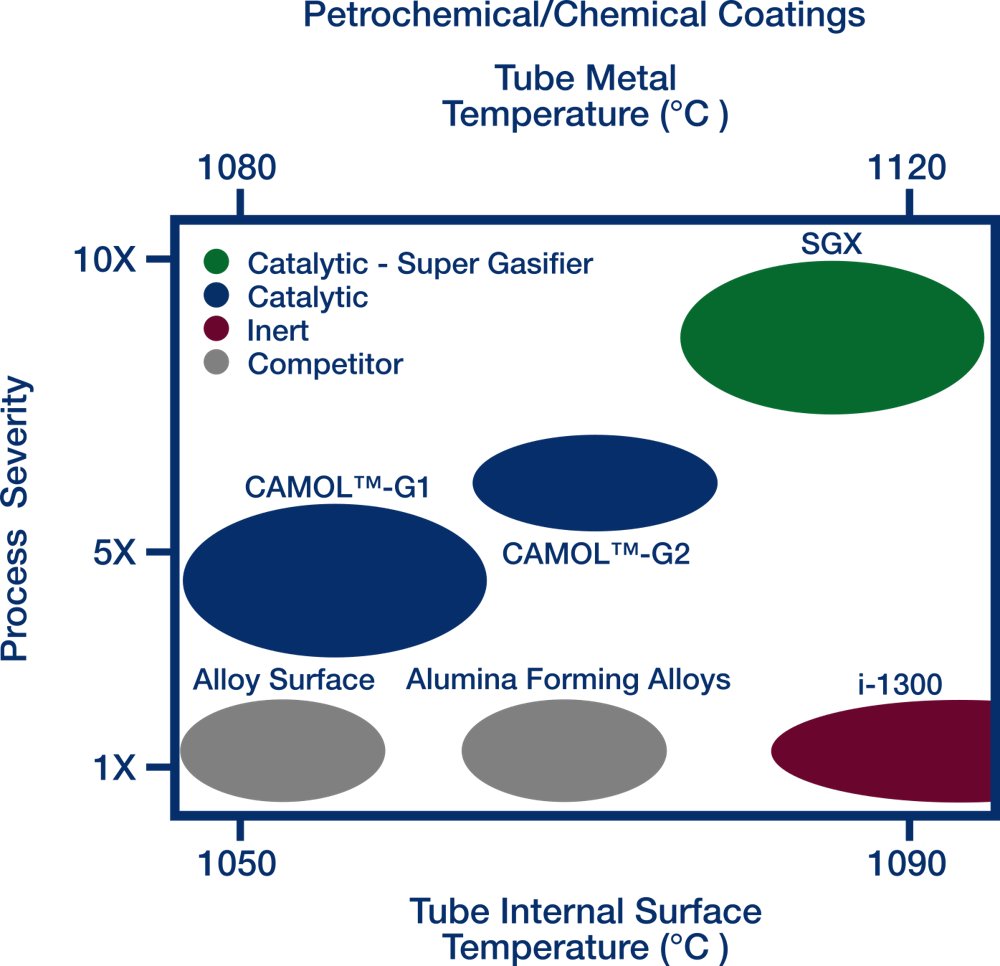
Pioneering Catalytic Gasification Coatings As the global leader in internal tubular and shapes coatings, Quantiam offers advanced Catalytic Gasification Coatings applied on the internal surfaces of steam cracker furnace tubes and fittings (coils), enabling the Catalytically-Assisted Manufacture of Olefins (CAMOL™) using a range of hydrocarbon feedstocks. The coatings improve operational efficiency and profitability, and reduce energy and emissions of steam cracker furnaces by: - Reducing coke formation and build-up. - Increasing on-line production time and reducing decoking frequency. - Reducing energy requirements and GHG emissions per unit of production. Catalytic Coke Gasification CAMOL™ is a patented composite metallic-ceramic coating for service in Medium Severity Cracking, which is deposited on the inner surface of the radiant tubes and fittings of a Petrochemical steam-cracking furnace coil for two main purposes: As a protective barrier - CAMOL™ protects the internal wall of the tubes by generating a coating matrix up to 500 microns thick that: (1) protects the base steel from degradation processes that include internal oxidation, carburization and sulfidation; and (2) enables the generation and regeneration of a surface oxide protective layer for functional coke gasification. As a gasifying catalyst - CAMOL™ provides a catalytic surface that gasifies coke that forms in the gas-phase (amorphous coke) and which would otherwise collect on the internal tube wall into CO and/or CO₂, thus offering a two-pronged approach to address the two major sources of coke-make, catalytic (filamentous) and amorphous (gas-phase) coke. The surface oxide layer is inert to filamentous (catalytic) coke-make and is typically <10 microns in thickness and which can be regenerated / repaired through normal furnace operation. The Benefits of Using CAMOL™ Field-demonstrated in Medium Severity Cracking Energy and Emissions - 6% overall reduction in energy and GHG emissions per unit of olefin production. Longer Runtime - Up to 10X in ethane feed. - Up to 3X in naphtha feed. Coil Life - Anti-coking benefit for full life-cycle of coil. - Improvement in coil life demonstrated. Increased Yields - Observed modest yield improvements on furnaces using CAMOL™. CAMOL™ coated products are the first-ever coatings brought to market that provide their engineered properties for a full life cycle of 4-7 years when used within operating envelope of base steel and coating. Field Performance Data With 12 field trials undertaken in ethane and naphtha crackers of global petrochemical producers, when operating at Medium Severity Cracking, the technology has demonstrated: - Ethane: Run lengths of 300+ days. - Naphtha: Run lengths up to 150 days. Full-cycle field trials have been completed with run-lengths at the end-of-life being near-equivalent to those at start-of-life, and anti-coking benefits of at least 5 years, when operating within the Operating Envelope of both the base steel and the CAMOL™ coating.
CATEGORY
World-Class Sliding Wear Protection Q-Tough (Gen-1, Gen-2 and Gen-3) are specialized coatings consisting of sub-micron, well-dispersed transition metal carbides, silicides, and borides generated in-situ in a ductile corrosion-resistant metallic matrix. The coatings are designed to perform reliably in applications facing extreme levels of sliding wear. Standardized ASTM G99 pin-on-disk sliding wear testing shows Q-Tough delivers 10X the performance of D2 tool-grade steel, and over 20X the performance of high-chromium white cast iron. "Teflon-like" In addition to delivering best-in-class sliding wear protection, the as-produced surface finish is very smooth and Q-Tough delivers significantly longer run-times for coated equipment while reducing wear and tear on mating components, metallic, coated or organic. Field trials in oil wells (shale gas and tight oil service) show service life extended by over 4X (for Gen-1 alone), drastically reducing the frequency of costly, resource-intensive workovers and increasing reliability, resulting in annual savings of over US$75,000 per well. Versatile Applications The coating can be applied to both external and/or internal (non-line-of-sight) surfaces, currently to a thickness of up to 1.5mm. Field-proven performance in O&G production tubing, with applications in many additional down-hole components. In accelerated wear testing for PCP rotors, the coating has exhibited excellent wear resistance, low friction and has been identified as "Teflon-like" in terms of its low friction coefficient, reduced energy requirements and extending the life of mating elastomer stators. Best-in-class Protection for Production Tubing Q-Tough coated tubulars address the sliding wear problems in sucker rod-driven wells which cause production tubing perforations and lead to a high frequency of tubewall failures and costly downtime and workovers. Production tubing lasts longer when Q-Tough is applied at high-wear locations, eliminating resource intensive workovers, reducing costs, and increasing reliability. Wear Performance Testing - High-Chromium White Cast Iron - D2 Tool-grade Steel Q-Tough outperforms J55 carbon steel in ASTM G65 and G99 testing. Comparable performance to Chromium Carbide overlays and white cast iron in slurry jet erosion tests, 93% of coating thickness remains after 500+ days in field service. Proprietary Microstructure Field Performance Data Field trials of Q-Tough coatings have been installed in 44 wells in the Bakken region of North Dakota. - In 4 years of operation, no coating related upsets or failures have occurred. - At 500 days of field service, only the 7% of top coating surface shows wear (93% intact). - Q-Tough gives a 200% average increase in well runtime. - Up to 500% reduction in production downtime. Product Specifications: ASTM G65: Volume Loss (mm³): Q-Tough 21.2, O&G G3 11.3, AR400 52.6, A335 64.5, D2 35.6 ± 5.2, HCWCI 28Cr 16.8 - 22.6. Mass Loss (g): Q-Tough 0.17, O&G G3 0.10, AR400 0.42, D2 0.24 - 0.32, HCWCI 28Cr 0.14 - 0.26. Coriolis Vol loss (mm³/kg): Q-Tough 0.236, O&G G3 0.061, A335 4.550, HCWCI 28Cr 0.097. ASTM G99 Pin on Disk (μm³): Q-Tough 7.0 × 10⁵, O&G G3 4.9 × 10⁵, A335 4.5 × 10⁶, D2 6.9 × 10⁶, HCWCI 28Cr 2.39 × 10⁷. NRC Slurry Jet Wet Erosion Volume Loss (mm³) 90°: Q-Tough 18.0, O&G G3 13.1, AR400 75.0, D2 24.4, HCWCI 28Cr 14.4. Volume Loss (mm³) 45°: Q-Tough 17, O&G G3 11.6, AR400 126.0, D2 25.9, HCWCI 28Cr 12.8. Volume Loss (mm³) 20°: Q-Tough 5, O&G G3 3.2, AR400 85. Hardness HRC: Q-Tough 61, O&G G3 64, AR400 40, A335 25, D2 60, HCWCI 28Cr 56. Vickers - Matrix: Q-Tough 1035, AR400 370, D2 818, HCWCI 28Cr 812. ASTM G171 Scratch Hardness (GPa): Q-Tough 14.20, O&G G3 19.20, AR400 3.39, A335 2.70, D2 2.03, HCWCI 28Cr 9.14. Innotec Rotary Impact Mass Loss (g): O&G G3 0.003-0.008. - AR400 Abrasion-resistant Steel - A335 Chromium-molybdenum Alloy Steel - D2 Tool-grade Steel - High-Chromium White Cast Iron Download our Q-Tough Brochure for more information
CATEGORY
CAMOL™ is a patented composite metallic-ceramic coating for service in Medium Severity Cracking, which is deposited on the inner surface of the radiant tubes and fittings of a Petrochemical steam-cracking furnace coil for two main purposes: As a protective barrier - CAMOL™ protects the internal wall of the tubes by generating a coating matrix up to 500 microns thick that: (1) protects the base steel from degradation processes that include internal oxidation, carburization and sulfidation; and (2) enables the generation and regeneration of a surface oxide protective layer for functional coke gasification. As a gasifying catalyst - CAMOL™ provides a catalytic surface that gasifies coke that forms in the gas-phase (amorphous coke) and which would otherwise collect on the internal tube wall into CO and/or CO₂, thus offering a two-pronged approach to address the two major sources of coke-make, catalytic (filamentous) and amorphous (gas-phase) coke. The surface oxide layer is inert to filamentous (catalytic) coke-make and is typically <10 microns in thickness and which can be regenerated / repaired through normal furnace operation. As the global leader in internal tubular and shapes coatings, Quantiam offers advanced Catalytic Gasification Coatings applied on the internal surfaces of steam cracker furnace tubes and fittings (coils), enabling the Catalytically-Assisted Manufacture of Olefins (CAMOL™) using a range of hydrocarbon feedstocks. The coatings improve operational efficiency and profitability, and reduce energy and emissions of steam cracker furnaces by: - Reducing coke formation and build-up. - Increasing on-line production time and reducing decoking frequency. - Reducing energy requirements and GHG emissions per unit of production. The Benefits of Using CAMOL™ Field-demonstrated in Medium Severity Cracking Energy and Emissions - 6% overall reduction in energy and GHG emissions per unit of olefin production. Longer Runtime - Up to 10X in ethane feed. - Up to 3X in naphtha feed. Coil Life - Anti-coking benefit for full life-cycle of coil. - Improvement in coil life demonstrated. Increased Yields - Observed modest yield improvements on furnaces using CAMOL™. CAMOL™ coated products are the first-ever coatings brought to market that provide their engineered properties for a full life cycle of 4-7 years when used within operating envelope of base steel and coating. Field Performance Data With 12 field trials undertaken in ethane and naphtha crackers of global petrochemical producers, when operating at Medium Severity Cracking, the technology has demonstrated: - Ethane: Run lengths of 300+ days. - Naphtha: Run lengths up to 150 days. Full-cycle field trials have been completed with run-lengths at the end-of-life being near-equivalent to those at start-of-life, and anti-coking benefits of at least 5 years, when operating within the Operating Envelope of both the base steel and the CAMOL™ coating.
CATEGORY
