By AMT&C Group (Advanced Magnetic Technologies & Consulting Group)
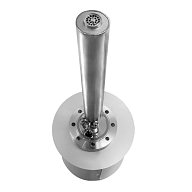
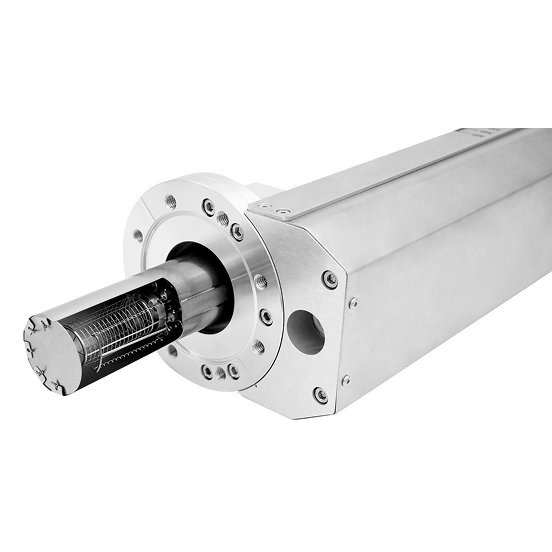
Working principle is based on ionization of gas molecules, which are attracted by collector. Flux measurement is achieved by monitoring the output of a Bayard Alpert ion gauge, positioned in the path of K-cell emissions, where it can measure the beam equivalent pressure.
Materials: H2 Advantages: - Low energy consumption - Absence of high-energy particles and ions - Integrated water cooling Technical characteristics Thermocouple: Type C Bakeout temperature: 200°С Operating temperature: 2000°С In-vacuum length: 190-400 mm In-vacuum diameter: 36 mm Mounting flange: 40CF
CATEGORY
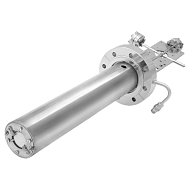
Materials: N2, H2, SiH4 ADVANTAGES: - PBN ionization chamber - Integrated matching device - Inductive plasma Technical characteristics - Input power: 50-400 W - In-vacuum length: 292 mm - Mounting flange: 63/100CF
CATEGORY
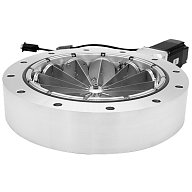
Counter-rotating vane set provides for linear control across the entire operating range of the valve. The precise setting of vane rotation of the plates is realized due to the servo-based flap control system.
CATEGORY