
In development for higher-performance aqueous microfiltration where water permeability, pressure drop, and polymer selection are critical.
At Hollingsworth & Vose, we supply our customers with a variety of AGM pasting paper products that improve advanced lead battery processability and performance, in industrial and automotive applications. Pasting papers are specialty products that are non-reactive to chemical compounds in batteries. The pasting paper acts as a battery separator that adds structural and mechanical strength to a lead battery plate assembly. H&V pasting paper material is made from glass microfibers that ensure consistent compression in absorbent glass mat (AGM) battery assemblies. Pasting paper also prevents active battery materials from being released and can support wet lead paste throughout battery production. AGM pasting paper and separator wets out with electrolyte naturally and won't degrade in the presence of battery acid. AGM pasting paper is commonly used in both industrial and automotive applications. Some of the applications they're most commonly used in include: - Light Passenger Vehicles - Commercial Truck Batteries - Motorcycle Batteries - Backup Power for UPS, Data Centers and the Telecommunication Network As a general rule, any battery that uses continuous grid pasting technology will require the use of pasting paper. AGM batteries typically require AGM pasting paper to prevent compression loss and extend battery life. AGM pasting paper ensures that the battery retains its active material structure throughout its lifespan. It adheres to the active material components without sticking to other substrates within the battery construction. This is crucial for safe and effective performance in long-term batteries and batteries that face long periods of continuous use. AGM pasting paper provides structural integrity to stacks of plates in battery assemblies, despite the fact that it is a very lightweight material at just 30-35 gsm. The benefits of our specialty pasting papers include: Cleanliness Our paper products don't have metals, contaminants, or chemical impurities. They are consistently clean and nonreactive. Stacking During production, battery plates need to be stacked together efficiently and with structural integrity. Pasting paper helps the layers of plates stay together. Carbon Gassing Prevention Because our pasting paper is nonreactive and chemically stable, it won't decompose or create a carbon gassing effect throughout the life of the battery. Optimal Battery Performance Pasting paper optimizes cycling without interfering with other substrates in the battery assembly. It can also assists in high-rate discharge. Interactions With Electrolytes Pasting paper can improve electrolytic stratification resistance and electrolyte-filling efficiency. High-Quality Bonding Pasting paper is built with pores that respond well to lead acid paste to ensure a long-lasting bond between the appropriate materials. Lightweight Pasting paper won't significantly add to the thickness or weight of the assembly. Pasting paper is an essential component in high-quality automobile and industrial batteries. Please contact our team at Hollingsworth & Vose for assistance identifying the appropriate pasting paper solution for your needs.
CATEGORY
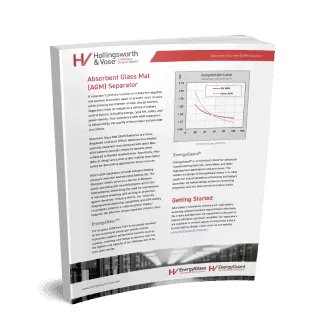
H&V’s All-Glass AGM separator is the world-leading, automotive battery separator for VRLA AGM batteries. Our All-Glass AGM separator product line can be customized to meet your plate width, plate insertion gap, and battery compression. Further, our products are produced with low, medium, or high surface area to meet the needs of your battery design and application. Why Use All-Glass AGM Separator? H&V’s All-Glass AGM battery separators have been proven for over a decade in the global automotive market. They are preferred worldwide for the following reasons: Longer Battery Life Our separators have best-in-class elasticity rebounding close to the original thickness. H&V’s AGM separators store elastic energy and rebounds once cathode compression (caused during battery cycling) is released. H&V’s improved thickness retention extends battery life versus other all-glass separator alternatives. Improved Battery Performance All-Glass AGM separator by H&V has lower electrical resistance compared to other products available. Lower electrical resistance improves automotive battery performance vehicle manufacturers and consumers depend on. Premium Quality H&V is the only vertically integrated global AGM supplier. H&V has full control of the sand evaluated to produce microfiber glass to the final AGM separator end-product. We source premium materials and strive to ensure the AGM separator is pure and low in leachates. Global Distribution H&V produces AGM separator in North America, Europe, and Asia. Global and regional AGM battery producers can count on AGM product consistency across the globe. Solutions Provider Since H&V produces All-Glass and reinforced AGM separator in every region of the world, we have regional technical experts available to support your application needs. We are ready to partner with you to solve your AGM battery separator requirements for any application. What Applications do All-Glass AGM Separator Serve? All-Glass AGM separator is the global industry leading separator for light passenger vehicle manufacturers. All-Glass AGM is the ideal AGM separator for all passenger vehicle powertrains to include: - Stop/Start - Mild or Full-hybrid - Battery Electric Vehicles, Auxiliary Choosing an All-Glass AGM Separator from the Industry Leader. All-glass AGM separators by Hollingsworth & Vose Company are the best-selling automotive AGM battery separator across the globe due to their exceptional quality and performance. At H&V, we design and manufacture our battery separators to meet the highest standards for performance and battery assembly. To learn more about our advanced material offerings and how they are used in batteries, contact us today. We can be your trusted partner and expert for your battery solution needs. The light passenger vehicle has some of the most aggressive regulations to reduce carbon dioxide (CO 2) emissions. In order to meet these CO 2 goals, advanced battery technology is needed.The global automotive industry has relied upon H&V to increase battery life, performance, and enable the reduction of CO 2 emissions.
CATEGORY
Choosing the right battery separators contributes significantly to the performance and life of your battery. At Hollingsworth & Vose, we manufacture and globally distribute Hi-Sep battery separator materials made from synthetic and glass fibers that outperform phenolic resin, polyethylene (PE), and polyvinyl chloride (PVC) separators in VRLA gel batteries. This page will discuss the features, advantages, and applicable industrial applications for Hi-Sep battery separators. Different battery assemblies require specialized battery separator materials. Hi-Sep is one of the only globally available VRLA gel separators that can be supplied in various configurations to include rolled goods, leafs, sleeves, and with or without glass mat. Hi-Sep rolled goods for VRLA gel allows battery manufacturers to increase their battery throughput. Hi-Sep has demonstrated that it outperforms other separators in VRLA gel batteries and premium flooded lead batteries. Hi-Sep is designed with a high porosity at 70% or more to improve ionic mobility increasing performance. Further, the optimized torturous pores prevent dendritic shorts extending battery life. Our Hi-Sep battery separators use close to a non-leachate formula with binders, synthetic fibers, filters, and glass fibers. Its unique composition makes it an excellent replacement for other commonly used separator materials, such as PE, PVC, and phenolic resin. Our Hi-Sep battery separator products feature the following characteristics: - 70% or more volume porosity that enables ionic mobility (ideal for VRLA gel batteries) - Tortuous pores preventing dendritic shorts - Low electrical resistance - The lowest electrochemical oxidation in its class - Durability in high-heat environments - Low levels of impurities compared to others - Available in different thicknesses - Available in leafs, sleeves, or rolled good - Good strength properties and resists punctures improving battery assembly and high vibration applications - Versatility for use across a wide range of battery products with different designs and specifications Our Hi-Sep battery separators have supported countless PSOC and deep cycle battery applications for over ten years. They offer exceptional performance in rugged applications and extreme environments that demand consistent battery performance amidst harsh operational conditions. Hi-Sep battery separators can be used in a diverse array of battery products found in many Industrial Motive and Reserve Power applications. Industrial, Motive Power Our Hi-Sep product can extend the life of VRLA gel battery cycles in Motive Power used to move, handle, and sort goods in warehouse settings. Hi-Sep battery separators see frequent use in batteries for warehouse material handling operations equipment such as forklifts. Industrial, Reserve Power We produce Hi-Sep battery separators for reserve power applications that have unpredictable use cycles. The Hi-Sep product line includes standby power separator units that have glass mats, rib variants, and a combination of these features to meet the needs of UPS and telecom applications. At Hollingsworth & Vose, we specialize in creating high-quality battery separator products that meet each of our clients' stringent performance and material standards. We serve the automotive and industrial sector with durable separators that enhance battery lifespan and performance for rugged applications. Our teams can tailor separators to meet your application needs.
CATEGORY
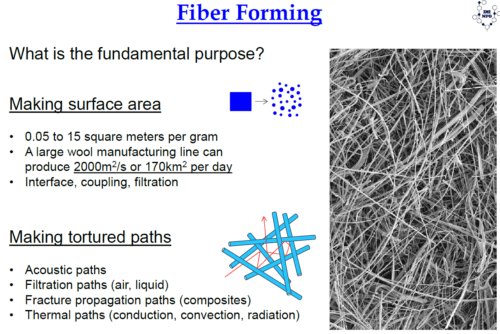
At Hollingsworth & Vose (H&V), we are a leader in high-efficiency filtration. Our glass fiber filter media is among the most widely used filter media for high-efficiency filtration applications. This versatile, proven material is employed in many different air and liquid filtration systems. While many types of filtration media meet ISO 29463 and EN 1822 standards, most have poor performance and reliability. Glass microfiber filter media products from H&V are ideal for high-efficiency filtration needs. They deliver even airflow distribution and can even reduce operating costs. Our micro glass fiber filter media is ideal for HEPA and ULPA filters in sensitive production environments like cleanrooms. As your one-stop shop for filtration solutions, H&V offers an extensive product range in grades that meet your industry's efficiency standards. A glass fiber filter is a filtration product designed to trap particles and contaminants while allowing air or liquid to pass through. Glass fiber filter paper is manufactured using a wetlaid process similar to traditional papermaking. The filter media is typically composed of micro-fine borosilicate glass fibers and resin binders for highly efficient filtration. At H&V, our glass fiber filter media features a unique matrix with best-in-class uniformity. They maximize internal surface area and create tortured paths to trap particles effectively while allowing high air permeability. We offer several fiber sizes to meet application-specific filtration requirements. With glass filtration products, production quality has a dramatic impact on performance. Glass microfiber filter media products from Hollingsworth & Vose are categorized into different grades and meet strict CTQ requirements for the following features. Superior Mechanical Filtration Efficiency: The more uniform the filter media is, the more evenly air can flow through it. Our highly uniform filter media performs more efficiently than our competitors, with reduced drop-outs during filter production and validation testing. Lower Pressure Drop: Compared to other glass fiber filter media, our products exhibit lower pressure drops at equivalent efficiency. This results in up to 14% lower electricity consumption and a reduced carbon footprint. Best-in-Class Formation: Our filter media features sharp, evenly-spaced pleats with reduced pleat tip penetration. This high-quality formation improves airflow uniformity and contributes to energy efficiency. Tensile Strength: Compared to lower-cost microfiber filter media, our products feature greater tensile strength for lasting durability. The improved tensile strength greatly reduces the risk of failure during transportation, product installation, and normal operation. Other key benefits of H&V micro glass fiber filter media include: - High flux and air permeability - Processability/Pleatability - Dirt- and dust-holding capacity - Antimicrobial properties - Chemical resistance - Reduced total cost of ownership - Temperature stability As global leaders in HEPA and ULPA filtration, our glass fiber filter media is used throughout many challenging applications. The most common use for these products is within cleanrooms, where they reliably control gas-phase particulates. Our glass fiber filter media is also used in respiratory protection, particularly full- and half-face powered air purifying respirators (PAPRs). With a mini-pleat configuration, glass fiber media can achieve up to P100 and high-efficiency (HE) filtration in the final filter. H&V glass fiber filter media can also be used in HVAC mini-pleat panels and V-bank filters. Available in durable and high-performance platforms, our micro glass fiber filter media is part of H&V's ASHRAE 52.2 MERV 11-16 portfolio range. H&V glass microfiber filter media is suitable for a multitude of other needs, such as: - Hydraulic filters - Coalescing filters - Fuel and oil filtration systems - Engine air intake filters - Room air purifier filters - Vacuum cleaner filters - Process liquid filters - Water filtration systems - Food and beverage filters - Analytical systems - Collecting suspended solids - Contamination analysis - Liquid clarification - Specialty liquid filters - Low-boron micro glass fiber media for semiconductor fabrication
CATEGORY
