By Applied Microengineering Ltd.
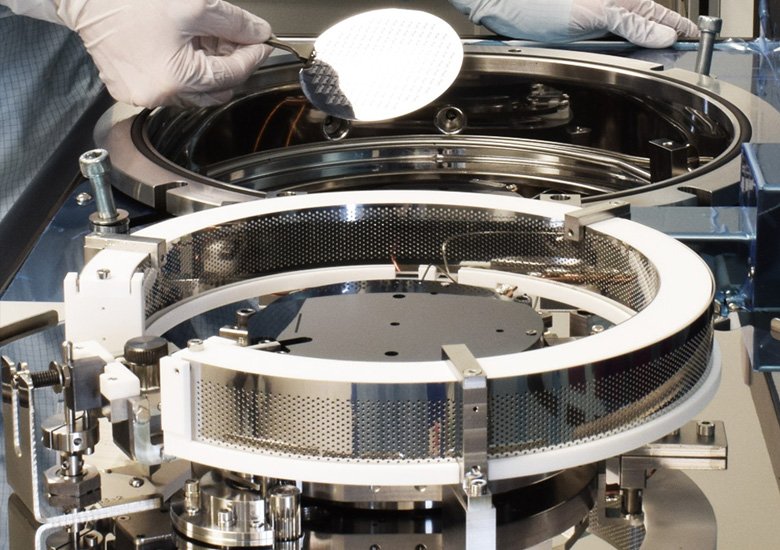
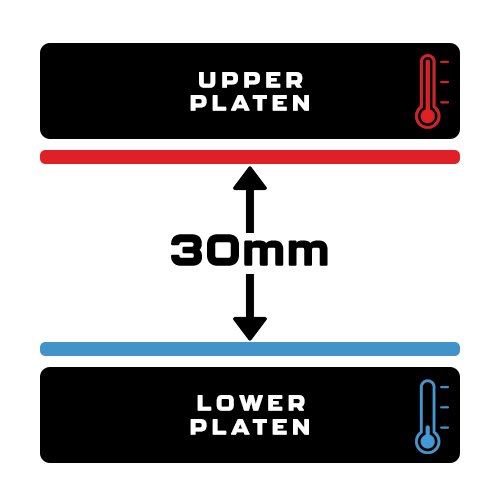
Wafers can be held apart, separated by up to 30mm, opening up process possibilities and providing a number of advantages. Rapid and effective outgassing of the wafers and any cavities - particularly important where vacuum-encapsulation or gas-encapsulation is required. The wafer separation is achieved by employing a fully automatic 4-axis manipulator where the Z drive provides up to a 30mm gap and applies up to 40kN contact forces. The large separation allows independent heating of the upper and lower wafers allowing, for instance, getter activation at a higher temperature while keeping the other wafer cool. Multi stack bonding - Thick wafer bonding and multi stack wafer bonding is possible, accommodating up to 30mm thick stacks. In-situ Chemistry - Various chemistries can be introduced into the chamber using either vapour injection system (DI water or acid) or pressure control system (gas). Wafers held in separation can be treated just before contact, for example for Copper oxide removal. Efficient Outgassing - Large wafer separation allows more effective evacuation of the space between the wafers. All surfaces of cavities can be efficiently outgassed while the wafers are heated. It is particularly important for vacuum or gas encapsulation. Independent Heating - Upper and lower wafers can be heated independently to different temperatures and with different ramp rates. The differential temperature can be as high as 350°C (depending on options). This feature can be useful for processes where one wafer needs outgassing while the other one has to stay cold or for activating the getter on one wafer. In-situ chemistry is also available with surface activation, reliable pressure control and vapour injection for oxide removal. Bonding of thick wafers or a stack of wafers up to 30mm is possible. A large temperature differential between the wafers of up to 350°C can be achieved.

Vapour Injection is a system that delivers the vapour directly into the chamber for in-situ surfaces treatment, without exposing the wafers to atmosphere. In direct bonding, water is important to initiate Hydrogen bonding that bridges the surfaces together. It is important to deliver the right amount of wafer – too much will create unwanted annealing voids and too little will prevent the initial bond from forming. Vapour injection can be used in two different processes: 1. Water vapour - following the RAD activation for low temperature direct bonding (read more about RAD activation) 2. Acid vapour, used in metal bonding for metal oxide reduction. Acid treatment can be used for metal oxide reduction and can increase the yield and decrease the required process temperature and bonding force. Formic acid vapour can be used for Cu or In bonding. This in-situ chemistry is made possible by the large gap that can be maintained between the wafers during the pre-alignment stage, thus enabling access to the wafer surfaces. The in-situ alignment capability is then used to align and contact the wafers before the native oxide can regrow. Our injection system allows delivery of a controlled amount of water needed for achieving an excellent bond strength but without compromising the bond quality.
CATEGORY