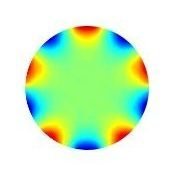
For users who prefer to operate our mirror in deflection-space over command-space, we offer an upgrade to our basic control software. This option simplifies the use of the mirror in open loop situations where closed-loop operation is not desired or orthogonal shapes need to be generated. This can be purchased with your mirror or any time thereafter to enhance your DM control experience. This capability can be implemented in your existing software setup using any of the already-available software drivers included with your DM system.
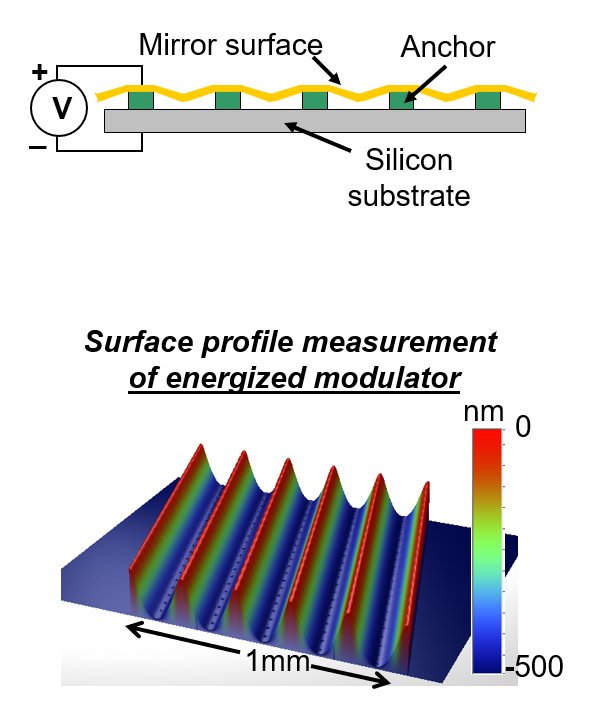
MEMS Grating Modulator | Optical Intensity Modulator Broadband intensity modulation with the turn of a knob How does it work? The MEMS Grating Modulator is a reflective diffraction grating with controllable groove depth. It modulates intensity by switching between an unpowered flat mirror state and a powered diffractive state. Simply adjust the maximum depth of deflection and modulate the central intensity of your beam with high levels of extinction. This provides you with more control over light since you can modulate the power; this helps to ensure you gather the most accurate information when researching. Tools like this are vital to many scientific fields, including astronomy, microscopy, healthcare, and more. Broad Wavelength Range Each diffractive component is designed for optimal performance over a range of wavelengths. The longer the wavelength, the more deflection is needed to maintain high contrast between the modulated and un-modulated beam. The optical intensity modulator is a gold-coated membrane which enables wavelength modulation from the visible to the far infrared (FIR), with peak extinction in the visible and near infrared (NIR) with lower extinction in the FIR. To attain peak extinction, the user simply tunes the deflection at a given wavelength. The user can achieve this by using a well-conditioned high voltage source. Fast Response Time = High Speed Modulation Our MEMS Grating Modulators are wavelength adjustable and have a frequency range of DC to 200kHz with full modulation and higher speeds are possible with partial modulation. Use your MEMS Grating Modulator to replace a pockels cell or use it as a substitute for your acousto optic modulator (AOM) or electro-optic modulator (EOM) for applications that require higher throughput. MEMS Grating Modulators have proven versatility across various applications such as laser communication and multi-photon microscopy, and their performance can be customized to user specifications to replace or augment another component such as an acousto optic modulator. Find Out More The MEMS Grating Modulator can be found as both an integrated product and a stand-alone component and is for sale through Thorlabs. Choose from the Thorlabs Fast Power Modulator to provide high-speed intensity modulation and beam attenuation for your imaging application or the MEMS Grating Modulator component for more custom applications. Find out more below. Making new discoveries is vital to scientific research, and with the best solutions, you can ensure that you have the intensity profile needed. With a MEMS Grating Modulator, you can modulate light as desired. We pride ourselves on creating partnerships rather than solely attracting customers. Reach out to us if you have questions about this product or need assistance from our professionals in determining which specific product or components are best for your application. MEMS Grating Modulator Boston Micromachines has taken our optical modulator technology and packaged it for flexible use as the MEMS Grating Modulator. This device can be used with a conditioned high voltage power source to enable diffractive modulation of an incident beam. Select the angle of incidence for your optical setup and modulate your beam of up to 6mm in diameter. This device is meant to be used in any setup and can be customized for higher volume applications. To purchase a standard model click here for the link to the Thorlabs website where you can place an order for this product. MEMS Grating Modulator Standard Models Specifications MGR6N MGR6P Housing Dimensions (D x L) 1 Ø1.30" x 2.22" Ø1.30" x 2.22" Reflective Coating 1 Gold Gold Frequency Range 0 to 200 kHz 0 to 200 kHz Rise/Fall Time: 90% – 10% <2.5 μs <2.5 μs Rise/Fall Time: 97% – 3% <4 μs <4 μs Peak Extinction Ratio 2 250:1 at 1060 nm 1 250:1 at 1350 nm 1 Optimal Wavelength Range 1 600 – 1100 nm 550 – 2400 nm Angle-of-Incidence for Peak Extinction <10° (Lateral Incident Angle) <10° (Lateral Incident Angle) Maximum Extinction Frequency Limit, -3 dB 100 kHz 100 kHz Active Aperture Ø6.0 mm Ø6.0 mm Total Reflected Wavefront Error (P-V) λ/4 λ/4 Maximum Operating Voltage (Device Dependent) <200 V <200 V Protective Window Wavelength Range 650 – 1050 nm 550 – 2400 nm Angle 10° 10° Substrate N-BK7 N-BK7 Available from Thorlabs BMC 1. Custom options available upon request 2. Devices measured using 1060 nm light and 650 – 1050 nm AR-coated protective window.
CATEGORY
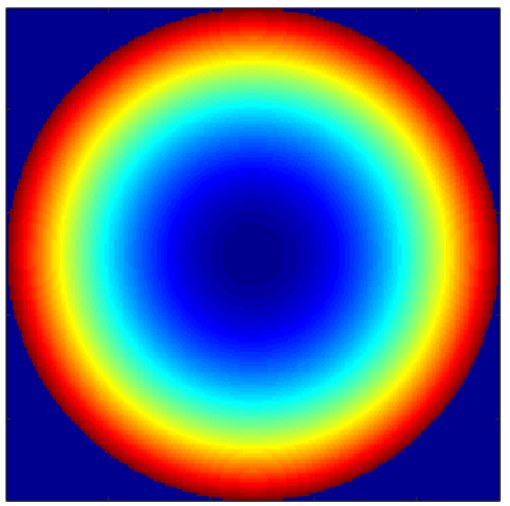
MEMS (micro-electro-mechanical systems) Deformable Mirror systems are the fastest, highest resolution wavefront control devices and are well-suited for high-speed focus control. Whether you are scanning a spot axially through a 3-dimensional space or contouring a bessel beam for light-sheet microscopy, the Boston Microamachines architecture is optimal for high-precision focus control. High Speed Focus Control The Boston Micromachines' DM design is simple in concept and enables high-speed, high-resolution control. An actuator array is built upon a cartesian layout of electrodes. The supported mirror facesheet movement enables unmatched control. Our standard driver enables 14 bit average step size yielding almost continuous motion but with digital input. Finally, the scalable fabrication process allows us to create multiple devices in large quantities, enabling lower cost at high volumes making the BMC DM optimal for OEM applications.
CATEGORY
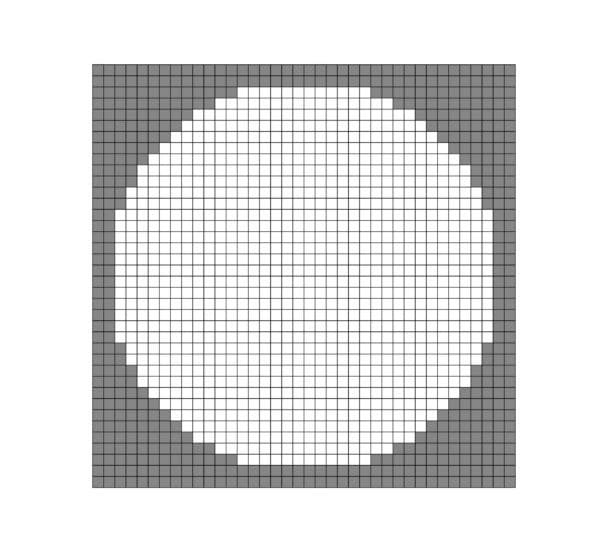
Layout: Kilo-C-deformable-mirror-layout; Total Actuator Count: 952; Actuator Count Across Aperture: 34; Physical Stroke (μm): 3.5; Wavefront Stroke (µm): 7.0; Aperture (mm): 13.20; Pitch (μm): 400; Mechanical Response (single actuator, 10% – 90%) (μs): <75; Mechanical Response (Defocus rise, 10% – 90%) (μs): 150; Mechanical Response (Defocus fall, 10% – 90%) (μs): 250; Digital Update Rate: Standard (kHz): 45; Digital Update Rate: High Speed (kHz): 60; Approximate Interactuator Coupling: 13%. Fill factor 99% (DM). Surface figure < 30nm. Custom actuator counts available upon request.
CATEGORY
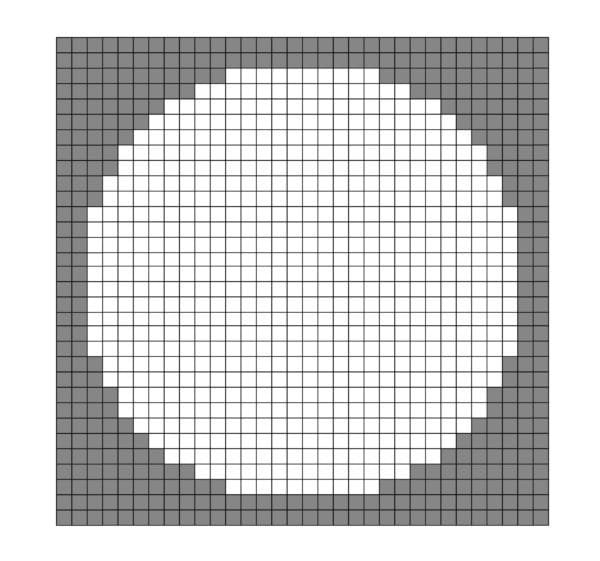
Layout: 648-deformable-mirror-layout; Total Actuator Count: 648; Actuator Count Across Aperture: 28; Physical Stroke (μm): 5.5; Wavefront Stroke (µm): 11.0; Aperture (mm): 12.15; Pitch (μm): 450; Mechanical Response (single actuator, 10% – 90%) (μs): <100; Mechanical Response (Defocus rise, 10% – 90%) (μs): 450; Mechanical Response (Defocus fall, 10% – 90%) (μs): 650; Digital Update Rate: Standard (kHz): 45; Digital Update Rate: High Speed (kHz): 60; Approximate Interactuator Coupling: 22%. Fill factor 99% (DM). Surface figure < 30nm. Custom actuator counts available upon request.
CATEGORY
