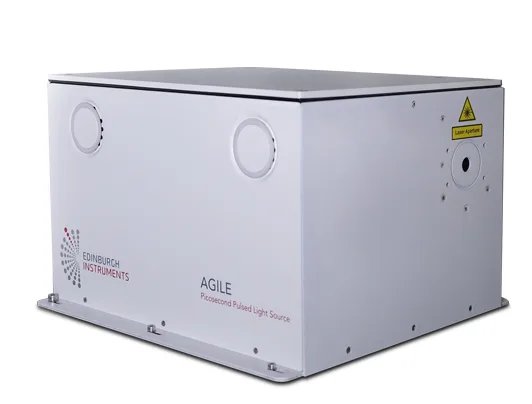
AGILE® is a wavelength-tunable supercontinuum laser providing picosecond pulses with variable kHz to MHz repetition rates, making fluorescence lifetime measurements even easier. - Picosecond pulsed source for time-correlated single photon counting (TCSPC) - Continuous spectral output: <400 nm to >2000 nm – wide range to suit most applications - Tunable repetition rate: from 10 kHz to 1 MHz - Designed for FLS1000: no alignment required (standalone operation possible) - MCS compatible: for faster measurements of long decays PRODUCT DESCRIPTION Designed for TCSPC in the FLS1000 Photoluminescence Spectrometer, AGILE® is a wavelength-tunable, high brightness supercontinuum laser providing picosecond pulses with variable kHz to MHz repetition rates. AGILE features a broadband spectral output from <400 nm to >2000 nm and pulse repetition rates from 10 kHz to 1 MHz, making it the ideal light source for most fluorescence lifetime applications. Using the TCSPC technique, fluorescence lifetimes from a few picoseconds to microseconds can be accurately resolved. It is also compatible with Multi-Channel Scaling (MCS) mode for lifetimes up to 10 μs. Thanks to the FLS1000 monochromator, AGILE provides continuous wavelength tuning across the visible and near-infrared spectrum with output power and temporal profile comparable to individual, single wavelength, picosecond pulsed diode lasers. TECHNICAL SPECIFICATIONS Wavelength Range: < 400 nm to > 2000 nm Repetition Rate: 10 kHz - 1 MHz Wavelength Range: 400 nm - 500 nm, 500 nm - 600 nm, 600 nm - 700 nm, 700 nm - 800 nm, 800 nm - 900 nm, 900 nm - 1000 nm Average Output Power/ 10 nm Bandpass *: 0.51 mW, 0.39 mW, 0.30 mW, 0.27 mW, 0.17 mW, 0.11 mW Typical Pulse Width (ps): 350 ps, 250 ps, 200 ps, 200 ps, 200 ps, 200 ps Total Power Stability: < 2% Polarisation: Unpolarised Beam Output: Collimated or focused Computer Interface: USB 2.0 Synch Output: NIM (for TCSPC) Trigger Output: TTL (for MCS) Interlock Input: Hirose HR10-7R-4S (73) Operating Temperature: +15°C to +30°C Software Control: Fluoracle® Power: 90 - 240 VAC, 1A, 50/60 Hz Dimensions (mm): 410 (L) x 305 (W) x 245 (H) Weight: 14 kg (approx) * at a repetition rate of 1 MHz after 20 min warm up time in stable environment
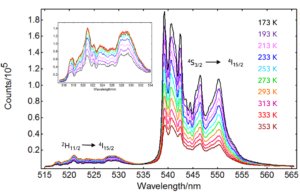
Photoluminescence Control and Analysis Software Fluoracle® is an exceptional software package designed specifically for handling data and instrumentation in fluorescence spectroscopy. All In One: Data acquisition, analysis, and presentation in one package Multi-technique: Supports spectra, lifetime, quantum yield, polarisation, and more Automation: User-programmable measurement routines and output commands via USB Advanced Accessories: Control of third-party accessories such as cryostats, titrators or microscope stages at no additional cost Applications Support: Our team of spectroscopy experts is at hand to help with your data analysis questions Live Video Demonstration Send us your samples, and we can measure them live in an online demonstration Fluoracle controls all FLS1000, FS5, and Mini-tau series of steady state and time-resolved spectrometers with a straightforward design concept: to enable all modern photoluminescence (PL) spectroscopy applications whilst providing a user-friendly interface with ‘ready to publish’ outputs. Whether you select a spectral scanning-only version of one of our spectrometer systems, or you go for an advanced version that includes time-correlated single photon counting (TCSPC) lifetime or quantum yield measurements, the software will provide all instrument options automatically, from data acquisition to analysis and presentation. Selection of sources and detection modes is quick and easy: it only takes one second to switch between spectral and time-resolved measurement modes. Fluoracle allows you to monitor the live signal ahead of measurement, so selecting and optimising parameters is quick and straightforward. Fluorescence Lifetime Imaging Microscopy (FLIM) acquisition and analysis are included in Fluoracle with a MicroPL upgrade. Fluoracle offers the FAST add-on for the advanced analysis of fluorescence and phosphorescence decay kinetics. PRODUCT VIDEO Thanks to Fluoracle’s signal monitoring and easy switching between measurement modes, you can characterise the spectrum, lifetime, and quantum yield of a sample in just a few minutes. See Fluoracle in action in this virtual FS5 demo: Software Features Spectral Measurements TCSPC Lifetime MCS Lifetime Quantum Yield Anisotropy Chromaticity FLIM Spectral Measurements Temperature-dependent PL emission spectra from NaY 0.77 Yb 0.20 Er 0.03 F 4. Fluoracle controls the temperature stage so that maps are automatically acquired. TCSPC Lifetime Time-resolved electroluminescence decay of a white light InGaN LED acquired with TCSPC: time-resolved emission spectrum (left) and exponential fit result at 575 nm. MCS Lifetime Multichannel scaling (MCS) decay of CzDBA and biexponential fit result. t p = prompt fluorescence lifetime, t d = delayed fluorescence lifetime. Quantum Yield Quantum yield measurement from upconversion nanoparticles (UCNPs). The calculated upconversion quantum yield result is 0.014%. Anisotropy Time-resolved fluorescence anisotropy for a dye in glycerol at different temperatures. Instrument response function plotted in grey. Chromaticity Photoluminescence spectrum and corresponding CIE 1931 chromaticity plot of α-(DMEN)PbBr 4 calculated using Fluoracle. FLIM Photoluminescence intensity map of a halide perovskite surface acquired with FluoracleMap software (included with MicroPL accessory). TECHNICAL SPECIFICATIONS Steady State Photoluminescence Time-Resolved Photoluminescence Software Functionality for Steady State Spectroscopy Measurement Modes: Signal rates; Excitation spectra; Emission spectra; Anisotropy spectra; Kinetic measurements; Synchronous spectra; Corrected spectra; Temperature resolved spectra map; Synchronous spectra map; Excitation-emission map; Sample temperature monitoring; Reflection measurements; Absorption measurements; Absorptance; Reflectance; Batch measurements; Absolute quantum yield measurements; Multiple sample position and well-plate measurements; Service scans Control Features: Wavelength selection (λEX & λEM); Grating selection; Spectral bandwidths; Integration time per data point (1 ms – 200 s); Sample selection (multi-position sample wells); Programmed excitation shutter; Programmed attenuator; Source and detector selection; Online spectral data correction; Post acquisition spectral correction; Polariser selection and orientation; X-Y Sample stage control; Sample temperature control; Sample selection (multiple cuvette holders); Temperature control of sample holders; Detector gating for phosphorescence spectra; Cryostat control; Microscope stage control; Plate reader control; Titrator control Data Manipulation and Display: Arithmetic ( +, -, ×, /, append ); Scaling / multiplication factor; Normalise; Baseline subtraction; Crop range; Smooth; 2D, 3D, Contour and text; Grid ON / OFF; Differentiation / Integration; Peak search; Correction; Anisotropy (G factor corrected); Logarithmic / linear scales; Comprehensive measurement and file properties for record keeping; Data manipulation and ASCII / CSV output; Cursor locations; Join, split and extract frames; Spectral correction wizard; Absolute quantum yield wizard; Chromaticity calculation and display wizard Software Functionality for Time-Resolved Photoluminescence Measurements Measurement modes: Signal rates; Manual lifetime measurement; Multiple lifetime measurement; Instrument Response Measurement; Time resolved excitation spectra; Time resolved emission spectra; Fluorescence anisotropy; Temperature controlled lifetime measurements; Sample temperature monitoring Control Features: Wavelength selection for excitation and emission monochromators; Sample selection (multi-position sample holders); Detector selection (up to 3); nF920 flashlamp voltage, frequency control and gas pressure monitor; External Laser Triggering; Programmable iris attenuator; Multiple sources; Polariser selection and orientation; Cryostat control Analysis Features: Full data reconvolution using a non-linear least square fitting routine: Exponential reconvolution or simple tail fit; 1-4 independent exponential decay times, fixed or as free fit parameters; Shift parameters, fixed or as a free fit parameter; Background fit, fixed or as a free fit parameter; Chi-squared goodness-of-fit test; Weighted residuals, Durbin-Watson parameter; Autocorrelation function; Anisotropy calculation
CATEGORY
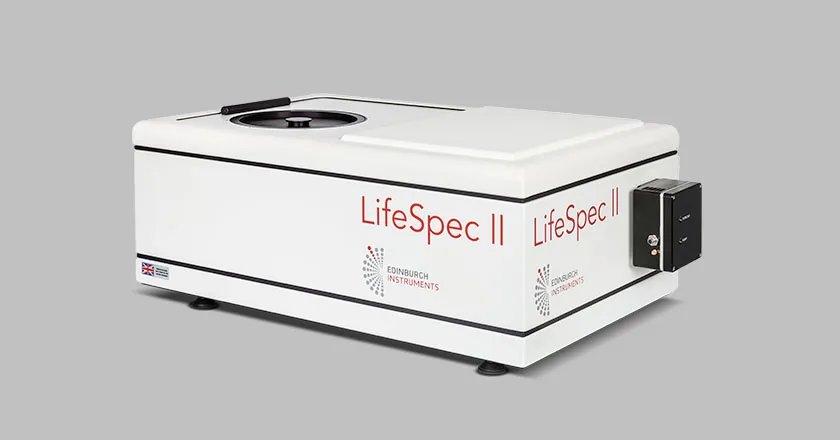
Dedicated fluorescence lifetime spectrometer with the ultimate temporal resolution High-Resolution TCSPC: Measure fluorescence lifetimes with ease using time-correlated single photon counting Ideal for Short Lifetimes: Innovative zero temporal dispersion monochromator design enables fluorescence lifetime measurements down to 5 ps NIR Coverage: NIR detector options to study NIR emitters out to 1700 nm Flexible Laser Integration: Compatible with pulsed diode, supercontinuum and titanium: sapphire lasers Compact: Save lab space with the compact design Live Video Demonstration Send us your samples, and we can measure them live in an online demonstration Pulsed Laser Diodes: Our family of high-performance lasers are perfect excitation sources for fluorescence lifetime measurements 305 fs/channel: Fast TCSPC electronics for ultimate time resolution Bespoke Development: Fully customisable systems for your requirements Sample Holder Options: Wide variety of sample holders for solids, liquids, and powders available NIR Coverage: NIR PL lifetimes available with an additional detector 5 ps Lifetimes: Achieved with fast laser and detector PRODUCT DESCRIPTION The Lifespec II is a compact, fully integrated, high performance,time-correlated single photon counting (TCSPC) fluorescence lifetime spectrometer for fast lifetime applications. Its zero temporal dispersion optics, using double monochromators in subtractive mode, sets the standard for ultra-fast decay measurements. Lifetimes < 5 ps are achieved if using a fast laser (ps or fs) for excitation. The system is a fully automated solution, combining hardware and software in a single package for fundamental research and routine laboratory applications. Data acquisition modes range from fluorescence lifetime decay acquisitions and time-resolved spectra to automated time-resolved anisotropy measurements and automated temperature maps. The LifeSpec II requires at least one picosecond pulsed diode laser and pulsed LED, supercontinuum laser or Ti:Sapphire laser (with suitable pulse picker) for operation. Multiple lasers can be simultaneously coupled to the instrument. Options and Upgrades Lasers & LEDs The LifeSpec II spectrometer can be used with all modern high repetition rate pulsed sources, such as picosecond pulsed diode lasers and LEDs, supercontinuum “white” picosecond pulsed lasers, and femtosecond Ti:Sapphire lasers. The standard LifeSpec II comes with an adjustable receptor flange for Edinburgh Instruments picosecond pulsed diode lasers and UV-LEDs. Sample Holder Options Single Cuvette Holder The Lifespec II standard cuvette holder features water/coolant circulation for adjusting temperature, filter slots, and monitoring of the sample temperature by the operating software. Powders, Thin-Films and Solid Sample Holders A range of single position front-face sample holders are available for powders, thin-films and solids. These include linear staged holders, rotational holders and clamps. Temperature Control Options Bath/Refrigerator (-25°C to +150°C), EPR Dewar (77 K) enable temperature control of samples at low cost. A range of open and closed cycle (cryogen-free) cryostats are available for the Lifespec II, from 77 K (liquid nitrogen) or 4 K (liquid helium). Software control and mounting mechanics for the sample chamber are provided. TE cooled cuvette holders are offered with a selection of temperature ranges controlled by the software, from -50°C to +15 °C. Detector Upgrades The choice of detector is informed by the emission range and lifetime of the sample. Photomultiplier tube (PMT) detectors are available with different spectral coverages and temporal responses. The following PMTs are available: - Standard PMTs up to 1010 nm – recommended for ns lifetimes - High speed PMTs up to 920 nm – recommended for 100s of ps lifetimes - MCP-PMT up to 850 nm – recommended for ps lifetimes - NIR-PMTs up to 1700 nm for NIR emitting samples with ns lifetime All PMTs are cooled and photon-counting for maximum sensitivity. Polarisation / Anisotropy The software-controlled polariser upgrade makes it possible to measure time-resolved fluorescence anisotropy in the Lifespec II. An excitation polariser may not be needed if the laser’s emission is naturally polarised, which is the case for Ti:Sapphire and picosecond-pulsed diode lasers. For precise fluorescence decays (energy relaxation), polarisers may be required to eliminate rotational artifacts that are superimposed on the fluorescence decay (“magic angle” measurements). TECHNICAL SPECIFICATIONS Standard Configuration Optical Configuration: 90° between excitation and emission beam path Mode of Operation: Time-Correlated Single Photon Counting (TCSPC) Optional Multi Channel Scaling (MSC) Upgrade Excitation Source Options: All high rep rate pulsed sources such as picosecond pulsed diode lasers (EPL Series, HPL Series) and LEDs (EPLED Series), supercontinuum pulsed lasers and femtosecond Ti:Sapphire lasers. Lifetime Range: 5 ps – 10 µs (depending on source and detector choice) Up to 1 s with MSC upgrade Detector Options: 230 nm – 650 nm, 230 nm – 850 nm, 500 nm – 1700 nm Mechanical Spectral Range: 200 nm – 900 nm (standard) plus 800 nm – 2000 nm (optional for infrared PMT detectors) Spectral Band Pass: 0 to 60 nm (computer controlled) Temporal Dispersion: Zero (negligible) Laser Beam Attenuation: 4 orders of magnitude, continuously adjustable (computer controlled) Spectrometer Software: F980 Software complete package for data acquisition and lifetime data analysis. Detectors High Speed Blue PMT: Wavelength Coverage 230 nm – 650 nm, Detector Response Width 250 ps, Dark Count Rate <100 cps High Speed Red PMT: Wavelength Coverage 230 nm – 850 nm, Detector Response Width 250 ps, Dark Count Rate <100 cps MCP-PMT: Wavelength Coverage 230 nm – 850 nm, Detector Response Width <25 ps, Dark Count Rate <10 cps NIR-PMT-1700 (LN2): Wavelength Coverage 300 nm – 1700 nm, Detector Response Width 800 ps, Dark Count Rate <100,000 cps NIR-PMT-1700 (TE): Wavelength Coverage 950 nm – 1700 nm, Detector Response Width 400 ps, Dark Count Rate <100,000 cps
CATEGORY
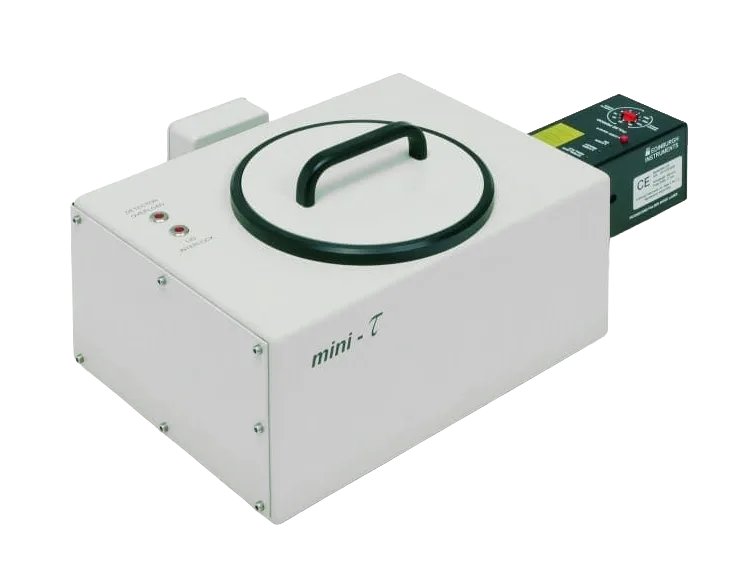
Ultra-compact, user-friendly instrument for fluorescence lifetime measurements at a low cost - Fluorescence Lifetimes: Measure fluorescence lifetimes with ease using high-resolution time-correlated single photon counting - Ultra-Compact: Save lab space with the compact filter-based design - User Friendly: Filter-based design makes the instrument simple to use - Phosphorescence Lifetimes: Measure phosphorescence lifetimes from 10 ns to 10 s with the MCS lifetime upgrade Sensitive Photon-counting detectors and electronics of the highest quality to detect low fluorescence User-Friendly Turn-key system with intuitive software Space Saving Ultra compact design (< 30 cm x 20 cm) – fits in any lab Pulsed Sources Edinburgh Instruments diode lasers and LEDs for fluorescence lifetime are directly compatible with MiniTau Wide Lifetime Coverage Cover a wide range of lifetimes, 25 ps tp 10 s, with the dual TCSPC and MCS version PRODUCT DESCRIPTION The Mini-tau is an ultra-compact, low cost, filter-based dedicated fluorescence lifetime spectrometer. Using Time-Correlated Single Photon Counting (TCSPC), the Mini-tau can measure fluorescence lifetimes ranging from 25 ps to 10 μs (source dependent). It can also be equipped with Multichannel Scaling (MCS) electronics for long-range photoluminescence from 10 ns to 10 s. Whether you need to measure fluorescence lifetimes or time-resolved fluorescence anisotropy for research, quality assurance or teaching applications, the Mini-tau is the ideal all-inclusive, fully integrated solution. Operation is extremely simple and intuitive making it the ideal entry-level instrument for photoluminescence lifetime. Fluoracle software is supplied with the Mini-tau. It has an easy-to-use interface and allows users to comprehensively record data and accurately analyse complex decay kinetics of up to four lifetimes. Options and Upgrades Time Ranges MINITAU-TCSPC Time-Correlated Single Photon Counting for fluorescence lifetimes of ~25 ps – 10 µs MINITAU-MCS Multichannel Scaling for phosphorescence lifetimes of 10 ns – 10 s MINITAU-DUAL Combines TCSPC and MCS to cover the full range of ~25 ps – 10 s Lasers & LEDs The Mini-tau spectrometer can be used with Edinburgh Instruments pulsed sources for TCSPC and MCS (EPL, EPLED, HPL, VPL, VPLED). Switching between sources only takes a few seconds and does not require any alignment. Sample Holder Options Single Cuvette Holder The standard cuvette holder features water/coolant circulation for adjusting temperature. An external bath (not included) is required. Solid Sample Holder This sample holder is suitable for measuring front-face emission of slides and powders in cuvettes. Two additional inserts are supplied. Insert for holding films/slides, and insert comprising demountable cuvette. Detectors Blue sensitive PMT, uncooled - Spectral range: 200 nm – 680 nm - Typical response width 180 ps Red sensitive PMT, cooled - Spectral range: 230 nm – 850 nm - Typical response width 180 ps Extended red sensitive PMT, cooled - Spectral range: 230 nm – 920 nm - Typical response width 180 ps TECHNICAL SPECIFICATIONS Mode of operation: Time-Correlated Single Photon Counting (TCSPC), Multi-Channel Scaling (MCS) Lifetime range: Approx. 25 ps - 10 µs (TCSPC), 10 ns - 10 s (MCS) Instrumental pulse width: 250 ps (in standard configuration with diode laser excitation) Excitation wavelengths: All picosecond pulsed diode lasers (EPL Series, HPL Series) and pulsed LEDs can be used in TCSPC (375 nm through to 980 nm). The above picosecond sources as well as variable pulse width sources (VPL Series, VPLED Series) can be used in MCS mode. Attenuation: 4 orders of magnitude, linear Filter Wheel: Comes as standard to accept 50 mm x 50 mm filters. Filter wheel with 5 bandpass filters of approx. 50nm width centred at 450nm, 500nm, 550nm, 600nm, and 650nm; one position without filter. Detector: High speed PMT detector with amplifier, interlock and overload protection in fan-assisted TE cooled housing. Spectral range 230 nm - 850 nm or 230 nm - 920 nm, typical pulse width 180 ps, dark count rate 150 cps at 0°C. ps, dark count rate: 150 cps at 0°C Data acquisition: TCC2 electronics module: up to 8192 channels per curve, forward or reverse mode, minimum channel resolution 305 fs, 20 ps time jitter, TAC ranges from 2.5 ns to 50 µs in TCSPC mode. Up to 8000 channels per curve, 10 ns resolution and up to 10 MHz repetition rate in MCS mode. Data analysis: Marquardt-Levenberg algorithm - up to 4 lifetimes - anisotropy calculation Dimensions: 265 mm (l) x 195 mm (d) x 125 mm (h) (excluding laser, detector, lid) Weight: 5 kg (excluding laser, detector) DOWNLOADS - Mini-tau Fluorescence Lifetime Spectrometer Datasheet - TCC2 Lifetime Electronics Module Datasheet
CATEGORY
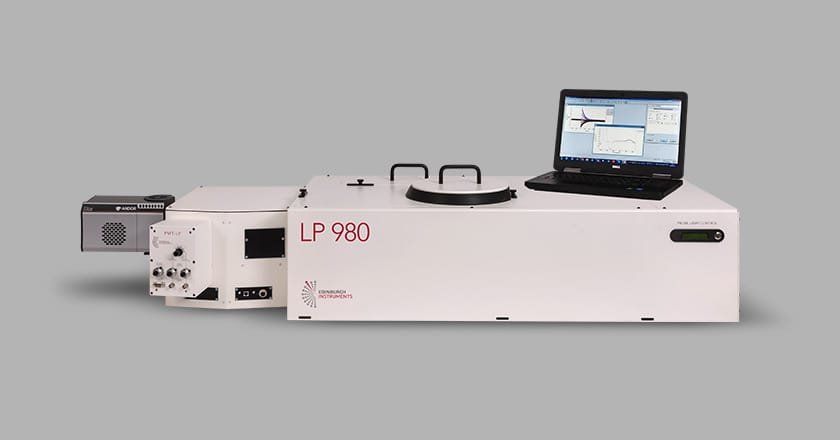
A turn-key spectrometer for nanosecond transient absorption, the LP980 makes fast and accurate transient spectra and lifetimes accessible to any user. - All-in-One spectrometer: Transient Absorption and Laser-Induced Fluorescence - Transients can be measured up to 2.55 µm: to cover a wide range of samples and sample types - Integrated ICCD: Transient spectra is measured within one laser flash - Advanced Software: Complete control of all components and measurements Live Video Demonstration Send us your samples, and we can measure them live in an online demonstration Multiple Detectors Configure the LP980 according to your spectral and time resolution needs High Sensitivity Detection limit of ΔOD 0.002 (kinetic) and ΔOD 0.0005 (spectral) Multi-Technique All your experiments in one instrument: Spectra, Lifetime, Absorption, Fluorescence Accurate Kinetics Over 9 orders of magnitude, from nanoseconds to seconds Wide Spectral Range Measure transient lifetimes and spectra from the UV to NIR range (200 nm – 2550 nm) Advanced Accessories Software-controlled cryostats, stopped flow kinetics, diffuse reflectance, and more The LP980 Transient Absorption Spectrometer sets the benchmark in transient absorption research, becoming the go-to instrument for a wide array of photochemical, physical, and biological applications. As the first of its kind on the market, the LP980 enables precise measurement of transient absorption (TA), laser-induced fluorescence (LIF), and phosphorescence up to 2.55 µm, with time scales ranging from nanoseconds to seconds. Its dual monochromator/spectrograph design allows for both spectral and kinetic acquisitions in one device, saving you both time and cost. Available in two models—LP980-K (kinetic PMT detector) and LP980-KS (kinetic PMT and spectral ICCD detector)—the LP980 can be customised with various pump lasers, probe sources, sample holders, and detectors to perfectly match your research needs. Our technical sales team is ready to help you configure the ideal setup for your experiments. With the intuitive L900® software package, data acquisition is straightforward, and comprehensive analysis tools like ΔOD calculations and multi-component decay fitting are included, eliminating the need for additional software. SOFTWARE The L900 software package streamlines every aspect of the LP980, from parameter optimisation and data acquisition to analysis and control of third-party accessories. With everything integrated into a single, user-friendly platform, there’s no need for additional upgrades. Before measurement, users can preview and optimize signal intensity, significantly reducing experimental time. The software offers comprehensive spectral calibration, automatic subtraction of camera dark noise, and generates automated maps of time, wavelength, and temperature when paired with the relevant accessories. Decay fitting and other analysis features are also built-in. For advanced transient absorption curve fitting, the FLASH software package is available. TECHNICAL SPECIFICATIONS Base Configuration LP980 Base Configuration: Monochromator - Czerny-Turner with triple grating turret, 325 mm focal length, 25 µm to 10 mm computer-controlled (continuously adjustable) motorised slits; Laser Excitation Source - Flashlamp pumped Q-switched Nd:Yag laser operating at 1064 nm, 532 nm, 355 nm or 266 nm. OPO, tuneable in the range 410 nm - 710 nm (signal). Idler and UV doubler options possible; Sample Geometry - Transverse sample excitation geometry included as standard LP980-K (Kinetic Mode) - for lifetime transient decay measurements at a single wavelength: Grating - Plane ruled grating, 1800 g/mm, 500 nm blaze as standard; Dispersion - 1.8 nm/mm; Spectral Range - 200 nm - 870 nm; Spectral Resolution - 0.1 nm; Sensitivity - ΔOD 0.002 (single shot - fast detector option, PMT), ΔOD 0.0005 (single shot - slow detector option, ICCD); Detector Type - Photomulitplier (PMT) with 5 stage dynode chain for high current linearity; Detector Impedance - 50 Ω (amplified - fast detector, <3 ns rise time), 1 kΩ (slow detector, <100 µs rise time) LP980-KS (Kinetic & Spectral Mode) - for lifetime transient decay measurements AND spectral measurements of the decay process: Grating - Kinetic mode grating plus an additional plane ruled grating: 150 g/mm, 500 nm blaze supplied; Dispersion - 21.6 nm/mm; Spectral Coverage - 540 nm (active horizontal ICCD dimension: 25 mm); Spectral Resolution - 0.56 nm (spectral coverage / 960 pixels); Sensitivity - ΔOD 0.0005 single shot; Detectors - Kinetic mode PMT plus an additional image intesified CCD camera (ICCD) supplied; Min. Optical Gate Width - 7 ns (FWHM); Active Pixels - 960 x 256; Active Area - 25 mm x 6.7 mm; Cooling - -20°C as standard (-35°C with additional water circulation) LP980 Upgrade Options: Gratings - A variety of gratings with 150 g/mm - 2400 g/mm, optimised from UV through to NIR; Sample Holders - Cross-beam geometry, diffuse reflectance, thin-film accessory; Detectors - InGaAs detectors (900 nm - 2550 nm) for NIR range are available Options and Upgrades Spectral Mode Detection Intensified Charge-Coupled Device (ICCD) Camera The generation of spectra in kinetic mode by successive measurement at different wavelengths requires many excitation flashes. This can be problematic due to photo-degradation of the sample over time. This can be overcome by upgrading to spectral mode and fitting an ICCD onto the instrument, converting an LP980-K into an LP980-KS. The ICCD detector has a high dynamic range, 7 ns temporal resolution, and is controlled by the L900 software. Sample Holder Options Cross-Beam Geometry Standard sample holder of the LP980. Laser beam and probe beam intersect perpendicular at the sample position. Diffuse Reflectance Suitable for opaque and highly scattering powders, solids and suspensions. Quasi-Collinear Holder Maximises overlap between pump and probe increasing transient absorption signal. Film Sample Holder Films are mounted vertically at an angle from the pump and probe beams. Features control of X,Y position and rotational angle for maximum alignment flexibility. LIF Sample holder Fits standard cuvettes and is placed near the detection monochromator, for enhanced fluorescence collection compared to the standard TA holder. Temperature Control Options TE Cooled Sample Holder Transient absorption sample holder with TE control by the L900 software. Options from -50 o C to +150 o C are available. Liquid Nitrogen Dewar Low-cost option for cryogenic measurements of liquids and powders at 77 K. Software-Controlled Cryostats Liquid N 2 or He cryostats are mounted in the TA sample position and easily exchanged for other holders. They are fully controlled from the software enabling the creation of automated temperature maps. Spectral Range Upgrades Visible PMT Detectors The standard kinetic detector in LP980 covers the range of 200 nm – 980 nm. This can be replaced by a PMT980 (200 nm – 980 nm) or PMT1010 (200 nm – 1010 nm) detector for TA extending further into the NIR. NIR Detector Options A range of analogue InGaAs detectors are available to cover the range of 900 nm – 2550 nm (LIF-only detection between 2050 nm and 2550 nm). For weak laser-induced fluorescence signals in the NIR, a photon-counting NIT PMT and MCS electronics upgrade is recommended.
CATEGORY
