By Molchem Technologies Uk LTD.
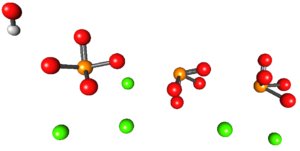
Hydroxyapatite powder also called HA powder is a mineral present in either solid or crystalline form which is then converted into the powdered form. It is based on the presence of calcium, hydroxyl ions and phosphorus in different ratios. It is synthesized chemically in various forms having a balanced chemical equation with appropriate ratios. It has two biological functions too, mantis shrimp and humans/mammals/primates. It has several uses as well in the field of cosmetics, supplements, medical and archeology. With the world pacing at such a great rate, HA powder has proved to be beneficial in several ways. Though there are still some manufacturers who are claiming this mineral to be a misfit but on the other hand, it has multiple supporters too so that is why it is rightly believed that benefits and misfits go hand in hand and it is true in plenty of ways too because we have to be careful as to what product or use of HA powder will prove to be beneficial or harmful for us. Hydroxyapatite which is also known as hydroxylapatite (HA) is a form of a mineral calcium apatite which occurs naturally, the formula of which is Ca 5(PO 4)3(OH). It is therefore known that the mineral hydroxyapatite is a crystalline formed cell and has two separate structures. Hydroxyapatite is one of the members of the apatite group, which is a complex one. The hydroxyl ions can be alternated by carbonate, chloride or fluoride. Upon heating, it is crystallized and is present in the crystalline form which can then be converted into the powdered form by crushing the crystals of it that is why the pure form of it is in white colour. Although the ones which occur naturally might be present in other colours too, that is brown, yellow or green. A bone mineral which is present in a normal human bone is an altered form of the hydroxyapatite because fifty per cent of it by volume and seventy percent of it by weight is actually the bone mineral comprised of hydroxyapatite. The minute structures of hydroxyapatite are also found in the pineal gland, brain sand and a few other structures of the human body. These are the tiny calcifications of the human body. Hydroxyapatite powder can be chemically synthesized in multiple different ways. Calcium, phosphorus and hydroxyl ions are the main components of a hydroxyapatite powder. They can be altered in various ways to bring out various shapes and forms of the powder, but the main formula and equation that formulates the process remain the same which are mentioned below respectfully. It can be formed in solid-state too which later on is converted into the crystalline form and from that is converted into the powdered form to perform various functions for different purposes. Properties of Hydroxyapatite powder The most prominent property of hydroxyapatite powder is the level of its stability at the time of comparison with the other calcium phosphates. However, HA powder is believed to be that calcium phosphate compound which is the most stable under the influence of physical conditions such as the composition of body fluids, pH and temperature. Following are the exceptional chemical properties of HA powder: Biocompatibility: One of the excellent property of HA powder is biocompatibility. HA powder enhances the biocompatibility of all the products it is used in. Bioactivity: Another good property of HA powder is bioactivity. All the products or minerals which have HA powder extraction in them speeds up the bioactivity of those products or minerals. Osteoconductivity: Osteoconductivity too is one of the greatest properties of HA powder. As HA powder can either be transparent or opaque, so osteoconductivity is exceptionally enhanced in it. Non-toxicity and non-inflammatory nature: HA powder possesses the non-toxic and non-inflammatory nature that is why it can be used for various purposes as it has no harmful, toxic or inflammatory effects on any of the things it is mixed with. Following are the physical properties of the HA powder: 1) Like all the other ceramics, HA is also very brittle. 2) The usual colours of HA powder are green, grey, red, brown, violet or colourless, but the colour of it depends upon the type of apatite. 3) It can be transparent or opaque. 4) It gets degraded in the solution of 2.0 pH.
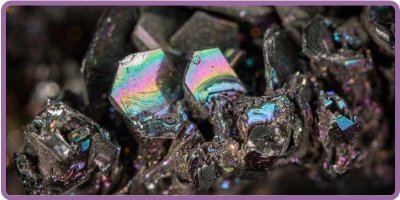
Silicon carbide nanoparticles have wide applications in field emission displays and light emitting devices. Moreover, nanoscale silicon carbide is used in designing and manufacturing electro-devices in nanoscale, nanosensors and biological labels. Bulky silicon carbide (SiC) is known as a refractory agent and semiconductor with excellent thermal, mechanical and chemical behavior. The melting point of this non-oxide ceramic is above 2800 °C, perfectly resistant against corrosion with low thermal expansion coefficient. Silicon carbide has a large bandgap and remarkable mechanical strength with low density and high hardness. Silicon carbide, also known as carborundum, has a rare natural occurrence found in moissanite mineral. However, it has been largely produced as powder since the late nineteenth century with the most application as an abrasive agent. It been found applications in semiconducting electronics devices which function at high voltages and high temperatures. The most favorable electronic properties of silicon carbide include low quantum confinement, high ionic mobility, high breakdown electric field, and high saturation electron drift velocity and high thermal and electrical conductivity. Using a technique called Lely method, silicon carbide’s large single crystals are grown and cut as small as gems called synthetic moissanite. Through binding silicon carbide together, practically hard ceramics are used as a highly enduring agent in car clutch and ceramic plates, car brakes and bulletproof vests. Silicon carbide is also used in electronics, in designing detectors and light emitting diodes (LEDs). Even though silicon carbide is rarely found on Earth crust, it is highly abundant in space mostly near carbon-rich stars with the most common crystal forms as beta-polymorph. In general, crystalline silicon carbide comprises some 250 different forms and is produced in glassy amorphous crystals by pyrolysis of preceramic polymers in an inert gas atmosphere. The most common crystalline structure of SiC is alpha silicon carbide (α-SiC) with a hexagonal configuration which forms at temperatures over 1700˚C. There is a modified silicon carbide as β-SiC which is processed using a zinc blend crystal structure with applications in supports for heterogenous catalysts due to their higher surface area compared to the alpha form. Silicon Micron and Nanoparticles powder: Particles and mostly crystals can be classified according to their size as nano and micron. Generally, the particles with their size around 70 microns are referred as micron particles while those with sizes below 100nm are considered as nanoparticles. Silicon carbide (Sic) is available as micron and nano scales with different properties as well. Regarding high fracture toughness, excellent hardness, high resistance towards oxidization, perfect mechanical strength and stability in extreme environmental conditions, silicon carbide is expected to adopt novel and even improved properties when its obtained in nano scale. The silicon nanoparticles have been demonstrated to exhibit new properties in addition to the improved behaviors mentioned earlier. Silicon nanoparticles have unique optical and electrical properties with higher strength and hardness when included in some target materials. Technically, the impact of silicon carbide nanoparticles has been investigated so precisely proving remarkable impact of the size their physical and mechanical behavior. It has been shown that the encapsulation of smaller silicon carbide nanoparticles in the bulk of aluminum has resulted in significant grain refinement when compared to SiC nanoparticle with bigger sizes. Moreover, the particle mean size has been demonstrated to influence the heat transfer capability and basic microscopic properties of α-SiC/water nanofluids. It has been proved that large-particle nanofluids have lower viscosity and higher thermal conductivity which is originated from the solid/liquid smaller area of interface. What’s more, the particle size directly and significantly affects the catalytic activity.
CATEGORY
