
Product type Iron based metal bond Main functionality Co, Ni and Cu free Sintering method Hot press Suitable for Profling wheels, polishing pads, rollers Application Ceramics, abrasive stones Developed for the ceramic industry, these eco-friendly pre-alloyed powders provide a sustainable alternative to traditional materials. Free from copper and cobalt, with reduced levels of other critical elements, they combine high cuttability with excellent performance on abrasive stones. Designed to lower environmental impact and minimize workplace exposure, they ensure safer and greener diamond tool production. product name: S144 | S146 | S147 | S163 | S161 Elements composition: Fe P | Fe P | Fe P | Fe P Mo | Fe P Mo Ni Sintering Temperature (°C): 800 | 800 | 800 | 800 | 800 Density (g/cm³): 7.7 | 7.7 | 7.6 | 7.6 | 7.6 Hardness HRB scale (HRB): 104.5 | 104.5 | 109.5 | 107 | 107.5 Resilience (J/cm²): 15 | 15 | 7.5 | 15 | 23 Particle size (µm): <106 | <106 | <106 | <106 | <106
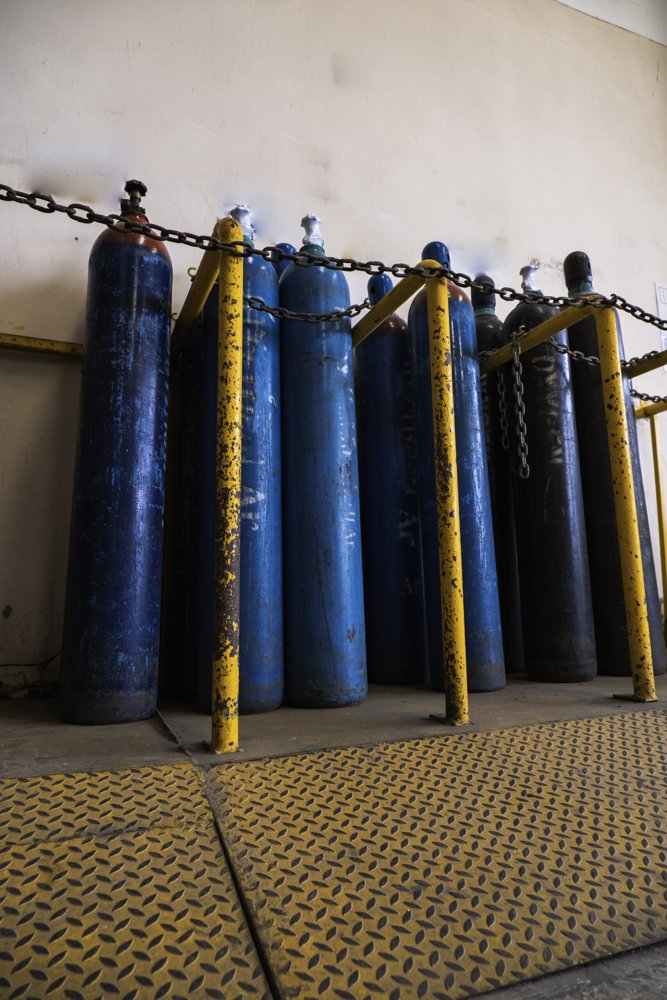
Alloys for Reversible Hydrogen Storage The process developed by MBN are suited to the production of advanced intermetallic hydride powders for solid-state hydrogen storage systems, including AB₅-type, AB₂-type, and AB-type alloy families. These hydrogen storage materials are engineered using mechanical alloying process, enabling synthesis of complex multicomponent intermetallic systems with precise compositional control and nanostructured morphology. The flexibility of solid-state processing allows both A-site substitution (rare-earth or alkaline-earth elements) and B-site substitution (transition metals) within the crystallographic lattice, enabling creation of optimized hydrogen storage alloys beyond conventional binary compositions. This compositional tuning capability allows optimization of critical storage properties: ◉ Hydrogen storage capacity (wt% and volumetric density) ◉ Equilibrium plateau pressure (matching operating conditions) ◉ Absorption/desorption temperatures (ambient to 100 °C) ◉ Cycling stability and degradation resistance (10,000 cycles) ◉ Activation behavior (initial hydrogenation requirements) The nanocrystalline grain structure achieved through high-energy ball milling (grain size 20-100 nm) significantly enhances hydrogen diffusion kinetics through grain boundary networks, dramatically improving hydrogen absorption rates and desorption kinetics compared to cast or arc-melted alloys. Additionally, in-situ dispersion of catalytic nano-oxides (TiO₂, Nb₂O₅, V₂O₅ catalysts) during processing promotes efficient H₂ molecule dissociation into atomic hydrogen at the alloy surface, further boosting reaction kinetics, storage efficiency, and low-temperature performance. The metal hydride powders can serve stationary hydrogen storage applications (renewable energy buffering, backup power), mobile hydrogen systems (fuel cell vehicles, maritime applications), and niche portable power solutions, offering a safe, compact, and fully reversible hydrogen storage technology operating at near-ambient temperatures and moderate pressures (1-30 bar). MBN provides custom metal hydride alloy development services to meet specific pressure-temperature requirements, capacity targets, kinetics specifications, and system integration constraints. PROPERTIES AB₅-Type Alloys (LaNi₅-based)Hydrogen capacity 1.3-1.5 wt% (reversible) Plateau pressure 2-10 bar at 25 °C Operating temperature 0-80 °C AB₂-Type Alloys (TiV₂-based, Laves phase) Hydrogen capacity 1.8-2.2 wt% Plateau pressure 5-50 bar at 25 °C (tunable) Operating temperature 20-100 °C AB-Type Alloys (FeTi-based) Hydrogen capacity 1.5-1.9 wt% Plateau pressure 5-20 bar at 25-50 °C Operating temperature 20-80 °C Powder Characteristics Particle size 10-150 µm (application-optimized) Grain size 20-100 nm (nanocrystalline) Catalyst loading 0.5-3 wt% (optional) Delivered condition Activated or as-synthesized
CATEGORY
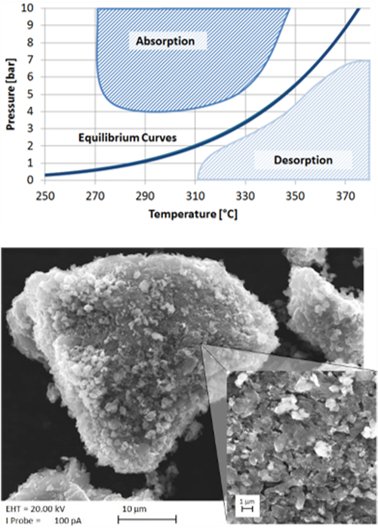
MBN has developed advanced magnesium-based metal hydride alloys and nanostructured hydrogen storage composites using its proprietary Mechanomade® high-energy ball milling process, successfully overcoming the significant processing challenges associated with highly reactive and ductile magnesium. Mg-based hydrogen storage materials are synthesized directly in powder form with refined nanocrystalline grain structure (grain size <100 nm) that dramatically accelerates hydrogen diffusion kinetics along grain boundary networks. Nano-scale catalytic additives (Nb₂O₅, TiO₂, V₂O₅) are homogeneously dispersed during the milling process, promoting efficient dissociation of H₂ molecule into atomic hydrogen at the powder surface—the rate-limiting step in hydrogen absorption. This catalytic enhancement strategy significantly improves: Gravimetric hydrogen storage capacity (up to 7 wt% H₂) Hydrogen absorption/desorption kinetics (fast cycling rates) Operating temperature reduction (150-300 °C vs. 350+ °C for pure Mg) Activation time minimization (first hydrogenation cycle) Cycle life stability (reversible hydrogen uptake/release) MBN’s magnesium enables safer solid-state hydrogen storage, lightweight tank systems, and more efficient energy density compared to compressed or liquefied hydrogen, supporting next-generation clean energy infrastructure, hydrogen fuel cell vehicles, renewable energy storage, and accelerating the adoption of hydrogen as a sustainable energy carrier for decarbonization. COMPOSITION Mg, Mg-Ni, Mg-Fe, Mg-Ti alloy systems PROPERTIES Hydrogen capacity 5-7 wt% (reversible) Operating pressure 1-10 bar H₂ Operating temperature 150-300 °C Absorption kinetics<5 min for 80% capacity (optimized formulations) Desorption kinetics<10 min at 250 °C Cycle life1000 absorption/desorption cycles Particle size 10-100 µm (application-specific) Catalyst loading 1-5 wt% transition metal oxides Development Services: Custom alloy composition design, kinetics optimization, catalyst screening, cycling stability testing, tank integration support.
CATEGORY

Customized powders for Advanced Applications Cantor Alloy (equiatomic CoCrFeMnNi composition) is one of the most extensively studied High Entropy Alloys (HEAs), renowned for exceptional mechanical stability, high ductility, and outstanding corrosion resistance across extreme temperature ranges. Originally identified by Prof. Brian Cantor, this single-phase FCC alloy remains the benchmark system for compositionally complex alloy (CCA) development and multi-principal element alloy research. COMPOSITION Cobalt 20% – Chromium 20% – Iron 20% – Manganese 20% – Nickel 20% In the context of project FORGE, MBN produces Cantor Alloy powders using its proprietary Mechanomade® mechanical alloying technology, ensuring precise elemental homogenization and controlled nanostructured microstructure. Powders are supplied with customized particle size distributions and tailored powder morphology, optimised for Hot Isostatic Pressing (HIP) consolidation, additive manufacturing, thermal spray coating deposition, or spark plasma sintering. Beyond Cantor Alloy, MBN’s High Entropy Alloy portfolio includes: AlCrFeNiTi – lightweight, oxidation-resistant HEA AlCrMoNbTi – refractory HEA for high-temperature applications CrMnNbSiW – ultra-high temperature HEA AlCuCrFeNi – precipitation-hardenable HEA system This compositional diversity showcases the flexibility of the Mechanomade® solid-state processing to combine elements with vastly different melting points—impossible through conventional liquid metallurgy routes like casting or atomization. Industrial Applications span advanced tooling, energy sector components, and aerospace structural parts, where high strength-to-ductility balance, thermal stability at elevated temperatures, fatigue resistance, and structural integrity under cyclic loading are critical performance requirements. MBN offers both standard HEA compositions and customer-specific alloy development, supporting the transition from lab-scale materials discovery to industrial-scale production.
CATEGORY
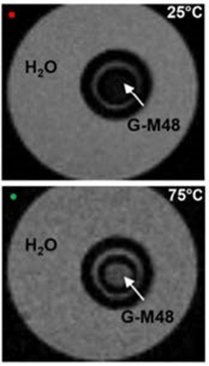
Magnetic Nanoparticles for Cancer Theranostics & Hyperthermia Treatment SelfMag® magnetic nanoparticles are doped ferrite nanoparticles for biomedical applications developed by MBN’s mechano-chemical synthesis process, integrating cancer therapy and diagnostic imaging in a single theranostic nanoplatform. The key feature of SelMag® nanoparticle is the tunable Curie temperature, which enables precise thermal dose control and intrinsic patient safety in magnetic hyperthermia therapy, with transition temperatures adjustable between 40 and 250 °C. The self-regulated heating prevents tissue overheating during alternating magnetic field (AMF) treatment. Surface functionalization options (glucose, PEG, chitosan) ensure colloidal stability in physiological media, controlled protein corona formation, and tailored biodistribution and tumor targeting. Validated on MDA-MB-231 breast cancer cells, SelfMag® nanoparticles induce selective cancer cell necrosis under alternating magnetic fields with minimal off-target cytotoxicity to healthy tissues. Beyond magnetic hyperthermia applications, these multifunctional nanoparticles serve as temperature-sensitive MRI contrast agents and magnetic particle imaging (MPI) tracers with exceptional sensitivity. Available as aqueous dispersions or propan-2-ol suspensions, SelfMag® nanoparticles provide a patent-pending nanomedicine solution for precision cancer treatment and molecular imaging. Biomedical Applications: Magnetic hyperthermia therapy, MRI contrast enhancement, magnetic particle imaging, drug delivery carriers, cancer theranostics, thermal ablation, cell tracking. Key Advantages: Self-regulating temperature control, high heating efficiency, biocompatible composition, multimodal imaging capability, customizable surface chemistry. PROPERTIES Particle size 50-120 nm (hydrodynamic diameter) SAR values 20-30 W/g at clinical AMF conditions Tunable Curie temperature range 40-250 °C COMPOSITION Fe₂O₃ matrix 28-30% – MgO 32-36% – TiO₂ 26-30% – Other stabilizing phases 12-16% Surface coatings Glucose, PEG, chitosan (custom options available) Dispersion media Water, propan-2-ol SelfMag® magnetic nanoparticles are doped ferrite nanoparticles for biomedical applications developed by MBN’s mechano-chemical synthesis process, integrating cancer therapy and diagnostic imaging in a single theranostic nanoplatform.
CATEGORY
