By J.A. Woollam
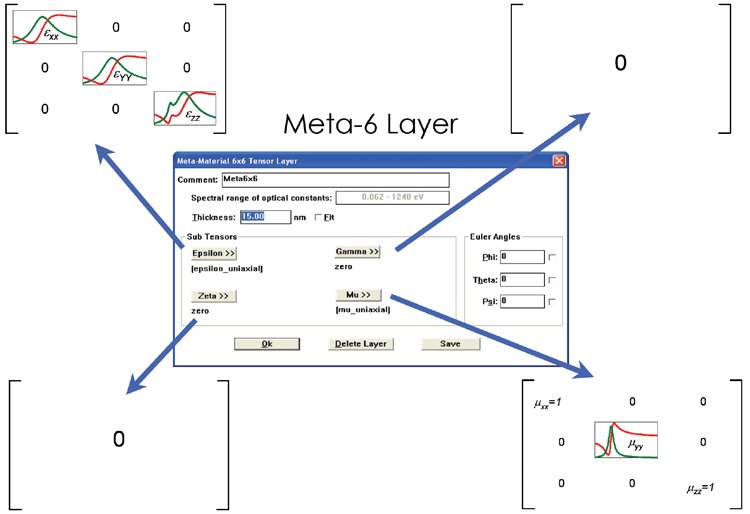
WVASE ® is the most powerful and comprehensive ellipsometric analysis program available. It provides more modeling options than any other program. WVASE is also FAST. It employs state of the art mathematical fitting algorithms for the fastest, most accurate, fits to your data. In addition to modeling and analyzing the ellipsometric data, WVASE also analyzes and/or simulates reflectance and transmission data (Neutron reflectivity data, also, for analysis of very thin films such as organics). WVASE is included with VASE, IR-VASE, and VUV-VASE systems. Build your own oscillators, beginning with a number of built-in functions, including: • Lorentz • Gaussian • Harmonic • Drude • Tauc-Lorentz • Cody-Lorentz • Tanguy • PSEMI Metamaterials consist of artificially-created arrays of small structures, usually smaller than the measurement wavelength. These structures have properties tailored to interact with incoming ElectroMagnetic waves in ways generally not observed in natural materials.Up to four relative constitutive functions (ε, μ, γ and ζ ) can be required to completely model metamaterials structures. Furthermore, they can be anisotropic, requiring 3X3 tensors for each function, as shown below: These equations are embodied in the Meta-6 layer, as shown below with different Gen-Osc layers describing the various anisotropic dielectric tensors. Metamaterials are usually anisotropic and are often depolarizing; meaning that they usually require either generalized ellipsometry (g-SE)measurements or even Mueller Matrix ellipsometry (MM-SE).
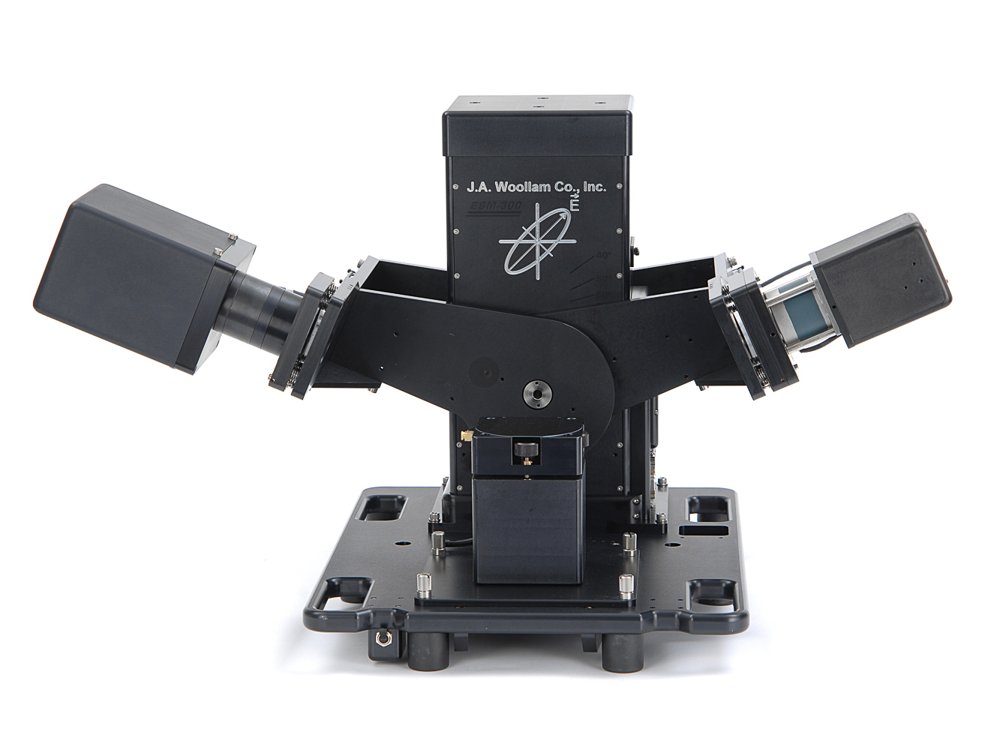
The M-2000® line of spectroscopic ellipsometers is engineered to meet the diverse demands of thin film characterization. An advanced optical design, wide spectral range, and fast data acquisition combine in an extremely powerful and versatile tool.The M-2000 delivers both speed and accuracy.Our patented RCE technology combines Rotating Compensator Ellipsometry with high-speed CCD detection to collect the entire spectrum (hundreds of wavelengths) in a fraction of a second with a wide array of configurations.The M-2000 is the first ellipsometer to truly excel at everything from in-situ monitoring and process control to large-area uniformity mapping and general purpose thin film characterization.No other ellipsometer technology acquires a full spectrum faster. Why an M-2000? Advanced Ellipsometer Technology: The M-2000 utilizes our patented RCE (rotating compensator ellipsometer) technology to achieve high accuracy and precision. Fast Spectral Detection: The RCE design is compatible with advanced,proven CCD detection to measure ALL wavelengths simultaneously. Wide Spectral Range: Collect over 700 wavelengths from the ultraviolet to the near infrared – all simultaneously. Flexible System Integration: With modular optical design, the M-2000 is suited for direct attachment to your process chamber or configured on any of our table-top bases. Accuracy: Advanced design ensures accurate ellipsometry measurements for any sample. Applications: The M-2000® is a versatile spectroscopic ellipsometer, suited to many different sample types. Coatings can be dielectrics, organics, semiconductors, and even thin metals. Optical Coatings: Characterize both thickness and refractive index for single- and multi-layer coatings;anti-reflection, high-reflection, or decorative coatings. Calculate the color coordinates for your coating stack under different lighting conditions. Chemistry/Biology: The M-2000 can be used for a variety of chemical and biological applications, either as a stand-alone tool or in combination with one of our many accessories. Study materials under liquid ambient, at high or low temperatures, or in conjunction with QCM-D measurements. Conductive Organics: Great progress has occurred in the area of organic layers and stacks used for display (OLED) or photovoltaic applications.There are many different materials being studied, from small molecules such as Alq3 to conjugated polymers such as P3HT. Often multiple materials are blended together – which requires the wide spectral range of the M-2000 – to probe different wavelengths where the organics are optically different. Long-chain molecules may also have significant anisotropy, where orientational stacking of the polymer chains produces different optical constants in different directions. Semiconductors: Traditional ellipsometry applications are still going strong. Characterize any semiconductor material:resists, photomasks, SiON, ONO stacks, low-k dielectrics, high-k gates, SOI, SiGe, II-VI and III-V ternary and quaternary compounds. Photovoltaics: Film thickness and optical properties are critical to performance of solar devices. Ellipsometry is used for development and monitoring of all PV materials: a-Si, μc-Si, poly-Si, AR Coatings (SiNx, AlNx…),TCO Films (ITO, ZnOx, doped SnO2, AZO), CdS, CdTe, CIGS, organic PV materials, and dye sensitized films. Transparent conductive oxides appear metallic at long wavelengths and dielectric in the visible. The M-2000 can gather info about the film from both of these regions. In-Situ: The M-2000 is ideal for in-situ monitoring and process control. It is used successfully with a number of different processes to provide real-time results: MBE Sputter ALD E-beam evaporators, MOCVD PECVD Plasma etch ECR, Liquid Cells Temperature Stages Cryostat Specifications: Ellipsometer Configuration: Rotating Compensator Ellipsometer (RCE) Spectral Range: D: 193-1000 nm; X-210: 210-1000 nm; X: 245-1000 nm; U: 245-1000 nm; V: 370-1000 nm; +NIR: adds 1005-1690 nm Number of Wavelengths: D ~500; X-210 ~485; X ~470; U ~470; V ~390; +NIR adds ~190 wavelengths Detector: CCD Angles of Incidence: 45°-90° (Automated Angle Base); 20°-90° (Vertical Automated Angle Base); 65° (Fixed Angle Base); 65° (Test Base) Data Acquisition Rate (Complete Spectrum): 0.05 seconds, minimum; 2-5 seconds, typical Max substrate thickness: 18mm Power Requirements: 100/240 VAC, 47-63Hz, <1 Amp Dimensions: Contact us for dimensions Accessories: Sample Translation/Rotation: Horizontal base options: +Automated XY (100x100mm, 200x200mm, or 300x300mm); +Manual XY (50x50mm); +Automated Sample Rotation. Vertical base options: +Automated XY (50x50mm); +Manual XY (50x50mm); +Automated Sample Rotation Temperature Control: +Basic Temperature Stage (room temp to 300°C); +Standard Temperature Stage (-70°C to 600°C); +High Temperature Stage (room temp to 1000°C); +Cryostat (4.2/77 to 500 Kelvin or 4.2/77 to 800 Kelvin) Liquid Studies: Horizontal base options: +5mL Liquid Cell; +500uL Liquid Cell; +2mL Electrochemical Cell; +5mL Heated Liquid Cell; +500uL Variable Temperature Liquid Cell. Vertical base options: +45mL Electrochemistry Compatible Cell; +270uL Liquid Cell; +5mL Liquid Cell Focusing & Camera: Add focusing optics to decrease the measurement beam diameter. Focusing optics are detachable for normal use. Add a camera to view the measurement spot on the sample and improve beam positioning. Contact us for details. FAQ: Is automated mapping included? The M-2000 is highly customizable. We offer several options for automated mapping. Is table included? The table pictured is an optional feature convenient for containing computer and electronics. Can the M-2000 be used in situ? Yes. Modular source and receiver can be attached to chamber. Which software package is included? CompleteEASE What is the difference between M-2000 and RC2? The M-2000 was the first widely-used high-speed ellipsometer. It has a long history of success in research and production, and it’s optical design includes a single rotating compensator. The RC2 is a newer design with many of the same great features combined with innovative new technology. Further, it has two rotating compensators, which allow measurement of the full Mueller-matrix.
CATEGORY
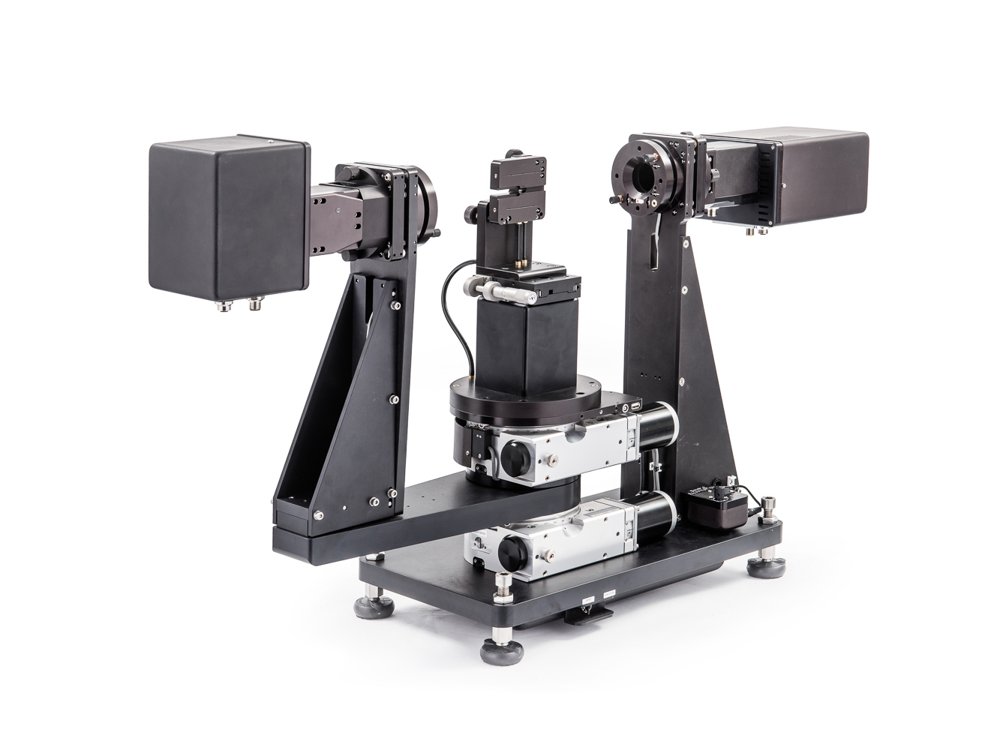
The RC2® design builds on 25 years of experience. It combines the best features of previous models with innovative new technology: dual rotating compensators, achromatic compensator design, advanced light source and next-generation spectrometer design. The RC2 is a near-universal solution for the diverse applications of spectroscopic ellipsometry. Why an RC2? Advanced Measurement Capabilities The RC2 is the first commercial spectroscopic ellipsometer to collect all 16 elements of the Mueller matrix. Mueller matrix SE allows characterization of the most advanced samples and nanostructures. Best Measurement Accuracy Advanced measurement capabilities allow the best accuracy from fast CCD-based ellipsometry. Dual Rotating Compensators Synchronous rotation of two compensators provides high accuracy, high speed, and complete Mueller-matrix measurements. Achromatic Compensator Design New achromatic compensator design with optimized performance over a wide spectral range. patent pending Wide Spectral Range Collect over 1000 wavelengths from the ultraviolet to the near infrared – all simultaneously. Fast Measurement Speed Synchronous operation of both compensators allows highly accurate data without waiting to "zone-average" over optical elements. Collect the entire spectrum (over 1000 wavelengths) simultaneously in a fraction of a second. Advanced "Dual" Light Source Dual light source for extended spectral range with computer control of beam intensity. Automatically optimize signal on any sample (low or high reflection). ANISOTROPY APPLICATIONS Generalized Ellipsometry Traditional ellipsometry measurements are ideal for standard thin film characterization. However, more advanced measurements are required for anisotropic materials. Generalized Ellipsometry collects six values compared to the standard two (Ψ, ∆). This additional information completely characterizes the cross-polarization of anisotropic samples. Generalized Ellipsometry Measures: Anisotropic PEN (Polyethylene Naphthalate) Generalized Ellipsometry measurements of the transmitted beam provide high sensitivity to the birefringence in anisotropic PEN films. Variable Angle Generalized Ellipsometry was used to fully characterize the biaxial indices (n x ≠ n y ≠ n z) of the PEN substrate. Complete Mueller-matrix The RC2 can characterize the full Mueller-matrix of a sample. This advanced data type insures appropriate characterization of complex samples that are both anisotropic and depolarizing. Viewing the entire Mueller matrix allows access to different polarization effects in advanced samples. The yellow and green sections are related to Diattenuation and Polarizance, respectively. The red section shows unrotated Retardance. Further rotating the sample will shift this information into different regions of the Mueller matrix. Rotation MM-SE scan shows the retardation signature from an anisotropic sample in the bottom-right nine elements. Liquid Crystal Twisted nematic liquid crystal films introduce the complexity of an anisotropic film with a smoothly varying optical axis. With the thick liquid crystal layer sandwiched between glass substrates, the Mueller-matrix measurements insure the best measurement. The complete Mueller-matrix was measured for a twisted liquid crystal. This enabled characterization of the optical axis twist and pre-tilt, and liquid crystal anisotropic refractive index. SPECIFICATIONS Ellipsometer Configuration Dual RCE Wavelength Range D / X / U / +NIR / +XNIR: 193-1000 nm / 210-1000 nm / 210-1000 nm / adds 1005-1690nm / adds 1005-2500nm Number of Wavelengths D / X / U / +NIR / +XNIR: ~800 / ~790 / ~790 / adds ~275 wavelengths / adds ~250 wavelengths Detector CCD Angles of Incidence: 45°-90° (Automated Angle Base); 20°-90° (Vertical Automated Angle Base); ~65° (Focused Base); 65° (Fixed Angle Base); 65° (Test Base) Data Acquisition Rate (Complete Spectrum): 0.3 seconds, minimum; 2-10 seconds, typical Max substrate thickness 18mm Power Requirements 100/240 VAC, 47-63Hz, <1 Amp Dimensions Contact us for dimensions ACCESSORIES Sample Translation/Rotation Horizontal base options: - Automated XY (100x100mm, 200x200mm, or 300x300mm) - Manual XY (50x50mm) - Automated Sample Rotation Vertical base options: - Automated XY (50x50mm) - Manual XY (50x50mm) - Automated Sample Rotation Temperature Control - Basic Temperature Stage (room temp to 300°C) - Standard Temperature Stage (-70°C to 600°C) - High Temperature Stage (room temp to 1000°C) - Cryostat (4.2/77 to 500 Kelvin or 4.2/77 to 800 Kelvin) Liquid Studies Horizontal base options: - 5mL Liquid Cell - 500uL Liquid Cell - 2mL Electrochemical Cell - 5mL Heated Liquid Cell - 500uL Variable Temperature Liquid Cell Vertical base options: - 45mL Electrochemistry Compatible Cell - 270uL Liquid Cell - 5mL Liquid Cell Focusing & Camera Add focusing optics to decrease the measurement beam diameter. Focusing optics are detachable for normal use. Add a camera to view the measurement spot on the sample and improve beam positioning. Contact us for details. FAQ Is automated mapping included? The RC2 is highly customizable. We offer several options for automated mapping. Is table included? The table pictured is an optional feature convenient for containing computer and electronics. Can the RC2 be used in situ? Yes. Modular source and receiver can be attached to chamber. Which software package is included? CompleteEASE What is the difference between M-2000 and RC2? The M-2000 was the first widely-used high-speed ellipsometer. It has a long history of success in research and production, and it’s optical design includes a single rotating compensator. The RC2 is a newer design with many of the same great features combined with innovative new technology. Further, it has two rotating compensators, which allow measurement of the full Mueller-matrix.
CATEGORY
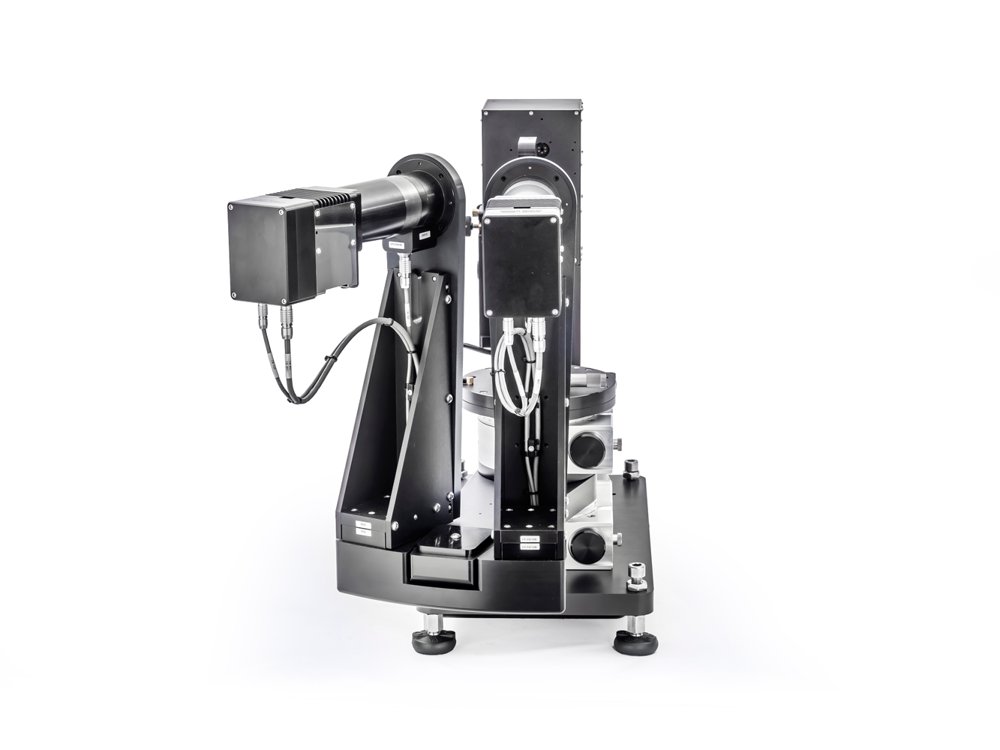
The VASE® is our most established and versatile ellipsometer. Useful for research on all types of materials, including semiconductors, dielectrics, polymers, metals, multi-layers, and more. Variable wavelength and angle of incidence enable flexible measurement capabilities. The VASE combines high accuracy and precision with the widest spectral range in the industry, 193 to 4000 nm. Why a VASE? Maximum Data Accuracy The VASE features a rotating analyzer ellipsometer(RAE) combined with our patented AutoRetarder®for unparalleled data accuracy. High Precision Wavelength Selection Our custom-built scanning monochromator is designed specifically for spectroscopic ellipsometry, optimizing speed, wavelength accuracy, and light throughput, while automatically controlling wavelength selection and spectral resolution. Flexible Measurements The VASE features a vertical sample mount and vacuum stage to accommodate a large variety of measurement geometries including reflection, transmission, and scattering. Extended Wavelength Range The VASE offers multiple combinations of detectors, including our latest 4IR extension which allows for measurements up to 4000 nm. FEATURED COMPONENTS AutoRetarder® Technology The VASE is able to collect the most accurate data of any ellipsometer through its use of our patented AutoRetarder. The AutoRetarder adjusts the polarization state of the incident measurement beam to provide optimal sensitivity for all types of materials. This provides an optimum measurement for any sample, under any conditions. AutoRetarder accurately measures: +Ψ and Δ over the full range +Generalized (anisotropic) Ellipsometry +Depolarization data +Mueller-matrix data Custom Monochromator Our custom-built, double-chamber monochromator provides superior stray-light rejection. Up to four gratings are used to provide the most efficient reflectivity across the measured spectral range. The monochromator is located before the sample, which restricts the intensity of light incident on the sample to just a narrow bandwidth around the wavelength being measured. This avoids photo-bleaching of light-sensitive samples, as can happen for other ellipsometers where the monochromator is placed after the sample. Extended NIR Detection The VASE has always offered the widest wavelength range of our UV-VIS-NIR ellipsometers. Now optional for the VASE is a LN2-cooled InSb detector for measurements up to 4 μm in the infrared. The detector is enclosed inside a liquid nitrogen dewar; when filled before data acquisition, it provides up to eight hours of data collection. Combined with our standard UV-VIS detector, the continuous spectral range from 193 to 4000 nm can be measured. APPLICATIONS Optical Coatings Ellipsometry plays an effective role in both the design and manufacturing stage of optical coatings. Anti-reflection coatings, notch filters, and highly reflective film stacks are all examples of material systems composed of high/low-index films. The optical properties and thickness of each layer in a coating stack play a pivotal role in determining the performance of a coating stack within a given wavelength range. Thin Absorbing Films The variable angle capability of the VASE enables characterization of thin metal films. Transmission intensity measurements are easily acquired with the VASE. Simultaneous analysis of ellipsometry and transmission-intensity data enables characterization of very thin, non-opaque metal films less than 50 nm thick, including graphene, TiN, Au and more. Semiconductors Ellipsometry is highly sensitive to surface roughness and oxide layers that natively grow on most semiconductors. In addition, optical bandgap, electronic transitions, and critical points can be determined for bulk and thin-film semiconductor materials such as GaN, InP, SiGe, CdTe, etc. Crystallinity and alloy composition can also be determined by monitoring the shape and wavelength position of the critical points. Liquid Studies Liquid cells enable in-situ, real-time study of surfaces under varying liquid ambients. Typical studies include protein attachment, etch rates of photoresists, and oxide growth through electrolysis. Optical properties of liquids can also be accurately determined using the VASE with our liquid prism cell via the minimum deviation experiments. SPECIFICATIONS Ellipsometer Configuration Rotating Analyzer Ellipsometry (RAE) with patented AutoRetarder®, and automated wavelength selection via our custom monochromator Spectral Range Standard: 240-2500 nm +DUV extension: adds 193-240 nm +4IR extension: adds 2500-4000 nm (requires liquid nitrogen cooling) Number of Wavelengths User-defined before measurement Angles of Incidence+Fully-automated +Range: 15° to 90° (standard system) +Accuracy: 0.01 ° Data Acquisition Rate+Typical: 0.1 to 3 seconds per wavelength, depending on reflectivity of sample. +High Accuracy: measurements using full-AutoRetarder capability require 20 seconds per wavelength. Max substrate thickness 20mm Power Requirements 100, 110, 220, 240 VAC, 50-60Hz, 4/8 Amps Software WVASE Light Source 75 watt, convection-cooled xenon lamp Dimensions shown below ACCESSORIES Temperature Control By adding a cryostat or heat stage to the VASE for variable temperature studies, measurements can be conducted at temperatures as low as 4.2K and as high as 1000° C. +Basic Temperature Stage (room temp to 300°C) +Standard Temperature Stage (-70°C to 600°C) +Cryostat (4.2/77 to 500 Kelvin or 4.2/77 to 800 Kelvin) Liquid Studies Cells with optical windows are available for measurement through liquid ambient enable characterization of liquid/solid interface. Options include: +45mL Electrochemical Cell +270uL Liquid Cell +5mL Liquid Cell +Liquid Prism Cell Sample Mounting Options We offer a variety of sample stage mounts to accommodate your measurement needs. Our standard and small sample stages are provided with every ellipsometer, while the others are available as upgrades. Options include: +Standard Stage +Manual Translation +Small Sample Stage +Automated Translation +Sample Rotator +Auto-Z Stage Focusing & Camera Add focusing optics to decrease the measurement beam diameter. Our standard focusing option provides a 100 μm beam diameter. Our alternate focusing option provides a slightly larger, 200 μm beam diameter, but can be used during transmission measurements. Focusing optics are detachable for normal use. Add a camera to view the measurement spot on the sample and improve beam positioning. FAQ What advantages does VASE have over other UV-VIS-NIR models? With our original VASE system, users have maximum control over measurement settings (including precise wavelength selection), the monochromator source protects sensitive samples from wide spectrum exposure, and the wavelength range can be extended up to 4 microns. Can the VASE be used in situ? M-2000 or RC2 are preferred. Which software package is included? WVASE
CATEGORY
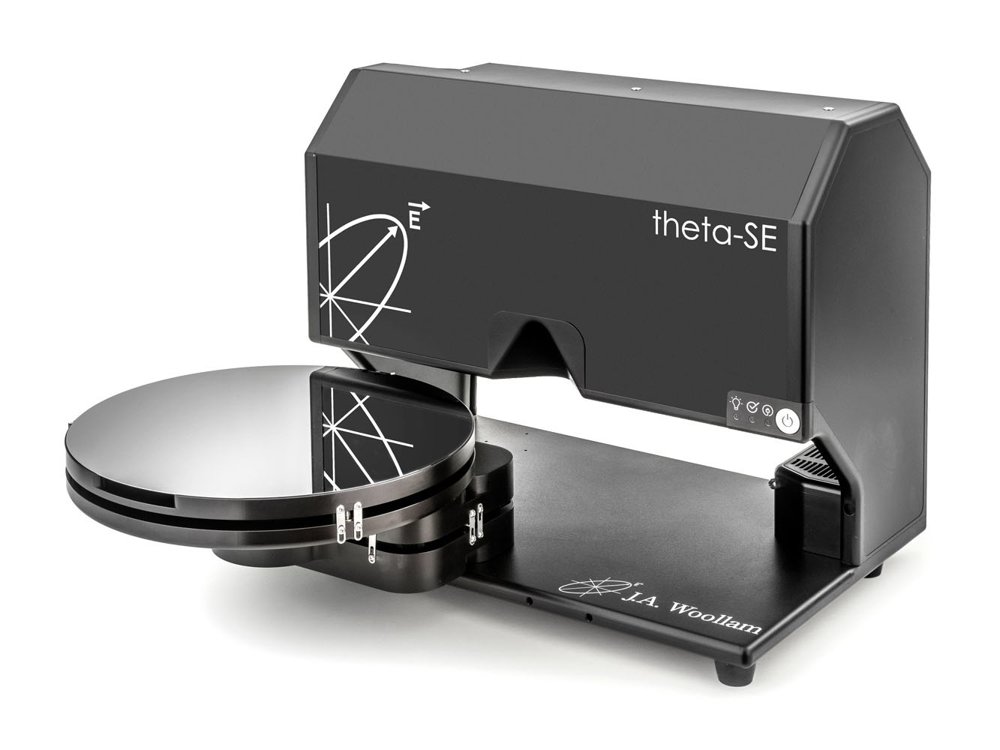
The theta-SE is a push-button spectroscopic ellipsometer for characterizing thin film uniformity. It features advanced ellipsometry instrumentation in a compact package at an affordable price. Why a theta-SE? Fully Integrated The theta-SE comes equipped with 300 mm sample mapping, small-spot measurement beam, fast sample alignment, look-down camera and our latest Dual-Rotation ellipsometer technology. The theta-SE has everything you need to measure the spatial uniformity of your film thickness and optical properties. High Speed Sample throughput is optimized by using fast point-to-point translation, high-speed sample alignment and Dual-Rotation ellipsometer technology for continuous data collection. Compact The patented Dual-Theta rotation stage enables full, 300 mm mapping in a small, table-top instrument. The instrument footprint is only slightly larger than a 300 mm wafer. User Friendly Automated data analysis and built-in reporting enables push-button operation and quick access to measurement results. Affordable The theta-SE delivers the power of spectroscopic ellipsometry and 300 mm uniformity mapping at a reasonable price. Mapping The theta-SE combines many of the latest advancements in ellipsometry instrumentation to provide uniformity maps of your thin films. Spectroscopic ellipsometry is perfect for measuring film thickness and optical constants. The theta-SE scans the uniformity of these film properties over your entire wafer. Advantages Fast, Wide-Spectrum Measurements The theta-SE combines many of the latest advancements in ellipsometry instrumentation to provide uniformity maps of your thin films. Spectroscopic ellipsometry is perfect for measuring film thickness and optical constants. The theta-SE scans the uniformity of these film properties over your entire wafer. Sensitivity: Spectroscopic ellipsometry measurements provide sensitivity to a variety of material properties such as composition, conductivity, surface conditions, etc. In addition, ellipsometry is sensitive to thickness changes at the sub-angstrom level. The theta-SE leverages the sensitivity of ellipsometric measurements in combination with high-speed mapping functionality to provide nondestructive sample characterization across a sample. Accuracy: Spectroscopic ellipsometry measurements calculate the change in polarization of light reflecting off a sample. This change in polarization is traditionally described with two measured parameters, Psi and Delta. In addition to providing two measured parameters at each wavelength, this self-referencing technique provides excellent measurement accuracy. Dual-Theta Mapping Translation: Our patented translation stage enables ellipsometry measurements across samples up to 300 mm diameter with a small, table-top instrument. The compact ellipsometer heads and integrated electronics all result in a significantly reduced instrument footprint. Focused Spot: A focused measurement beam parallel to the wafer edge produces excellent edge exclusion. Fast Camera Alignment: The fast camera alignment uses machine vision and image recognition to precisely align the sample in a fraction of the time compared to traditional alignment techniques. The camera also provides sample visualization to locate specific areas of interest for measurement. Dual-Rotation Technology: Measurement times for multi-point maps are minimized by reducing the translation time between points, using our fast camera alignment and taking advantage of Dual-Rotation technology that captures high-accuracy measurements in half the time. Automated Data Analysis in CompleteEASE: CompleteEASE is equipped with user-friendly features for surface uniformity measurements. Recipes that describe the data acquisition, measurement location and data analysis allow push-button operation. Specifications Ellipsometer Type Dual-Rotation Optical Design Mapping Overview 300 mm diameter Spectral Range 400-1000 nm Number of Wavelengths 190 Detector CCD Focusing Optics Included Data Acquisition Rate 0.61 sec. [Fastest] 1-2 sec. [Typical] Spot Size Nominal: 250 x 600 μm on sample Data Types Spectroscopic ellipsometry and advanced g-SE or MM-SE Angle of Incidence 65° fixed for all measurements Data Types Spectroscopic ellipsometry and advanced g-SE or MM-SE Light Source Quartz Tungsten Halogen (QTH) Power Requirements 100-250 VAC, 50-60 Hz, 2 Amps Dimensions Width 20.4″ / Depth 20.3″ / Height 15″ FAQ What is included? theta-SE which contains source/receiver and all electronics Power supply Computer (optional) Do I need vacuum pump to hold the sample? The theta-SE is equipped with an integrated vacuum pump. How do I connect the theta-SE to my PC? The theta-SE uses one RJ-45 network connection and one USB connection. What data types can the theta-SE measure? Spectroscopic ellipsometry, advanced generalized-SE or Mueller Matrix-SE Which software package is included? CompleteEASE
CATEGORY
