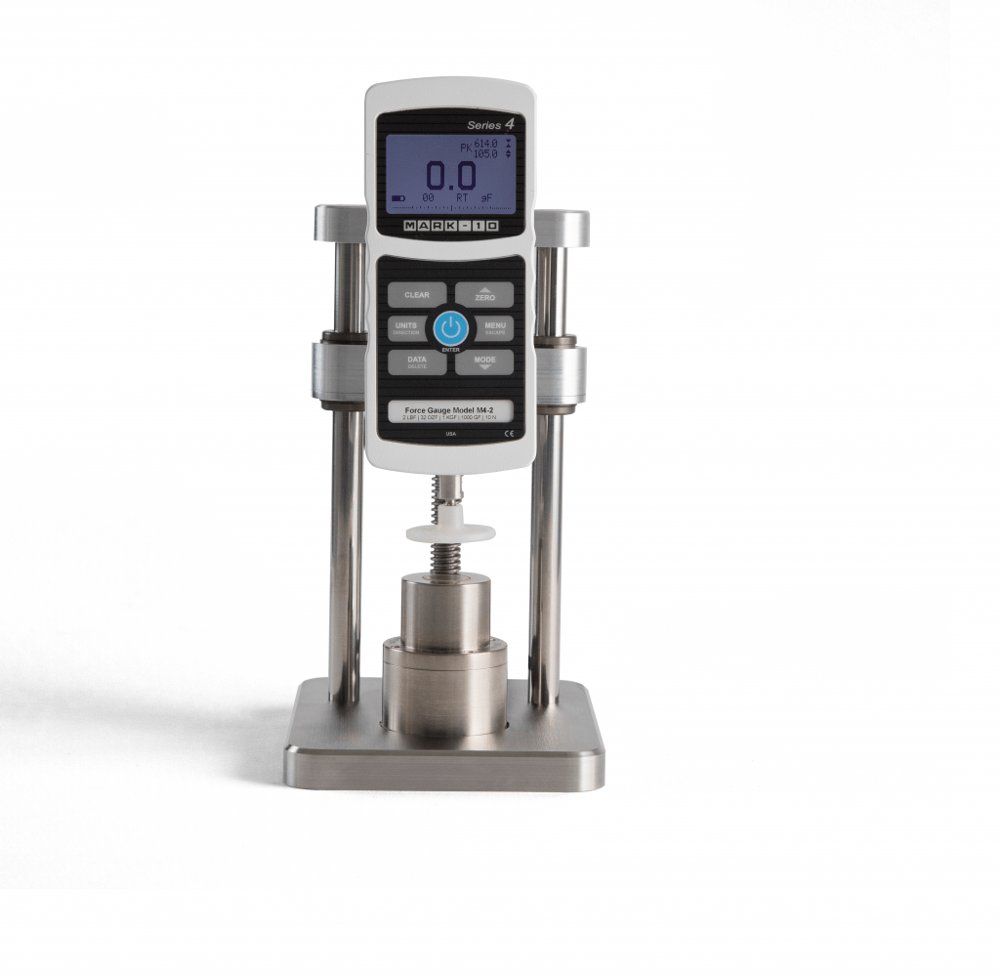
Additionally, even the slightest variation in loading procedure will cause a variation in the effective thermal conductivity. This is why the Compression Test Accessory (Figure 7) is frequently used as it is able to precisely control the compressive force or displacement of the powder sample. Figure 7 – C-Therm Compression Test Accessory with MTPS Sensor
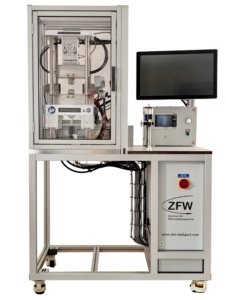
When accuracy and reproducibility matter Leading researchers rely on the ZFW TIM-Tester for quantifying the performance of their thermal interface materials because it features the best accuracy and reproducibility in the market. Measures thermal conductivity, thermal resistance, thermal impedance, thermal contact resistance & more. Highest Accuracy | Highest Performance The TIM-Tester, developed by the Zentrum für Wärmemanagement (ZFW) in Stuttgart, is designed for the precise characterization of thermal interface materials (TIMs). Utilizing the stationary cylinder method in accordance with ASTM D5470, it provides highly accurate measurements of thermal resistance and effective thermal conductivity for a diverse range of materials, including gap fillers, gap pads, greases, pastes, adhesives, tapes, solids and liquids. Since its inception in 2012, the TIM-Tester has established itself as a market leader, trusted by leading researchers for its high-precision gap resolution and versatile measurement modes, supporting both pressure- and gap-controlled analysis. Core Measurement Capabilities The TIM-Tester is engineered to provide a comprehensive thermal profile of your materials. It goes beyond basic testing to offer: - Thermal Resistance: Delivers highly accurate measurements of a sample's resistance to heat. - Thermal Conductivity: By utilizing high-precision gap measurement, the device calculates the material's true ability to conduct heat. - Thermal Contact Resistance: By testing different layer thicknesses, the device can isolate the contact resistance between the material and the test surfaces. - Optical Gap Measurement: Uses a high-precision, non-contact optical method to determine the interface gap, improving the accuracy of thermal resistance and conductivity measurements by accounting for changes due to compression and thermal expansion, and reducing uncertainty associated with parasitic heat paths. - Compliance with Global Standards: All measurements are performed using the stationary cylinder method in strict accordance with ASTM D5470 and IPC-TM-650, while offering numerous measurement modes that extend far beyond these standards. Versatile Measurement Modes To accommodate a wide range of material viscosities and forms, the TIM-Tester offers two distinct control modes: - Gap-Controlled: Ideal for low-viscosity materials such as greases and pastes, where thermal properties are measured as a function of specific layer thickness. - Pressure-Controlled: Designed for high performance grease, thin films, solids, pads, and elastic materials, determining thermal resistance based on specific contact pressures ranging up to 2 N/mm². One of the most powerful features of the TIM-Tester is its ability to perform compression and expansion tests. These can be quasi-static, dynamic, or cyclic. This "Delamination Test" mechanically simulates the real-world thermal expansion that occurs between a heat source and a heat sink during operation. - Predict Thermal Failure: Continuously records thermal and mechanical properties (gap and force) over multiple cycles. - Identify Adhesive Limits: Pinpoints the exact force or gap value at which a material detaches from the interface, helping prevent thermal failure caused by delamination or peeling. Technical Specifications Feature | Specification Gap Resolution | 0.1 μm Absolute Gap Accuracy | ± 4 μm Reproducibility | < 1 mm²K/W Surface Pressure Range | up to 2 N/mm² (290 PSI) Sample Temperature Range | 10°C to 150°C (Hot side up to 175°C) Gap Measurement Range | 0 – 10 mm
CATEGORY
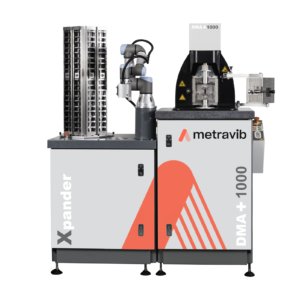
The Metravib DMA+ line represents the most advanced scientific design in dynamic mechanical analyzers. Higher forces, higher frequencies, higher sensitivities, more information, and better material characterization. That's what Metravib provides, and what C-Therm is here to deliver. C-Therm is the exclusive distributor and partner for Metravib DMA in the United States and Canada. If you're ready to discuss, so are we. Not a Traditional DMA For many elastomer and composite researchers, viscoelastic properties are vital material performance characteristics. For many labs, the window of data is so small that they rely on extrapolation, super-positioning, and temperature-frequency master curves to make assumptions about their materials. These problems arise in materials with extremely high modulus changes. When the stiffness change is drastic, most instruments cannot detect this entire range. This leads to further assumptions being made about the materials and introduces a great amount of risk in the development and reporting of mechanical properties. Furthermore, the data they are seeing is smoothed by software to make up for the lack of sensitivity in the equipment. This sets a dangerous precedent; how can you be truly confident in your data when you're seeing such a small and distorted piece of the picture? Metravib is Different With a higher frequency range, our master curves are more accurate. With access to the raw data, you are seeing the true curve, not smoothed ones, and by having a higher force range and auto control, you can see up to 7 decades of modulus change in a single experiment. The Metravib DMA+ series is the only line to offer fully integrated and highly functional automation through Xpander. You can run your system 24/7 without human intervention. Why Metravib is the Best DMA Innovative Design High-rigidity-one-piece mechanical frame ensures the accurate measurement of the specimen viscoelastic characteristics because the deformation measured corresponds to the material specimen and not to the mechanical test frame. Air bearing and electrodynamic shaker technology unlocks excitation amplitude capabilities are optimized at high frequency because there is no friction, no suspension stiffness and continuous ventilation of the gap body. Built with Users Due to specific developments made for elastomer customers to deal with their nonlinear mechanical behavior, specific functions have been developed and improved to match with the growing expectations of scientists and engineers. These functions represent major benefits for performing advanced testing of a large variety of polymer and advanced materials. Highest Force Range Force range: 300, 1000, 2000 Newtons (peak to peak) allows users to extend their testing capabilities and have a larger diversity of specimen geometries. Multiple Tests, One Instrument DMA, high frequency, creep, stress relaxation, fatigue, crack growth, calorimetry modes on a single instrument. Broad selection of specimen holders for multiple specimen geometries and dimensions. Largest Frequency Range Frequency range from 0.00001 Hz to 1000Hz. The high rigidity mechanical frame design implies testing capabilities over an extended frequency range; an additional accelerometer measures continuously the acceleration measured on the test frame. Master curves computation using equivalence frequency/temperature law make it possible to use the data over an extended frequency range from the original testing range. Powerful Software & Experimental Control Simultaneous static and dynamic control with combined scanning on temperature ramps (temperature/strain/stress) up to 3 in one single test. Efficient auto control mode to switch from strain/displacement to stress/force control automatically. This makes it possible for a continuous test over a huge range of modulus (up to 7 decades). Full trace-ability of test conditions because you have access to the real data points. Tire and Rubber Rolling resistance, fatigue testing, crack growth, tread testing, cord testing, composition analysis, automation, creep testing, HBU and Flexometer testing. Polymer Composites & Advanced Materials Curing studies, glass transition, Fatigue testing, long term creep prediction, environmental effects, crack growth. Sports Goods For several years, the use of DMA instruments has been democratised in the sports field in order to develop increasingly high-performance articles, of which shoe soles are the most representative example. Medical and Biomaterials Aging studies, immersion testing, exact geometries, custom excitations, fatigue testing, shear for films, pastes, and liquids. Aerospace and Defense Glass Transition, fatigue testing, creep testing, master curve analysis, 3-points bending, exact geometries, resin setting, shear for films, pastes and liquids. International Standards The Metravib DMA adheres to various international standards listed below: ISO 4664 – Rubber, vulcanized or thermoplastic — Determination of dynamic properties. ISO 6721 – Plastics — Determination of dynamic mechanical properties ASTM D4065 – Plastics DMA: Standard Practice for Plastics: Dynamic Mechanical Properties: Determination and Report of Procedures ASTM D5023 – DMA testing: Standard Test Method for Measuring the Dynamic Mechanical Properties: In Flexure (Three-Point Bending) ASTM D5024 – Standard Test Method for Plastics: Dynamic Mechanical Properties: In Compression ASTM D5026 – Standard Test Method for Plastics: Dynamic Mechanical Properties: In Tension ASTM D5418 – Standard Test Method for Plastics: Dynamic Mechanical Properties: In Flexure (Dual Cantilever Beam) ASTM D5992 – Rubber testing: Standard Guide for Dynamic Testing of Vulcanized Rubber and Rubber-Like Materials Using Vibratory Methods ASTM D7028 – Standard Test Method for Glass Transition Temperature (DMA Tg) of Polymer Matrix Composites by Dynamic Mechanical Analysis (DMA) ASTM E1640 – DMA testing: Standard Test Method for Assignment of the Glass Transition Temperature By Dynamic Mechanical Analysis ASTM D623 – Plastics DMA: Standard Practice for Plastics: Heat Generation and Flexing Fatigue In Compression ISO 4666 – Rubber, vulcanized — Determination of temperature rise and resistance to fatigue in flexometer testing ISO 27727 – Rubber, vulcanized – Measurement of fatigue crack growth rate
CATEGORY
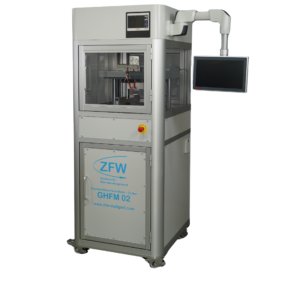
Thermal Conductivity Measurement up to 850°C - Compliant with ASTM D5470 & ISO 8301 High-Accuracy Thermal Conductivity Testing at Elevated Temperatures The High-Temperature HFM is a high-temperature thermal analysis system designed for the thermal characterization of insulation and battery materials. It enables precise measurement of thermal conductivity, thermal resistance, compression and force under controlled hot–cold side testing conditions. High-Temperature Thermal Testing up to 850 °C Engineered for demanding environments, the High-Temperature HFM operates across a wide temperature range up to 850 °C. It supports both gradual and rapid heating, allowing realistic simulation of material performance under operating and extreme thermal conditions. This makes it ideal for evaluating heat resistance and thermal stability in advanced insulation systems and battery components. Testing and Core Measurement Capabilities The High-Temperature HFM supports both soft and hard insulation materials and allows testing under different thermal loading conditions. Materials can be exposed to both gradual and rapid heating, enabling realistic simulation of operating and extreme temperature environments. The GHFM-Tester measures: - Thermal conductivity - Thermal resistance - Compression behavior - Force under load All measurements are performed using a hot–cold side heat flow method to ensure reliable material characterization. Suitable Materials The High-Temperature HFM is suitable for a broad range of insulation and battery-related materials, including: - Insulation materials - Battery cell spacers and thermal barriers - Thermal insulation boards - Thermal propagation and protection materials - Ceramic-based nonwovens - Polymer-based foams - Fumed silica - Aerogels - Mica - Other customer-specific materials Applications The High-Temperature HFM is used for: - High-temperature testing up to 850 °C - Thermal conductivity measurement - Thermal resistance analysis - Compression and mechanical behavior testing - Heat resistance evaluation of advanced insulation materials Technical Specifications: Thermal Resistance at 25°C: 10 3 to 10 6 mm 2 K/W Thermal Resistance at 850°C: 10 4 to 10 6 mm 2 K/W Thermal Conductivity: 0.01 to 3 W/mK Surface Pressure: up to 4 N/mm² (580 PSI) Temperature Range: 25°C to 850°C Sample Thickness: 0.1 to 25 mm
CATEGORY
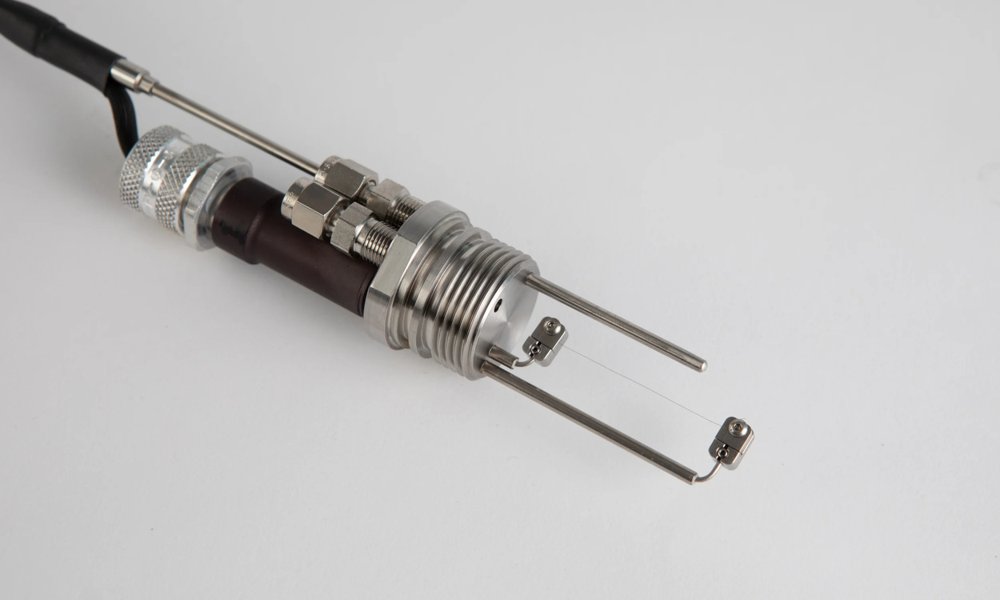
C-Therm’s Transient Hot Wire (THW) is the preferred method for testing the thermal conductivity of heat transfer fluids due to its short testing times, minimizing the effect of convection on the fluids. C-Therm’s Transient Hot Wire sensor delivers fast, accurate thermal conductivity measurements across liquids, solids, and pastes. Transient Hot Wire (THW) is an excellent choice due to its short test times and low power inputs, which are two factors that help mitigate the impact of convection during measurement. Measuring the Thermal Conductivity of e-Liquids via the Transient Hot Wire In the design and performance of e-cigarettes (vapes), the thermal behaviour of the e-liquid plays a critical role in determining vaporization efficiency, aerosol composition, and overall user experience. Thermal conductivity (k) is the property that quantifies how well a material conducts heat. For e-liquids, this determines how quickly and uniformly the coil’s heat distributes into the fluid. If an e-liquid cannot conduct heat away efficiently, even a modest-sized coil can develop a steep temperature gradient: extremely hot at the coil surface and much cooler just a short distance away. The following data demonstrates the use of the THW in testing the different components of e-liquids and a commercially available e-liquid containing 70% VG and 30% PG. The results above are the average of 5 consecutive measurements. Both PG and VG align with the expected literature values (within 3%). Comparing a 70/30 mix to a commercially available e-liquid, we observe near identical results (0.268 vs 0.263 W/mK).
CATEGORY
