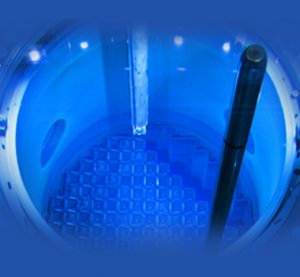
Starfire’s technology can be used to infiltrate porous uranium dioxide, which can be pyrolized to form pellets utilized for nuclear fuel. The combination of Silicon Carbide and Uranium Dioxide provides better thermal conductivity and enhances safety under accident conditions such as loss of coolant. It also possesses superior burn up capabilities compared to conventional uranium dioxide fuels thereby allowing greater fuel utilization and limiting fission gas release.
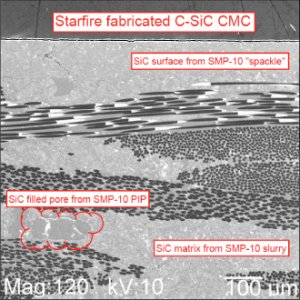
These proprietary Starfire® Systems polymers are our original technology and yield near stoichiometric SiC ceramics when converted. They are our highest strength polymers, thermally stable to 2500°C +, and available in new, hot melt versions. Starfire's advanced technology offers a polymer route to near stoichiometric silicon carbides, delivering the benefits of SiC ceramic composites without the sintering and machining challenges. Our polymers form a high-strength green part with cure temperatures as low as 200°C and then form SiCs with nanoscale grain sizes as low as 800°C. Highlights: - Ability to mold complex, near net-shaped ceramic composite components - Features a low temperature green cure - Ceramic is formed using low cost furnaces - Nanoscale ceramic grain yields tough parts - Products are flexible – they feature low viscosity for infiltration or hot melt for layups - Materials are lightweight, corrosion resistant, and temperature resistant - Materials increase friction while reducing wear Applications: - SiC ceramic matrix composite components - Infiltrate low cost preform for enhanced performance - Suitable for a variety of structural, thermal, or friction uses
CATEGORY
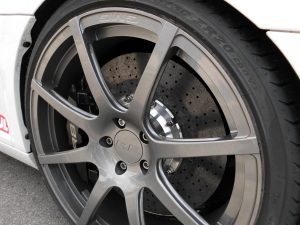
In a society on the go, we depend on reliable brake systems when it comes time to stop. Starfire's Polymer-to-Ceramic™ Composite (PTCC) materials produce lightweight, tough, and thermally stable composites used in automobile, motorcycle, aircraft, and train braking systems. With 33% the mass of traditional metal brake rotors and significant heat and corrosion resistance, our carbon fiber reinforced ceramic composites provide our clients in the friction materials markets with a competitive edge. In one test of our material, we subjected a rotor to tough conditions – similar to driving a 5,500 pound Chevrolet Tahoe at speeds of greater than 160mph to a dead stop. The rotor successfully endured the extreme heat while maintaining an excellent friction coefficient.
CATEGORY
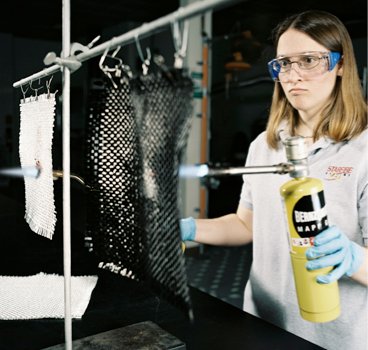
Starfire® Systems has developed a family of polysiloxanes called Polyramic® resins. These unique resins have processing requirements similar to traditional plastic polymers. Highlights: - Composite / coating capable - Inherent flame retardance (no additives) - Halogen free compliance - Low CTE, Dk, and Df - High-modulus composites - Excellent thermal stability and shock resistance - High temperature oxidation resistance - Low smoke and toxicity Applications: - Electronics – PCB Laminates - Flame resistant composites / coatings - Friction Modifiers / additives - High temperature composites - Environmental barrier coatings
CATEGORY
SSI has developed a broad range of specialty silane compounds which are used as CVD precursors and spin coat liquid polymers that are used for semiconductor dielectric coatings. Our specialty silanes form SIC or SIOC coatings that are unique to the industry. The Starfire Systems precursors cyclic structure is key for a robust mechanical strength which is critical for the thin film application. Our molecules are an excellent source for both SIC and SIOC for the deposition of superior low dielectric constant-high strength films.
CATEGORY
