By OCSiAl Group
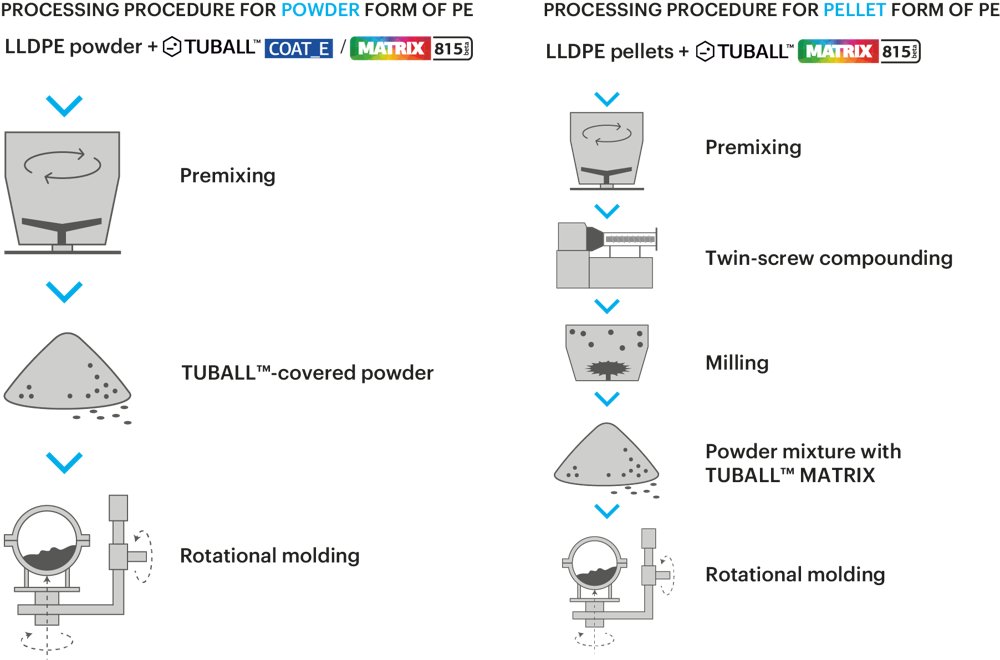
TUBALL™ graphene nanotubes (single wall carbon nanotubes) provide superior electrical conductivity to polyethylene rotomolded parts. Graphene nanotubes’ unique morphology allows them to create a dense conductive network inside polyethylene rotomolded parts at ultralow loading rates—starting from just 0.01 wt.% in the total compound. This unprecedentedly low concentration has minimal impact on the mechanical properties or the original color of the material. TUBALL™ graphene nanotubes are applied via easy-to-use TUBALL™ MATRIX, which is a line of additives based on polymer carriers and pre-dispersed TUBALL™ graphene nanotubes, or TUBALL™ COAT_E suspensions. TUBALL™ anti-static additive for polyethylene rotomolded parts demonstrates the following benefits: Permanent, stable anti-static properties without “hot spots”; Maintained or even increased mechanical properties; Possibility of color solutions*; Stable performance reducing the number of out-of-spec parts. *Depending on the formulation, processing, and products. Maintained mechanical properties: In contrast to conventional additives, graphene nanotubes make it possible to preserve the mechanical properties and light colors, and have a minimal impact on the viscosity and density, of the host material. EASY TO APPLY AT REQUIRED APPROACH: TUBALL™-based products can be processed with standard equipment that is widely used in the thermoplastics industry.

TUBALL™ is the first graphene nanotubes to be available for the commercial application of this novel material in a wide range of industries. Graphene nanotubes can be described as a one-atom-thick graphene sheet shaped as a tube more than 5 µm long. This material is also commonly called single wall carbon nanotubes. TUBALL™ has potential applications across up to 50% of global materials markets. When embedded into a material’s matrix, well-dispersed TUBALL™ graphene nanotubes create a 3D reinforced and conductive network that provides a new set of properties and has minimal impact on the other key properties of final product. Graphene nanotubes are carbon nanomaterials with breakthrough properties that can significantly enhance the physical properties of other materials. atom wall thickness gram of TUBALL™ nanotubes contains enough to stretch from the earth to the sun & back times more thermal conductivity compared with diamond nm range of outer diameters pcs amount in 1 gram µm length approximately m 2 surface area of 1 gram G/D ratio with nominal value 90 5 µm 1 µm 500 nm High-quality nanotubes (G/D ratio 90) Maintains color, elasticity, durability and other key properties Gains traction starting from ultra-low concentrations Enhances mechanical properties of materials Adds uniform, permanent and stable electrical conductivity Versatile for an extremely wide range of applications Graphene nanotubes 0.01% Unlike conventional conductive fillers such as multi wall carbon nanotubes (MWCNTs), carbon fibers, mica and most types of carbon black, TUBALL™ provides significant improvements in material properties starting from the addition of just 0.01% by total weight. 0.5-5% MWCNTs 1-6% multilayer graphene 3-12% carbon fibers 15-35% metal fillers 20-40% carbon black Glass Rubber materials Electrochremical power sources Composites Concrete Copper Ceramics Sensors semiconductors Paints Adhesives Aluminium Plastics Graphene nanotubes give advantages unachievable with other additives and make it possible to create revolutionary products and materials. TUBALL™ nanotubes have the potential to transform other materials in unprecedented ways and provide significant benefits across a broad range of end uses. For some specific applications, ultrapure TUBALL™ could be recommended. Graphene nanotubes allow us to create materials which were previously impossible and products that will change many industry standards and the look of the present-day world. This new generation of materials is called nanoaugmented materials. As one example, graphene nanotubes accelerate next-generation e-mobility upgrades. Nanotubes give the possibility of a lighter car body, leading to a decrease in the dead load of the vehicle; an altered tread and sidewall composition of tires that can reduce rolling resistance; nanotube-reinforced plastic car components that can replace metal parts; and next-generation EV batteries with graphene nanotubes leveraging the achievement of higher energy density, faster charging, a longer lifetime, improved safety, and lower. These improvements open the door for a reduction of up to 25% in car weight and up to 30% improvement of its energy efficiency.
CATEGORY
OCSiAl's single wall carbon nanotubes. Research highlights found on this page: - Silicon anodes that maintain their performance after 1,000 cycles. Researchers from Korea Electrotechnology Research Institute (KERI) have developed a special core–shell silicon structure using TUBALL™ single wall carbon nanotubes. The design helps the anode withstand silicon expansion while keeping electricity flowing as the battery charges and discharges. This allowed the researchers to blend 20 wt.% of their Si-based composite with graphite—well above the ~5% typical industrial level cited in the study. In pouch cells, the technology delivered 275 Wh/kg and retained 75% capacity after 1,000 cycles. - With just 0.3 wt.% TUBALL™ graphene nanotubes, rubber can achieve stable electrical resistivity while gaining up to 103% higher tear strength and 36% higher tensile strength—with elasticity and hardness preserved. - OCSiAl is bringing a critical enabling material to this challenge. Our single wall carbon nanotubes form conductive reinforcing networks within silicon-rich anodes and dry-coated electrodes, helping overcome key limitations in conductivity, mechanical integrity, and cycle life that stand in the way of higher-performance cells. - Discover how TUBALL™ single wall carbon nanotubes enable exceptional conductivity while helping reduce electrode spring-back after calendering, limit swelling after cycling, and improve flexibility—across next-generation battery technologies. - Enter graphene nanotubes. One atom thick. 100× stronger than steel. Lighter and more conductive than copper. Stable past 1,600°C. Because a material reinforced with graphene nanotubes can be this strong, you need less of it. Less material, less weight, less energy—without losing performance. Already reinforcing tires, batteries, and industrial parts today. - 96% of iodine removed from water. In minutes. A new way to make radioactive waste treatment safer. Researchers from Southern University of Science and Technology and Peking University turned to TUBALL™ single wall carbon nanotubes to explore a new approach to iodine capture. By assembling iodine into atomic chains inside TUBALL™ nanotubes, they achieved an exceptionally fast removal rate of 53.7 mg of iodine per gram of SWCNT per minute—surpassing most reported aqueous iodine adsorbents. The material also maintained 97% removal efficiency after 10 reuse cycles. - How far can the nanotubes in just 1 gram of TUBALL™ reach? Placed end to end, the nanotubes in just 1 gram of TUBALL™ would stretch for roughly 300 million kilometers. - What if the energy storage powering wearable electronics could flex with them? Researchers from Sungkyunkwan University (SKKU) and Hubei University of Technology used OCSiAl single wall carbon nanotubes in composite that forms a 3D conductive network for flexible micro-supercapacitors. The resulting devices retained 93% capacitance after 10,000 cycles and continued operating while bent by up to 120°. Integrated with a wearable solar energy harvester, the micro-supercapacitor successfully powered a digital clock. - Solid-state batteries are supposed to be the future of energy. The problem is that “solid meets solid” doesn’t conduct particularly well. When two solid materials come into contact inside a cell, electrons struggle to pass through—and that’s where the bottleneck holding back the entire technology begins. The solution doesn’t have to be a new material—it can be a network, thousands of times thinner than a strand of hair, woven through that contact point to “patch” it. TUBALL™ nanotubes do exactly that: They maintain conductivity where the material is most fragile and prevent microcracks before they even form. A small change at the nanoscale. A major step forward for safer, longer-lasting batteries. - Discover how single wall carbon nanotubes are enabling a new generation of advanced rubber products. Electrical conductivity. Enhanced strength. Color variety. High elasticity. - Meet our R&D team, exchange ideas, explore the latest developments in single wall carbon nanotubes, and get 1 gram of TUBALL™ for your research. - What can even just 0.12 wt.% TUBALL™ do for MXene fibers? This ultralow dosage boosts tensile strength by 480%, ductility by 300%, and toughness by 1,620% while retaining conductivity above 10,400 S cm⁻¹, according to research from Nankai University and Zhengzhou University. Such a powerful combination of mechanical performance and high conductivity opens new opportunities for wearable fiber-shaped electronics, structural composites, and energy storage devices. - PETROVIETNAM Paint has launched a new generation of anticorrosion coatings enhanced with TUBALL™ nanotubes. Designed for assets operating in highly corrosive environments—including offshore oil and gas platforms, refineries, petrochemical plants, storage tanks, and marine infrastructure—the coatings deliver long-term corrosion protection and mechanical durability in compliance with independent corrosion and adhesion testing. - Can a thin TUBALL™ nanotube coating unlock ultrafast charging? Researchers from Seoul National University of Science and Technology have developed an ultrasonic spray coating process to create a tailored TUBALL™ single wall carbon nanotube layer on LiCoO₂ cathodes. Compared to bare LCO, the optimized SWCNT coating nearly doubled the capacity at 10C and retained 80.9% of its capacity after 500 cycles at 10C, versus just 38.9% for uncoated LCO, highlighting how an ultrathin conductive network can enable ultrafast and ultra-stable lithium-ion batteries.
CATEGORY
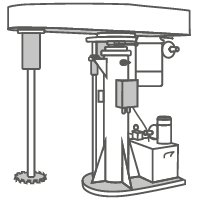
TUBALL™ graphene nanotubes (single wall carbon nanotubes) in the form of TUBALL™ MATRIX 814 concentrate are an industry-friendly form of anti-static additive for PVC plastisol formulations. They have been specifically designed to provide superior electrical conductivity to thermoplastic materials while retaining the mechanical properties of PVC plastisol. TUBALL™ MATRIX 814 anti-static additive for PVC plastisol demonstrates the following benefits: - Stable, permanent conductivity - Preserved original color of compound - Retained or even improved mechanical performance - Versatile application technologies - Clean production without the dust usually associated with carbon black - Flexibility in compound formulation thanks to a low dosage of nanotubes - User-friendly form of concentrate with no additional equipment required PVC-plastisols enhanced with TUBALL™ graphene nanotubes have found wide application in the mining, oil & gas, textile, and other industries. In contrast to ammonium salts and carbon black, graphene nanotubes enable a full set of properties: stable,permanent conductivity with preserved original colors and mechanical performance. This is possible thanks to graphene nanotubes' unique morphology, which allows them to create a dense conductive network inside thermoplastic compounds at ultralow loading rates—starting from just 0.01 wt.% in the total compound. PARAMETER AMMONIUM COMPOUNDS CARBON BLACK TUBALL™ MATRIX 814 Working dosage, wt.% 0.2–4.0 4–12 0.5–2.0 (0.01–0.04 TUBALL™ nanotubes) Resistivity range, Ω/sq 10 8 –10 11 10 5 –10 11 10 4 –10 11 Influence on mechanical performance small negative strong negative limited Influence on rheology none strong negative limited Color opportunity possible none possible Dust formation during production none high none Resistivity independent of humidity no yes yes Stable resistivity over time no yes yes Cost of conductivity $ $/$ $ Results for optimized formulation. Values can vary depending on the formulation, processing, and product grades. The values shown are given as typical figures. TUBALL™ MATRIX can be processed with standard equipment widely used in the thermoplastics industry. Standard single-shaft high-speed mixer 25 min total dilution time Instant quality control with a grindometer to reach particle size ≤ 15 µm
CATEGORY
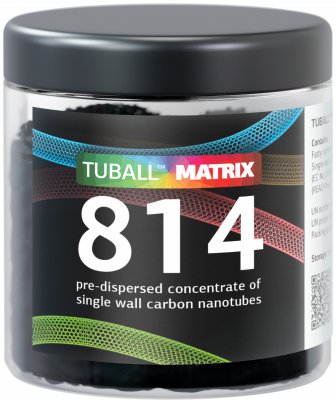
This concentrate of TUBALL™ graphene nanotubes is designed to provide permanent, stable electrical conductivity to polyvinyl chloride plastisol. Anti-static to conductive performances are achievable for PVC-plastisol systems. Gain extra value compared to traditional additives: - Obtain conductivity with maintained mechanical performance and coloration potential comparing to high dosages of carbon black - Get permanent, stable anti-static and conductive properties compared to organic anti-static agents. The cost of our SWCNT products depends on the quantity ordered. Please reach out to us for a personalized quote. Material system Polyvinyl chloride plastisol Working dosage 0.25–2 wt.% Сoncentrate carrier Epoxidized fatty acid glyceride Shape Paste Benefits Electrical conductivity Enables a full range from electrical conductivity to anti-static protection that is permanent and uniform without “hot spots” Permanent characteristics Conductive properties are stable and independent of humidity Mechanical properties Maintains the mechanical properties of the plastisol Low influence on rheology Minimally affects the viscosity and rheological properties of the plastisol Easy to use The pre-dispersed formula can be used with standard manufacturing equipment without dust generation Coloration opportunities Adding color to anti-static or colored PVC-plastisol is possible due to the low working dosage of the concentrate Packaging Jar 0.6 L (up to 500 g) Bucket 3 L (up to 1 kg) Bucket 10 L (up to 5 kg) Other packaging volumes are available at customers’ request Contact us for product processing guidelines and additional technical documentation
CATEGORY
