By Wildcat Discovery Technologies
The first materials the company will offer will be LFP formulations, followed by lithium manganese iron phosphate. The latter promises better performance in terms of energy density and power density, with comparable cycle life and costs to LFP cathode chemistries.
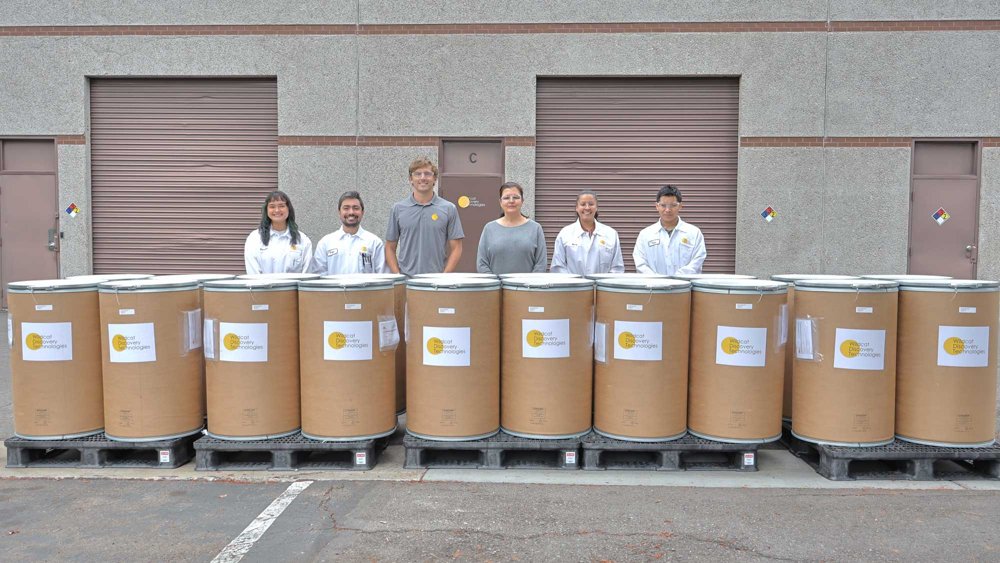
Battery materials pioneer Wildcat Discovery Technologies today announced it produced one metric ton of high-quality lithium iron phosphate (LFP) cathode materials, enabling customer testing and advancing the company’s strategy for U.S.-based manufacturing. The 1MT batch demonstrates Wildcat’s ability to support large-scale and repeatable production of high-quality cathode active material (CAM). In less than 24 months, the company created its superior LFP recipe in the lab, scaled up the synthesis, and completed the pilot-scale batch. Product testing is now underway with several battery cell makers, commercial truck and automotive manufacturers, and grid storage providers. “Customers’ feedback on our LFP samples has been overwhelmingly positive, and they also appreciate Wildcat’s unique expertise in optimizing battery integration,” said Wildcat President and CEO Mark Gresser. “We are pleased customers’ offtake agreements already represent enough volume to fill our 15,000-ton manufacturing capacity in the first year.” Producing material on the tonnage scale represents an important milestone in Wildcat’s manufacturing readiness. Wildcat has been developing battery materials since 2006, and it plans to build a plant in the United States to manufacture LFP in late 2026, lithium manganese iron phosphate (LMFP) in 2027, and disordered rock salt (DRX) in 2028. The plant, opening in 2026 with a 15,000-ton capacity, is set to double to 30,000 tons in 2028. “Customers in North America seek accessible, long-term alternatives to China-based CAM production, and Wildcat’s strategy is to provide the high-quality, U.S.-based materials they need,” Gresser said.
CATEGORY

Leveraging its experience and technology, Wildcat plans to build a U.S. plant to manufacture a portfolio of nickel-free and cobalt-free materials: LFP in late 2026, lithium manganese iron phosphate (LMFP) in 2027, and disordered rock salt (DRX) in 2028. The plant will open in 2026 with a 15,000-metric ton capacity, and it is set to double to 30,000 metric tons in 2028. Wildcat already is providing pilot-scale LFP samples, enabling product testing with several battery cell makers and commercial truck and automotive manufacturers. Customers worldwide seek dependable nearshore alternatives to China-based cathode materials, and Wildcat's strategy is to manufacture and supply the high-performance products they need. Among the bustling labs and engineering spaces at Wildcat Discovery Technologies headquarters is the John B. Goodenough Conference Room. Named for the esteemed Nobel lauereate and inventor of lithium iron phosphate (LFP), the room is an inspiration for the company's bold, new strategy to manufacture high-performance cathode materials in the United States. Dr. Goodenough discovered LFP at the University of Texas in the 1990s, and Chinese companies soon were mass producing the technology. Today, China produces more than 95% of LFP, leading to supply chain risk as cell producers face the related costs and geopolitical uncertainties.
CATEGORY
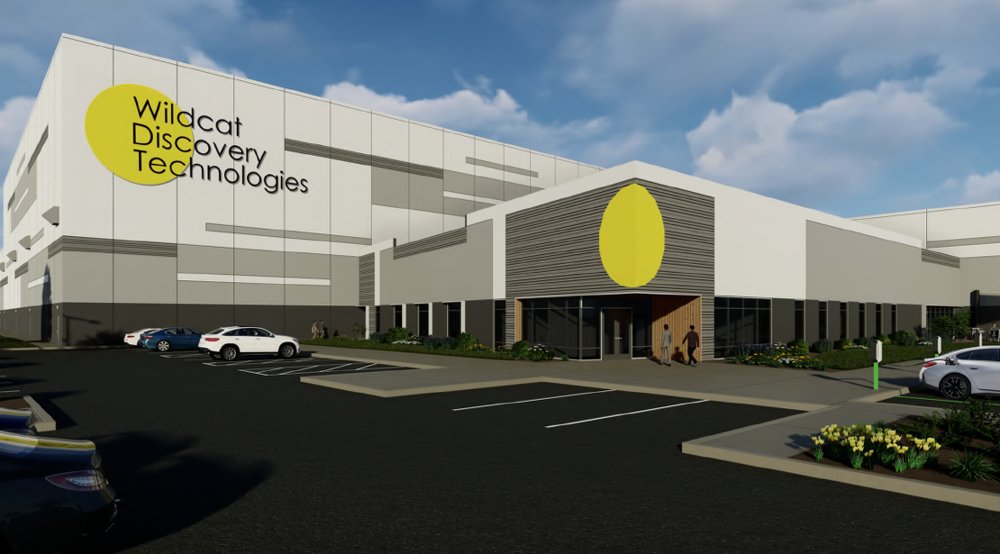
The company plans to first produce lithium iron phosphate (LFP) batteries at the plant in 2026 followed by lithium manganese iron phosphate (LMFP) batteries in 2027. Because of an increasing demand for nickel-free cathode materials produced in North America, the production of LFP and LMFP batteries also will be significant for the industry, Gresser said. The U.S. backed out of the LFP market around 2010 because auto companies were not interested in them. At the time, a lithium battery's range in an electric vehicle was about 40 or 50 miles, he said. Lithium is considered safer and more stable than other cathodes, and China began producing lithium batteries for buses. The technology improved, and the range of the batteries grew significantly. More than 95% of the global LFP supply now comes from China, and Gresser said the new Wildcat plant will boost the domestic production of the battery. Customers will have access to LFP, LMFP, and DRX materials produced at the plant.
CATEGORY
The plan is then to follow these with a proprietary cathode material based on disordered rock salt, a high-energy material without the nickel or cobalt capable of competing with high-nickel NMCs, and capable of serving as a drop-in replacement for an NMC cathode in any cell. "We've been working on disordered rock salt for the past 7 years and now we can see a path to commercialisation," Voeffray said. "We're probably a year away from having something customers can sample. "Essentially it's a high-energy density material with a good safety profile – better than NMC – and all the materials in it are low-cost and abundant," he added. "The challenge at this point is cycle life, but we're hoping to improve that up to 1000 cycles so we can use it in automotive applications."
CATEGORY
