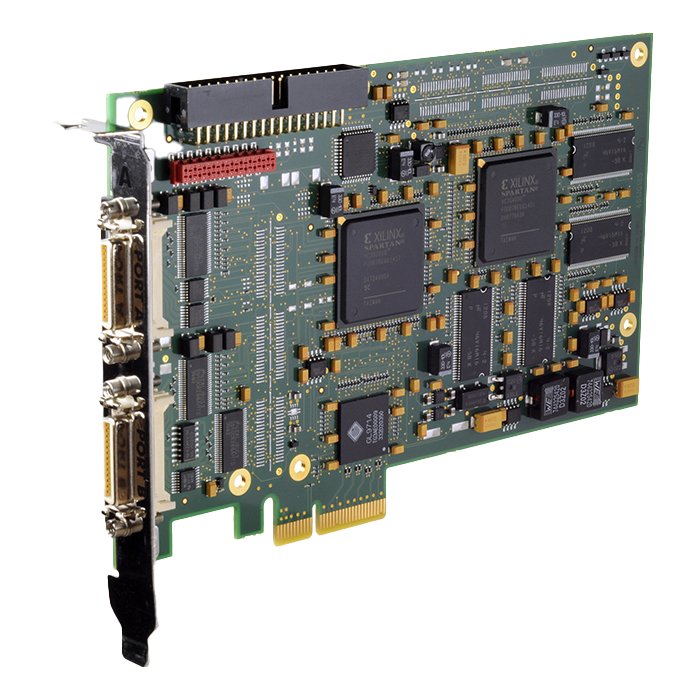
Frame grabbers reliably transmit image data from industrial cameras to the host PC and support fast, stable image processing systems.
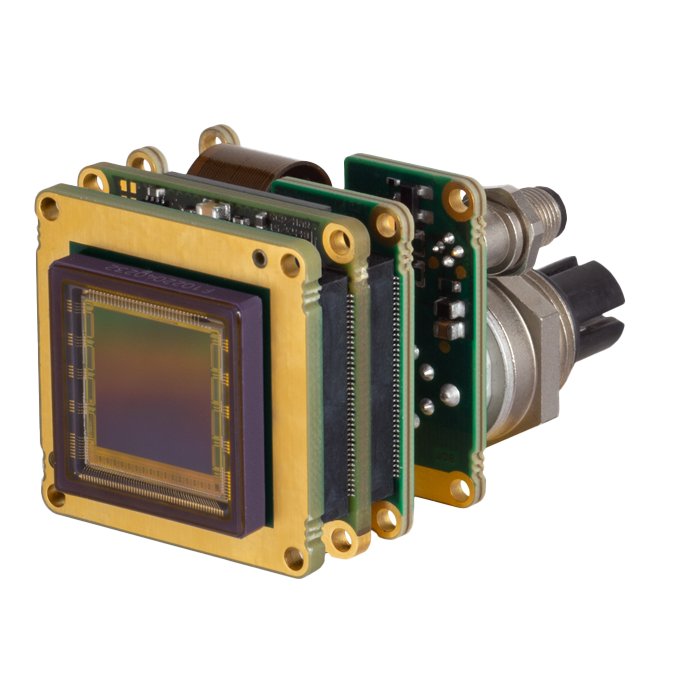
Photonfocus OEM0-D2048x1088-C01-3D06-G2 Configurable region of interest (ROI) Decimation in y-direction 2 look-up tables (12-to-8Bit) on user-defined image region (Region-LUT) Constant frame rate adjustable by software Temperature monitoring of camera Camera informations readable over SDK Ultra low trigger delay and low trigger jitter Extended trigger input and strobe output functionality Status line in picture with Shaft Encoder The OEM0-D2048x1088-C01-3D06-G2 camera is based on the CMOSIS CMV2000 V3 CMOS image sensor Interface GigE Model Mono Sensor CMV2000 2048 x 1088 Data / Specifications Interface gige Application Lowlight, 3d Pixel clock 80 MHz Greyscale resolution 8bit Shutter global Performance curve Piecewise linear Trigger Modes Free running, Ext trigger, Sw trigger Exposure time range 6µs – 349ms Fixed Pattern Noise < 1DN RMS @ 8Bit Analog Gain yes Digital Gain 0.1 to 15.99 (FineGain) Operating temperature 0°C... + 50°C / 20%... 80% Storage temperature / moisture -25°C... 60°C / 20%... 95% Power Supply PoE (compliant according to IEEE 802.3af standard Class: 2) Power Consumption < 4.2W Lens Mount C mount I/O Inputs 2x Opto-isolated I/O Outputs 1x Opto-isolated Connector I/O (Power) Binder 4-pole (mating plug M5 x 0.5, Series 707) Connector Interface X-coded M12 Dimensions 26.5 x 26.5 x 50.5mm³ Mass 75g Conformity Ce, Rohs, Weee IP Code IP40 Sensor Model CMV2000 Technology CMOS Resolution 2048 x 1088 Pixel size 5.5µm x 5.5µm Optical Diagonal 12.76mm Active Area 11.26mm x 5.98mm Dark Current 125e-/s Readout noise 13e- Full capacity 11ke- / 105:1 Dynamic Range 60dB Spectral range VIS, NIR Responsivity Monochrome: 1200 x 10³ DN / (J/m²) @ 540nm / 8bit NIR: 900 x 10³ DN / (J/m²) @ 850nm / 8bit Quantum Efficiency Monochrome: < 57% NIR: < 60% Color: < 45% Optical Fill Factor 42% without micro lenses Sensor Shutter Global Shutter Frame rate calculator Width (px) Minimum and maximum value: 8 – 2048 px Height (px) Minimum and maximum value: 11 – 1088 px Exposure (ms) Minimum and maximum value: 0.01 – 349 ms Simultaneous (interleave) Camera specifications Pixel clock: 80 MHz Camera taps: 2 Exposure: 0.01-349 ms Width: 8-2048 pixel Height: 11-1088 pixel Max. frame rate: 18540 fps
CATEGORY
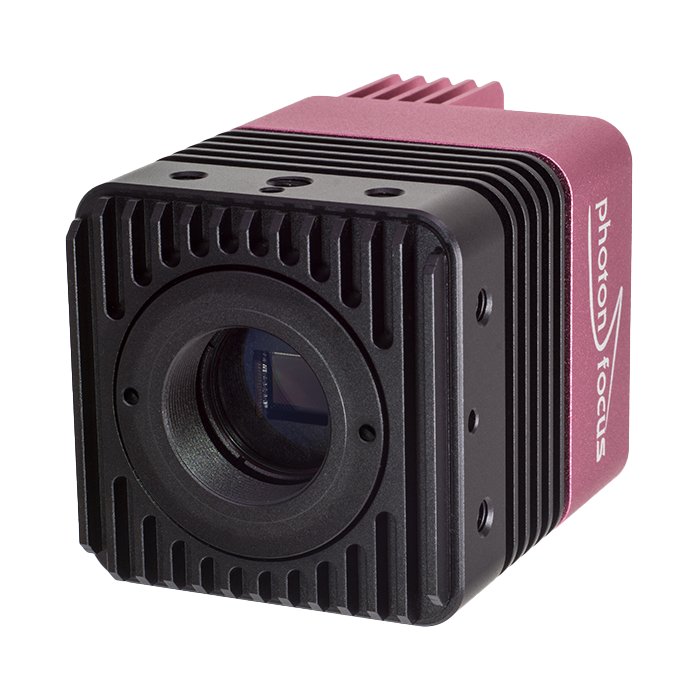
Linear Mode / multiple slope (High Dynamic Range Mode) Temperature monitoring of camera Low trigger delay and low trigger jitter Extended trigger input and strobe output functionality 4x Isolated inputs or shaft encoder A, B, Z, Y interface (RS422, TTL, D-HTL, HTL) 3x Isolated outputs (2x open drain, 1x TTL highspeed) The MV4-D1280-L01-3D06-GT (LUX1310) 3D CMOS cameras were developed for high triangulation rates. To achieve this, the LUXIMA CMOS image sensor LUX1310—which has been optimized for high frame rates and high sensitivity—was combined with two robust algorithms for determining the triangulation line within the camera’s FPGA. Interface: 10GigE Model: Mono Sensor: LUX1310 1280 x 1024 Data / Specifications Interface: 10gige Application: Lowlight, 3d Pixel clock: 80 MHz Greyscale resolution: 8bit Shutter: global Performance curve: Linear Trigger Modes: Free running, Ext trigger, Sw trigger Exposure time range: 10µs – 186ms Fixed Pattern Noise: < 1DN RMS @ 8Bit Analog Gain: no Digital Gain: 0.1 to 15.99 (FineGain) Operating temperature: 0°C... 50°C / 20... 80 % Storage temperature / moisture: -25°C... 60°C / 20... 95 % Power Supply: PoE (IEEE 802.3bt standard Class 4) or Wall adapter (+12VDC (-10%)... +24VDC (+10%)) Power Consumption: <16.9W Lens Mount: C mount I/O Inputs: 4x Isolated inputs or shaft encoder A, B, Z, Y interface (RS422, TTL, D-HTL, HTL) I/O Outputs: 3x Isolated outputs (2x open drain, 1x TTL highspeed) Connector I/O (Power): 17-pol. M12 Connector Interface: X-coded M12 Dimensions: 59 x 59 x 103.2 mm3 Mass: 465g Conformity: Ce, Rohs, Weee IP Code: IP40 Sensor Model: LUX1310 Technology: CMOS Resolution: 1280 x 1024 Pixel size: 6.6µm x 6.6µm Optical Diagonal: 10.82mm Active Area: 8.45mm x 6.76mm Dark Current: 41100e-/s Readout noise: 25e- Full capacity: 17ke- / 130:1 Dynamic Range: 57dB Spectral range: VIS Responsivity: Monochrome: 994 x 10³ DN / (J/m²) @ 560nm / 8bit Quantum Efficiency: Monochrome: < 54% Optical Fill Factor: 45 % (without micro lenses) Sensor Shutter: Global Shutter
CATEGORY
Photonfocus’s 3D laser triangulation cameras play a central role in this process and serve as the linchpin for maximum precision and speed. In a wide range of applications where precise 3D measurements are required, Photonfocus cameras are the key component that unlocks the full potential of 3D laser triangulation technology. Selecting the right camera—based on professional advice from our camera experts—is also crucial to their efficiency. Our 3D cameras use on-board camera filters that minimize disruptive influences. The robust algorithms in the camera’s FPGA (Field-Programmable Gate Array) were specially developed by Photonfocus to suppress artifacts and reflections. This is particularly important when dealing with highly reflective materials, as it ensures that the correct laser line can be reliably identified. Thanks to the on-board processing in the FPGA of our cameras, data can be processed directly within the camera, resulting in a significant reduction in data bandwidth and considerably faster results. Filter functions such as Multi-ROI (Multiple Region of Interest), Moving-ROI, and Line-Skipping also allow for the inspection of only relevant test areas. This saves time and resources. The linefinder algorithm in our 3D cameras is at the heart of 3D laser triangulation. It reliably detects the laser line and calculates a 3D profile within the camera with subpixel accuracy.
CATEGORY

Systems for surveying and monitoring soils and land provide information about their structure, damage, and contamination. This is important for protecting the environment and for planning and evaluating construction projects. Embedded vision solutions with hyperspectral imaging (HSI) are particularly well-suited for this purpose. The level of detail in their data far exceeds that of conventional color cameras. They reveal the difference between healthy and degraded soils and make physical and geological damage visible, as well as climatic changes. Photonfocus develops and manufactures application-specific sensors and imaging systems that can be optimally integrated into mobile applications, vehicles, and drones. Image data can be processed directly on board, making results available immediately. High image resolution with a wide spectral range, fast frame rates, and data processing ensure the highest quality of the collected data and analyses. Recommended camera features - Contamination visibility: Detects pollutants and environmental changes at an early stage. - Hyperspectral imaging: Reveals chemical differences and changes in materials. - Large area coverage: Efficient data coverage over large areas. - Rugged monitoring systems: Suitable for long-term outdoor and industrial use.
CATEGORY
