By Attolight
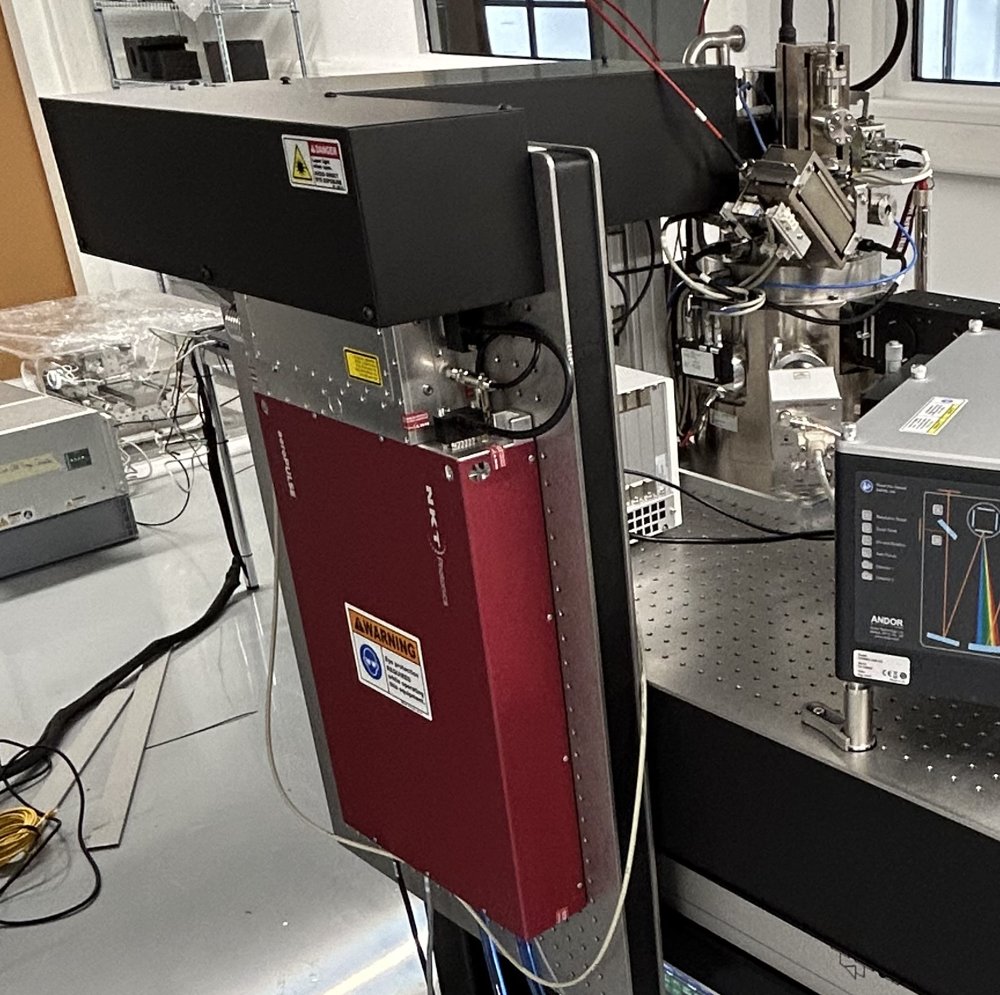
The Attolight Allalin’s electron gun is fitted with a viewport directly on the electron source, making it possible to trigger emission using a laser. This allows for pulsed mode operation for state-of-the-art performance in Time-Resolved Cathodoluminescence (TRCL) spectroscopy. The ability to control the timing of electron pulses enhances the system’s capability to capture ultra-fast emission events, providing high temporal resolution. This feature is crucial for studying dynamic processes in materials, such as carrier recombination and defect behavior, at the nanoscale. By enabling TRCL spectroscopy with state-of-the-art performance, the Allalin facilitates in-depth analysis of material properties and behaviors in applications requiring precise timing and resolution. The 80MHz picosecond laser provided with the pulsed source option is fully enclosed and normal operation poses no laser-related risk. It is also equipped with a pulse picker in order to fine tune the tool operation to the material of interest’s time constants, thereby simplifying optimization of the signal-to-noise ratio of the TRCL experiment. The laser power can also easily be adjusted, making dose control straightforward. 80MHz picosecond pulsed laser and laser bridge on Allalin platform Attolight offers two families of time-resolved CL detectors with this option: Streak cameras and Time-Correlated Single Photon Counting (TCSPC)- Hybrid Photodetectors, to enable maximum flexibility on the detection end.
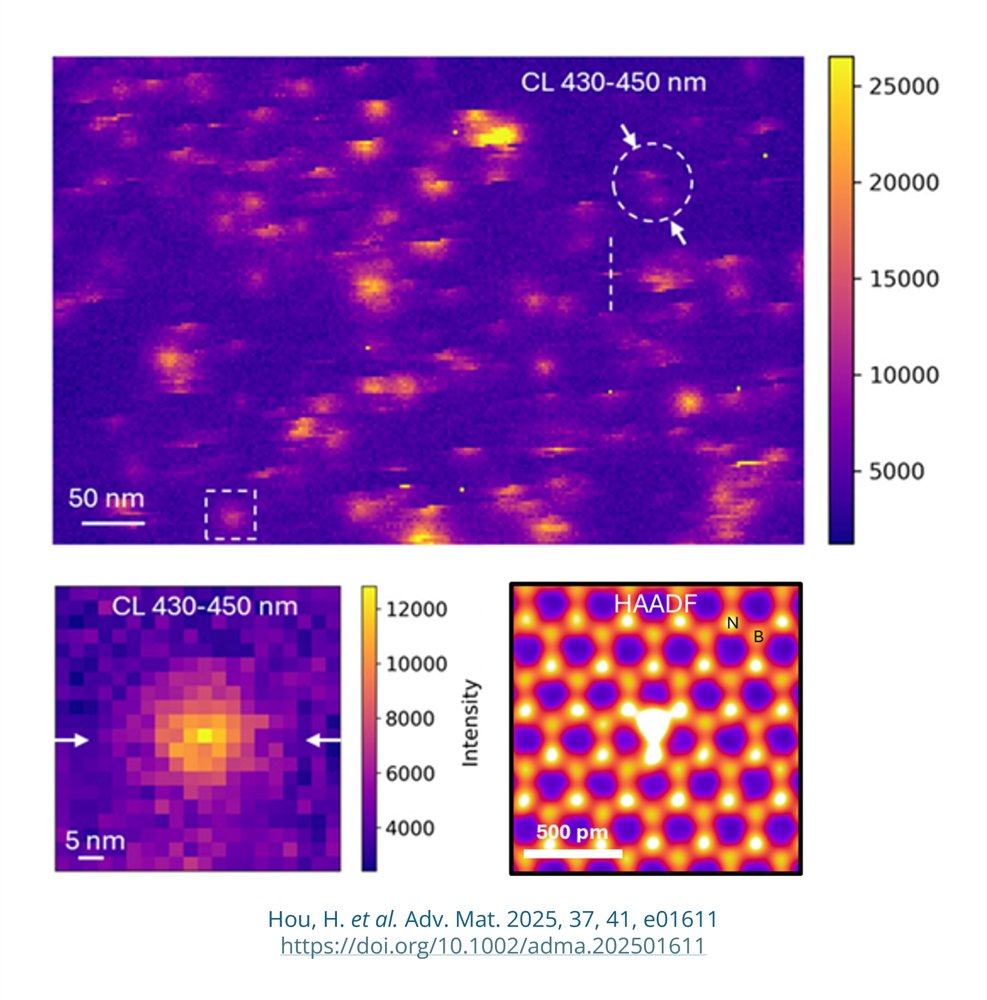
About Our STEM-CL + Light Injection Solution Whether operating in light collection or light injection mode, the Attolight Mönch offers a unique feature set that ensures excellent optical performance and user experience. The specially designed, high-NA mirror has been optimized for maximum light collection efficiency and minimum ultimate injected spot size. The precise and reproducible motion control system means less time spent aligning, more time spent collecting data and running experiments. And because the mirror moves independently from the sample holder, you can explore the full surface of your TEM grid while maintaining alignment at eucentric height. The Mönch is simple to operate and compatible with a wide range of microscopes and complementary techniques, like EELS and EDX. From CL to pump-probe to in-situ and beyond, the Mönch unlocks a world of possibilities for advanced studies in (S)TEM. Unique Features for Every Mode of Use Collection Mode (CL) In collection mode, the Mönch features several important advantages over other STEM-CL solutions: - Quick and easy optical alignment for every sample, performed in-situ - No limitation on which regions of your sample are accessible for CL - A patented optical fiber which preserves brightness and spectral resolution Light Injection Mode In injection mode, the Mönch benefits from tight focusing and optical flexibility: - A <10 micron-sized spot for localized sample excitation - Free space coupling ensures compatibility with a wide range of lasers - Feedback about alignment condition using an in-line detector Switching between modes is quick and easy, allowing users to adapt their workflow on the fly. Components of the Mönch Every component of the Mönch has been meticulously designed for an optimal user experience. At the heart of the Mönch is a precision engineered mirror which has been optimized for light collection and injection. This mirror is affixed to a sub-micron mechanical positioning system which incorporates additional optics to facilitate getting light into and out of the chamber. In Light Collection Mode, the patented optical fiber bundle is inserted close to the mirror, bringing light to a detection unit, consisting of a high-performance spectrometer and CCD detector. Motion, acquisition, and safety features are controlled by custom electronics for a smooth and seamless user interface. The default Injection + Collection system is versatile and supports a broad range of wavelengths and applications. For specialized use cases and customization options, contact us for more information on what might be possible. Sample Holder Compatibility Due to the small space inside the TEM chamber and the unique geometry of the Mönch mirror, only certain sample holders may be used with the Attolight Mönch. Specifically, holders must be thin on their top side and very flat. Tilting is not possible when using the Mönch. Despite these constraints, there is already a wide range of Mönch-compatible sample holders for various types of experiments, including standard room-temperature, liquid nitrogen cryo, helium cryo and liquid cell holders. Attolight is proud to work closely with holder companies to ensure compatibility and user convenience, and we’re committed to expanding the range of holder offerings to our customers. For questions on available holder types and ongoing developments, please contact us or the TEM manufacturer.
CATEGORY
The Mönch is an advanced add-on for coupling light into and out of STEM microscopes, perfect for cathodoluminescence spectroscopy and a wide range of light injection applications. Whether operating in light collection or light injection mode, the Attolight Mönch offers a unique feature set that ensures excellent optical performance and user experience. The specially designed, high-NA mirror has been optimized for maximum light collection efficiency and minimum ultimate injected spot size. The precise and reproducible motion control system means less time spent aligning, more time spent collecting data and running experiments. And because the mirror moves independently from the sample holder, you can explore the full surface of your TEM grid while maintaining alignment at eucentric height. The Mönch is simple to operate and compatible with a wide range of microscopes and complementary techniques, like EELS and EDX. From CL to pump-probe to in-situ and beyond, the Mönch unlocks a world of possibilities for advanced studies in (S)TEM. Collection Mode (CL) In collection mode, the Mönch features several important advantages over other STEM-CL solutions: - Quick and easy optical alignment for every sample, performed in-situ - No limitation on which regions of your sample are accessible for CL - A patented optical fiber which preserves brightness and spectral resolution Light Injection Mode In injection mode, the Mönch benefits from tight focusing and optical flexibility: - A <10 micron-sized spot for localized sample excitation - Free space coupling ensures compatibility with a wide range of lasers - Feedback about alignment condition using an in-line detector Switching between modes is quick and easy, allowing users to adapt their workflow on the fly. Every component of the Mönch has been meticulously designed for an optimal user experience. At the heart of the Mönch is a precision engineered mirror which has been optimized for light collection and injection. This mirror is affixed to a sub-micron mechanical positioning system which incorporates additional optics to facilitate getting light into and out of the chamber. In Light Collection Mode, the patented optical fiber bundle is inserted close to the mirror, bringing light to a detection unit, consisting of a high-performance spectrometer and CCD detector. Motion, acquisition, and safety features are controlled by custom electronics for a smooth and seamless user interface. The default Injection + Collection system is versatile and supports a broad range of wavelengths and applications. For specialized use cases and customization options, contact us for more information on what might be possible. Sample Holder Compatibility Due to the small space inside the TEM chamber and the unique geometry of the Mönch mirror, only certain sample holders may be used with the Attolight Mönch. Specifically, holders must be thin on their top side and very flat. Tilting is not possible when using the Mönch. Despite these constraints, there is already a wide range of Mönch-compatible sample holders for various types of experiments, including standard room-temperature, liquid nitrogen cryo, helium cryo and liquid cell holders. Attolight is proud to work closely with holder companies to ensure compatibility and user convenience, and we’re committed to expanding the range of holder offerings to our customers. For questions on available holder types and ongoing developments, please contact us or the TEM manufacturer.
CATEGORY
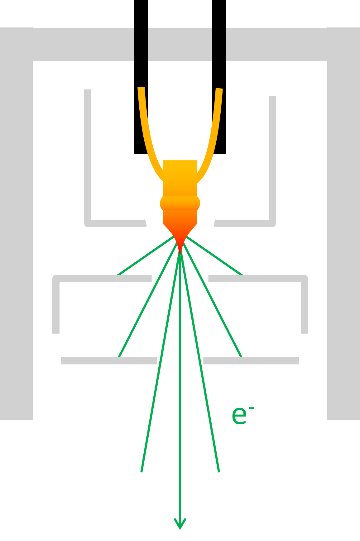
The Allalin system from Attolight, operated with a field emission gun (FEG) electron source, leverages several benefits that significantly enhance its performance in advanced electron microscopy and cathodoluminescence applications. The Field Emission Gun (FEG) is a key component in advanced electron microscopy, offering high brightness, intense electron beams, and precise focus. These features enhance resolution, signal quality, and stability, making it ideal for high-resolution imaging and time-resolved cathodoluminescence (CL) analysis. The FEG’s superior performance is essential for accurate material characterization and advanced scientific applications. Key Benefits: 1. High Brightness and Current Density: - Improved Signal Quality: The FEG source provides a highly collimated and intense electron beam, resulting in high brightness and current density. This enhances the signal-to-noise ratio and allows for the acquisition of clearer, more detailed images and spectra. - Better Resolution: The high brightness of the FEG contributes to better spatial resolution, enabling the observation of finer structural details in samples. 2. Excellent Angular and Energy Stability: - Consistent Performance: FEG sources offer stable electron emission with minimal fluctuations in current and energy, which is crucial for maintaining consistent imaging and spectroscopy performance over extended periods. This is especially important for quantitative applications. - Reduced Aberrations: The stability in energy and angular spread of the emitted electrons helps in reducing aberrations, leading to sharper and more accurate imaging. 3. High Spatial Resolution: - Fine Detail Observation: The small emission source size of the FEG allows for the production of a highly focused electron beam, achieving sub-nanometer spatial resolution. This is particularly beneficial for high-resolution imaging and characterization at the sub-nanometer level. 4. Enhanced Cathodoluminescence Performance: - Improved Sensitivity: The high beam current provided by a FEG source enhances the sensitivity of cathodoluminescence (CL) measurements, making it possible to detect weak luminescence signals more effectively. - High Temporal Resolution: Coupled with advanced time-resolved techniques, the FEG source can support precise timing and synchronization in CL experiments, improving the resolution of time-resolved measurements. 6. Reduced Sample Damage: - Minimized Exposure: The FEG’s high brightness allows for lower beam currents to achieve the same level of signal as lower-brightness sources, reducing the risk of damage to sensitive samples during imaging or analysis. 7. Higher Detection Sensitivity: - Accurate Measurements: The high current density of the FEG provides a strong signal for detection, which is advantageous for achieving accurate and reliable measurements in both imaging and spectroscopy.
CATEGORY
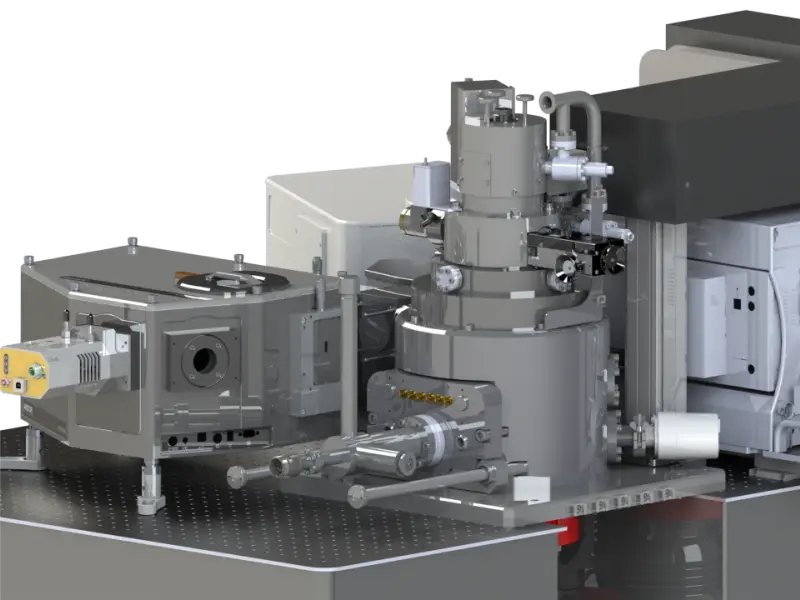
By clicking “Accept All Cookies”, you agree to the storing of cookies on your device to enhance site navigation, analyze site usage, and assist in our marketing efforts. View our Privacy Policy for more information. Deny Accept Applications Products Services Technologies Attolight Contact us Products / Allalin Mönch Säntis 300 Home Products Allalin Hybridized SEM – Spectroscopic Platform - SEM – Quantitative Cathodoluminescence (qCL) - Spectroscopic Analysis (Photoluminescence, Raman, …) - Time-resolved measurements (TRCL, TRPL, g², …) - Electrical Measurements (EBIC/EBAC) - Room to low-temperature analyses (<10K) - Cryo-compatible Nanoprobes Download brochure Contact us Characteristics About our Hybridized SEM – Spectroscopic Platform The Allalin is a nanometer-resolution SEM-spectroscopic instrument featuring a unique optical collection objective integrated within the SEM column, which allows for robust and repeatable measurements, enabling quantitative cathodoluminescence (qCL) analysis. One Platform, Multiple Measurement Possibilities The Allalin platform supports a wide range of spectroscopic analysis techniques, utilizing multiple sources (electron beam or laser, in continuous or pulsed mode) and various detectors (SE detector, PMT, CCD/Streak cameras, InGaAs/TCSPC/HPD detectors). The system can also be equipped with options like in-SEM electrical probing, Raman spectroscopy, Photoluminescence, and HBT setup for g(2) autocorrelation measurement. Different stage options are available to accommodate samples as small as a few micrometers to wafers up to 6 inches. Finally, spectroscopic analyses can be conducted at temperatures ranging from 10 K to 320 K, thanks to an integrated helium cryostat and a unique hexapod-based stage design, which ensures high stability and very low drift (<5 nm/min). Features Explore Allalin Platform Options Explore the versatility of the Allalin platform with its extensive range of customizable options. Select your options according to your needs: CW-CL detector NIR Detector Photomultiplier tube UV – Visible Camera e-sources FEG Source Picosecond photoelectric pulsed source Beam blanker In-column injection In-SEM photoluminescence In-SEM Raman Spectroscopy Stage 6-inch Wafer stage Liquid Helium Cryostage Nanostage Cryogenic Nanoprobes TR-CL detector Streak Camera Time-Correlated Single Photon Counting - Hybrid Photodetector Others In-SEM electrical measurements Trusted by top semiconductor companies and prestigious research institutes worldwide
CATEGORY
