By PhotonPath
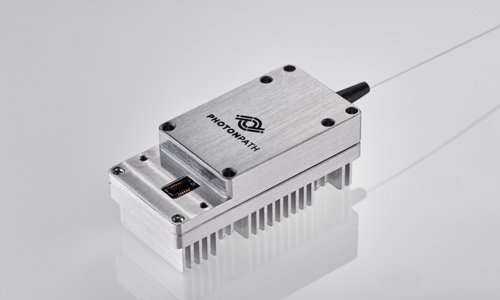
The smallest flex-grid Optical Channel Monitor (OCM) for DWDM Networks nanoOCM is an ultra-compact optical channel monitor designed for real-time spectral analysis of optical signals. Using a fast-tuning, narrow-band reconfigurable filter, it scans the full C-band and provides high-resolution spectral information for monitoring, troubleshooting, and optimizing DWDM optical networks. Designed for flex-grid environments, nanoOCM enables precise visibility into network performance as systems evolve, and it is available as a bare module or with a metal enclosure. 15 GHz Form Factor 500 ms Scan Time -35 dBm Sensitivity Key Features and Benefits nanoOCM Performance & Integrability PERFORMANCE High Spectral Resolution for precise C-band channel monitoring Flex-grid Configuration supported flex-grid architectures Real-time Visibility live insight into power drifts and spectral shape Minimal Impact negligible impact on the optical path Stability and repeatability consistent, repeatable performance INTEGRABILITY Compact Form Factor the smallest nanoOCM on the market Flexible packaging options available as bare or enclosed module DWDM & DCI Ready ideal for embedded and interconnect application nanoOCM Technical Specifications Operational Bandwidth 1529-1567 nm Dimensions bare OCM 23.5×12.8×4.095mm Frequency Accuracy ± 4GHz Resolution Bandwidth 15GHz Sensitivity -35dBm Scan Time 500ms Power Consumption 2W Applications & Network Impact PhotonPath’s nanoOCM is deployed within DWDM network elements such as ROADMs, optical line systems and data center interconnect (DCI) systems. Its compact form factor allows integration directly at the node or port level. Optical channel monitoring improves network stability and efficiency by enabling fast detection of channel variations. It also reduces system complexity, lowers operational costs, shortens troubleshooting and recovery times, and supports automation in high-capacity optical and DCI networks. Seamless Integration Fast Detection of Channel Variations Reduced Complexity and Operational Costs nanoOCM Performance ROADM Node Within a ROADM node, the nanoOCM monitors the DWDM channels along the add, drop, and through paths supporting node supervision, power balancing, and fault detection. Real-time Monitoring The OCM enables real-time monitoring and troubleshooting through dynamic tracking of DWDM channels with arbitrary bandwidth.
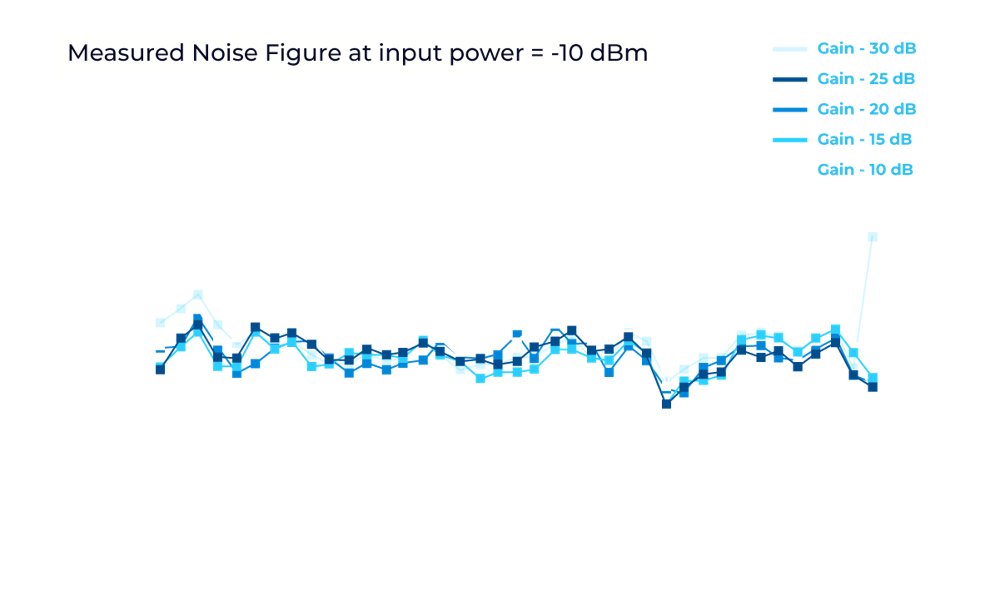
Optical Amplifier. Dual EDFAs with dynamic gain equalization in a single module. Atlas is a compact module housing two dynamically equalized Erbium-Doped Fiber Amplifiers, making it an ideal solution for DWDM amplification in telecom, datacom, and CATV networks. Delivering up to 20 or 23 dBm per amplifier, Atlas provides low noise, minimal gain ripple, and stable signal amplification across the C-band. Built on PhotonPath's proprietary low-loss SiON platform, it integrates key optical functions to reduce system cost and complexity while enhancing scalability. 10-30 dB Gain Range. 20 dBm Max Output Power. ≤ 8.5 dB Noise Figure. Key Features and Benefits - Atlas Performance & Integrability: - Reconfigurable Dual EDFA: two dynamically equalized EDFAs in one compact module - Ultra wide gain range: extended operational mask with contained noise floor - Hitless Gain reconfiguration: seamless adjustment of operational working point without disruption - Transient suppression: avoid sudden spikes or short-duration input signal drops - Inherent Tilt Control Feature: possibility to pre-compensate wavelength dependent fiber loss - Compactness and efficency: Discrete components now integrated in the photonic chip. Technical Specifications: - Operational Bandwidth: 1528-1567 nm - Gain Range: 10 – 30 dB - Output Power: 0 – 20 dBm - Noise Figure: ≤ 8.5 dB - Gain Ripple: 0.5 dB - Power Consumption: ≤ 15 W Applications & Network Impact: The integration of a Dynamic Gain Equalization (DGE) into smart Erbium-Doped Fiber Amplifiers (EDFAs) unlocks significant cost-saving opportunities for optical transmission networks. By dynamically equalizing gain across the C-band, these advanced amplifiers can replace conventional architectures that rely on separate booster, in-line, and pre-amplifier stages simplifying network design while reducing equipment count, power consumption, and operational costs. Integrated Dynamic Gain Equalization. Single-Amplifier Architecture Across the C-Band. Reduced Equipment, Power Consumption, and OPEX. Atlas Optical Amplifier Performance: Atlas is a compact smart EDFA that integrates two high-performance optical amplifiers and a photonic-based Dual Dynamic Gain Equalizer into a single, compact module. Principe of Operation: PhotonPath Dual EDFA is based on reconfigurable Dynamic Equalizers realized in our proprie-tary integrated photonic platform with ultra-low losses. The key differentiation is the ability to compensate for several spectral profiles, thus covering a wide operational mask while keeping a low Noise Figure (NF). Atlas impact on network: Metro area network simulations show a reduction of optical amplifiers cost up to 20%, by choosing Atlas over a commercial EDFA. Further savings can be achieved by considering OEO regeneration and maintenance costs.
CATEGORY
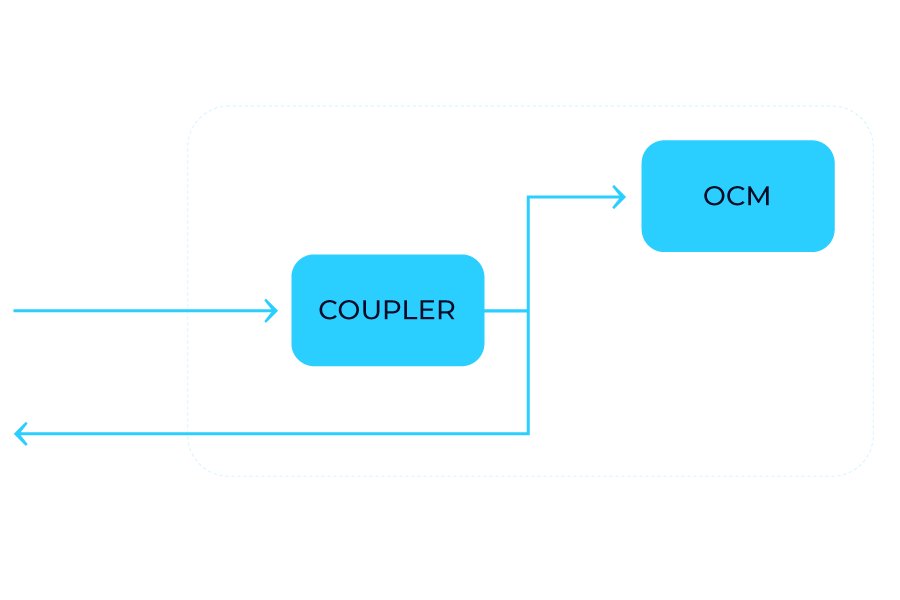
The only multi-channel flex-grid Optical Channel Monitor in a QSFP form factor Packaged in a QSFP form factor, PhotonPath's 4-port pluggable nanoOCM provides per-port spectral visibility across four optical inputs, ideal for DWDM networks and high-density environments such as data center interconnect (DCI) systems. It is QSFP MSA-compliant and supports true plug-and-play deployment in existing network equipment. The module performs spectrum analysis using a narrow-band, reconfigurable optical filter that scans the entire C-band. An integrated 95/5 optical tap enables pass-through operation, allowing continuous monitoring without impacting the main optical signals. QSFP MSA compliant 15 GHz Resolution Bandwidth ± 4 GHz Frequency Accuracy Key Features and Benefits - Expanded capacity: up to 4 optical input ports to monitor - Flex-grid Configuration: supported flex-grid architectures - Real-time Visibility: live insight into power drifts and spectral shape - Minimal Impact: Integrated 95/5 tap in the optical path - Stability and repeatability: consistent, repeatable performance - Standard QSFP Form Factor: to plug-and-play into existing network equipements - MSA Compliant: support the industry-standard specificatons - Per-port deployment: suited for high-density networks Technical Specifications Operational Bandwidth: 1529-1567 nm Channel Power Accuracy: 1 dB Frequency Accuracy: ± 4 GHz Resolution Bandwidth: 15 GHz Total Optical Input Power: 24 dBm Applications & Network Impact PhotonPath's 4-port pluggable nanoOCM is used within DWDM network equipment such as ROADMs, line cards, and data center interconnect (DCI) systems to provide per-port optical monitoring across four inputs. Its QSFP form factor allows monitoring to be added directly to high-density interfaces without changes to the system architecture. Pluggable multi-port monitoring enables fast detection of channel variations and supports scalable and automated operation. - Data Center Interconnect (DCI) - Per-Port Optical Monitoring - Fast Channel Variation Detection Performance 95/5 Integrated Tap: The module comprises a 95-5% tap, routing approximately 5% of the power to each nanoOCM's input port and 95% through the pass-through path, making the QSFP OCM suitable for in-line DWDM applications. Monitoring of ROADM nodes: Within a ROADM node, Pluggable nanoOCM monitors the DWDM channels along the add, drop, and through paths supporting node supervision, power balancing, and fault detection. Real-time Monitoring: The OCM enables real-time monitoring and troubleshooting through dynamic tracking of DWDM channels with arbitrary bandwidth. Ready to Integrate? Contact our team to discuss how the Pluggable nanoOM can enhance your optical network monitoring capabilities.
CATEGORY
The smallest flex-grid Optical Channel Monitor in a QSFP form factor Packaged in a QSFP form factor, PhotonPath’s Pluggable nanoOCM provides per-port spectral visibility in DWDM networks and high-density environments such as data center interconnect (DCI) systems. It is QSFP MSA-compliant and supports true plug-and-play deployment in existing network equipment. The module performs spectrum analysis using a narrow-band, reconfigurable optical filter that scans the entire C-band. An integrated 95/5 optical tap enables pass-through operation, allowing continuous monitoring without impacting the main optical signal. QSFP Form Factor 500 ms Scan Time 95-5 Optical Tap Key Features and Benefits Pluggable nanoOCM Performance & Integrability PERFORMANCE High Spectral Resolution for precise C-band channel monitoring PERFORMANCE Flex-grid Configuration supported flex-grid architectures. PERFORMANCE Real-time Visibility live insight into power drifts and spectral shape PERFORMANCE Minimal Impact integrated 95/5 tap in the optical path PERFORMANCE Stability and repeatability consistent,repeatable performance INTEGRABILITY Standard QSFP Form Factor to plug-and-play into existing network equipements INTEGRABILITY MSA Compliant support the industry-standard specificatons INTEGRABILITY Per-port deployment suited for high-density networks Technical Specifications Operational Bandwidth 1529-1567 nm Channel Power Accuracy 1 dB Frequency Accuracy ± 4 GHz Resolution Bandwidth 15 GHz Total Optical Input Power 24 dBm Scan Time 500 ms Applications & Network Impact PhotonPath’s Pluggable OCM is used within DWDM network equipment such as ROADMs, line cards, and data center interconnect (DCI) systems to provide optical channel monitoring at the port level. The QSFP form factor allows monitoring to be added directly to high-density interfaces without changes to the system architecture. Pluggable, per-port monitoring enables fast detection of channel variations and supports scalable and automated operation. Data Center Interconnect Optical Channel Monitoring Fast Detection of Channel Variations Pluggable nanoOCM Performance 95/5 Integrated Tap The module comprises a 95-5% tap, routing approximately 5% of the power to the nanoOCM and 95% through the pass-through path, making the QSFP OCM suitable for in-line DWDM applications. Monitoring of ROADM nodes Within a ROADM node, Pluggable nanoOCM monitors the DWDM channels along the add, drop, and through paths supporting node supervision, power balancing, and fault detection. Real-time Monitoring The OCM enables real-time monitoring and troubleshooting through dynamic tracking of DWDM channels with arbitrary bandwidth.
CATEGORY
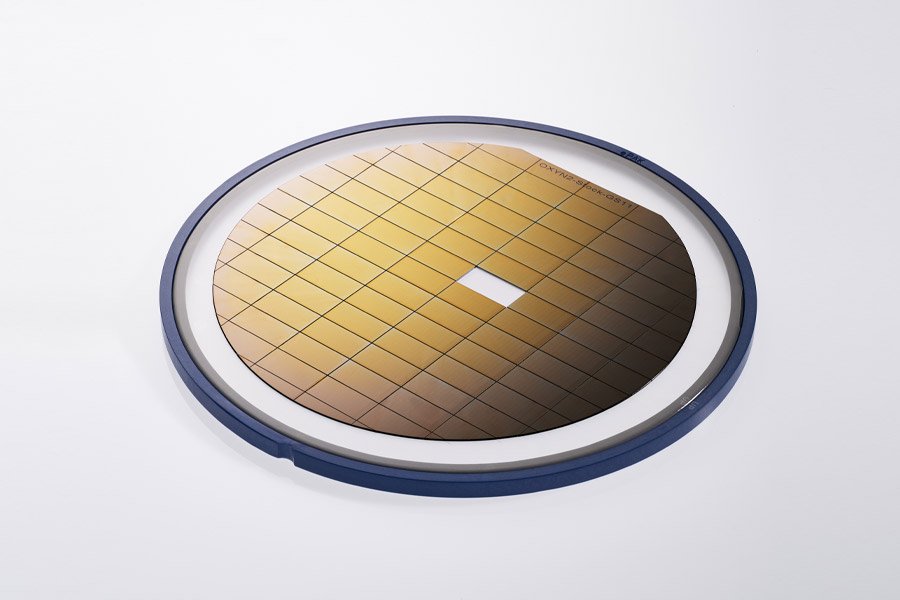
Silicon Oxynitride (SiON) reconfigurable filter for EDFA gain flattening PhotonPath's Dual Dynamic Gain Equalizer (DDGE) is a compact, low-loss integrated photonic device device for optical gain flattening in amplified networks. Built on PhotonPath's proprietary low-loss SiON platform, the module integrates fully reconfigurable filters, that dynamically adapt to guarantee spectral flatness and high optical performance. DDGE extends usable bandwidth enabling a single amplifier to replace three or four amplifier nodes while reducing noise, complexity, cost and power consumption. 30 dB Return Loss 4 dB Excess Loss ± 0.5 dB Flatness Error Key Features and Benefits Dual Dynamic Gain Equalizer Performance & Integrability PERFORMANCE Two Dynamic Equalizers indipendently reconfigurable, in one module PERFORMANCE Tilt Compensation and Control up to ± 10dB linear tilts PERFORMANCE 1000+ Spectral Profiles stored indipendeltly for each DDGE PERFORMANCE Integrate new optical components whitin the same photonic chip INTEGRABILITY Key Building Block for low-noise optical amplifiers with an extended operational range INTEGRABILITY Compact footprint enables integration within pluggable or multi-rail EDFA INTEGRABILITY Technology Supporting Operations across multiple or extended optical bands Dynamic Gain Equalizer Technical Specifications Operational Bandwidth 1529-1560 nm Dimensions 92 x 72.2 x 12.2 mm mm Flatness Error ± 5 dB Return Loss 30 dB Excess Loss 4 dBm Power Consumption 6 W Applications & Network Impact Dynamic Gain Equalizers play a critical role in enabling efficient, reliable, and scalable operation in next-generation optical networks. In systems with multiple amplifiers, effective management of gain tilt and gain ripple is essential to preserve signal quality across all wavelength channels. By providing real-time gain control, DGE supports flexible network configurations, and reduce reliance on complex signal processing. Real-Time Gain Control & Spectral Optimization Tilt & Ripple Management in Multi-Amplifier Systems Scalable & Automated Optical Network Architecture Dynamic Gain Equalizer Performance Tilt Profiles The DGE can operate as a dynamic compensator of linear tilts of ± 10 dB. Channel tilt in optical communication systems could be induced by diverse effects such as ISRS (Inter-channel Stimulated Raman Scattering) and wavelength-dependent fiber gain/loss. Evaluated Flatness Defined as the difference between the target profile and the DGE implemented spectral response.
CATEGORY
