By Xenocs
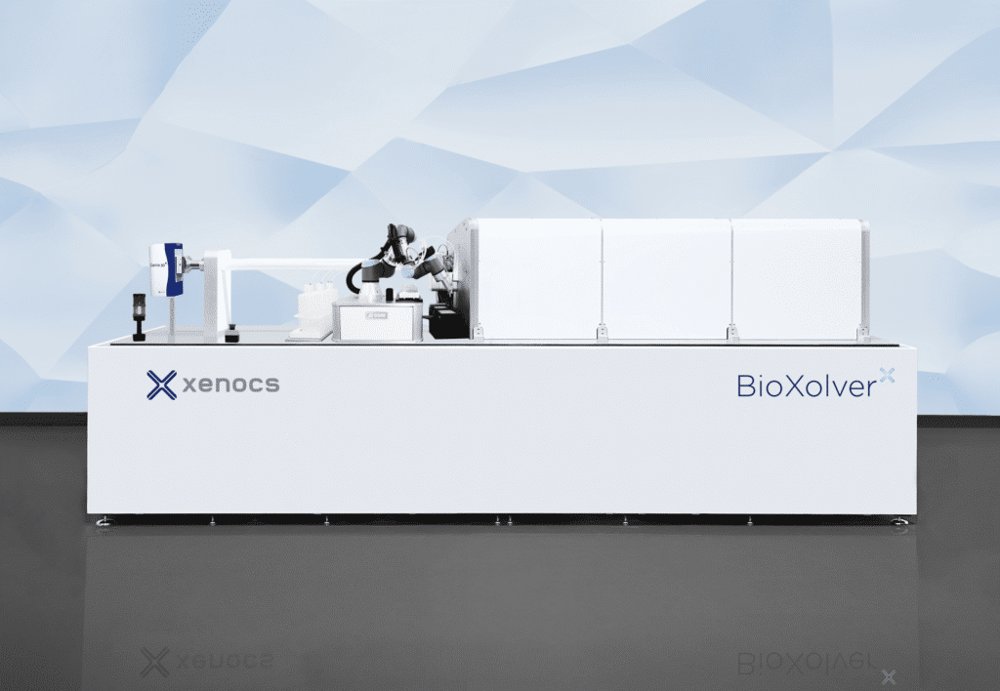
BioXolver: Accelerate your biostructural research Until now, SAXS measurements on biological samples were limited to synchrotron facilities or low throughput laboratory setups requiring large sample volumes. The BioXolver is designed to overcome these limitations with the following features: - Synchrotron-quality data in your own lab - Optimized and automated configuration for biological materials - Simplified, high-throughput data collection and data analysis workflows - Low volume capability: Work reliably with volumes as small as 5 µL. - Characterize complex samples in near-native conditions High quality SAXS data in the lab Measurements previously only possible at synchrotron facilities can now be performed in the lab. High throughput measurements and results Full automation from sample to final results on up to 192 samples. Low sample volume consumption Down to 5μL. The lowest sample consumption on the market. In-line SEC and UV-Vis combined with SAXS Characterize small and large protein species with real-time concentration measurement. High data quality Measurements once limited to synchrotron facilities can now be performed directly in your laboratory. With the BioXolver you obtain: - Structural insights into proteins and biomolecular systems under near-native conditions. - High quality data for accurate modeling and interpretation. - Precise determination of key structural parameters. Due to weak scattering from biological samples, high quality SAXS measurements require an instrument optimized for maximum X-ray intensity and minimal background noise. The BioXolver combines both capabilities in a single laboratory platform. Such performance is achieved by combining the Genix3D long lasting source with new patented FOX 3D multilayer optics having a very high solid angle. The BioXolver can be installed with different source options. It can integrate a MetalJet source to obtain the highest X-ray beam intensity possible in a laboratory instrument. It can also be installed with the Genix3D, a bright microfocus low maintenance source with intensity levels only previously accessible with high power rotating anode sources. The BioXolver uses state of the art collimation slits that greatly reduce noise and provide a clean beam. High quality detection is achieved with hybrid photon counting (HPC) detectors integrated inside a vacuum-sealed chamber with no interfering window in front of the detector sensor (windowless detector). This ensures that weakly scattering samples can also be measured at low concentrations. Measuring the background level of the instrument is further improved by proprietary automatic cosmic background removal algorithm. Windowless HPC detectors also allow beamstopless measurements. - Captures the direct beam throughout acquisition for accurate transmission measurement for precise absolute intensity normalization. - Enables measurements at lower scattering angles, limited only by the sample. High throughput measurements and results Full automation from sample to final results on up to 192 samples. Streamline your laboratory workflow. With the BioXolver, standard well plates are loaded and measured automatically using the in-line pipetting robot and automated software suite. - Maximize uptime with a simplified “samples-in, results-out” process. - Minimize manual intervention with automated in-line pipetting. - Scale your research with high-throughput support for up to 192 samples. - Ensure data quality through repeatable and reproducible measurements. The BioXolver’s pipetting robot ensures reliable sample handling: - Prevents cross-contamination with disposable tips - No sample loss thanks to tubeless handling - Fully automated cleaning and drying of the measurement cell The BioXolver includes powerful analysis tools for rapid and objective interpretation of biological SAXS data. The patented LipoSAXS algorithm from Xenocs enables model-free characterization of vesicles and liposomes, removing the need for subjective core–shell modelling. Automatically determine key parameters: - Bilayer head-to-head distance - Number of lamellae - d-spacing for multilamellar systems Quickly compare large datasets and monitor structural consistency between samples or batches. Key capabilities include: - Feature clustering analysis - Similarity metrics (Chi-squared, Pearson, CorMap) - Full similarity matrix visualization - Trend tracking across datasets - Reference comparison with PASS / FAIL decisions Both parameter extraction and similarity analysis are performed in seconds, making the software ideal for high-throughput studies, automated workflows, and in-line analysis on the BioXolver. Low sample volume consumption 5μL minimum sample volume requirement – the lowest on the market. High-precision handling is powered by the seamless integration of our in-line pipetting robot, the BioCUBE flow cell, and Machine Vision monitoring. - Reduced operating costs from lower sample consumption. - Maximize research impact with more data points and greater resolution of the biostructural design space. Each sample is first automatically injected into the BioCUBE measurement cell with the tubeless pipetting robot, then positioned into the beam for measurement. - Thermal Stability: Samples are maintained at your selected temperature, from the well plate to the measurement cell. - Integrated Analysis: Optional UV/Vis capabilities for real-time sample monitoring. A digital eye on your science. Using Machine Vision, the BioXolver monitors the sample volume at all times. This provides continuous feedback to the control software, keeping the sample perfectly positioned in the X-ray beam for optimum data quality. In-line SEC and UV-Vis combined with SAXS Characterize small and large protein species with high precision. In-line size-exclusion chromatography (SEC) separates protein species, from small monomers to large complexes, ensuring clean, monodisperse samples. Integrated UV-Vis measures sample concentration exactly at the SAXS exposure point. Together, they provide accurate, reliable data even for polydisperse, heterogeneous, or aggregation-prone systems. Bring synchrotron-level characterization to your lab. Combine the BioXolver with SEC to resolve even the most complex protein structures. - Superior sample purity: Ensure monodisperse samples by separating species in real-time. - Complex protein dynamics: Analyze structurally heterogeneous, aggregation-prone, and multi-domain proteins in dynamic equilibria. - Universal compatibility: Works with any HPLC system, simply connect your column directly to the BioCUBE flow cell. Real-time concentration monitoring for optimal SAXS results. - Precise post-column tracking: Automatically account for sample dilution after the column to ensure accurate concentration data. - In situ measurement: Get real-time data directly in the BioCUBE cell, before, during, and after X-ray exposure. - SEC-SAXS Optimization: Perfect for complex experiments where concentration fluctuates dynamically during elution. - Total sample integrity: Monitor stability throughout the entire run to guarantee the reliability of your structural models. - Microfocus sealed tube: Cu, 30W/30µm*, point focus. (* DIN EN 12543-2) - MetalJet F source (Ga), 250 W - Rotating anode X-ray sources (Cu and Cr/Mo/Co on demand) 1.2 / 3 kW – 70 μm - Motorized Dual or Triple source (Microfocus sealed tube: Cu/Mo/Cr combined with MetalJet or Microfocus rotating anode) Aspheric single reflection 3D beam conditioning multilayer optics Motorized scatterless slits Xenocs thermalized BioCube flow-cell with camera and pump Pipetting robot with disposable tips Up to 2 x 96 well plates (thermalized) Down to 5 μL Automated cleaning and drying with three cleaning fluids Hybrid pixel photon counting detector Dectris Eiger2R 4M or Eiger2R 1M In-vacuum motorized detector for continuous change of sample to detector distance <0.003 Å-1 / MW < 1.5 GDa / Rg < 270 Å 4.2 meters UV-VIS, SEC-SAXS Installation, training, hot-line, maintenance contract
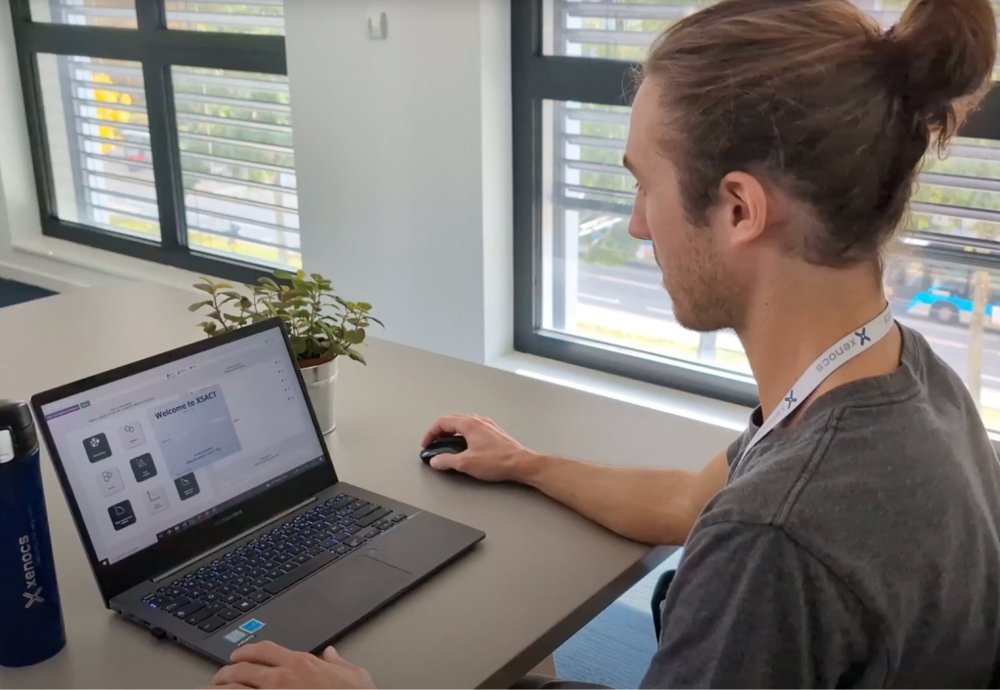
XSACT Pro is your all-in-one SAXS software solution, combining raw SAXS data processing and advanced analysis in a single, integrated platform. As a powerful SAXS data analysis software, it provides an intuitive interface that streamlines complex workflows, making it accessible for researchers at all experience levels. Whether investigating nanostructures, polymers, or biomolecules, XSACT Pro empowers you to unlock meaningful insights from your scattering data. Let XSACT Pro guide you effortlessly from raw SAXS data to insightful results with minimal user input. Harness the power of AI to identify the most probable particle shapes in your sample, saving time and ensuring accuracy. Dive deeper into the analysis using the model-fitting option, which extracts essential structural parameters to provide a comprehensive view of your sample. Robust and comprehensive array of data analysis algorithms XSACT Pro offers a comprehensive suite of analysis modules for characterizing size, structure, and related properties of various materials, providing a unified and versatile solution for SAXS data processing and analysis. All analysis modules come with full documentation and practice data. Unique capability for particle sizing - Xenocs-exclusive solution based on Expectation Maximization algorithm - High performance and statistical uncertainties provided - Parameter-free method to extract the size distribution of a particle system Evaluation of specific surfaces - Obtain the characteristic surfaces (mass specific surface area, surface to volume ratio) of nano-objects - Possible applications include nanoparticles in dispersions, dry powders, pores in granular media or interfaces in nanostructured solids - Two calculation protocols are available: the absolute scale method and the invariant method in accordance with ISO 20804:2022 Determination of crystallinity - Calculate the degree of crystallinity (crystalline fraction) in semi-crystalline samples - Deconvolute the amorphous and Bragg scattering contributions using Peak fitter and Visual Peak Search modules - Two calculation protocols are available: the absolute scale method and the invariant method in accordance with ISO 20804:2022 Estimation of the radius of gyration of scatterers - Estimate the radius of gyration of scattering particles, a key parameter for comparing structural changes under varying conditions (temperature, concentration, solvent etc.) - Extrapolated intensity at zero angle (I(0)), offering insights into particle concentration and size. - Detect particle interactions or oligomerization Evolution of scattering data as a function of measurement parameter - Study impact of external measurement parameter (temperature, stress…) - Study impact of acquisition parameter (sample position, …) - Study impact of acquisition parameter (sample position, …) Data simulator - Adjust the sample or instrument properties to simulate the scattering intensity - Estimate the smearing effect due to the instrumental resolution SMART workflow for efficient SAXS data analysis The SMART workflow and streamlined user experience bring a new level of simplicity and efficiency to SAXS/WAXS data analysis. By guiding you through each step with intuitive tools and automation, SMART workflow allows you to obtain high-quality, publication-ready results with minimal effort, keeping the focus on your research instead of technical setup. Sample characterization is at the core of the SMART workflow, allowing you to focus on your research questions rather than the technical aspects of the setup. Measurements are effortless as the SMART workflow optimizes setup, providing real-time feedback to ensure accuracy with minimal user input. Analysis is made easier with a comprehensive array of SAXS data analysis algorithms including advanced AI-powered classification and model fitting, allowing you to extract meaningful data quickly and accurately. Report generation becomes straightforward with publication-ready figures and readily available meaningful structural parameters of the sample. Time-saving is a key aspect of the SMART workflow, streamlining every step so you push the boundaries of materials research. Advanced SAXS data processing Xenocs instruments simplify your workflow with automatic 2D data reduction into 1D scattering curves in absolute intensity units, ensuring quick and reliable analysis. For applications requiring detailed study of 2D scattering data—such as anisotropic samples or thin films analyzed via grazing incidence techniques—XSACT Pro SAXS software represents 2D data in reciprocal space without information loss, offering advanced tools for orientation analysis and visualization. Automatically convert 2D images into 1D scattering curves in absolute intensity units. Represent 2D data (transmission, GISAXS, GIWAXS) in Q-space for detailed interpretation. Seamlessly combine scattering images from multiple acquisitions for a comprehensive view. Publication-ready figures Scientific insights depend on the ability to visualize and compare data effectively. XSACT Pro integrates powerful SAXS data processing with advanced visualization tools, allowing you to transition seamlessly from acquisition through processing and analysis to publication—all within a single, comprehensive SAXS software. Tailor your data representation to fit your specific needs. Save your figures in multiple formats. Generate high-quality images for presentations and publications.
CATEGORY
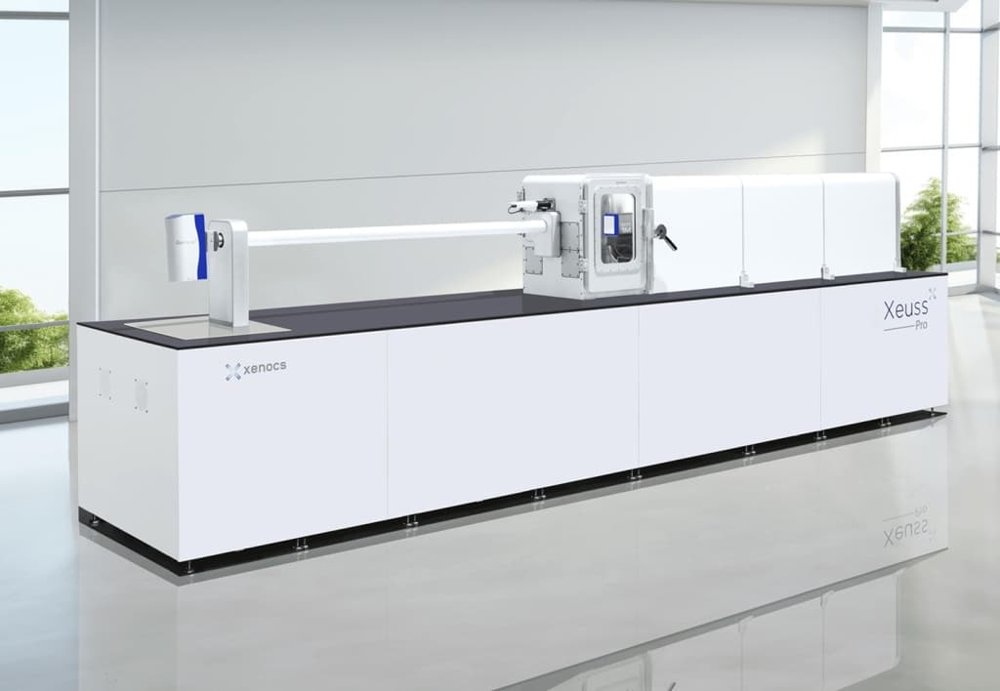
Xeuss Pro: High-Performance SAXS System for Nanoscale Characterization The Xeuss Pro is a high-performance SAXS system for nanoscale characterization, combining SAXS, WAXS, GISAXS, USAXS and X-ray imaging in a versatile laboratory platform. Building on more than a decade of expertise in Small-Angle X-ray Scattering, the Xeuss Pro integrates advanced X-ray optics, detection and modular configurations to deliver high-quality structural information across a broad range of length scales. Designed for both scientific research and industrial applications, this SAXS system supports a wide range of experiments, from routine analysis to advanced in situ and operando studies. Ultimate data quality: Achieve superior results with state-of-the-art optics, Clean Beam technology, and high-resolution, low-noise detection capabilities. Maximum modular versatility: Customize your SAXS system with modular options to adapt to any experiment and effectively address your scientific questions. Unlimited possibilities: Experience unparalleled flexibility with our large sample chamber and a variety of sample holders and environments. Comprehensive software suite: Enhance your research workflow with an all-encompassing software suite for seamless data acquisition, processing, and analysis. The Xeuss Pro SAXS/WAXS/GISAXS/USAXS/Imaging system stands at the forefront of scientific X-ray instrumentation. It offers a series of innovative features that not only enhance its performance but also broaden the scope of research possibilities. This advanced SAXS and WAXS system delivers high-quality data for applications ranging from pharma to renewable energy. The Xeuss Pro features state-of-the-art patented single reflection 3D multilayer optics. With an improved multilayer design and optimized geometry, these optics are engineered to significantly enhance X-ray flux for high-resolution SAXS/WAXS measurements. Drawing on more than two decades of experience in X-ray technologies and breakthrough innovations backed by several patents, the Xeuss Pro combines high flux and high resolution with low noise technology through several advanced features: These innovations and features ensure that even the most advanced experiments, such as kinetic studies or shape analysis of diluted samples, and the most challenging samples —including those with low contrast, large characteristic dimensions, or requiring accurate mesophase analysis — can be studied in a laboratory setting. The Xeuss Pro guarantees superior X-ray scattering measurements, enabling precise and comprehensive scientific investigations across a wide range of research applications. The beamstopless data acquisition of the Xeuss Pro SAXS/WAXS/GISAXS/USAXS instrument offers numerous advantages for detailed structural analysis and dynamic studies. It provides extended access to very low-q values, allowing for the study of larger structures and assemblies, and ensures continuous acquisition across the entire detector area, resulting in High Dynamic Range data. By eliminating the beamstop, artefacts such as shadowing effects and parasitic scattering from beamstop edges or detector window are avoided, leading to noise-free scattering at low-q values. A significant benefit is the simultaneous recording of the direct beam with the sample scattering profile, enabling accurate measurement of transmitted intensity for precise absolute intensity normalization. The direct beam profile is integrated into the data analysis process in XSACT Pro, improving result accuracy. The beamstop-free design of the Xeuss Pro simplifies experimental alignment, increases efficiency, and supports diverse applications, including time-resolved studies, in situ measurements, and high-throughput screening, making it a versatile choice for advanced SAXS research. Q-Xoom features a fully automated, computer-controlled detector travel system that adjusts the sample-to-detector distance and performs the necessary calibrations, providing maximum measurement flexibility for optimizing experimental resolution. The virtual detector technology further enhances measurement capabilities by providing collection surfaces larger than 200 mm x 200 mm at any sample-to-detector distance, independent of the physical detector size, and with automatic data reconstruction from WAXS to SAXS. The large surface area detection provided by the Xeuss Pro is particularly advantageous for studying anisotropic samples and achieving high-resolution measurements of smaller length scales (larger wave vectors) at longer sample-to-detector distances. The Xeuss Pro SAXS/WAXS/GISAXS/USAXS/Imaging system is designed to accommodate numerous modular options. This flexibility allows for customization to meet specific research needs for various scientific applications, ensuring versatility and ease of use. This advanced SAXS system addresses the critical need for characterizing nanomaterials over a vast range of length scales. It enables measurements across up to 5 orders of magnitude in q (wave vector) through entirely motorized configuration changes and full remote operation capabilities. Experience unmatched flexibility with our large vacuum sample chamber designed for SAXS, WAXS, GISAXS, USAXS, and Imaging measurements. It accommodates a wide array of sample holders and environments. The fixed sample position allows seamless integration of new equipment, while the XL station supports even the largest third-party instruments, ensuring your research is never constrained by space. Microfocus sealed tube: Cu, 30W/30µm, point focus. ( DIN EN 12543-5) Polychromatic Copper microfocus source for imaging a field of view of 14 mm x 14 mm. MetalJet D2+ source (Ga), 250 W Rotating anode X-ray sources (Cu and Cr/Mo/Co on demand) 1.2 / 3 kW – 70 μm Motorized Dual or Triple source (Microfocus sealed tube: Cu/Mo/Cr combined with MetalJet or Microfocus rotating anode) Patented 3D single reflection multilayer optics. In-vacuum motorized 3-axis detectors for 2D SAXS/WAXS (Q-Xoom): –Eiger2 R (500K, 1M or 4M) hybrid photon counting detectors Optional WAXS detectors for SWAXS: –Motorized 3-axis Eiger2 R 500K hybrid photon counting detector Large vacuum chamber. On-axis sample viewing (parallax-free). Attachments for operation of sample in air. XL station: Dedicated air-space tailored for accommodating extra-large sample environments Clean Beam technology: High flux and low background beamline. Beamstopless measurement: SAXS acquisition continuously without any beamstop. Q-Xoom: Automatic change of measurement configuration over all instrument Q-range with no movement of sample measuring position and automatic calibrations. Virtual detector mode: Surfaces of detection 200 mm x 200 mm Nanoparticles sized up to 250 nm, 500 nm, or 900 nm in diameter, depending on the Xeuss model. Nanoparticles size up to 2.5 microns with optional motorized Bonse-Hart module for automatic sequential USAXS/SAXS/WAXS measurements. Nanoparticle sizes down to 50 nm can be measured using the AuX source on spot sizes of 150 microns and with measuring times in the range of a minute or less. Scattering measurements up to 2Ɵ 70° with Q-Xoom. Qmax 49 nm-1 The X-ray imaging option extends the range of structural information from Å to mm, while the Dark-field and Phase-contrast imaging (DF-PCI) option reveals nanostructure differences, interfaces, and orientation. Standard holders (multi-samples): solids, capillaries, powders, and gels. Flow cells for liquids: — Low noise flowcell — Capillary flow cell — Automatic Sample Changer — BioCube measuring cell with dynamic monitoring (compatible with pipetting robot) Temperature stages: — Multi-purpose X-Ray temperature stage (-30°C to 150°C) — High temperature sample stage (-150°C to 350°C) — Extended high-temperature sample stage (ambient to 1000°C) Mechanical stress stages: — Tensile Stage (0 N to 600N). — Couette stage for shear SAXS. — Cryo-Shear Cell (-50°C to +450°C). Humidity stage (5% to 95% humidity at temperatures ranging from 10°C to 70°C). Temperature-compatible advanced GISAXS stage with incidence angle control and additional rotation for texture or in-plane scattering analysis Other sample stages are available upon request Models & Footprint: Xeuss Pro C (1 m x 3.5 m), HR (1 m x 5 m), UHR (1 m x 8 m). Maximum power consumption: 4.8kW (single-phase power)
CATEGORY
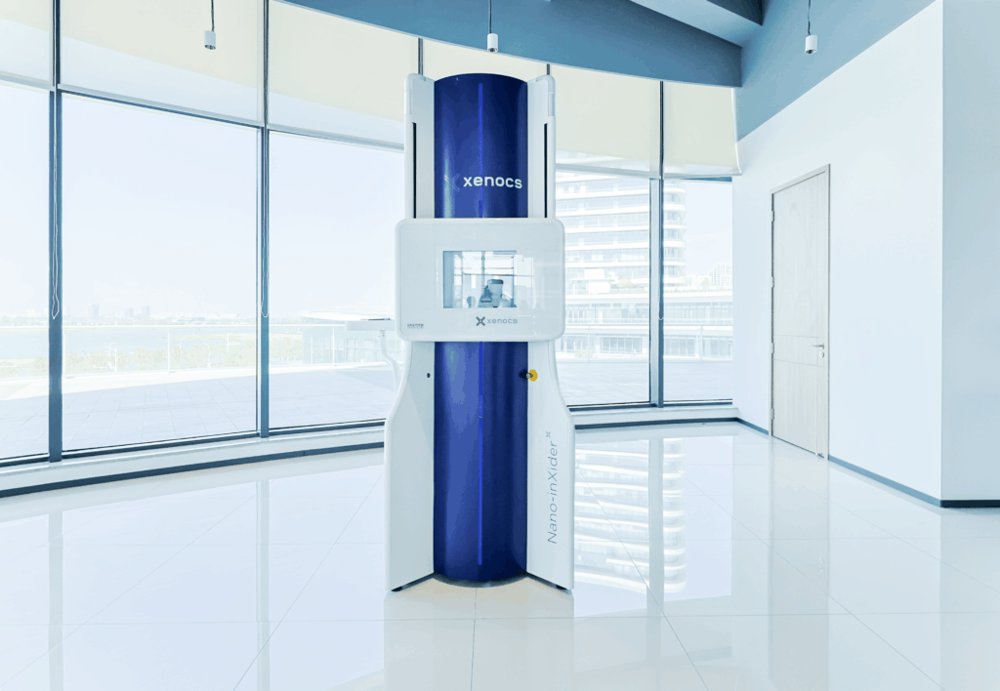
Nano-inXider: Smart nanoscale characterization with ease of use and high performance in a compact, intelligent design The Nano-inXider SAXS/WAXS instrument for nanoscale characterization delivers fast, reliable access to structural information from the atomic to the nanometer scale, directly in the laboratory. Built on Xenocs' expertise in Small and Wide Angle X-ray Scattering (SAXS and WAXS), the Nano-inXider combines proven scattering performance with a fully automated, user-friendly design optimized for routine and high-throughput use. Designed for everyday research environments, the Nano-inXider provides simultaneous SAXS and WAXS measurements in a single exposure, ensuring unambiguous structural insights across multiple length scales. Its compact, vertical architecture, beamstop-less acquisition, and integrated data processing make high-quality nanoscale characterization accessible to both experts and non-specialists, from academic research to industrial R&D. 01 Accurate and high dynamic range measurements The Nano-inXider delivers reliable, high signal-to-noise SAXS/WAXS data across a wide intensity range, enabling confident quantitative analysis from weakly scattering samples to large structural features. Beamstop-less acquisition combined with Xenocs' Clean Beam Technology delivers simultaneous measurement of transmitted and scattered signals, ensuring accurate absolute intensity normalization and exceptional data reliability across the full dynamic range. The Nano-inXider leverages 25 years of Xenocs R&D in advanced X-ray optics and instrument design to achieve an optimal balance between high X-ray flux at the sample and exceptionally low parasitic scattering generated by the instrument itself. This balance is essential for high dynamic range measurements and reliable detection of weak scattering signals. Clean Beam Technology integrates a carefully engineered set of components designed to preserve beam quality from source to detector: - Microfocus sealed-tube X-ray source (30 W) coupled with patented single-reflection multilayer optics for high brilliance and beam stability - Patented motorized scatterless collimation, minimizing background and parasitic scattering - Fully in-vacuum beam path, from optics to detector, reducing air scattering to a minimum - Low-noise hybrid pixel photon-counting detector, ensuring accurate detection across a wide intensity range - Windowless SAXS detector. The Nano-inXider uses beamstop-less SAXS acquisition to record the transmitted direct beam and the scattered signal simultaneously, enabling high dynamic range measurements while preserving weak scattering features. Continuous measurement of the direct beam allows automatic normalization to absolute intensity, while the absence of a beamstop eliminates parasitic edge scattering and enables clean data at low q, with automatic q min determination adapted to each sample. Automatic cosmic background removal continuously corrects for ambient parasitic radiation during data acquisition. By identifying and removing spurious events caused by cosmic rays, this feature improves signal-to-noise ratio and preserves data integrity, particularly for long acquisitions and very low-intensity scattering signals. The result is cleaner, more reliable data without user intervention. 02 Directly from samples to results: The SMART workflow for efficient nanoscale characterization With the Nano-inXider SMART design, move seamlessly from sample loading to validated results. The entire workflow is automated, minimizing user interaction while ensuring accuracy, reproducibility, and speed. With remote operation and automatic alignment, the Nano-inXider minimizes human error while guaranteeing measurement traceability and reproducibility. Its ease of use and robustness make it ideally suited for multi-user and open-access laboratories. Sample Simply place the sample in the chamber. The instrument automatically aligns itself without any user intervention, reducing setup time and eliminating alignment errors. Measurement Data acquisition is fully automated and fast. Scattering data are automatically normalized to absolute intensity, with no calibration required by the user, thanks to a fully motorized instrument and a fixed dual-detector configuration controlled by an integrated software suite. Analysis Scattering data are displayed in real time for immediate feedback. Advanced analysis is performed using XSACT Pro software, offering a comprehensive set of algorithms and rapid access to key nanostructure parameters through an intuitive interface. Report Generate publication-ready figures in just a few clicks. XSACT Pro produces high-quality graphs that can be exported directly or integrated into reports and presentations via drag-and-drop. Time-saving Fast answers with minimal user effort. The SMART design ensures a short learning curve for scattering experts, material scientists, and technicians alike, enabling efficient daily use. 03 Simultaneous data from atomic- to nano-scale The Nano-inXider delivers true simultaneous SAXS/WAXS measurements, capturing atomic- and nanoscale structural information in a single exposure. Its integrated dual-detector design provides a coherent, multi-scale view of sample structure, ensuring reliable interpretation across length scales. To access large characteristic dimensions without compromising laboratory space, the Nano-inXider combines a long SAXS sample-to-detector distance with a unique compact vertical architecture. This design extends q-range coverage while maintaining a minimal footprint, making advanced multi-scale characterization readily accessible directly in the lab. With the Nano-inXider, SAXS and WAXS data are acquired simultaneously in a single exposure, with both the sample and detectors remaining fixed throughout the experiment. The integrated WAXS detector seamlessly extends the scattering range beyond SAXS, providing continuous coverage up to 2 θ=60° with intrinsic overlap between datasets. This unique vertical fixed-geometry design, unmatched by any other laboratory SAXS system on the market, delivers decisive advantages: - True simultaneous SAXS/WAXS acquisition, providing unambiguous multi-scale structural information, from atomic to nanoscale, in a single measurement on the same sample volume, with seamless q-range overlap for reliable data merging and intensity scaling - A fixed, optimized vertical geometry, delivering effortless operation, long-term stability, and highly reproducible results - Reliable in situ and operando studies, where structural evolution must be tracked simultaneously at atomic and nanoscale By combining true simultaneous SAXS/WAXS acquisition with a unique fixed vertical geometry, the Nano-inXider sets a new benchmark for coherent, multi-scale structural characterization directly in the laboratory. For anisotropic samples such as fibers or oriented films, the Nano-inXider employs an automated sample rotation stage to acquire scattering data over a wide range of orientations. This virtual detector approach significantly extends azimuthal coverage without increasing experimental complexity. The acquisition workflow is fully automated and includes: - Controlled rotation of the sample around the X-ray beam during sequential exposures - Automatic merging of the acquired scattering patterns - Reconstruction of a final 2D scattering image with azimuthal coverage exceeding 200° across the full instrument q-range (up to 2θ=60°) This approach enables accurate analysis of orientation and anisotropy while preserving data quality and experimental simplicity. 04 Low cost of ownership The Nano-inXider is designed to integrate easily into standard laboratory environments while keeping installation, operation, and maintenance costs to a minimum. - Microfocus sealed tube: Cu, 30W/30µm, point focus. ( DIN EN 12543-5). - Patented 2D single reflection multilayer optics. - Two fixed detectors for continuously and simultaneously. - Dectris Pilatus 3 hybrid photon counting detectors. - SAXS and WAXS acquisition up to 2θ=60°. - Windowless beam path entirely under vacuum from beam delivery system to detector sensor. - Clean Beam technology: high flux and low background beamline. - Beamstopless measurement: SAXS acquisition continuously without any beamstop. - Virtual detector mode: 200° azimuth coverage with rotation of sample. - Nanoparticles size up to 250 nm in diameter. - Standard holders: solids, capillaries, powders. - Sample holders for powders and gels. - Flow cells for liquids: — Low noise flow cell — Capillary flow cell - Automatic Sample Changer - Temperature stages: — Multi-purpose X-Ray Temperature Stage (-20°C to 150°C) — High temperature sample stage (-150°C to 350°C) — Extended high temperature sample stage (amb – 700°C) - Tensile Stage (0-200N). - GiSAXS stage compatible with high temperature sample stage. - Custom stages on request. Comprehensive Software Suite: - Acquisition software with automatic data reduction in absolute units and live data display. - XSACT Pro (X-ray Scattering Analysis and Calculation Tool) for data analysis and interpretation, including unique modules for particle shape determination through direct modeling or AI-powered classification. - Fooprint: < 1×1 m². - Weight: ~ 520 kg. - Maximum power consumption: < 2000 W (single phase power). - Self-contained: no external fluids required.
CATEGORY
