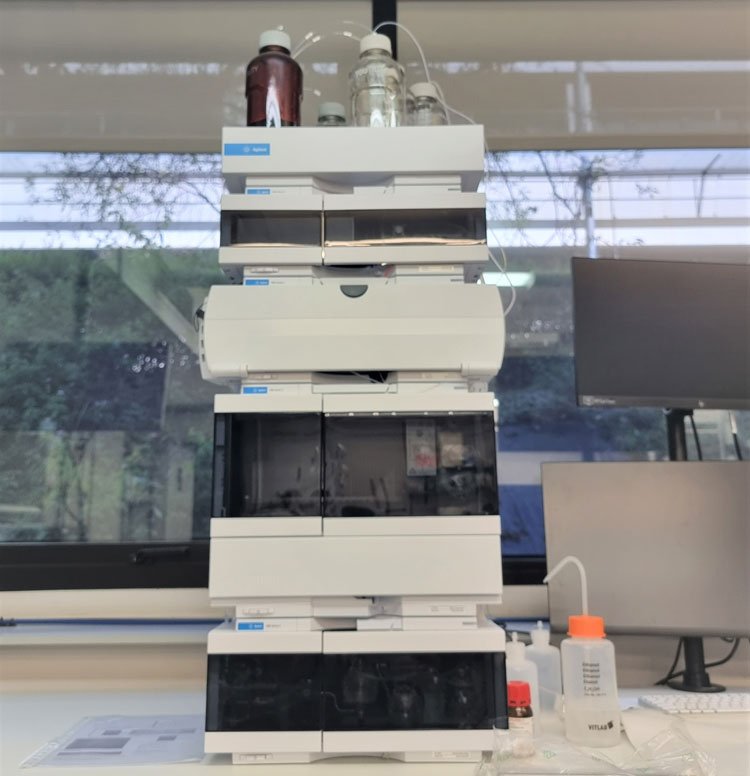
By Institute of Molecular Science- ICMol
The 1260 Infinity II LC System is a robust high performance liquid chromatography instrument that offers the widest choice of modules for analytical HPLC and entry-level UHPLC. It delivers the performance, reliability, and robustness you need for highest confidence in your daily results....
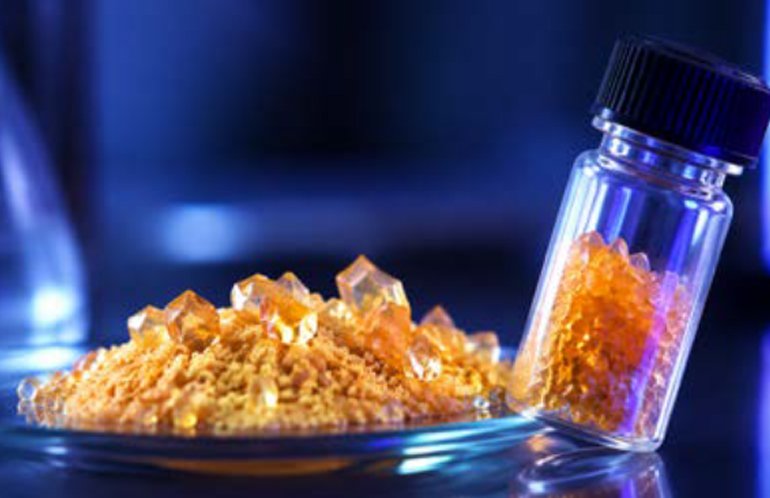
Patented PhotoSpinner is a high-throughput photoreactor designed to run multiple light-driven chemical reactions in parallel under reproducible irradiation, stirring and temperature conditions. The technology enables reaction vessels to follow the same periodic trajectory in front of one or more fixed commercial light sources, improving the average light exposure across samples while preserving efficient individual magnetic stirring. PhotoSpinner is particularly suited to heterogeneous photochemical and photocatalytic systems, including suspensions, different reactor geometries and reactions requiring controlled or inert atmospheres. IP Status: Patented Technology readiness: TRL 9 Category: Photochemistry Availability: For licensing / co-development / shelling Overview PhotoSpinner is a patented photochemical reactor architecture developed to accelerate the screening and optimisation of light-driven chemical reactions. The device uses a rotating platform that moves multiple reaction vessels along the same circular trajectory in front of a fixed lateral light source. As a result, all samples experience comparable average irradiation conditions, reducing position-dependent differences that often affect conventional parallel photochemical setups. A key feature of the technology is the combination of sample rotation with independent magnetic stirring for each vessel. This is especially relevant for heterogeneous photochemistry and photocatalysis, where solid photocatalysts, suspensions or multiphase systems can suffer from poor mixing, sedimentation or local overexposure. PhotoSpinner maintains each sample under efficient stirring while the platform rotates, allowing irradiation and mixing to be controlled independently. The reactor is designed to transfer established single-sample photochemical conditions to a parallel screening format without requiring users to abandon their existing light sources, reaction vessels or experimental workflows. The platform is compatible with commercial photochemical lamps and can be adapted to different vessel geometries, including cylindrical vials, square cuvettes and other reaction containers. The system also supports operation under controlled atmospheres through gas connections and temperature management by forced-air cooling. The technology has been fully validated under real operating conditions by early adopters in academic laboratories working in photochemistry, photocatalysis and materials chemistry. Key advantages - High-throughput operation: multiple photochemical reactions can be performed in parallel. - Reproducible irradiation: all vessels follow the same periodic trajectory relative to the light source, improving comparability between samples. - Compatibility with commercial lamps: the reactor can be coupled to existing photochemical light sources rather than requiring a proprietary lamp ecosystem. - Direct transfer from single-sample experiments: users can adapt conditions previously optimised with conventional lamps to a parallel format. - Independent magnetic stirring: each reaction vessel is stirred individually from below, improving suspension quality and reducing sedimentation in heterogeneous systems. - Suitable for heterogeneous photocatalysis: particularly useful for solid photocatalysts, MOFs, materials screening and liquid-solid reaction mixtures. - Flexible reactor formats: compatible with different vessel geometries, including vials, cuvettes and other adapted containers. - Controlled or inert atmosphere operation: gas connections allow use with air-sensitive or atmosphere-dependent photochemical reactions. - Temperature management: forced-air cooling helps reduce heating associated with high-irradiance light sources. - Workflow efficiency: enables faster comparison of photocatalysts, reaction conditions, solvents, additives or irradiation protocols. Applications - Photochemistry and photocatalysis laboratories. - High-throughput screening of photocatalysts. - CO₂ valorisation and artificial photosynthesis research. - Heterogeneous light-driven chemical reactions. - MOF, porous material and semiconductor photocatalyst screening. - Parallel reaction optimisation in synthetic chemistry. - Air-sensitive photochemical and photocatalytic processes. - Materials chemistry and catalytic performance testing. - Academic and industrial R&D laboratories. - Laboratory instrumentation for photochemical method development. Collaboration opportunities - Licensing of the patented PhotoSpinner reactor architecture. - Integration of PhotoSpinner technology into commercial photochemical lamp platforms. - Co-development with manufacturers of laboratory photoreactors, LED irradiation systems or scientific instrumentation. - Industrial validation with companies working in photocatalysis, chemical screening, materials discovery or photochemical synthesis. - Pilot testing with R&D laboratories requiring reproducible parallel irradiation under controlled stirring, temperature and atmosphere conditions. - Commercial development through manufacturing, distribution or technology transfer partnerships. Intellectual Property Status Patent granted in Spain. International patent application published under the PCT route. Spanish patent number: ES2986236 PCT application number: PCT/ES2024/070188 International publication number: WO2024209120A1 Title: Device for carrying out chemical reactions Applicant: Universitat de València Keywords / sectors Photochemistry Photocatalysis High-throughput screening HTS photoreactor Parallel synthesis Laboratory instrumentation Chemical reactors Reaction screening Heterogeneous catalysis CO₂ valorisation Artificial photosynthesis MOFs Porous materials Inert atmosphere chemistry Scientific instrumentation Synthetic chemistry Materials chemistry
CATEGORY
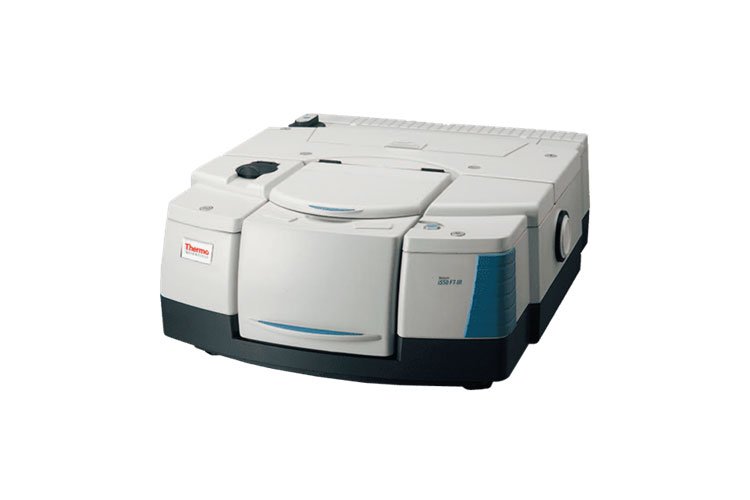
FT-IR Spectrometer featuring two detectors (DTGS & MTC) with two beam splitters capable of measuring a spectral range of 7500-50 cm-1. Besides the standard transmission measurement mode, reflection (IRRAS) and attenuated total reflection (ATR) modes are also available through a VeeMAX II accessory. A Harrick Dewar Transmission/Reflection Accessory also allows to measure samples under variable temperature (-175-350°C) and atmosphere (from vacuum to 1 bar).
CATEGORY
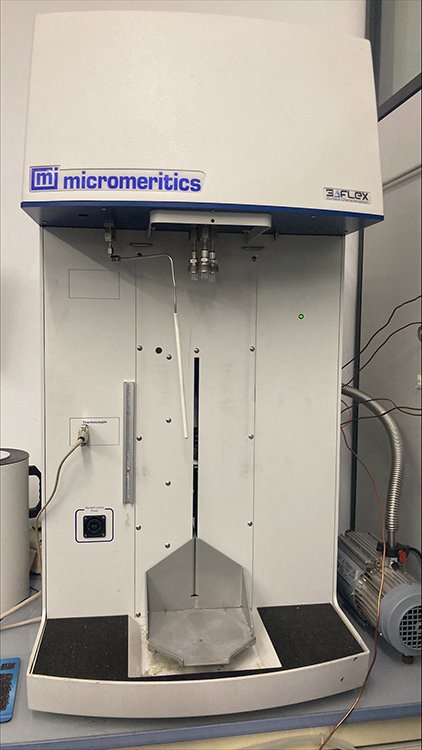
High-performance adsorption analyzer for measuring surface area, pore size, and pore volume of powders and particulate materials equipped with 3 high-resolution ports. The 3Flex is ideally suited for gas or vapor adsorption analysis of microporous (< 2nm) and mesoporous (2 to 50nm) materials and delivers superior accuracy, resolution, and data reduction.
CATEGORY
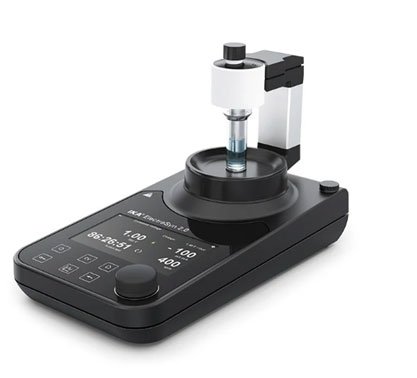
ElectraSyn 2.0 is a three-in-one device that runs electrosynthesis, cyclic voltammetry (CV), and room temperature stirring. to run a simple CV and explore the substrate’s electrochemical properties; set up constant current or constant voltage reactions in the most intuitive way.
CATEGORY
