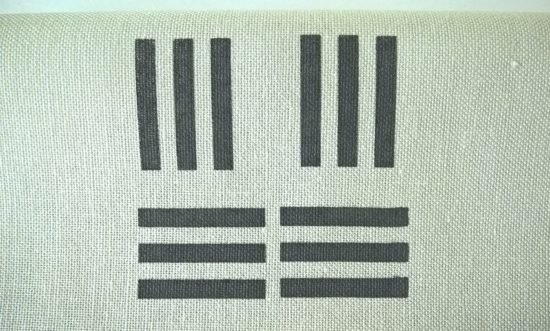
Our inks enable the integration of graphene into a variety of technical applications. Graphene inks provide a convenient and flexible, yet industrially relevant means to integrate graphene into various products and applications. Many of the useful properties of graphene are retained in the printed films, for example, its high electrical and thermal conductivity, mechanical strength, flexibility, and sensing properties. However, inks are usually formulated with graphene flakes rather than monolayers; as a result, printed graphene tends to be opaque and not transparent. With a focus on commercially viable technology development and no tie to specific graphene raw material, we formulate graphene inks which provide the best technical solution for a particular application. All our graphene inks are water-based and have low curing temperature. Therefore, they are suitable for deposition on heat sensitive substrates such as paper, textiles, and polymers. Once cured, the inks are stable at up to 200 ºC expanding the range of applications to include automotive, motorsport, power electronics, industrial sensors, etc. Graphene films and patterns printed with our inks can be bonded to wires and other flexible or rigid circuitry using our silver conductive adhesive SA0850, or a graphene adhesive.
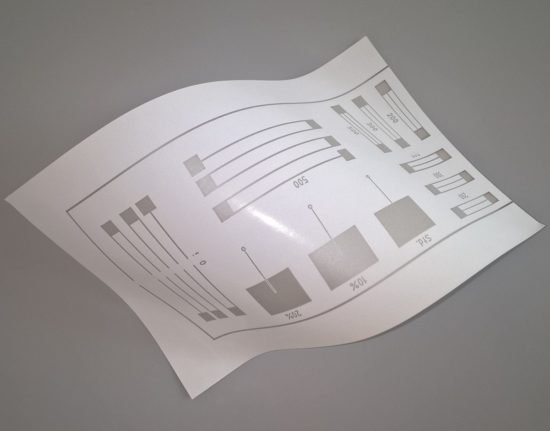
Conductive inks and thick pastes for the most demanding applications of flexible, stretchable, and plastic electronics. Our products are particularly advantageous in applications where solvent inks cannot be used because the organic solvent reacts and causes damage to other components in the assembly. In medical devices and wearable technology, our silver inks offer aqueous formulations free from organic solvents, meeting the demanding non-toxicity requirements in these applications. Additionally, our silver conductive inks are suitable for general purpose use offering ultimate safety and convenience, without the need for specialist solvent extraction. Main features and benefits - low-temperature cure at any temperature between 25 °C and 190 °C, suitable for printing on polymers, paper, textile, biological materials, and other heat sensitive substrates - excellent environmental stability once cured, including in humid and warm conditions - thermally stable up to 220 °C once cured - stored at room temperature with shelf life exceeding 12 months - drastically reduced transport and storage costs, due to lack of flammable solvents and no need for low-temperature fridge storage - reduced compliance costs. Silver conductive inks are one of the most widely used materials in printed, plastic and hybrid electronics simply because all electronic devices require multiple interconnects. However, novel applications often require bespoke and innovative materials to enable new functionalities and properties which cannot be met by existing products on the market. Many of our silver conductive inks are custom made for specific applications. For example, ink formulations can be uniquely designed to meet specific requirements for processing and cure, specialist substrates, mechanical properties, and environmental stability.
CATEGORY
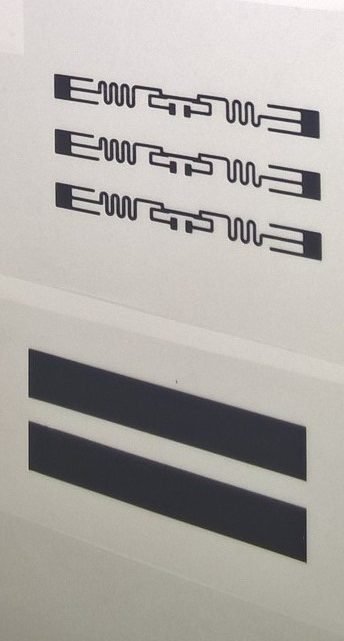
We offer carbon inks for a diverse range of applications, from sensors and heaters, to energy storage. Why use carbon inks? Carbon inks are one of the most versatile materials in printed and plastic electronics. This is because carbon exists in several forms, each of which has different physical properties. The most common forms of carbon are graphite, diamond, carbon black, activated carbons, graphene, and carbon nanotubes, among others. Inks produced with different forms of carbon have distinctive and widely varied properties which are determined by the type of carbon present in the ink. Choosing the correct carbon ink can be confusing; however, it is an extremely important step for achieving the required electrical properties of the printed carbon. The recommendations below can be used as a general guidance. Carbon inks can produce disposable, biodegradable, and sustainable electronics, which is a particularly important and attractive property. - graphite inks maintain the properties of graphite and typically have good electrical and thermal conductivity - carbon black inks are based on amorphous carbon which can be a good electrical conductor but with moderate or poor thermal conductivity - activated carbons have high surface area and produce carbon inks suitable for electrodes in electrochemical cells such as batteries, supercapacitors, and electrochemical sensors - in most cases, carbons inks have to be functionalised in order to function as gas sensors or biological sensors with good selectivity - carbon inks based on graphene and carbon nanotubes can be extremely diverse, therefore asking the supplier for detailed technical specifications is highly recommended. Customised products We develop and supply a wide range of specialist carbon inks based on different types of carbon and graphite. Contact us for further information, detailed technical specifications, and confidential discussion about your specific requirements.
CATEGORY
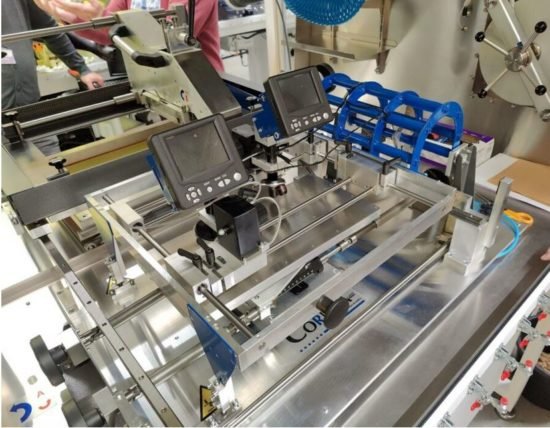
It’s great to see our collaborative project with the Advanced Manufacturing Research Centre (AMRC) about Composite cure monitoring being recognised in a case study on the Henry Royce Institute website. Composite materials are one of the hallmarks of modern materials science, often associated with motorsport, performance cars, and advanced aircraft. Yet, composite manufacture involves a lot of manual labour and skills gained over many years of experience, with limited options to monitor and control the cure process. In this project, we worked with AMRC to develop our graphene sensor technology and evaluate its feasibility in composites. In fact, the graphene sensors can be used in many other applications, where monitoring the cure of structural adhesives, sealants, and resins is a key to superior mechanical performance and reliability; and where other existing sensor solutions cannot be easily applied. Since this project, we have been working to scale up the embedding of graphene sensors into a civil composite structure for structural health monitoring, aided by machine learning algorithms being developed within the AMRC Composites Centre at the University of Sheffield through an Innovate UK funded grant. At DZP Technologies, we are excited to see our printed graphene sensor being introduced in so many industries, bridging materials science with digital technology.
CATEGORY
Our electrically conductive adhesives are unique, patented formulations which are developed to meet the challenges of today’s electronics industry and emerging novel technologies. Properties Our conductive adhesives provide the following properties: - Low-temperature cure at any temperature between 50 °C and 220 °C - One-part adhesives stored at room temperature, enabling their use over many days and months to fit prototyping and low-volume production schedules - Ready to use as supplied, no pre-mixing required - Excellent environmental stability once cured, including in humid and warm conditions - Suitable for dispensing with commonly available dispensing equipment - Supplied in syringes for manual dispensing and in specialist cartridges according to customer specifications - Aqueous formulations without flammable and toxic solvents means safe use in any operating environment.
CATEGORY
