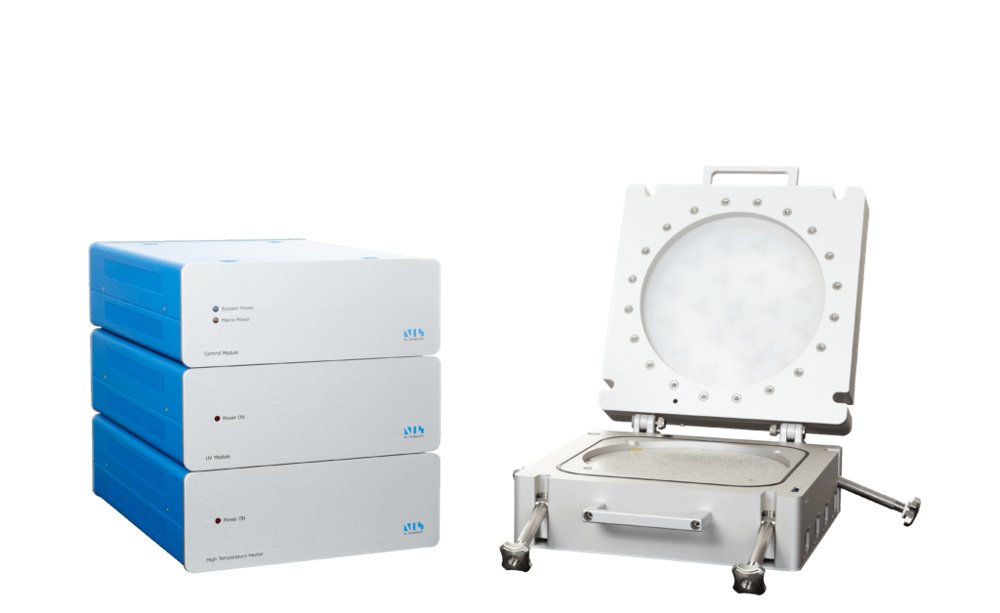
Perfect for testing & demos | Compact desktop size | Versatile and flexible | A cost-effective solution A desktop nanoimprint tool for easy replication of micro and nanoscale structures The starting point of nano-replication A compact nanoimprint tool that can be used for both imprinting and hot embossing. Perfect for testing and demo. Versatile and flexible Supports masters and substrates up to 120 and 210 mm. Both versions support thermal imprint up to 250°C and UV imprint at 365 nm and/or 405 nm Replication in a box Allows for replication of micro- and nanostructures from masters to substrates, both thermal replication and UV replication. Ease of use, cost-effective Robust and simple to operate. It facilitates non-standard processes and new experiments as well as mature and advanced development A versatile and flexible replication tool Perfect for.. - Nanoimprint – even on curved surfaces - Reverse Nanoimprint Lithography - Hot embossing - Wafer level optics replication - Bonding - Planarization of thick resists - Attachment and structuring of Graphene - Attaching resist on curved surfaces - More … The CNI tool is available in 20 different configurations depending on your needs. You have to decide whether you need the big chamber and what kind of UV exposure and temperature range you need.
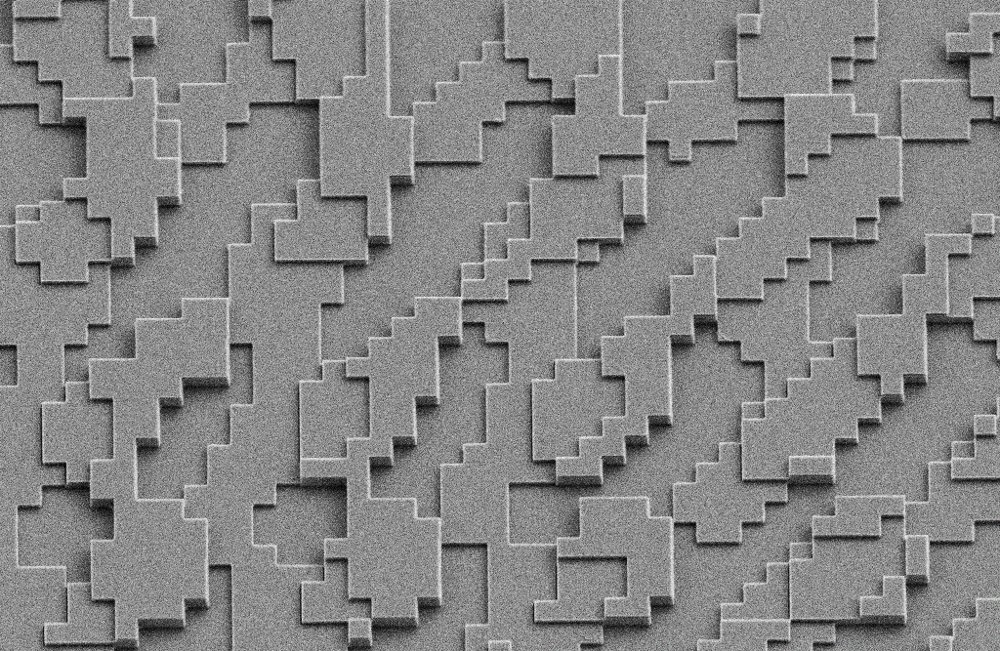
NIL Technology is specialized in diffractive optical elements (DOEs). We make diffractive optics that are customized to your specific needs. This enables you to efficiently shape light and consequently improve the overall performance and flexibility of your products. Our selection of diffractive optics includes blazed, slanted, 1D and 2D gratings, fan-out diffractive beam splitters, and diffractive diffusers. NIL Technology offers you DOEs that are customized to your specific needs. We have made diffractive optics for many years and have extensive experience in complex and high-precision DOEs. We can offer rapid turnaround times for our customers, having design, testing, and manufacturing facilities within NILT. Through high accuracy in manufacturing, we are able to reach high-performance optics. Some of the benefits of our DOEs include: - High definition/pattern fidelity - High aspect ratios - Steep sidewalls - Multi-levels - High resolution - Low roughness With NILT, you can expect improved diffraction efficiency and better stray light suppression, among other key benefits. Contact us to get an overall understanding of how it will affect your optical applications and product performance by working with NIL Technology. We can be your partner throughout the whole product journey, from idea to design and production. Precise We have high-quality production methods and years of experience with high-precision diffraction structures Adaptable Easily replace or combine refractive optics with diffractive optics Energy-efficient Shape and divide laser beams to control intensity Custom-made Customized to your specific needs and specifications Effective Be able to precisely control the phase across the aperture and make complex intensity Diffractive optical elements (DOEs) are optical components made of structures with dimensions comparable to the wavelength in complex arrangements. Based on the types of application, DOEs are capable of manipulating an incident light’s phase and amplitude with the purpose of creating a desired output pattern with a unique functionality. Diffractive optics with a given function follows the same principles as a diffractive grating with a repetitive pattern of two or more levels, formed on the surface of a substrate – typically etched into the surface of a hard substrate or replicated in a polymer on the surface of a substrate or made purely in polymer. The depth of the pattern is in the order of the wavelength of the light, specific to the application, adjusted to the refractive index of the material of the DOE. Nowadays, with the aid of high accuracy advanced micro and nanolithography fabrication techniques, diffractive optics can be engineered with feature sizes ranging from a few hundred nanometers.
CATEGORY
Single-surface 2-in-1 dot-projector for driver-monitoring and depth-sensing Our demonstration systems highlight the remarkable capabilities of our record-breaking single-surface metalens dot projectors, unveiled in October 2023. These innovative projectors consist of a single surface adept at collimating light and projecting precise dot patterns. The use of a single surface not only streamlines the module design but also facilitates the creation of exceptionally compact dot-projector modules. We are showcasing three distinct configurations with fields of illumination (FOI) of 70° x 40°, 70° x 70°, and a record-setting 144° x 70°, all demonstrated live. These projectors boast over 70% efficiency, less than 10% dot uniformity error, and high contrast ratios exceeding 40:1. Dot projection optics are made with metaoptic according to customer specifications. The metaoptic are single surface (1M); typically used for 3D sensing (structured light and time of flight) for face unlock, short distance Lidar, etc. NILT can design, prototype and manufacture metaoptic to state-of-the-art standards. - Dot projection designed for stand alone, or to be used with external collimator - Design freedom to match desired FoI with perfect N x M tiling - Single-surface element allow for extreme miniaturization of optical system - Extreme FOI possible - Dot projectors can be designed both for collimated as well as divergent light sources with a high number of possible use cases - All dot projectors can be optimized to customer requirements Projected dot pattern with invisible horizontal tiling See examples below: 1. Dot projector 70×40 degree 2. Dot projector 70×70 degree 3. Dot projector 144×70 degree 4. Collimator Demonstrated specifications: - Overall performance depends on design specs - Diagonal FoI above 144° demonstrated - Efficiency above 80% demonstrated for single surface combined collimation/fan-out function - Uniformity error below 5% demonstrated - Contrast ratio above 60:1 demonstrated for fan-out of a collimated beam, 90% efficiency is demonstrated NILT meta dot projector (left: module, right: element) 1. Dot projector 70 x 40 degree The dot projector has a 3 x 3 tiling, FOI of 70⁰ x 40⁰,efficiency above 70%, and dot uniformity-error <10%, making it an ideal platform for most 3D sensing applications where low power consumption is critical. Dot projector λ [nm] FOI (XY) [⁰] Tiling Number of spots Efficiency [%] Dot uniformity error [%] Contrast ratio A 940 70x40 3x3 2,952 82.9 8.5 60:1 B 940 70x40 3x3 2,925 78.7 3.7 60:1 2. Dot projector 70 x 70 degree The dot projector has a 3 x 5 tiling, FOI of 70⁰ x 70⁰ and demonstrates an efficiency above 70% even with its relatively larger FOI. λ [nm] FOI (XY) [⁰] Tiling Number of spots Efficiency [%] Dot uniformity error [%] Contrast ratio 940 70x70 5x3 4,875 73.9 5.1 42:1 3. Dot projector 144 x 70 degree The dot projector has a 5 x 5 tiling, FoI of 144⁰ x 70⁰, yet maintains a dot-uniformity-error around 20% which is highly advantageous for applications such as in-cabin monitoring. (The full projected pattern is pincushion distorted but the corners are clipped by the limited field of view of the detector) λ [nm] FOI (XY) [⁰] Tiling Number of spots Efficiency [%] Dot uniformity error [%] Contrast ratio 940 144x70 5x5 8,125 67.1 20.9 41:1 4. Dot projection by collimator This dot projector is based on collimation without fan-out. This means that the number of projected dots equals the number of emitter in the VCSEL array and the FOI is givel bu the focal length of the metalens collimator. λ [nm] Tiling Number of spots Efficiency [%] Contrast ratio 940 1x1 325 85 166:1 Fan-out 2 FOI Non-uniformity (%) Efficiency (%) 70x50 15.6 77.6
CATEGORY
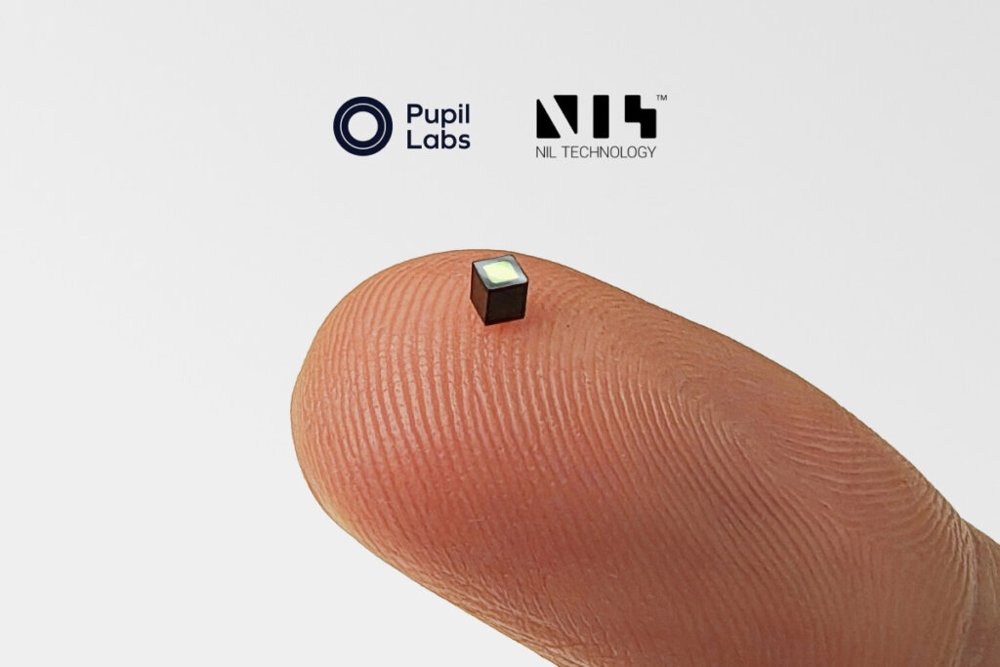
NILT metaEye™ is an ultra-compact near-infrared camera module based on meta-optic lens technology. It is optimized for eye-tracking applications in smart glasses, AR/VR headsets, and other near-field imaging applications requiring high image quality in an extremely small form factor. The metaEye™ camera is 1.68 mm x 1.68 mm x 2.11 mm in size and built with a monolithic compact architecture including an integrated bandpass filter, cover glass, and an industry-leading 400 x 400, 2.2 µm pixel CMOS image sensor. The camera delivers a unique combination of best-in-class imaging, ultra-compact form factor, and temperature insensitive performance. The metaEye™ camera is a 1.68 x 1.68 x 2.11 mm3 stacked “no-air” cube, consisting of 2 metalenses, CMOS image sensor, and cover glass. Key Features - Ultra-compact module, 1.68 x 1.68 x 2.11 mm3 - Solid lens cube, without air gap - Outstanding MTF image quality across field - Simple assembly process - Optimized for eye-tracking applications in eyeglasses and headsets, as well as similar applications imaging objects at 15–40 mm working distance - Beta samples and custom solutions available Advantages - Pioneering metalens architecture delivers performance comparable to 4 refractive lenses. Extremely lightweight, ideal for smart AR glasses - Excellent MTF performance maintained over and beyond consumer temperature range. Operates over a large Depth of Field (DOF) - High contrast and image quality across the entire FOV, enabling both eye-tracking & iris recognition with LED illumination at 850 nm - Flat front surface, enabling seamless integration in a reflowable package Partnership with Pupil Labs Pupil Labs and NIL Technology Announce Pilot Product Partnership to Advance Next-Generation Eye Tracking.
CATEGORY
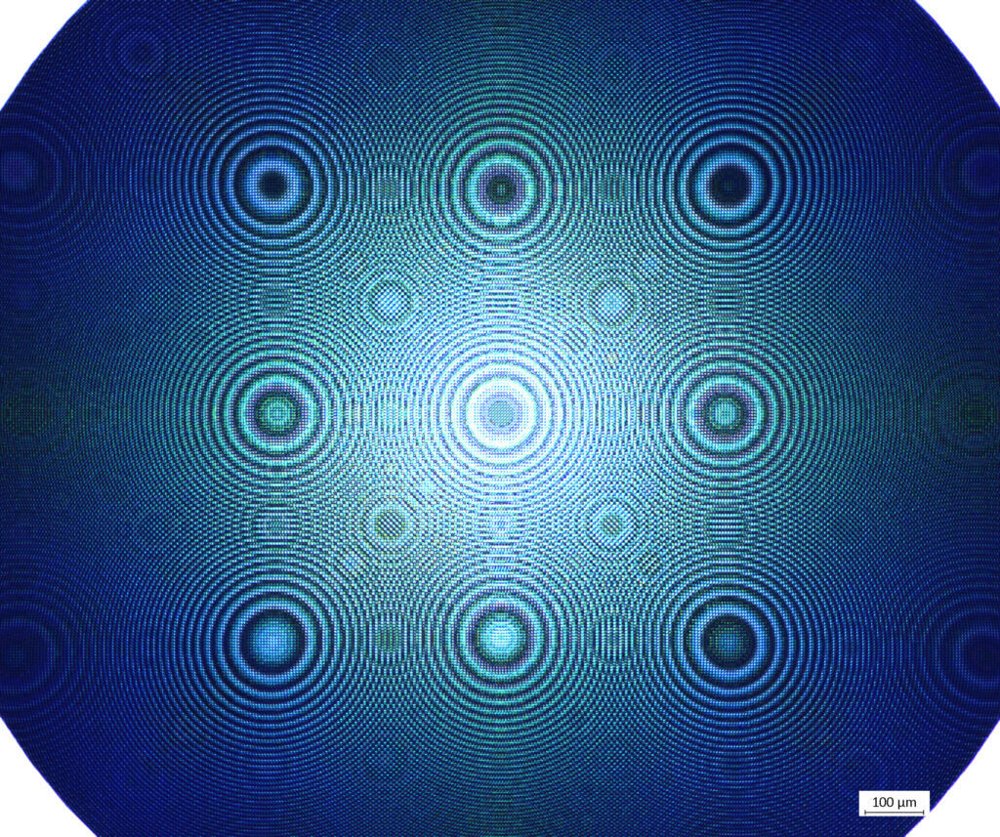
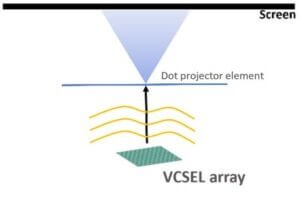
NILT has designed and fabricated a single-surface DOE fan-out that eliminates the need for separate collimator optics and provides high-quality performance. The DOE eliminates the need for collimator optics between the VCSEL light source and the fan-out element and facilitates a simpler assembly process, among other things. This innovation will transform 3D sensing applications. The underlying DOE technology is already proven in mass production of more than 30 million units. The DOE fan-out demonstrates high uniformity, enables high-efficiency single-function diffractive optics, and delivers multiple functionalities such as diffusor and fanout side by side. The single surface DOE platform is a unique demonstration of NILT's next-generation DOE technology applicable for 3D sensing, LiDAR, and machine vision applications targeting consumer electronics, industrial, IoT, medical, and automotive markets. The technology platform is versatile and can be customized to specific application needs. It can incorporate multiple use-cases leading to compact and efficient size, weight, and power solutions. The current system is demonstrated at 940 nm and can be scaled to SWIR. It is also compatible with integration and use of eye-safety features. NILT's DOE platform is made possible through in-house proprietary design algorithms, unique mastering capabilities, and wafer-level replication processes. The vertical integration enables rapid prototyping, which helps our customers quickly find the technology-product fit while eliminating the need for complex and capital-intensive CMOS fab processing. The DOE platform from NILT is ready to be produced and delivered to customers' specifications. Samples are ready now.
CATEGORY
