A new generation of advanced packaging able to selectively interact and change the package’s internal atmosphere is obtained by introducing active functionalities into coating formulation. Advanced active coatings are innovative solutions able to selectively interact and control the package’s internal atmosphere thus extending products shelf life and ingredients preservation without the need to use preservative additives. Active components can be dissolved or dispersed in the lacquer formulation and include different type of chemical and physical gas scavenger able to absorb or block the target molecule; the high selectivity of active system guarantees excellent performance even in the presence of high humidity and other VOCs. An oxygen scavenger is a material in which reactive compounds may combine with oxygen to reduce or completely remove oxygen in enclosed volume. The purpose of an oxygen scavenger is to limit the amount of oxygen available for deteriorative reactions that can lead to reduced functionality of many types of products: lipid oxidation, nutritional loss, changes in flavor and aroma, alteration of texture, and microbial spoilage. Antioxidant coating, able to inhibit the propagation of oxidizing reaction, is obtained by integration of natural antioxidant materials specifically selected and, if required, designed in capsules/core-shell structures to guarantee chemical and physical compatibility. An active system comprising exchanged zeolites is provided as ethylene scavenger coating, suitable to improve the fruits and vegetables lifetime by controlling ethylene concentration within the package itself.

Zeolites are a special class of crystalline alluminosilicates characterized by a microporous and 3D-structure. Selective Adsorption: The three-dimensional network create a vast array of tunnels and channels, allows them to be used in catalysis, adsorption processes, and gas separation. Hosting and Carrying: The well-defined porous structure, the mobility of extra-framework cations and surface reactivity confer to this class of material the ability to host and carry functional molecules. A well known material with new functionalities. Raw Materials: Zeolites were first described in 1756 by Baron Cronstedt. However, it was not until 1948 that synthetic zeolites were produced by Barrer, who synthesized small-port mordenite at high temperatures and pressures. Union Carbide later introduced synthetic zeolites as a new class of industrial adsorbents and catalysts for hydrocarbon conversion. Over time, new zeolite structures and compositions emerged, through an explosion of new molecular sieve structures and compositions. Today, many zeolites can be synthesized with different SiO2 content, which affects their properties. Higher SiO2 gives greater hydrothermal stability, stronger-acid catalytic activity, and greater hydrophobicity as adsorbents, while lower SiO2 gives greater cation exchange capacity and higher adsorption for polar molecules. Only few companies can control the synthesis process to optimize zeolites for different applications and use them as carriers for new functionalities. SOL-GEL hydrothermal synthesis: SOL-GEL hydrothermal synthesis is an innovative and sustainable approach to synthesize zeolites frameworks using alumina and silica sources without any organic template driving agents. Well-defined crystalline structures can be obtained through a deep control of the reaction gel. Although the approach is simple, the physicochemical process during crystallization is complex and depends on several factors such as amorphous gel preparation, synthesis parameters, reaction mixture composition and its rheological properties. By controlling the process parameters, a new set of functional additives with selected size and tunable chemical-physical properties can be prepared. Particles Surface modification: Silanization is a simple and cost-effective coating method used to modify surfaces of materials that have a high concentration of hydroxyl groups, such as zeolites, silica, and other metal oxide surfaces. The method involves binding silicon-based molecules to the particles by linking silicon atoms with hydroxyl groups on the surface. Commercially available silane-coupling agents can be used to introduce active groups, such as amino and carboxyl groups, to the surface, making it easily modifiable for further grafting and the introduction of new advanced properties. Cation exchanging reactions: Zeolites are highly effective in absorbing gases, and the distribution of extra-framework cations plays a crucial role in determining gas adsorption mechanisms and selectivities. Various experimental and simulation techniques have been employed to locate cations in different scenarios and evaluate modified zeolites prepared through cation exchange reactions. For instance, exchanging zeolites with zinc and silver ions can transform them into odor control materials, while exchanging them with palladium can enable them to ethylene adsorption. This approach can also be used to introduce guest molecules like sensors and markers, making zeolites excellent hosts for active molecules.
CATEGORY
Manipulating Alloys for Adaptable Getter Solutions. Selective Adsorption Getters can adsorb efficiently and selectively one or more gas species, enabling them to sustain high or ultra-high vacuum conditions in a variety of vacuum systems. Active Coatings Getters can act as active coatings to shield organic layers from moisture at a single molecule level. With high sorption capacity, tunable kinetics and selectivity, they provide a huge variety of functions. The origin of the getter alloys. Raw Materials Almost eighty years ago, SAES began to design complex alloys able to selectively and efficiently sorb one or more gas species from atmosphere, even in vacuum or ultra-high vacuum conditions. It was the origin of the “getter” alloys, which year after year have been continuously refined, developed and modified, generating a wide variety of advanced metal powders, parts and coatings with finely tuned sorption properties for the most demanding high-tech applications. Precision processing for tailored alloy properties: from Ingots to three-dimensional parts. Manipulation Very accurate processing conditions (from vacuum to high pressure, from room temperature up to more than 1000°C, from mild compression to forces of the order of several tons) transform the incoming metal and non-metal pellets into alloys, which form solid ingots of different shapes and dimensions, once cooled down. Mechanical processes in controlled atmosphere, like grinding, reshape the ingots into smaller pieces, down to the level of powders. While retaining the unique properties of the alloy, these powders can be formed into a variety of three-dimensional parts through compression, sintering, printing from a liquid dispersion. The physical and morphological properties, even at the micron and submicron level, are strongly dependent upon the transformation process adopted. Every single step is fundamental to fine tune the features of the alloy and make it perfectly suitable for the final application. Enabling advanced applications from micro to macro scale. Advanced Properties Getter alloys can take on various forms based on their intended application. These alloys can be shaped as two-dimensional getter wires, three-dimensional getter elements, sputtered films, loose powders, or getter coatings. They constitute an enabling part of a wide range of devices, ranging from tiny Micro Electro Mechanical Systems (MEMS) to massive synchrotron radiation rings that span kilometers in length. Furthermore, getter alloys have extensive applications beyond Earth, with their use in avionics and space systems In a diverse range of environmental conditions, the getters effectively utilize their function of selectively absorbing gas species. These advanced materials serve to maintain a high or ultra-high vacuum or safeguard microelectronics or photonics packages against detrimental effects of specific gas contaminants, even at extremely low partial pressures. The integration of getter materials is indispensable for the long-term operation of numerous microelectronics, optoelectronics, photovoltaics, cryogenic, and energy devices. Without these advanced materials, it would be impossible for such devices to remain operational for years or even decades.
CATEGORY
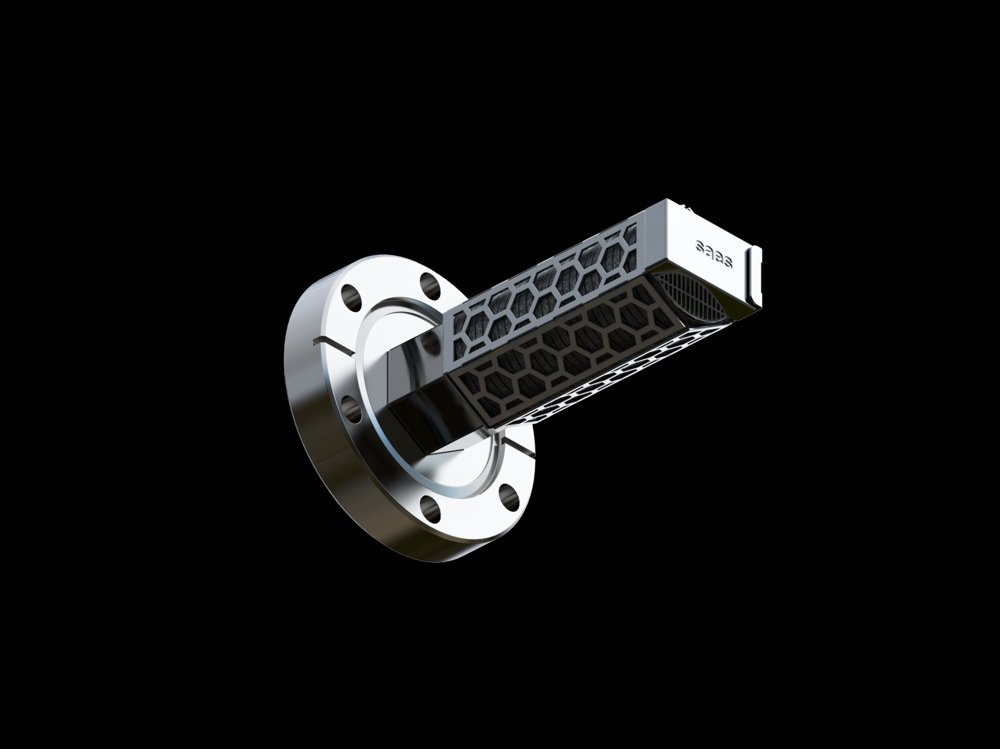
CapaciTorr® is a product family of flanged NEG vacuum pumps that utilize porous sintered Non-Evaporable Getter (NEG) disks for high-efficiency gas sorption in ultra-clean vacuum systems. Designed for the Ultra-High Vacuum (UHV) and eXtreme High Vacuum (XHV) pressure regimes (10⁻⁹ Torr and below), the CapaciTorr® range includes two advanced series: - The CapaciTorr® D Series, based on the well-established St 172 NEG alloy, has been reliably used in UHV/XHV applications such as particle accelerators and scientific instrumentation since the early 1990s - The CapaciTorr® Z Series employs the innovative ZAO® NEG alloy, specifically developed to provide superior hydrogen pumping speed, enhanced mechanical strength, and reduced outgassing during thermal activation (typically just 1 hour). This advanced alloy also performs significantly better than St 172 when activated at lower temperatures, making it ideal for systems where thermal budget is limited Pumping Speed and Capacity for the Main Gas Species Product Description | Pumping Speed (l/s) | Sorption Capacity (Torr l) H2 | H2O | N2 | CO | H2 | H2O | N2 | CO CapaciTorr D 50 55 45 22 30 78 3.4 0.04 0.15 CapaciTorr D 100 100 85 40 60 135 5 0.1 0.25 CapaciTorr D 200 200 180 60 125 280 10 0.25 0.6 CapaciTorr D 400 400 290 95 180 450 16 0.5 1 CapaciTorr D 1000 1000 900 330 600 1360 60 1.5 4 CapaciTorr D 2000 2000 1600 420 1000 2250 84 2 5 CapaciTorr D 3500 3500 2600 900 1600 3950200 4.1 12 CapaciTorr Z 100 150 100 40 65 600 5 0.15 0.35 CapaciTorr Z 200 290 195 75 130 1160 10 0.3 0.65 CapaciTorr Z 400 500 320 125 210 1920 16 0.6 1.2 CapaciTorr Z 1000 1250 900 360 550 5600 70 1.7 3.5 CapaciTorr Z 2000 2600 1750 700 1050 9600 150 2.4 4.8 CapaciTorr Z 3500 3900 2100 900 1400 14100200 5.1 10 Notes: Pumping speed values for water vapor (H₂O) are estimated based on standard testing conditions in ultra-high vacuum (UHV). Initial pumping speeds are measured in nude configuration, meaning the NEG pump is directly exposed to the vacuum environment without external housing or shielding. Sorption capacity is calculated based on the point when pumping speed drops to 5% of the initial value under nude conditions. More than 100 NEG reactivations (sorption cycles) are possible, ensuring long operational life and cost-effective maintenance for demanding UHV/XHV systems. General Features - Extremely compact NEG pump design with minimal weight - High and stable pumping speed for all active gases, including H₂, O₂, CO, CO₂, and N₂ - Large sorption capacity and extended operational lifetime for ultra-high vacuum (UHV) and extreme-high vacuum (XHV) environments - Consistent pumping performance at UHV/XHV pressure levels - Operates at room temperature without power supply after activation, reducing energy consumption - Oil-free and vibration-free vacuum pumping, ideal for sensitive instruments - Reliable operation in strong magnetic fields, such as those found in accelerators and fusion research - Reversible hydrogen and isotope pumping, enhancing reusability and efficiency Applications - Extremely compact NEG pump design with minimal weight - High and stable pumping speed for all active gases, including H₂, O₂, CO, CO₂, and N₂ - Large sorption capacity and extended operational lifetime for ultra-high vacuum (UHV) and extreme-high vacuum (XHV) environments - Consistent pumping performance at UHV/XHV pressure levels - Operates at room temperature without power supply after activation, reducing energy consumption - Oil-free and vibration-free vacuum pumping, ideal for sensitive instruments - Reliable operation in strong magnetic fields, such as those found in accelerators and fusion research - Reversible hydrogen and isotope pumping, enhancing reusability and efficiency
CATEGORY
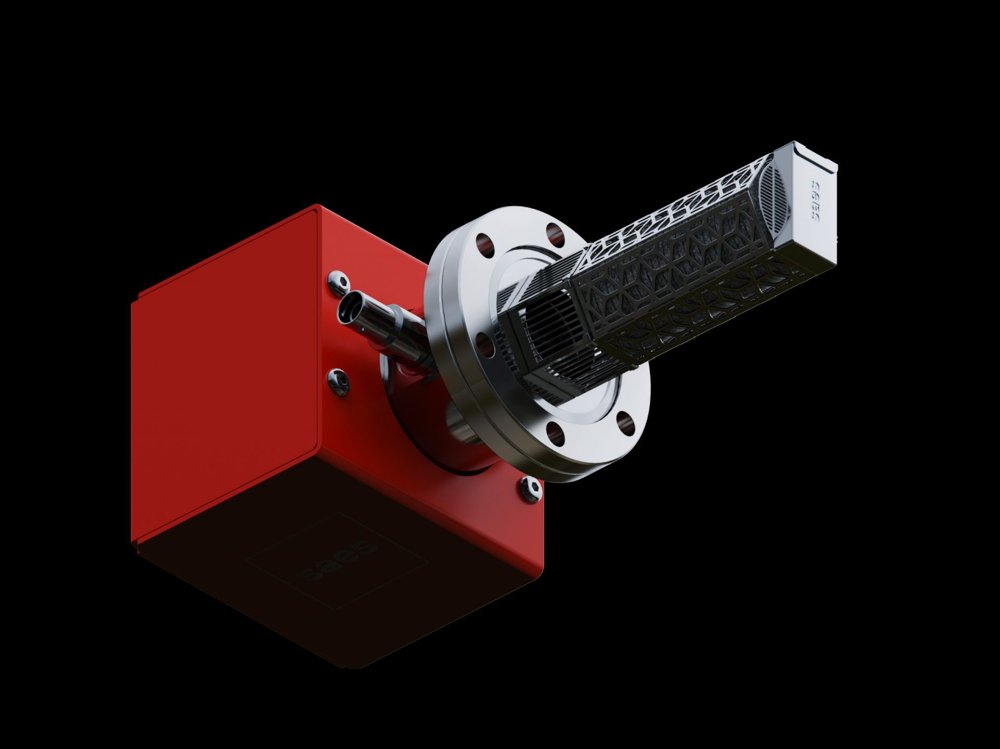
NEXTorr® UHV pumps are advanced Ultra-high Vacuum (UHV) pumping solutions that integrate a sputter ion pump (SIP) and a Non-Evaporable Getter (NEG) pump into one compact, high-performance device. Designed to deliver exceptional pumping speed and capacity for active gases—especially hydrogen—these hybrid pumps maintain a minimal footprint and low weight, ideal for space-constrained UHV systems. Two NEG-based series are available to meet different performance needs: - NEXTorr® “D” Series, built around the St 172 (Zr-V-Fe) NEG alloy, proven in UHV/XHV environments since the 1990s - NEXTorr® “Z” Series, engineered with the novel ZAO® (Zr-V-Ti-Al) NEG alloy, offering enhanced hydrogen pumping speed and capacity, along with improved disk robustness and lower outgassing during activation All models in the D and Z series feature high-efficiency sputter ion pumps, optimized to work in synergy with the NEG element: - CF35 / CF63 flanged models: 6 l/s (Ar) and 15 l/s (CH₄), available in diode or noble diode versions - CF100 flanged models: 10 l/s (Ar) and 32 l/s (CH₄), with noble diode configuration For systems requiring enhanced performance on noble gases and methane, the NEXTorr® D500-StarCell and D1000-StarCell models integrate two high-capacity NEG cartridges (500 and 1000 l/s for H₂) and a StarCell ion pump offering 21 l/s (Ar) and 30 l/s (CH₄), respectively. Pumping Speed and Capacity for the Main Gas Species Product Description Pumping Speed (l/s) Single-run Capacity (Torr l) H2 H2O CO N2 H2 H2O CO N2 NEXTorr D 100-5 100 90 70 40 135 10 0.7 0.4 NEXTorr D 200-5 200 180 140 80 280 18 1.3 0.6 NEXTorr D 300-5 300 270 200 100 410 45 2.2 1.3 NEXTorr D 500-5 500 450 340 200 680 70 3 1.7 NEXTorr D 500-StarCell 500 450 340 200 680 70 2.5 1.3 NEXTorr D 1000-10 1000 850 580 320 1125 440 7 4 NEXTorr D 1000-StarCell 1000 850 580 320 1125 500 6 2.5 NEXTorr D 2000-10 2000 1700 1100 640 2250 800 13 7 NEXTorr Z 100 150 100 75 40 600 9 0.6 0.35 NEXTorr Z 200 290 180 140 80 1160 16 1.5 0.7 NEXTorr Z 300 400 280 200 120 1920 40 2 1.2 NEXTorr Z 500 580 440 300 180 2880 60 2.5 1.5 NEXTorr Z 1000 1150 850 500 320 4380 400 7 4 NEXTorr Z 2000 2200 1600 920 640 6840 700 11 6 General Features - Extremely compact and low weight, ideal for systems with limited space - High and constant pumping speed for all active gases, including H₂, CO, CO₂, N₂, O₂ - Pumping speed for noble gases and methane through integrated ion pump - Long-lasting performance in UHV and XHV environments - Negligible power consumption during standard operation - Reduced magnetic interference, suitable for sensitive instruments - Capability to indicate system pressure - Maintenance-free design with no moving parts or oil contamination Applications - Improvement of the ultimate vacuum in UHV and XHV systems - Particle accelerators and synchrotron radiation sources - Atom/ion trap systems, atomic clocks, and interferometers - Scanning and transmission electron microscopes (SEM/TEM) - Portable ultra-high vacuum instrumentation and suitcases - Surface analysis systems - General-purpose UHV setups in both industrial and research environments
CATEGORY
