By Hockmeyer Equipment Corporation
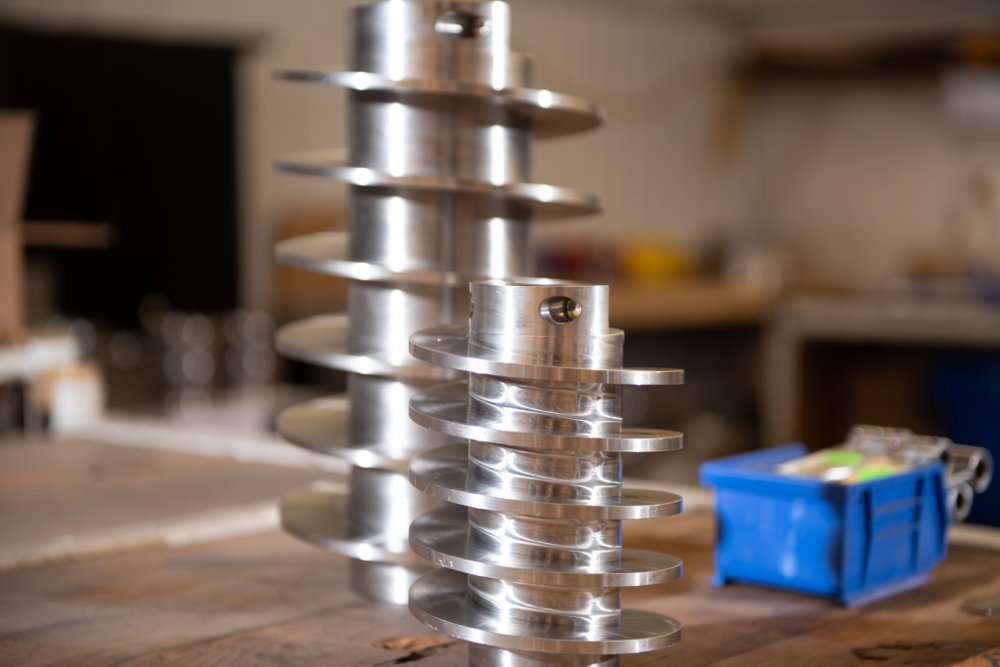
Because equipment is the backbone of your production process, it's critical to source and purchase spare parts from reliable suppliers. At Hockmeyer, we understand the importance of maintaining a fluid process and we are ready to supply our customers with the Hockmeyer parts and accessories they need, when they need them. To avoid unnecessary downtime at your facility, we maintain high stock levels and are ready to ship your orders overnight. Parts and accessories manufactured and tested to match the original equipment specifications To turn a customer's downtime into uptime in no time, our Parts & Service Department stocks Hockmeyer parts and accessories that are ready to ship to your facility overnight. Hockmeyer machines are designed for your unique process. As an Original Equipment Manufacturer (OEM), our customers receive parts specific to their Hockmeyer machine. What to expect: - Replacement parts with a seamless fit - Performance assurance - Direct customer support from experienced staff members
This innovative RotorStator design produces an airless ultra-fine dispersion using an aggressive multi-prong approach to particle size reduction. Bridging the gap between milling and dispersion, the NEXGEN™ Vacuum Rotor Stator was designed for maximum dispersion. This innovative design with integrated vacuum delivers fast & pure dispersion — NO AIR, NO FOAM... 100% PRODUCT. DISPERSION TECHNOLOGY. FAST. PATENTED The process takes place in a temperature-controlled environment to preserve formulae characteristics and function. A thorough cooling system covering the chamber and return lines quickly mitigates the heat generated by the aggressive shear forces. The result is a deaerated dispersion, a narrow particle size distribution band, volumetric accuracy, and an optimal dispersion pre-mix for milling into the nanoparticle size range. It easily hooks up to your existing process tanks. Flexible, portable design. Easy cleanup and changeovers. Vacuum The air inside the agglomerates expands and forces the particles apart, exposing maximum particle surface area. Liquid and resin encapsulate each particle for fast and thorough wetting. Controlled Cavitation The rapid pressure change inside the vacuum chamber creates micro vapor cavities in the liquid. When these short-lived vapor cavities (bubbles) collapse, they generate a shockwave through the feedstock that further aids in particle size reduction. Extreme Shear Zone The Interlocking ‘H’ Stator Design creates a unique shear pattern of vertical and horizontal slots for ultra-dynamic impact while offering maximum open area for the greatest flow. The tight tolerances between the rotor and the stator create a short distance between particle acceleration and point of contact for the greatest shattering effect on agglomerates. Dual Pumping Rotor Design The NEXGEN™ Vacuum Rotor Stator is pulled from both the rotor’s top and bottom, doubling the number of collisions per particle. High-speed Recirculation ~300 gpm. The feedstock is recirculated through the shear zone at high velocity to maximize the number of passes for every drop. Powder Incorporation Direct powder incorporation into the liquid stream using an eductor that controls the flow and creates a venturi effect. This generates suction at the bottom of the funnel pulling powders into the flow. The high-speed jet coming out of the eductor mixes the powder and liquid before it reaches the rotor-stator. 2021 Patented design
CATEGORY
Milling Innovation at Its Best Machine Features - Remove the air in the slurry – no more foaming issues - In-the-mill vacuum - Flexibility for batch volumes - Hook up to any tank: portable or permanent - Sanitary fittings for fast and easy cleanup - High screen surface area to media ratio - Greater media field throughput than any mill on the market - Nanoparticle size capability - Easy cleanup and minimal waste with 99% product recovery - Wide range of screen sizes is available - Handles slurry up to 15,000 cps Can the NEXGEN vacuum recirculation mill be connected to existing tanks? Yes. The system can be connected to virtually any portable or permanent tank configuration. Is the system suitable for laboratory work? Yes. The dedicated Lab Model, as well as pilot-scale machines, supports process development and linear scale-up. Does the NexGen Milling system require extensive floor space? No. One key benefit is its compact footprint and minimal ceiling height requirement. What makes the NEXGEN different from conventional bead mills? The NEXGEN combines high-shear recirculation milling with vacuum deaeration, enabling simultaneous grinding and air removal, improving wetting efficiency, product quality, and processing speed. Model | recommended Batch Size Min/Max (Gallons) for maximum efficiency | Media Volume (Liters) Micromill | 1 L/1 Gal. | 49 ML HNG-1 | 5/20 | 1 HNG - 2.5 | 15/50 | 2.25 HNG - 5 | 35/100 | 4.5 HNG-10 | 50/150 | 8 HNG - 20 | 150/400 | 18.5 HNG - 60 | 400/1000+ | 46 DEAERATION: THE EFFECTS OF VACUUM While milling under vacuum, small amounts of air entrapped within the agglomerates begin to expand and push apart the solids. The air separates from the solids and begins to accumulate in the mill’s upper chamber. Once enough air accumulates, it is purged intermittently by the mill, returning to the supply tank and quickly rising to the top where it is released. Covered by one or more of the following patents: 5,184,783; 5,497,948; 5,820,040; 7,175,118; 7,559.493; 7,828,234; 7,883,036; 7,914,200; 8,182,133; 8,376,252; 8,733,677; 9,597,691 B1
CATEGORY
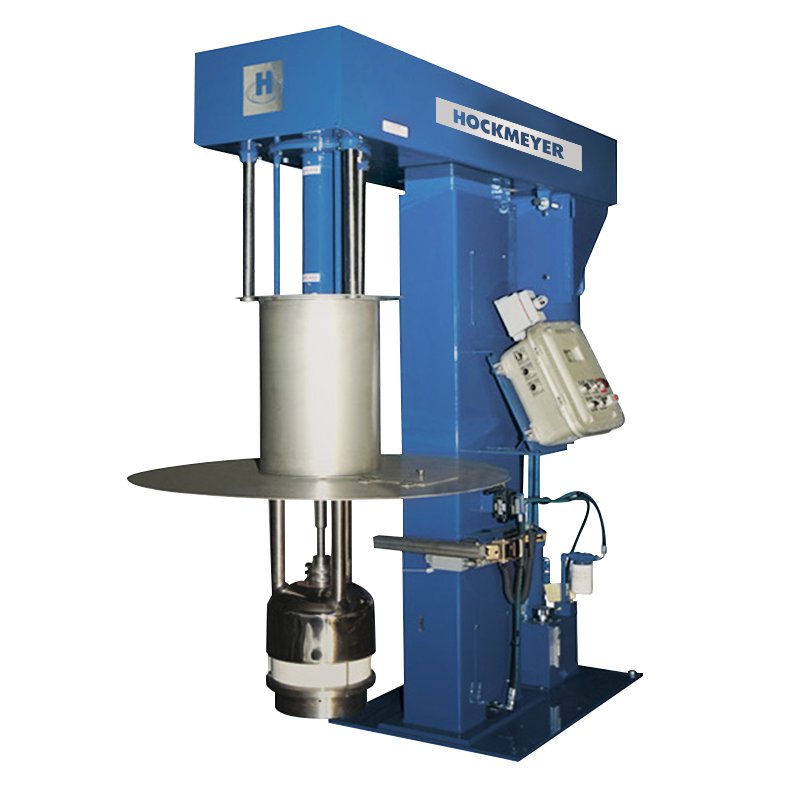
Machine Features - Multiple tank positions with 360º rotation available - Minimal cross-contamination, easy clean-up, and low solvent loss - Maximizes color development, strength, gloss, durability, and yield - Reduction of process time versus traditional milling techniques - Highly efficient using small quantities of media - Use media as small as.5 mm and as large as 2 mm - Consistent performance - Various materials of construction available - Tight Particle Distribution - Fast processing times - High product recovery – reduced raw material loss Covered by one or more of the following patents: 5,184,783; 5,497,948; 5,820,040; 7,175,118; 7,559.493; 7,828,234; 7,883,036; 7,914,200; 8,182,133; 8,376,252; 8,733,677; 9,597,691 B1 The HCP Immersion Mill: A History of Milling Excellence The immersion mill was invented and patented by Hockmeyer in the 1990s to replace the outmoded horizontal milling technologies and three roll mills that process the feedstock very slowly through the shear zone, are cumbersome to disassemble and clean, are labor-intensive, and are relatively inefficient by modern-day standards. In immersion milling, the feedstock is circulated through a powerful and turbulent shear zone at a very high velocity, as fast as 50 passes per hour. This produces very narrow particle size distributions, decreases the bead-to-product ratio necessary for efficient milling, and dramatically increases productivity and throughput. Over the years, Hockmeyer has continued to improve on the original design by adding more impact points, flow boosters, high-viscosity models (HCPS), and nano-milling features. Model | RECOMMENDED Batch Size Min/Max (Gallons) Larger batch sizes will require longer milling times | Media Volume (Liters) Micromill | 250 ml / 2 liter | 49 ML HCP - ¼ | 1 / 5 | 0.25 HCP - 1 | 5 / 20 | 1 HCP DM 1 | 3 / 15 | 1 HCP DM 2.5 | 20 / 60 | 2.5 HCP - 2.5 | 13 / 35 | 2.5 HCP - 5 | 35 / 60 | 4.5 HCP - 10 | 50 / 150 | 8 HCP - 20 | 120 / 250 | 18 HCP - 40 | 250 / 600 | 35 HCP - 60 | 600 / 800 | 46 HCP - 80 | 800 / 1100 | 63
CATEGORY
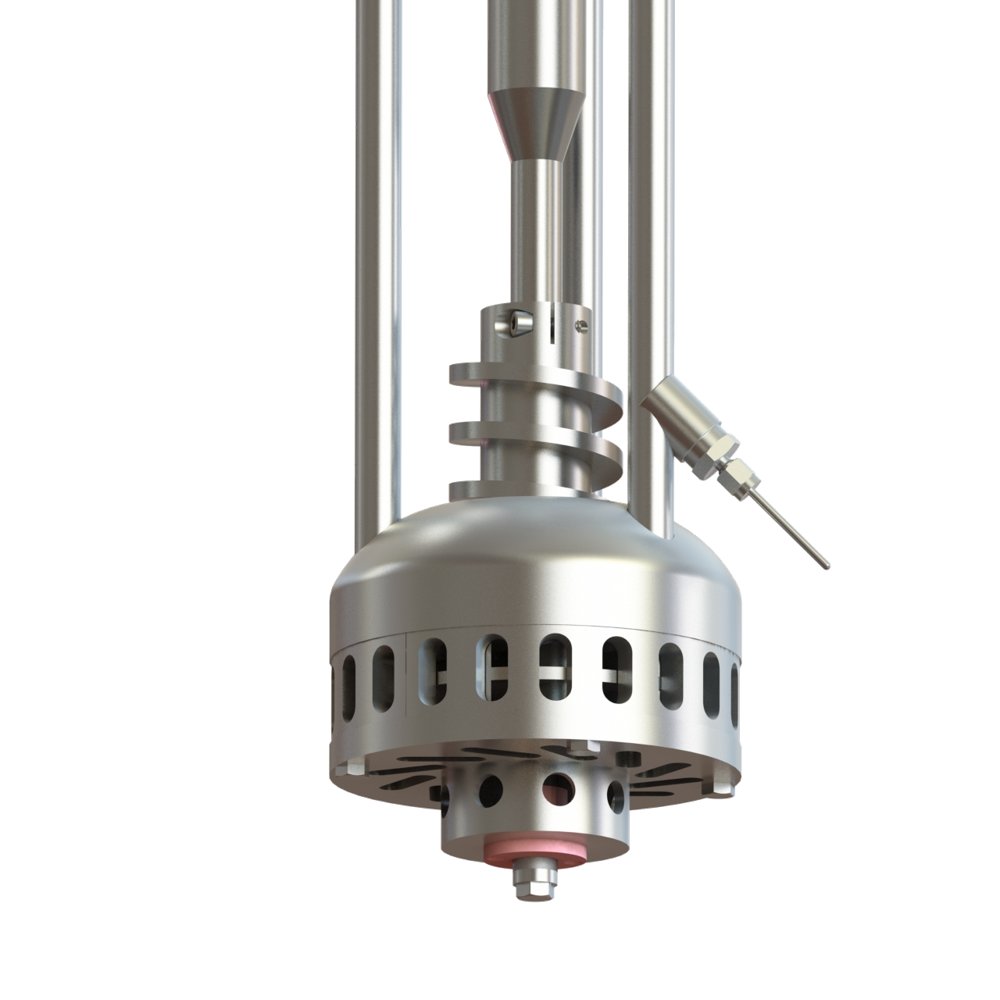
Its ingenious design generates mechanical shear by channeling materials into the rotor, expelling them radially through meticulously sized openings in the stator. With the HRX, a new dimension emerges, catering to products requiring a temperature-regulated environment during processing. Customized stators enable seamless adaptation to virtually any material, accommodating a broad spectrum of incoming particle sizes and viscosities. Welcome to the future of precision milling with the HRX Series. Precision Shear Control: Variable Speed Functionality Unleashed Explore the pinnacle of precision control with the HRX Series Temperature-Regulated Immersion Rotor-Stator. Designed for maximum efficiency, this innovative system empowers operators with variable speed functionality, providing precise control over shear intensity. The key to its exceptional performance lies in the intricacies of its design; the clearance between the rotor’s tips and the stator’s interior diameter meticulously governs discharge and shear rates. Tighter tolerances and strategically positioned exit ports amplify shear forces while moderating discharge rates, providing unparalleled versatility. Optimized Efficiency: Rotor-Stator Clearance Governs Rates Elevating its capabilities further, the HRX features a jacketed dome, introducing an additional control layer ideal for temperature-sensitive applications. Harnessing the synergy of a high-efficiency rotor and dynamic stator designs, this system achieves rapid deagglomeration and particle reduction with unparalleled finesse. Each stator boasts openings of various sizes, shapes, and angles, ensuring optimal performance across diverse materials. Shear Mastery: Tight Tolerances, Enhanced Performance Customizability reaches new heights as operators command exit ports’ positioning, size, and discharge angle, maximizing the machine’s efficacy for specific applications. But the innovation doesn’t stop there. By integrating an auger and sweep blade, the HRX transcends limitations, effortlessly processing materials across unlimited viscosity ranges. Experience precision, versatility, and efficiency redefined with the HRX Series by Hockmeyer Equipment Corp. Patent Number: 11,766,648 What is the Hockmeyer HRX Series? The Hockmeyer HRX Series is a temperature-regulated immersion rotor-stator processing system designed for products that require precise temperature control during mixing and dispersion. The technology is protected by U.S. patents 11,766,648 (2023) and 11,931,707 B1 (2024). What makes the HRX dispersion and mixing equipment unique? The HRX Series combines: - Temperature regulation - Variable-speed rotor-stator technology - Customizable stator designs - High-shear processing capabilities These features allow manufacturers to process a broad range of materials, viscosities, and particle sizes while maintaining process control. What processing functions can the HRX Series perform? The HRX Series is designed for: - Mixing - Deagglomerating - Dispersing - Chopping - Particle size reduction - Homogenizing Its rotor-stator design provides efficient processing across multiple applications. How does the HRX dispersion and mixing equipment work? The system creates mechanical shear by: 1. Feeding material into the rotor. 2. Accelerating and processing the material within the rotor-stator assembly. 3. Expelling the material radially through precision-sized and precision-angled openings in the stator. This process enables efficient particle breakdown, dispersion, and homogenization. Why is variable speed important in dispersion and mixing equipment? The variable-speed function allows operators to control the amount of shear applied to the product. This flexibility enables optimization of processing conditions based on product requirements and desired outcomes. How are shear rates controlled in dispersion and mixing with rotor-stators? Shear and discharge rates are controlled by the clearance between the rotor tips and the stator's inside diameter. - Tighter tolerances create higher shear rates. - Smaller exit ports increase shear but reduce discharge rates. - Larger open areas improve discharge rates. This design allows operators to tailor processing performance to specific applications. How can discharge rates be increased in a rotor-stator application for dispersion and mixing? Discharge rates can be increased by enlarging the open area of the stator exit ports by increasing the number of exit ports and optimizing port positioning. These modifications help balance throughput and shear requirements. What roles do the rotor and stator designs play in dispersion and mixing? The HRX Series uses a high-efficiency rotor paired with dynamic stator designs that feature various opening sizes, shapes, and angles. These configurations promote rapid deagglomeration and particle size reduction while maximizing machine performance. How does the HRX Series optimize particle size reduction and dispersion? Performance is optimized by controlling the exit port positioning, size, and discharge angle. These factors control deagglomeration, dispersion efficiency, and particle size reduction. How does the HRX Series support temperature-sensitive dispersion and mixing applications? The system includes a jacketed dome that provides temperature regulation during processing. This feature delivers greater operational control and helps protect temperature-sensitive materials from adverse processing conditions. Can the HRX Series process high-viscosity products? Yes. By incorporating an Auger and/or Sweep blade, the HRX Series can effectively process high-viscosity materials that would otherwise be difficult to move and mix. How does the HRX Series handle material deaeration? The addition of vacuum capability to the process vessel aids in feedstock deaeration. Removing trapped air improves volumetric accuracy and can enhance overall product quality. What should customers consider when selecting dispersion and mixing equipment? Key evaluation criteria include: - Equipment performance on specific products - Integration into existing processes - Ability to eliminate process steps - Process time - Scale-up capability - Cleanability - Product loss - Ergonomics - Ability to meet or exceed production standards These considerations help ensure the equipment supports efficient and lean manufacturing operations.
CATEGORY
