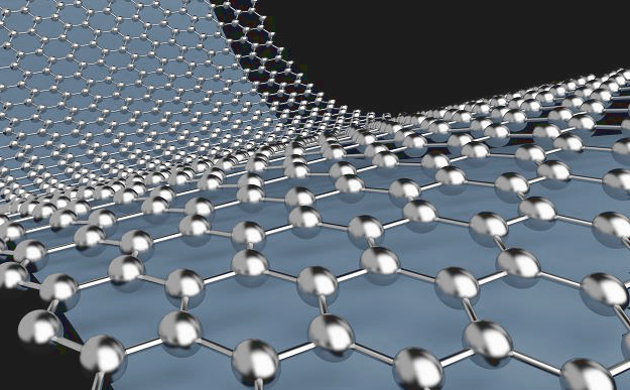
Electrical signals transmitted at high frequencies lose none of their energy when passed through the ‘wonder material’ graphene, a study led by Plymouth University has shown.
Discovered in 2004, graphene – which measures just an atom in thickness and is around 100 times stronger than steel – has been identified as having a range of potential uses across the engineering and health sectors.
Now research has shown graphene out-performs any other known material, including superconductors, when carrying high-frequency electrical signals compared to direct current, essentially transmitting signals without any additional energy loss.
And since graphene lacks band-gap, which allows electrical signals to be switched on and off using silicon in digital electronics, academics say it seems most applicable for applications ranging from next generation high-speed transistors and amplifiers for mobile phones and satellite communications to ultra-sensitive biological sensors.
The study was led by Dr Shakil Awan, a Lecturer in the School of Computing, Electronics and Mathematics at Plymouth University, alongside colleagues from Cambridge and Tohoku (Japan) Universities and Nokia Technologies (Cambridge, UK).
Dr Awan said:
“An accurate understanding of the electromagnetic properties of graphene over a broad range of frequencies (from direct current to over 10 GHz) has been an important quest for several groups around the world. Initial measurements gave conflicting results with theory because graphene’s intrinsic properties are often masked by much larger interfering signals from the supporting substrate, metallic contacts and measurement probes. Our results for the first time not only confirm the theoretical properties of graphene but also open up many new applications of the material in high-speed electronics and bio-sensing.”
The study, published in the IOP 2D Materials Journal, was funded by the EU Graphene Flagship, EPSRC, ERC and Nokia Technologies, and the results are now being exploited in developing high-speed and efficient low noise amplifiers, mixers, radiation detectors and novel bio-sensors.
The latter is the focus of a three-year £1 million project funded by the EPSRC on developing highly-sensitive graphene bio-sensors for early detection of dementia (such as Alzheimer's disease) compared to current methods.
Graphene is ideally suited for this as its room temperature thermal noise is smaller than any other known material, enabling the sensitive detection of tiny numbers of antibody-antigen interactions to indicate the likelihood of a patient to develop dementia in the future.
Dr Alan Colli, from Nokia Technologies, said:
“Graphene devices for next generation wireless technologies (up to and beyond 10 GHz) are progressing fast. Our study has unlocked the fundamental behaviour of graphene at high frequencies, which will be essential in the design and evaluation of future graphene-based wireless devices. This has only been made possible because of the multi-discipline expertise of the different groups based at Nokia, and in Plymouth, Cambridge and Tohoku universities.”
Plymouth University
#Graphene #Energy #Nanoelectronics #Superconductivity
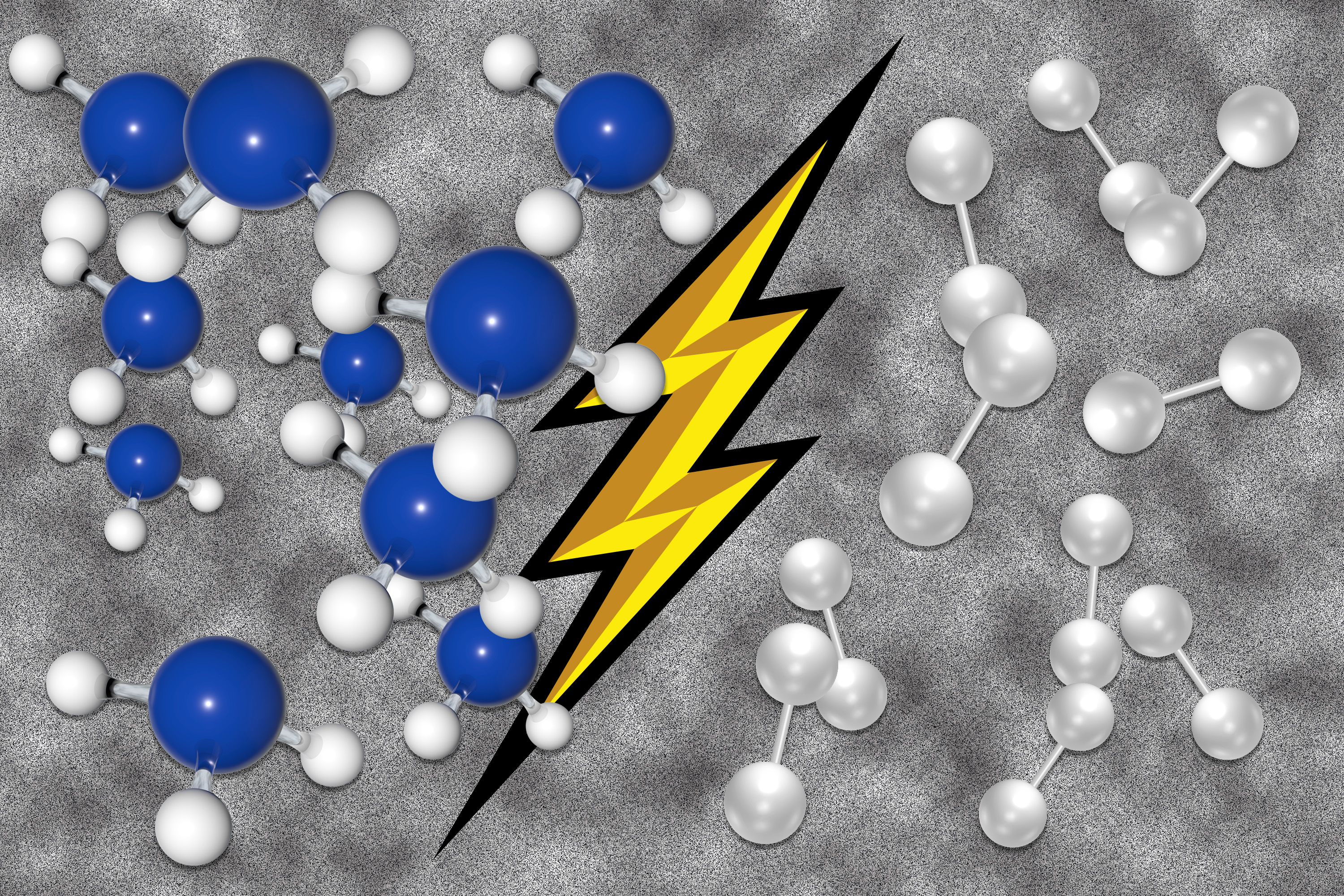
MIT researchers have developed a new way to extract pure hydrogen gas from ammonia and other hydrogen carrier molecules. Their strategy, which uses electricity to speed up the extraction, reduces the temperature and energy required to recover hydrogen from these molecules. As a liquid that is easily stored and transported, ammonia (NH3) is an attractive carrier for hydrogen, which is used in fuel cells, semiconductor manufacturing, chemical processing, and other applications. However,...
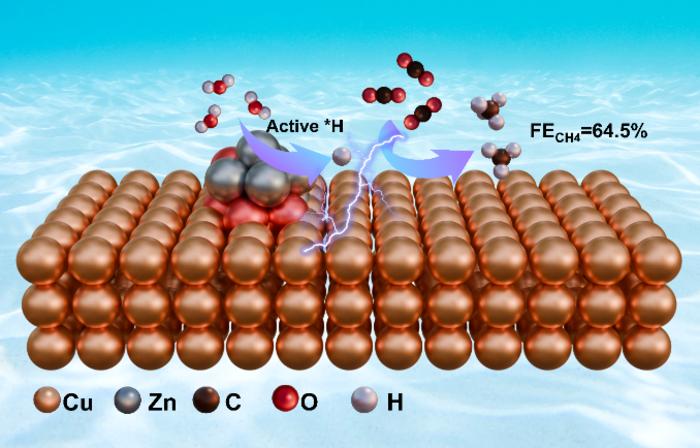
image: CuZn800@C was constructed via solvothermal method and utilizes the high-temperature volatility of zinc to prepare through calcination at different temperatures, which displays a high methane Faradaic efficiency of 64.5% and a remarkable partial current density of -551.3 mA/cm2 at -1.7 V vs. RHE, along with excellent stability. Zn and Cu form a tandem reaction system. Zn sites promote water splitting to provide protons, while Cu sites reduce the energy barrier for *CO hydrogenation....
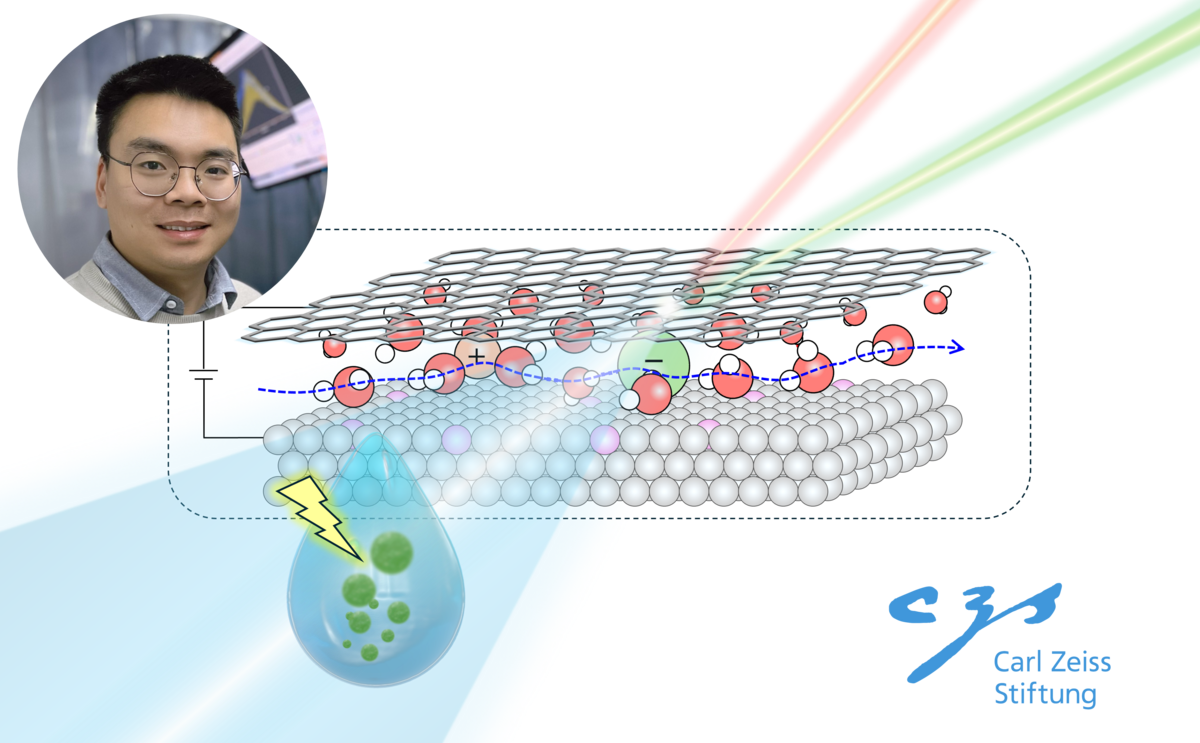
Electrochemical water splitting powered by renewable electricity is a promising pathway to sustainable hydrogen production, but its efficiency and scalability remain limited by costly catalysts and slow reaction kinetics. With €1.5 million in funding from the Carl-Zeiss-Stiftung for five years, Dr. Yongkang Wang and his team will pursue a new approach by visualizing and controlling water at the molecular level, using nanoscale confinement to shape its structure and dynamics at catalytic...






