Working with physicists from the University of Rome, a team led by Professor Cordt Zollfrank from the Technical University of Munich (TUM) built the first controllable random laser based on cellulose paper in Straubing. The team thereby showed how naturally occurring structures can be adapted for technical applications. Hence, materials no longer need to be artificially outfitted with disordered structures, utilizing naturally occurring ones instead.
Material synthesis that is inspired by biology is an area of research at TUM's Chair of Biogenic Polymers at the Straubing Center of Science. It utilizes models from nature and biogenic materials to develop new materials and technologies. The latest issue of the publication "Advanced Optical Materials" features a basic study by a joint team from Straubing and Rome who succeeded in "using a biological structure as a template for a technical random laser," according to scientist Dr Daniel Van Opdenbosch.
Two components are necessary for a laser: First of all, a medium which amplifies light. And secondly, a structure which retains the light in the medium. A classic laser uses mirrors to order and shine light in a single direction in a targeted, uniform fashion. This also takes place uniformly in the microscopic structure of a random laser, but in different directions. Although the development of the random laser is still in its infancy, in the future it could result in lower-cost production. This is because random lasers have the advantage that they are direction-independent and function with multiple colors, just to name a few benefits.
Disordered structure deflects light in all directions
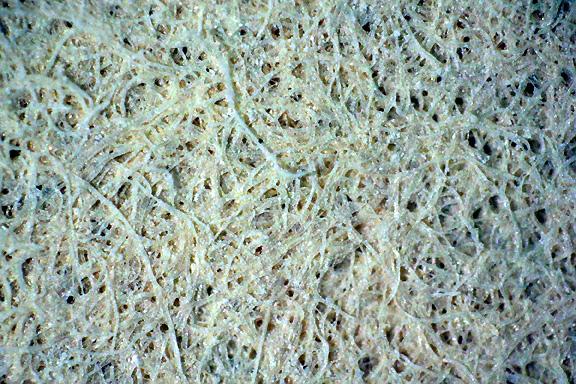
"The prerequisite for a random laser is a defined degree of structural chaos on the interior," Van Opdenbosch explained. The light in a random laser is therefore scattered at all manner of angles along random paths, which are determined by an irregular structure in the interior of the medium. The team led by Professor Zollfrank from the Chair of Biogenic Polymers in Straubing used conventional laboratory filter paper as a structural template. "Due to its long fibers and the resulting stable structure, we deemed it to be suitable for this purpose," said Van Opdenbosch.
In the laboratory, the paper was impregnated with tetraethyl orthotitanate, an organometallic compound. When it is dried and the cellulose burned off at 500 degrees Celsius, it leaves behind the ceramic titanium dioxide as residue -- the same substance generally used in sunblock to provide protection from the sun. "This effect in sunblock is based on titanium dioxide's strong light scattering effect," said Van Opdenbosch, "which we also utilized for our random laser." And "our laser is 'random' because the light which is scattered in different directions due to the biogenic structure of the laboratory filter paper can also be scattered in the opposite direction," he added, explaining the principle.
Random laser not that random after all
However, the light waves can still be controlled despite their random nature, as the team led by Claudio Conti of the Institute for Complex Systems in Rome discovered, with whom Daniel Van Opdenbosch and Cordt Zollfrank collaborated. With the help of a spectrometer, they were able to differentiate the various laser wavelengths generated in the material and localize them separately from one another.
Van Opdenbosch described the procedure: "The test setup used to map the samples consisted of a green laser whose energy could be adjusted, microscope lenses, and a mobile table which allowed the sample to be moved past. That way, our colleagues were able to determine that at different energy levels, different areas of the material radiate different laser waves." In light of this analysis, it is possible to configure the laser in any number of ways and to determine the direction and intensity of its radiation.
This knowledge puts potential practical applications within reach. "Such materials could, for example, be useful as micro-switches or detectors for structural changes," said Van Opdenbosch.
Ghofraniha, Neda, Luca La Volpe, Daniel Van Opdenbosch, Cordt Zollfrank, and Claudio Conti: Biomimetic Random Lasers with Tunable Spatial and Temporal Coherence, Advanced Optical Materials, September 2016. doi:10.1002/adom.201600649.
Technical University Munich
#MaterialScience #Laser #Polymers
This week in nanotech
$281.1M raised
6 funding rounds · 36 deals tracked
New products
 Ti-WCMBN Nanomaterialia Featured
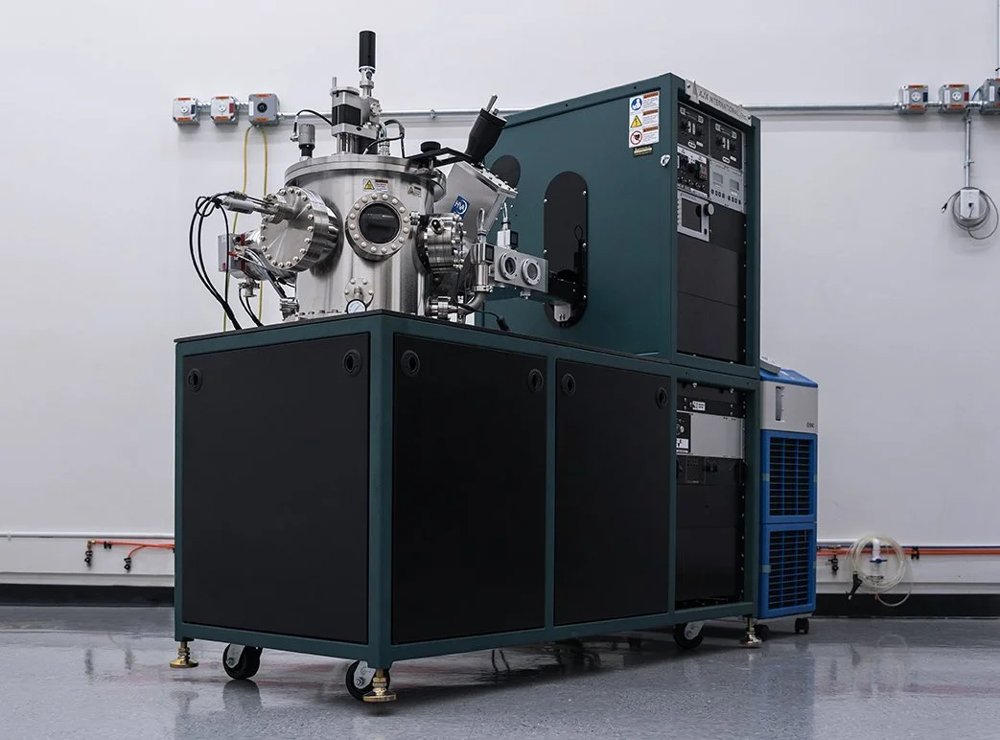 Orion Sputtering Deposition SystemsAJA International Featured
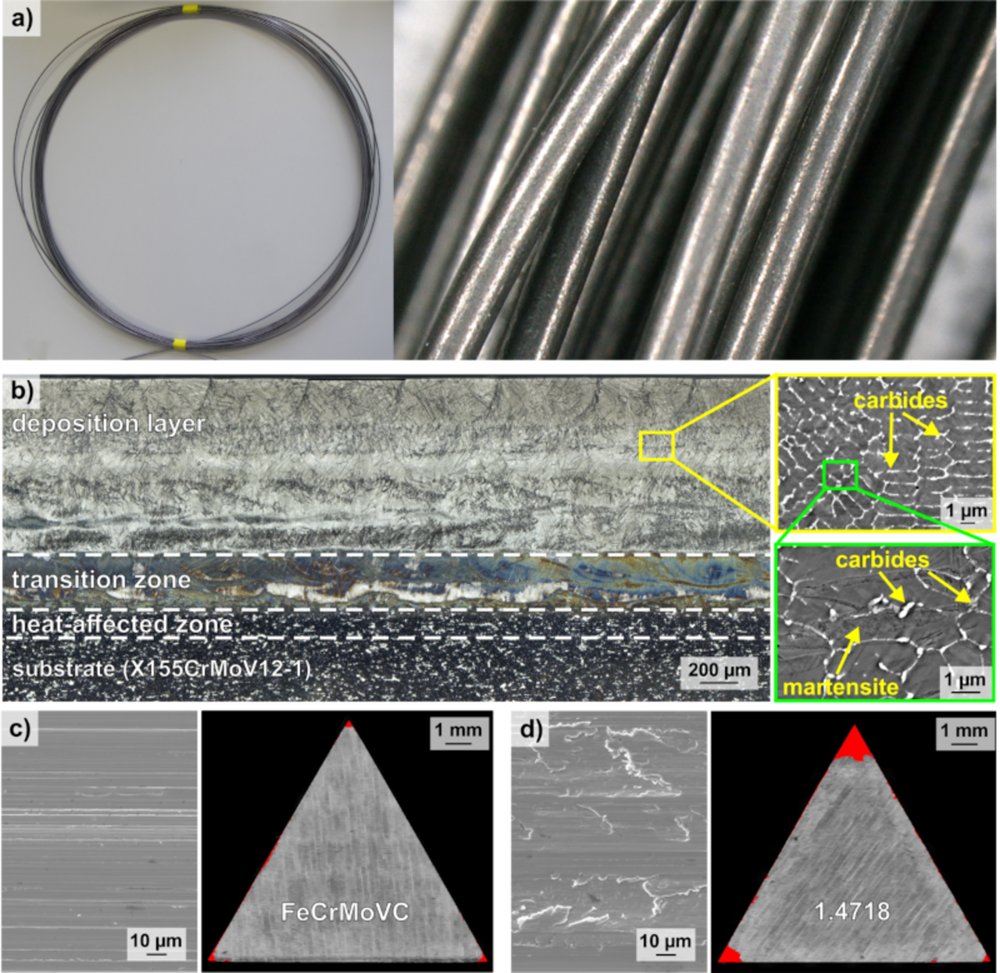 Fe85Cr4Mo8V2C1 wire filler materialLeibniz Institute for Solid State and Materials Research Dresden - IFW Dresden
Market insights
Last 30 days: Quantum Technologies drew the most money: $3.17B.
Money raised per month
Behind the deal
Who led Institut de Microelectronica de Barcelona (IMB-CNM, CSIC)’s $185.7M Grant?
See the investors with Insights Pro →